Ончейн-ринок доходу вимагає не лише виведення активів на мережу, а й управління капіталом, розподілу доходу та механізмів фінансової співпраці. Оскільки різні проєкти застосовують різні фінансові структури, їхня логіка управління активами та джерела доходу можуть суттєво відрізнятися.
Відмінності між Block Street та Ondo насамперед стосуються структури активів, формування прибутковості, управління капіталом та спрямованості фінансової екосистеми. Хоча обидва зосереджені на ончейн-прибутковості, їхня фінансова логіка та пріоритети екосистеми не збігаються.
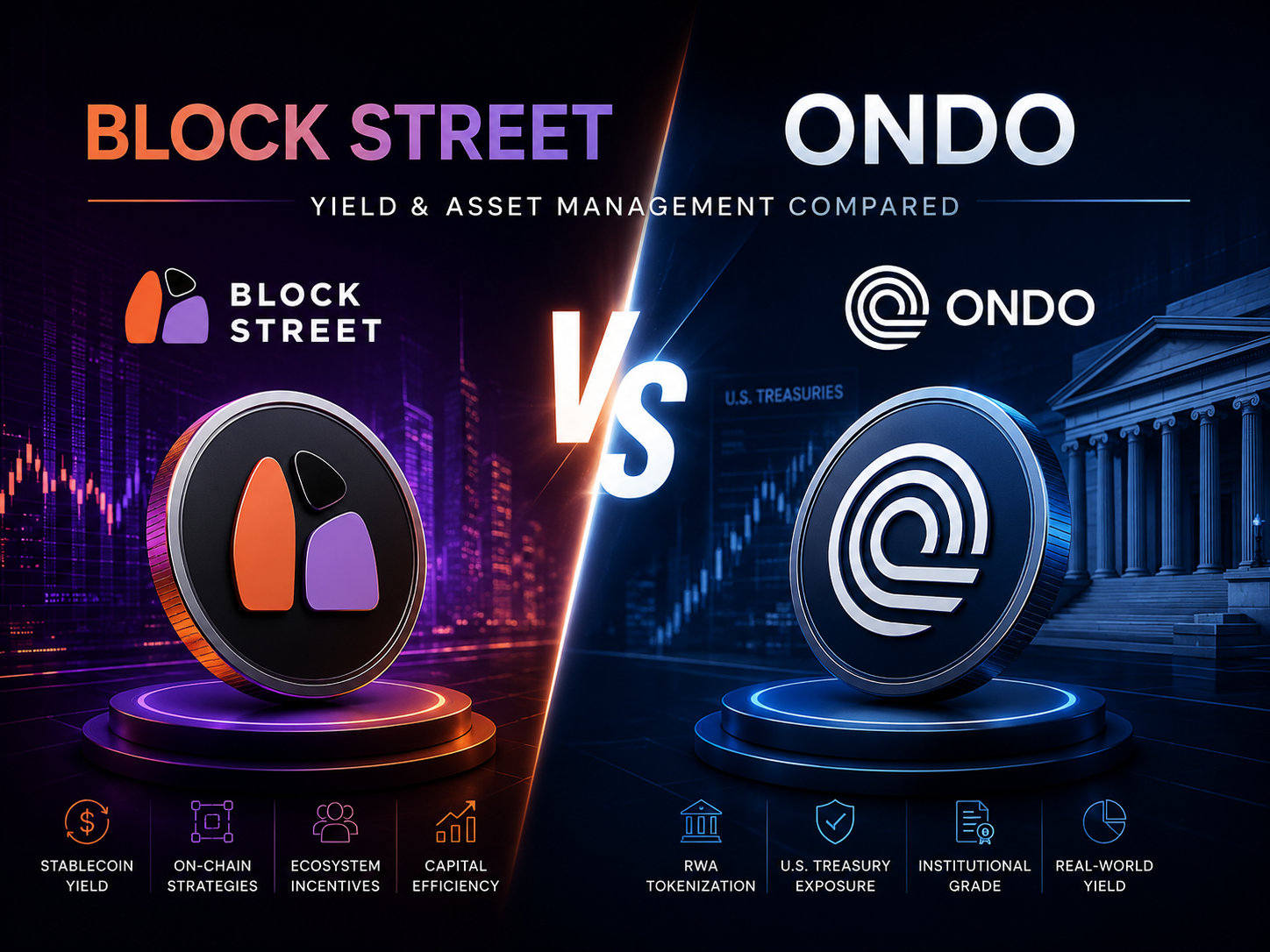
Що таке Block Street?
Block Street — це фінансова інфраструктура Web3, побудована навколо прибутковості стейблкоїнів, ончейн-фінансової співпраці та управління активами. Її основне завдання — координувати ончейн-структури прибутковості та потоки капіталу стейблкоїнів.
Спочатку користувачі підключають свої активи стейблкоїнів до Block Street. Далі Block Street координує стратегії прибутковості та управління капіталом через свою ончейн-систему. Потім дані прибутковості надходять до ончейн-структури розподілу.
Зрештою, Block Street підтримує ончейн-фінансову співпрацю за допомогою екосистеми BSB. Фінансова логіка Block Street спирається на прибутковість стейблкоїнів та ончейн-управління капіталом, що формує довгостроковий цикл.
За своєю структурою Block Street — це радше платформа для ончейн-співпраці в сфері прибутковості, аніж традиційний протокол токенізації активів.
Що таке Ondo?
Ondo — це платформа RWA, побудована навколо токенізації реальних активів та ончейн-продуктів прибутковості. Її основне завдання — переносити реальні фінансові активи на ончейн-системи.
Спочатку Ondo підключає реальні активи, як-от облігації Казначейства США, через свою ончейн-структуру. Потім вона створює відповідні ончейн-продукти прибутковості. Після цього користувачі можуть володіти активами, що приносять дохід, через ончейн-методи.
Нарешті, дохід надходить до ончейн-фінансової структури на основі ефективності реальних активів. Основна логіка Ondo спирається на перенесення реальних фінансових активів та їхнього доходу на мережу.
За своєю структурою Ondo робить акцент на випуску активів RWA та ончейн-фінансових продуктах.
Як відрізняються структури активів Block Street та Ondo?
Структури активів Block Street та Ondo суттєво відрізняються. Ondo більше покладається на перенесення реальних активів на мережу, тоді як Block Street зосереджується на стейблкоїнах та ончейн-співпраці в сфері прибутковості.
Основні активи Ondo зазвичай походять з облігацій Казначейства США та реальних продуктів прибутковості. Потім Ondo токенізує ці реальні активи на мережі.
Block Street має інший фокус. Він наголошує на активах стейблкоїнів, ончейн-структурах прибутковості та системах фінансової співпраці.
Ключові відмінності в їхніх структурах активів:
| Проєкт |
Основна структура активів |
| Block Street |
Стейблкоїни та ончейн-прибутковість |
| Ondo |
RWA та активи Казначейства |
Ця відмінність означає, що Ondo тяжіє до фінансування реальних активів, тоді як Block Street тяжіє до ончейн-співпраці капіталу та операцій з прибутковістю.
Як відрізняється їхня логіка формування прибутковості?
Логіка прибутковості Ondo походить переважно з доходу від реальних активів. Прибутковість Казначейства США безпосередньо впливає на ончейн-продукти прибутковості Ondo.
Спочатку Ondo володіє реальними фінансовими активами. Потім ці активи генерують дохід. Далі дохід переноситься до користувачів через ончейн-структуру.
Логіка прибутковості Block Street більше покладається на співпрацю стейблкоїнів та ончейн-управління капіталом. Він координує потоки капіталу та розподіл прибутковості через свою ончейн-структуру прибутковості.
З механічної точки зору, Block Street наголошує на ончейн-фінансових циклах, тоді як Ondo наголошує на перенесенні прибутковості реальних активів.
Це означає, що хоча обидва належать до ончейн-екосистеми прибутковості, їхні джерела доходу є абсолютно різними.
Як Block Street та Ondo керують ончейн-капіталом?
Їхні підходи до управління капіталом також суттєво відрізняються. Ondo тяжіє до зберігання активів та зв'язків з реальними фінансами, тоді як Block Street зосереджується на ончейн-співпраці капіталу.
Ondo керує капіталом через структури реальних активів, і його ончейн-продукти прибутковості безпосередньо відповідають цим реальним активам.
Block Street зосереджується на координації ончейн-прибутковості. Він керує ончейн-капіталом через систему стейблкоїнів, структуру прибутковості та екосистемні стимули.
Пріоритети управління капіталом Block Street включають:
- Потік стейблкоїнів
- Співпраця в сфері прибутковості
- Ончейн-розподіл
- Екосистемні цикли
Ця структура означає, що Block Street наголошує на ончейн-фінансовій ефективності, тоді як Ondo наголошує на безпеці реальних фінансових активів.
Які різні фокусні точки їхніх фінансових екосистем?
Фінансова екосистема Ondo зосереджується на створенні ончейн-ринку прибутковості RWA. Вона насамперед стосується того, як реальні фінансові активи потрапляють до системи Web3.
Block Street має інший фокус. Він наголошує на фінансах стейблкоїнів, ончейн-співпраці в сфері прибутковості та можливостях обігу капіталу.
Ondo розширює свою екосистему навколо продуктів прибутковості Казначейства, а потім зміцнює зв'язок між реальними фінансами та ончейн-системами.
Block Street розширює свою екосистему навколо прибутковості стейблкоїнів, управління активами та ончейн-фінансової співпраці. Його структура за своєю суттю ближча до ончейн-фінансового операційного рівня.
Ця відмінність означає, що хоча обидва є фінансовими проєктами, орієнтованими на прибутковість, напрямки розширення їхніх екосистем розходяться.
Для яких випадків використання підходять Block Street та Ondo?
Ondo більше підходить для сценаріїв, орієнтованих на дохід від реальних активів та фінансові структури з низькою волатильністю. Користувачі часто використовують Ondo для доступу до ончейн-продуктів прибутковості Казначейства.
Block Street більше підходить для сценаріїв, що наголошують на ончейн-співпраці в сфері прибутковості та фінансових операціях зі стейблкоїнами. Його фокус — підвищення ончейн-ефективності капіталу.
Ondo ідеально підходить для перенесення прибутковості реальних фінансових активів, а потім для підвищення фінансових атрибутів своїх ончейн-продуктів RWA.
Block Street ідеально підходить для співпраці в сфері прибутковості стейблкоїнів та ончейн-фінансової інфраструктури. Його операційна логіка наголошує на ончейн-циклах капіталу та можливостях фінансової співпраці.
За структурою Ondo тяжіє до фінансових продуктів RWA, тоді як Block Street тяжіє до ончейн-фінансової операційної екосистеми.
Підсумок
І Block Street, і Ondo діють у сфері ончейн-прибутковості та управління активами, але їхня фінансова логіка суттєво відрізняється.
Ondo наголошує на токенізації реальних активів та перенесенні прибутковості Казначейства, тоді як Block Street наголошує на прибутковості стейблкоїнів, ончейн-фінансовій співпраці та структурах управління капіталом. Хоча обидва працюють в екосистемах, заснованих на прибутковості, їхні структури активів, джерела доходу та фокус екосистеми не збігаються.
Поширені запитання
Яка найбільша відмінність між Block Street та Ondo?
Block Street зосереджується на співпраці в сфері прибутковості стейблкоїнів та ончейн-фінансових операціях, тоді як Ondo зосереджується на токенізації реальних активів та продуктах прибутковості Казначейства.
Звідки Ondo отримує дохід?
Дохід Ondo в основному надходить з доходу від реальних фінансових активів, таких як облігації Казначейства США.
Яка логіка прибутковості Block Street?
Логіка прибутковості Block Street головним чином покладається на співпрацю капіталу стейблкоїнів, ончейн-структури прибутковості та операції фінансової екосистеми.
Чи є Block Street проєктом RWA?
Block Street має тісні зв'язки з фінансовою екосистемою RWA, але більше орієнтований на ончейн-співпрацю в сфері прибутковості та фінансову інфраструктуру.
Який проєкт більше зосереджений на реальних фінансах: Ondo чи Block Street?
Ondo більше зосереджений на перенесенні реальних активів; Block Street більше зосереджений на ончейн-фінансових операціях.
Для яких сценаріїв найкраще підходять Block Street та Ondo?
Ondo найкраще підходить для сценаріїв прибутковості реальних активів; Block Street найкраще підходить для сценаріїв співпраці в сфері прибутковості стейблкоїнів та ончейн-фінансової екосистеми.