As the number of Internet of Things, or IoT, devices, AI Agents, and automated machines continues to grow, machines in the real world are gaining stronger autonomous decision-making capabilities. Yet under traditional internet architecture, most devices still rely on centralized platforms for identity management, payment settlement, and data coordination. This makes it difficult for machines to form open collaboration networks with one another.
The machine economy has emerged to allow machines to participate in economic activity on their own, much like internet users. As a Layer1 blockchain focused on DePIN and the machine economy, peaq aims to use on-chain identity, machine payments, and automated incentive mechanisms to build a decentralized coordination system among real-world devices.
What Is the Machine Economy?
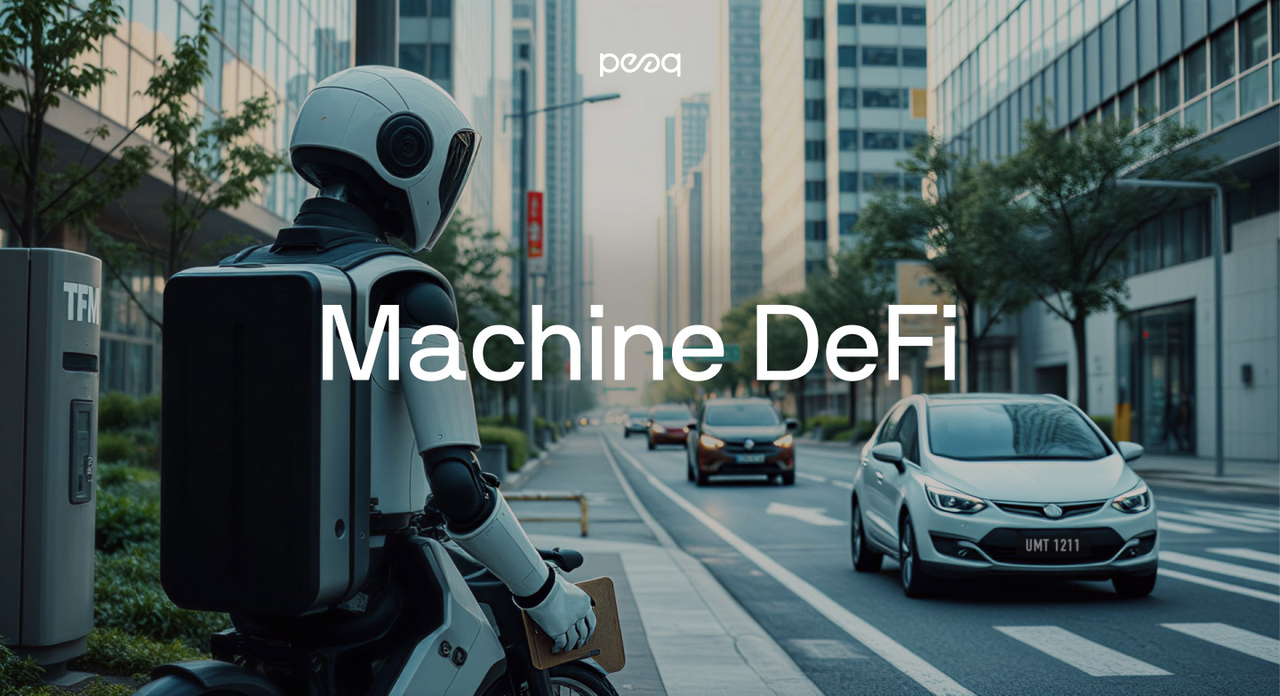
The machine economy refers to a network model in which machines, devices, and AI systems can autonomously participate in economic activity. In this system, machines are not only data collection tools. They can also have on-chain identities, digital wallets, and payment capabilities.
Traditional IoT networks usually only enable device connectivity and data transmission, but they lack a trusted mechanism for value exchange between devices. For example, a smart car cannot directly settle payments with a charging station, sensors struggle to sell real-time data independently, and robots cannot automatically receive task rewards. The machine economy uses blockchain to address these problems, allowing machines to interact with value much like on-chain accounts.
In peaq’s architecture, machines can do more than make payments. They can also participate in data transactions, automatically execute tasks, and receive on-chain rewards based on their contributions. This model allows devices to evolve from simple hardware endpoints into economic participants on-chain.
Why Do Machines Need On-Chain Identity?
In the machine economy, machine identity is the foundation that allows the entire system to function.
There are vast numbers of devices in the real world. Without a unified identity system, a network cannot verify whether devices are genuine or determine which data can be trusted. To solve this problem, peaq provides the peaq ID system, which is used to generate on-chain identities for machines.
After a device connects to the network, it receives a unique on-chain identifier. This allows the system to recognize the device, support data exchange, call smart contracts, and distribute rewards. For example, after an environmental monitoring device uploads air quality data, the network can confirm the source of the data and issue incentives based on the device’s contribution.
Machine identity is not only a tool for identifying devices. It also determines whether a device can truly participate in on-chain economic activity. Without trusted identity, the machine economy cannot form a stable coordination system.
How Does a Machine Connect to the peaq Network?
In peaq’s machine economy architecture, connecting a device to the network usually involves several steps.
First, the device needs to complete on-chain identity registration. The system generates a peaq ID for the device and links it to the corresponding wallet and access permissions. The device can then interact with the blockchain through nodes or APIs and begin uploading data or participating in network tasks.
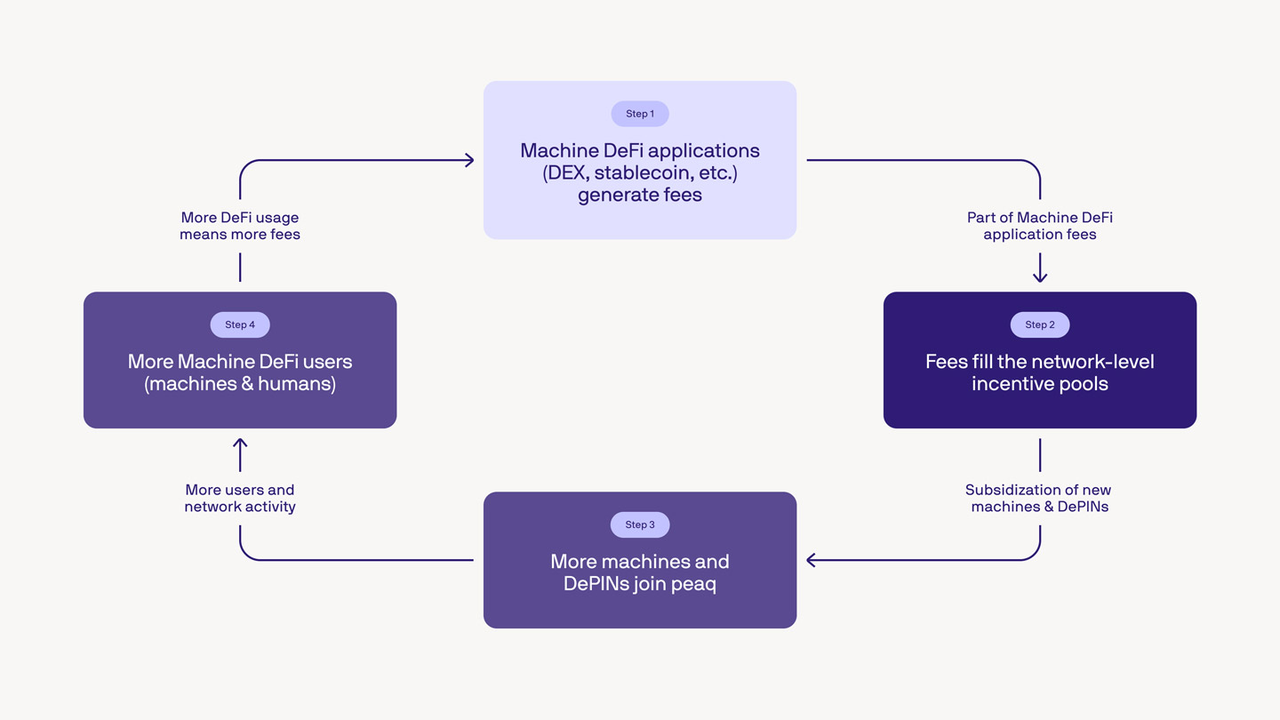
After the device submits data, smart contracts verify the data source and device identity. Once the system confirms that the data is valid, it records the device’s contribution and issues token incentives to the corresponding device. The device can then use those rewards to continue participating in network activities, creating an ongoing cycle.
Compared with traditional IoT networks, peaq’s core difference is that devices do not merely upload data. They also have real on-chain behavior and the ability to participate economically.
How Are Machine Payments Completed?
Machine payments are one of the core use cases of the machine economy.
In the traditional internet environment, most payments still require human action. For example, users need to manually pay parking fees, charging fees, or device usage costs. In peaq’s architecture, however, machines can automatically make payments through on-chain wallets.
Take an autonomous vehicle as an example. When the vehicle enters a charging station, the system can automatically identify the charging equipment, obtain pricing information, and call an on-chain payment protocol to complete settlement. After payment is completed, the relevant record is written to the blockchain, with no human intervention required.
This model means that machines in the future will not only exchange data with one another, but also complete economic coordination independently. For autonomous driving, robotics networks, and smart infrastructure, automated payment capability is an important foundation for large-scale machine collaboration.
How Is Machine Data Verified and Stored?
Another key issue in the machine economy is how to ensure device data can be trusted.
Devices in the real world may upload incorrect data, duplicate data, or even forged information, so the network needs a verification mechanism. To address this, peaq provides data verification and storage modules that check device identity, confirm data sources, and record historical data.
For example, in a mapping data network, multiple vehicles may upload road information at the same time. The system can use cross-verification across multiple devices to determine which data is more reliable and reduce the impact of false information on the network.
For DePIN networks, data authenticity is especially important. Real-world infrastructure often depends on large volumes of real-time data. If the data cannot be verified, the credibility and commercial value of the entire network will be affected.
As AI Agent technology develops, the machine economy is becoming more deeply integrated with artificial intelligence.
An AI Agent can be understood as a software system with autonomous decision-making capabilities, while the machine economy gives it on-chain execution and payment capabilities. For example, an AI system could automatically coordinate robots to complete delivery tasks, or choose energy resources and data sources based on real-time prices.
In this model, AI is no longer just an analytical tool. It can directly participate in real-world economic activity. In the future, AI Agents may manage vehicles, robots, and device networks at the same time, using blockchain to handle payments, resource allocation, and coordinated operations.
What Machine Economy Use Cases Exist on peaq?
At present, peaq’s ecosystem mainly focuses on real-world infrastructure and device collaboration networks.
In transportation, vehicles can upload mapping and road data and earn rewards based on their contributions. In environmental data networks, sensors can collect air, climate, and noise data in real time and sell it to data buyers. In robotics networks, robots can use smart contracts to automate task assignment and revenue settlement.
Decentralized energy networks are another important direction for peaq. Energy devices can automatically participate in on-chain energy trading, while AI data networks allow devices and AI Agents to jointly build distributed data markets.
What Challenges Does the Machine Economy Face?
Although the machine economy is considered to have long-term potential, the related ecosystem is still in its early stages.
First, large-scale device onboarding remains complex. Different devices use different protocols and hardware standards, making unified integration difficult. Second, verifying real-world data is costly. Blockchain can ensure that data cannot be tampered with after it is recorded, but it does not inherently guarantee that the data is true.
In addition, the machine economy involves issues such as privacy protection, regulation, network scalability, and device maintenance costs. For DePIN projects, how to build a long-term sustainable token incentive model remains an area the industry needs to keep exploring.
The machine economy therefore has broad application potential, but large-scale adoption will still take time.
Conclusion
As an important direction promoted by peaq, the machine economy aims to allow machines, devices, and AI Agents to participate autonomously in on-chain economic activity.
Through machine identity, on-chain payments, and data verification mechanisms, peaq provides decentralized collaboration capabilities for real-world infrastructure. This model not only expands the range of blockchain applications, but also pushes Web3 gradually beyond digital finance and toward real-world device networks.
FAQs
Why Does peaq Emphasize On-Chain Machine Coordination?
peaq aims to use blockchain to give real-world devices identity, payment, and coordination capabilities, creating an open machine economy network.
What Is peaq ID Used For?
peaq ID is used to generate on-chain identities for devices, allowing machines to participate in on-chain interactions, data verification, and reward distribution.
Why Do Machines Need On-Chain Payments?
On-chain payments allow devices to automatically purchase resources, settle fees, and coordinate economically without human operation.
What Is the Difference Between the Machine Economy and IoT?
IoT mainly solves the problem of device connectivity, while the machine economy places greater emphasis on value exchange and autonomous economic behavior between devices.
How Can AI Agents Participate in the Machine Economy?
AI Agents can use blockchain to coordinate devices, complete payments, and automatically execute real-world tasks.
What Are Some Typical Applications on peaq?
Current examples include mapping data networks, environmental monitoring networks, robotics coordination networks, and decentralized energy networks.







