Maximal extrahierbarer Wert (MEV) bezieht sich auf den wirtschaftlichen Wert, der von Block-Buildern durch die Manipulation der Transaktionsreihenfolge von Nutzern abgezogen wird. Die schädlichste Art von MEV sind Sandwich-Angriffe, bei denen ein Angreifer gleichzeitig einen Frontrun und einen Backrun bei den Swaps eines Opfers durchführt. Dadurch erhält das Opfer einen suboptimalen Ausführungskurs, während der Angreifer die Spanne einstreicht. Die meisten MEV-Aktivitäten finden auf Ethereum statt, da dort eine hohe Aktivität auf DEXs herrscht und es einen offenen Block-Building-Markt gibt, der den Orderflow für Searcher offenlegt.
In diesem Artikel liefert Cointelegraph Research Einblicke in Sandwiching-Aktivitäten von November 2024 bis Oktober 2025, basierend auf einem Datensatz von mehr als 95.000 ausschließlich von der Datenplattform EigenPhi bereitgestellten Sandwich-Angriffen.
Unsere Forschung zeigt, dass trotz des Rückgangs bei der Sandwich-Extraktion das Risiko für normale Nutzer weiterhin besteht. Während Angriffe zu jährlichen Verlusten von etwa $60 Millionen für Trader führen, erfassen Block-Builder den Großteil dieses Wertes durch Gasgebühren. Angreifer erzielen letztlich eine Gewinnmarge von nur 5 %. Fast 40 % aller Sandwiches treffen auf Niedrig-Volatilitäts-Pools, was darauf hindeutet, dass Trader auch bei normalerweise als sicher betrachteten Swaps erhebliche Slippage erleben können. Dennoch könnte der Rückgang der Extraktion auch darauf hindeuten, dass mehr Trader mittlerweile MEV-Schutz-Tools einsetzen.
Das Problem ist jedoch noch lange nicht gelöst, da es keinen einheitlichen Mechanismus gibt, um Nutzer-Swaps vor Sandwiching zu schützen. Es gibt eine wachsende Debatte über die Einführung eines nativen MEV-Schutzes auf Protokollebene von Ethereum. In unseren jüngsten Artikeln haben wir technische Innovationen untersucht, die darauf abzielen, nämlich Shutters Threshold Encryption und Batched Threshold Encryption.
Stand des Sandwichings auf Ethereum im Jahr 2025
Die Sandwich-Extraktion ging im Jahr 2025 stark zurück, obwohl die monatlichen DEX-Volumina von etwa $65 Milliarden im Q1 auf weit über $100 Milliarden im Q3 anstiegen. Die monatliche Extraktion durch Sandwich-Angriffe sank von fast $10 Millionen Ende 2024 auf etwa 2,5 Millionen US-Dollar im Oktober 2025.
Die Nettogewinne nach Gaskosten aus Sandwich-Aktivitäten lagen 2025 im Durchschnitt bei etwa 260.000 US-Dollar pro Monat. Diese Zahl wurde jedoch durch einen Ausreißer im Januar 2025 aufgebläht, als ein Sandwich-Angriff mehr als 800.000 US-Dollar Gewinn erzielte.
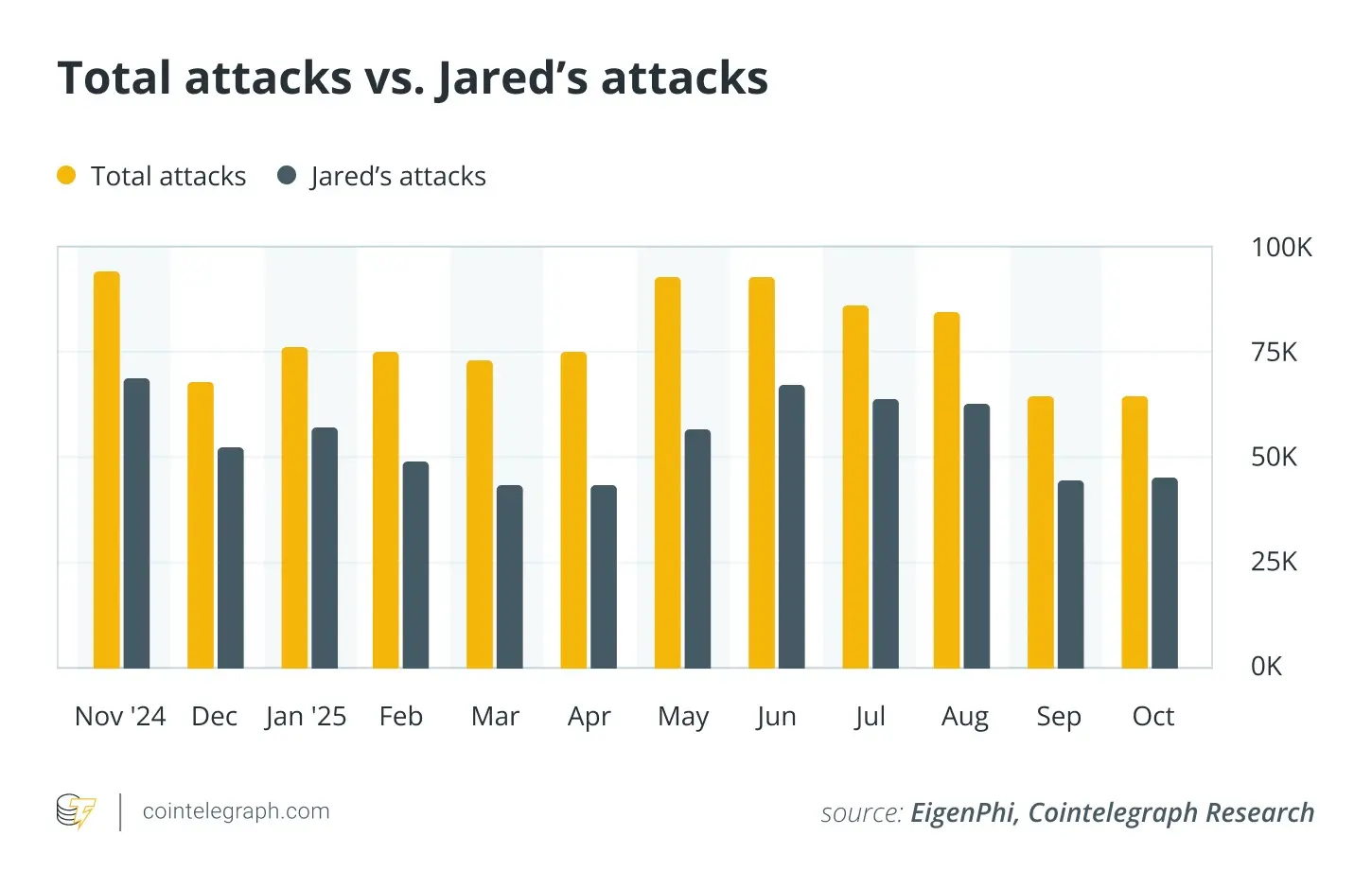
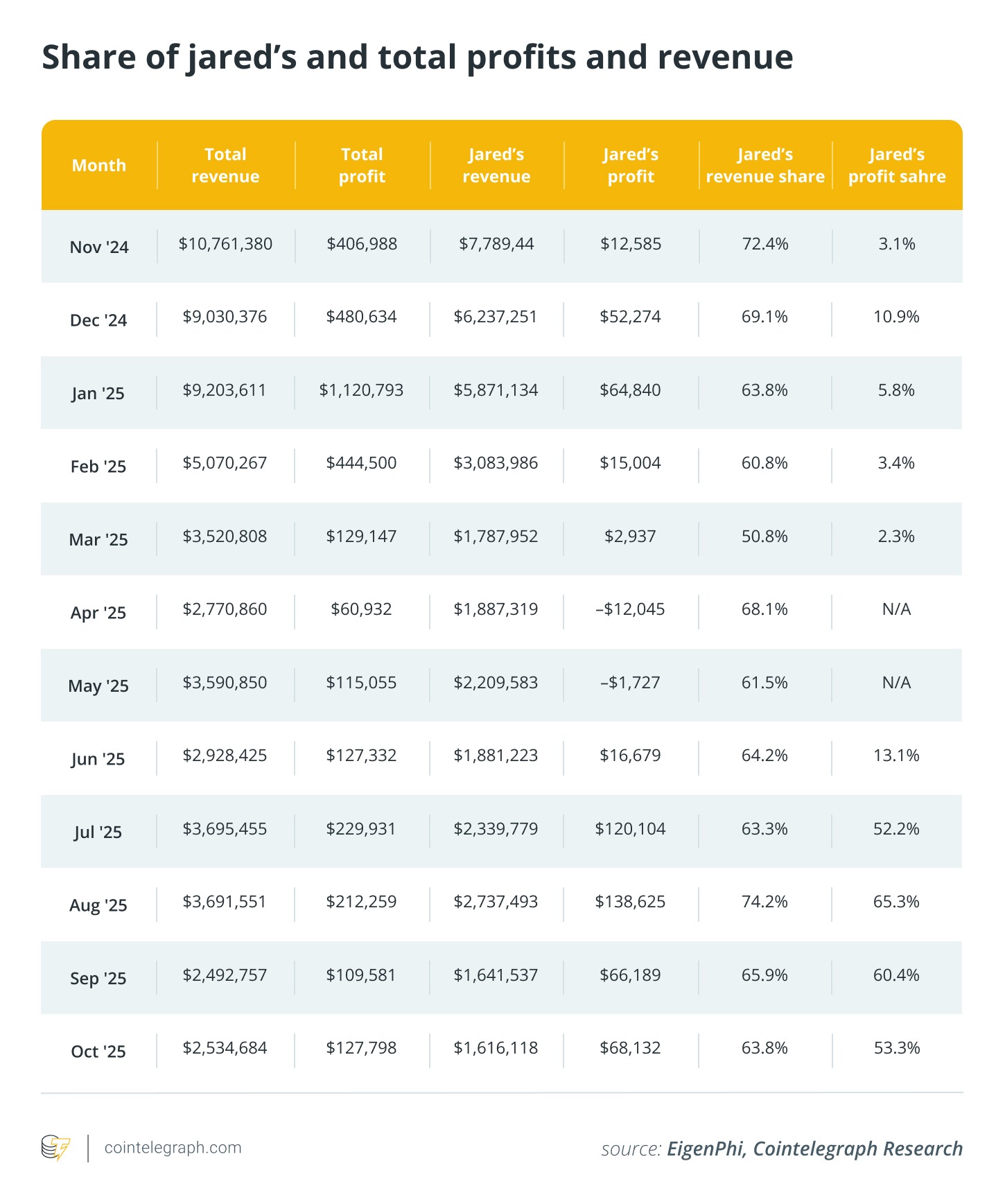
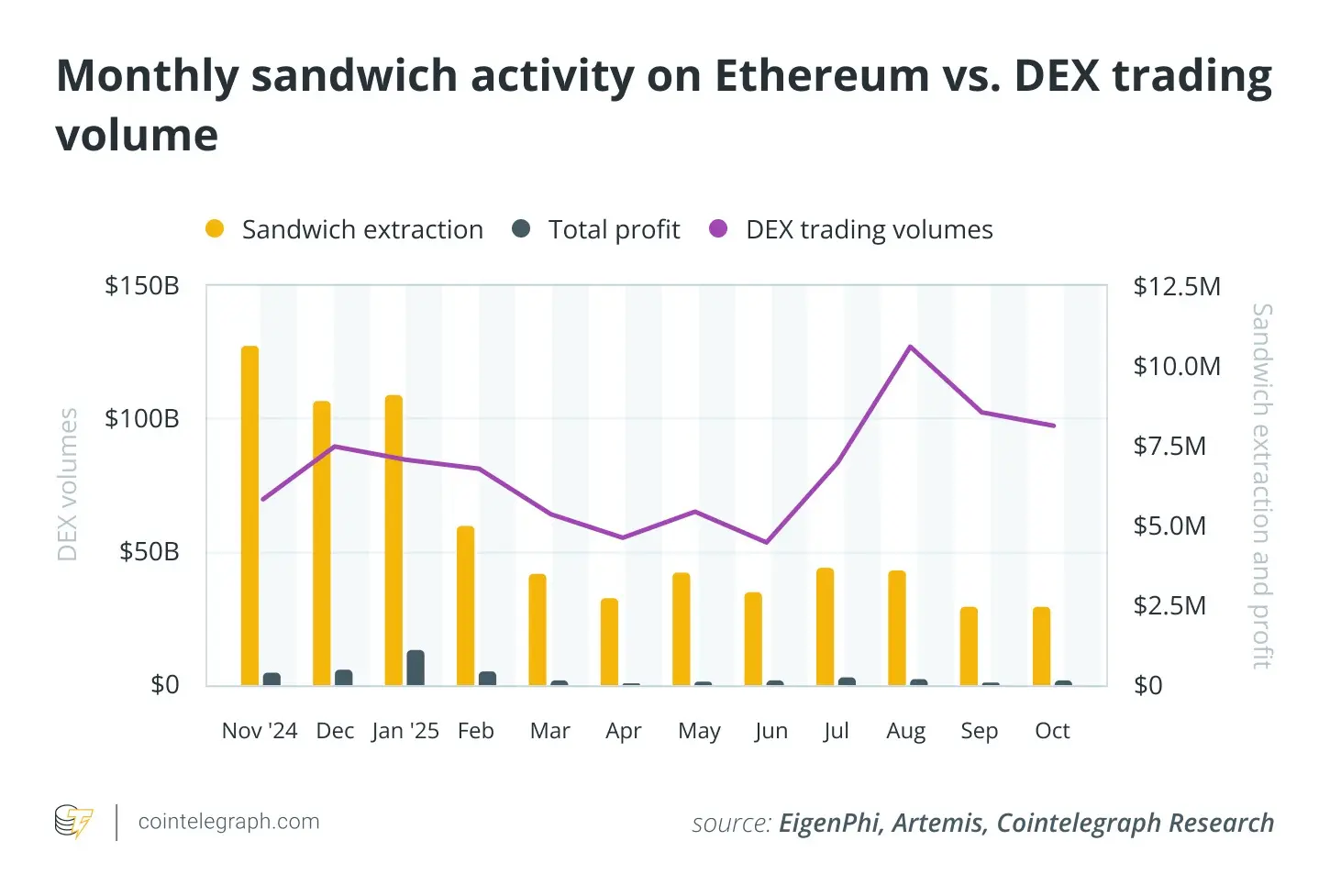 Dennoch blieb die Anzahl der Angriffe hoch und lag im gesamten Zeitraum konstant zwischen 60.000 und 90.000 pro Monat. Etwa 70 % aller Sandwich-Angriffe werden mit einer einzigen Entität namens Jared (jaredfromsubway.eth) in Verbindung gebracht, einem der bekanntesten MEV-Searcher. Jareds V2-Bot verwendet neuerdings eine ausgeklügelte Strategie, die in der Lage ist, bis zu vier Opfer gleichzeitig anzugreifen. Der Bot platziert manchmal eine Center-Transaktion zwischen Frontrun und Backrun, um die Swap-Raten für die folgenden Opfer noch weiter zu verschlechtern. Jared kann auch den Preis manipulieren, indem er dem Pool Liquidität hinzufügt oder entzieht.
 ## Welche Handelspaare werden von Sandwich-Angreifern ins Visier genommen?
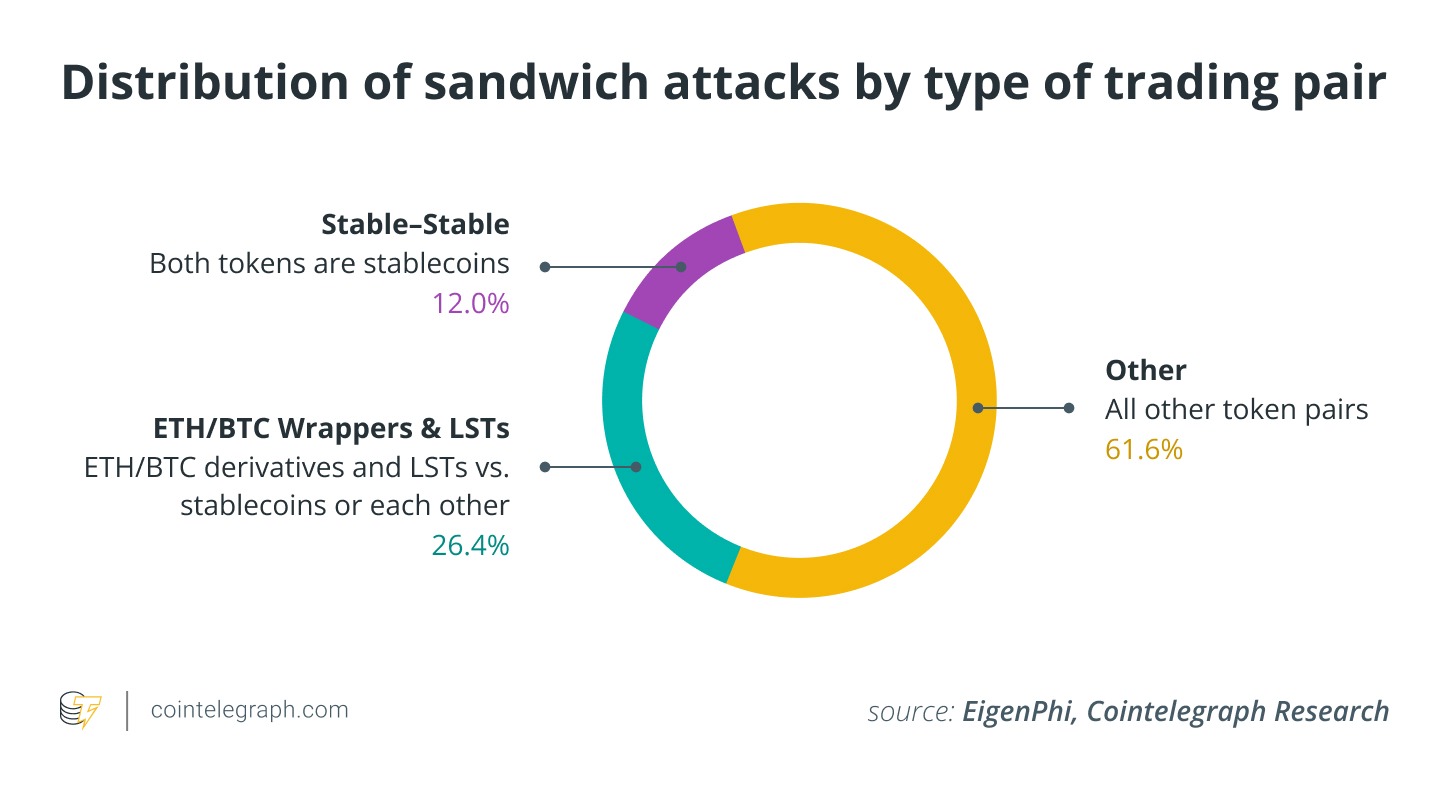
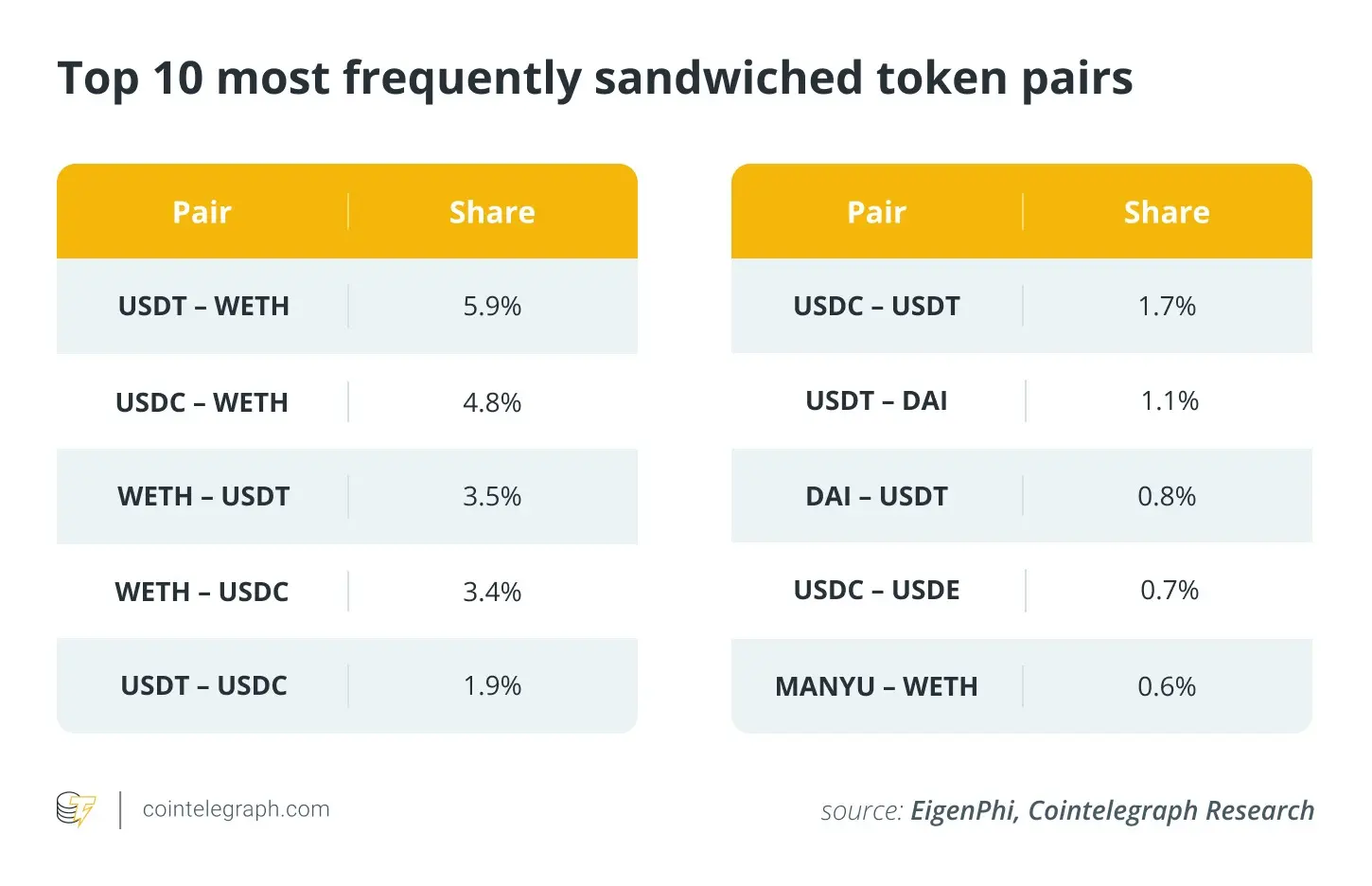
Daten zeigen, dass etwa 38 % der Angriffe auf Niedrig-Volatilitäts-Pools abzielen, zu denen Stablecoins, Wrapper und LSTs (Liquid Staking Tokens) von Ether und Bitcoin gehören. Bemerkenswert ist, dass etwa 12 % aller Sandwiches Stable Swaps treffen, was ein Slippage-Risiko an Stellen schafft, an denen es meist unerwartet und besonders schädlich ist. Der am aktivsten gehandelte Token außerhalb von Stablecoins und Wrapped Assets war der Memecoin MANYU gepaart mit WETH. Jared hat diesen Pool seit Juli kontinuierlich ins Visier genommen und fast 19.000 US-Dollar durch 65 Sandwich-Angriffe extrahiert.
 ## Da die Rentabilität schrumpft, ist die Quantität nun ein Schlüssel für MEV-Bots
Sandwich-Bots sind eine äußerst wettbewerbsintensive Nische, und immer weniger von ihnen sind noch aktiv, da die Gewinne zurückgehen. Im Oktober 2025 agierten insgesamt 515 verschiedene Bots auf Ethereum. Allerdings führen in einem typischen Monat nur etwas mehr als 100 verschiedene Sandwich-Bots Trades aus.
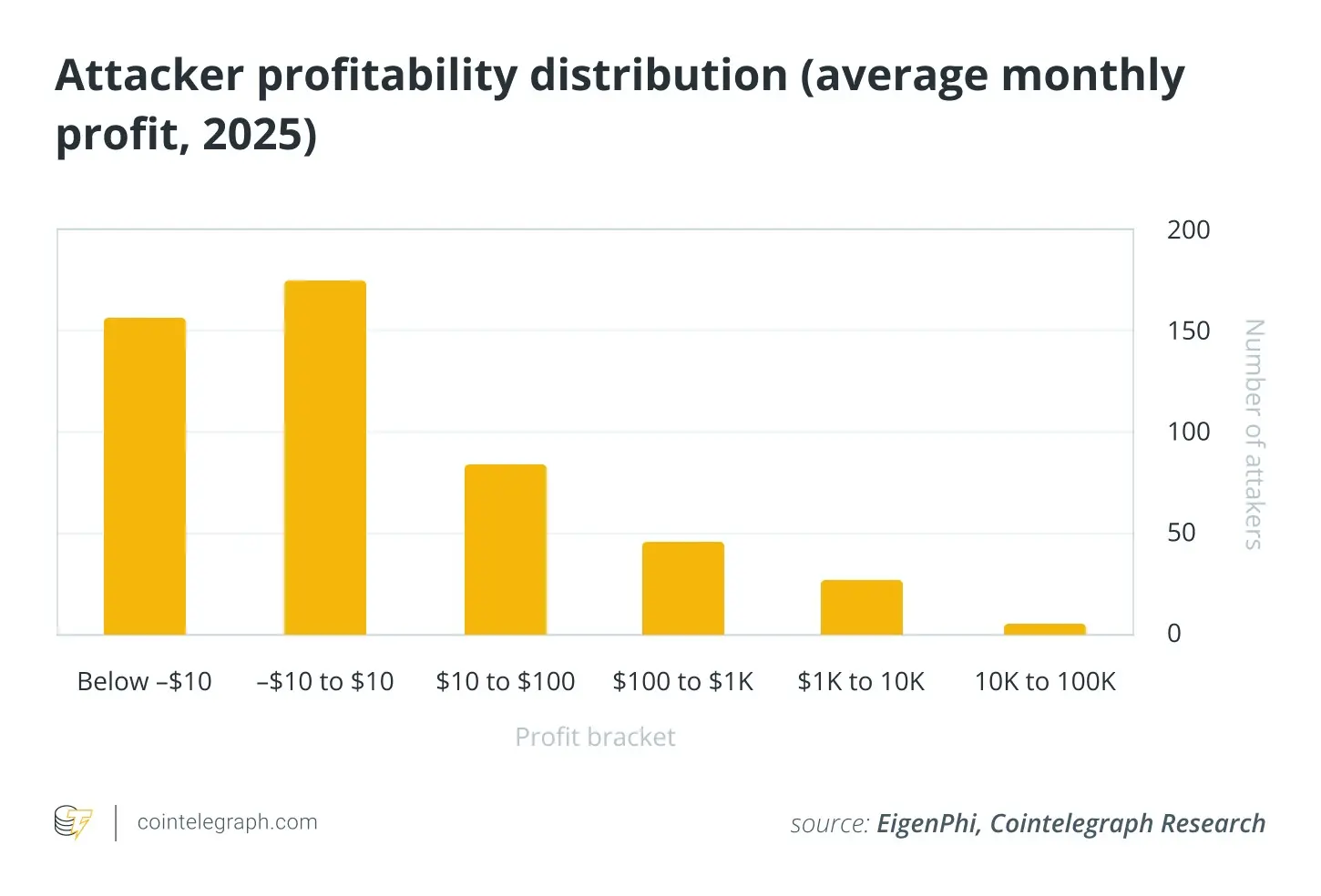
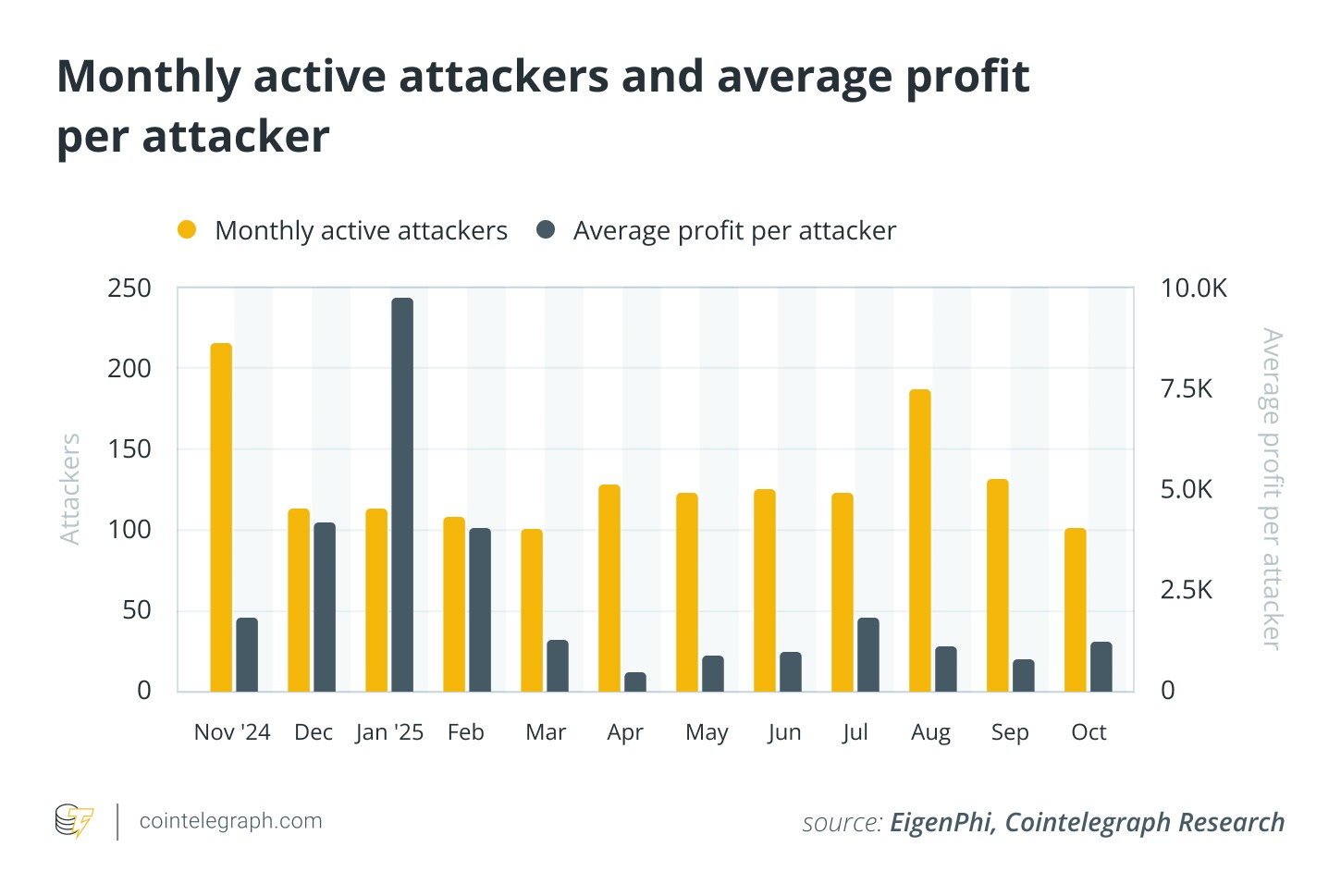 Der durchschnittliche Gewinn pro Sandwich-Angriff bleibt extrem niedrig bei etwas über 3 US-Dollar. Nur sechs Angreifer erzielten insgesamt mehr als 10.000 US-Dollar Gewinn, was zeigt, wie schmal der Weg zu konstanten Erträgen in dieser Nische geworden ist. Etwa ein Drittel aller aktiven Sandwich-Bots im Jahr 2025 bewegte sich in der Nähe der Gewinnschwelle (-$10 bis $10 ), während etwa 30 % Nettoverluste verzeichneten. Bots können oft Verluste erleiden, da sie mit hoher Konkurrenz um ein begrenztes Set an Möglichkeiten kämpfen, Slippage und Gaskosten falsch kalkulieren. Die Margen sind zu dünn, um solche Fehler auszugleichen.
 Die Daten zeigen, dass Jareds Strategie bisher am profitabelsten war. Sie setzt auf Quantität und nutzt die meisten verfügbaren Sandwich-Gelegenheiten, einschließlich kleinerer, die oft nur ein paar Cent Gewinn abwerfen. Während des Großteils von 2025 blieben die Gaskosten im Verhältnis zum Umsatz pro Angriff niedrig, was dieses Modell noch tragfähiger machte als zuvor. Dennoch macht auch Jared gelegentlich Verluste. Im April 2025 lag seine Gewinnmarge bei minus 20 %, was einem Verlust von etwa 12.000 US-Dollar entsprach.
 Dieser Artikel enthält keine Anlageberatung oder Empfehlungen. Jede Investition und jeder Handel birgt Risiken, und die Leser sollten ihre eigenen Nachforschungen anstellen, bevor sie Entscheidungen treffen. Dieser Artikel dient ausschließlich allgemeinen Informationszwecken und ist nicht als rechtliche, steuerliche, finanzielle, Anlage- oder sonstige Beratung gedacht und sollte auch nicht als solche ausgelegt werden. Die hierin geäußerten Ansichten, Gedanken und Meinungen sind ausschließlich die des Autors und spiegeln nicht notwendigerweise die Ansichten und Meinungen von Cointelegraph wider. Cointelegraph unterstützt weder den Inhalt dieses Artikels noch eines der hier genannten Produkte. Die Leser sollten eigene Nachforschungen anstellen, bevor sie Maßnahmen im Zusammenhang mit einem genannten Produkt oder Unternehmen ergreifen, und tragen die volle Verantwortung für ihre Entscheidungen. Obwohl wir uns bemühen, genaue und zeitnahe Informationen bereitzustellen, übernimmt Cointelegraph keine Garantie für die Richtigkeit, Vollständigkeit oder Zuverlässigkeit von Informationen in diesem Artikel. Dieser Artikel kann zukunftsgerichtete Aussagen enthalten, die Risiken und Unsicherheiten unterliegen. Cointelegraph haftet nicht für Verluste oder Schäden, die sich aus dem Vertrauen auf diese Informationen ergeben.
- #Ethereum
- #Stablecoin
- #Liquidität
- #DEX
- #Cointelegraph Research Artikel
![]()
Disclaimer: The information on this page may come from third parties and does not represent the views or opinions of Gate. The content displayed on this page is for reference only and does not constitute any financial, investment, or legal advice. Gate does not guarantee the accuracy or completeness of the information and shall not be liable for any losses arising from the use of this information. Virtual asset investments carry high risks and are subject to significant price volatility. You may lose all of your invested principal. Please fully understand the relevant risks and make prudent decisions based on your own financial situation and risk tolerance. For details, please refer to
Disclaimer.


