#24h加密合约清算破4亿美元 Blood-colored May! Bitcoin's $70k defense line is teetering, Ethereum's six core teams are collectively fleeing, and 150k people are wiped out overnight!
When the candlestick chart of the cryptocurrency market drew an almost vertical decline in the early morning of May 28, countless investors' screens lit up with blinding red.
Bitcoin lost the $73k threshold, plummeting 42% from last October's peak of $126k, equivalent to falling from Mount Everest to the mid-hills;
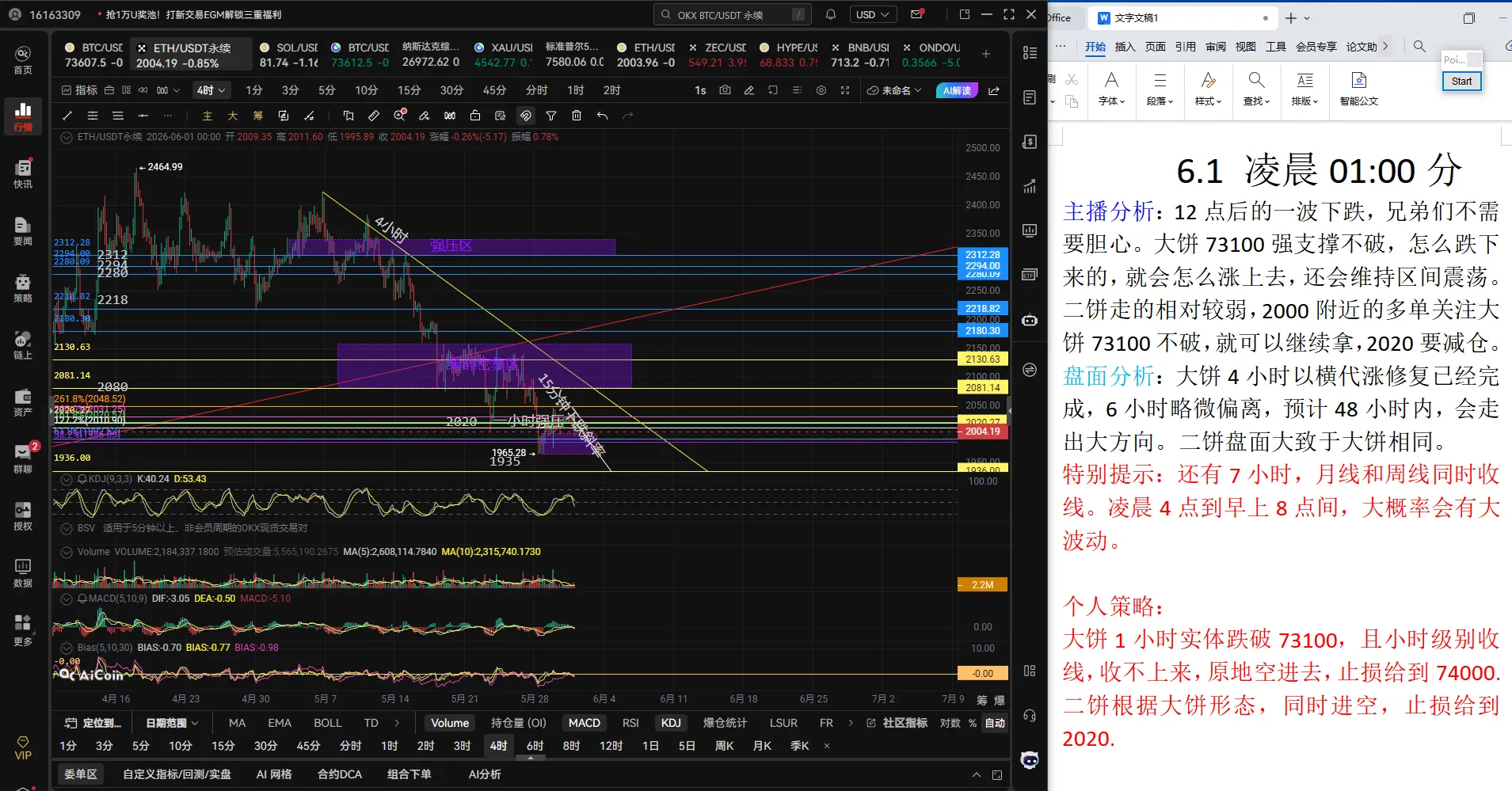
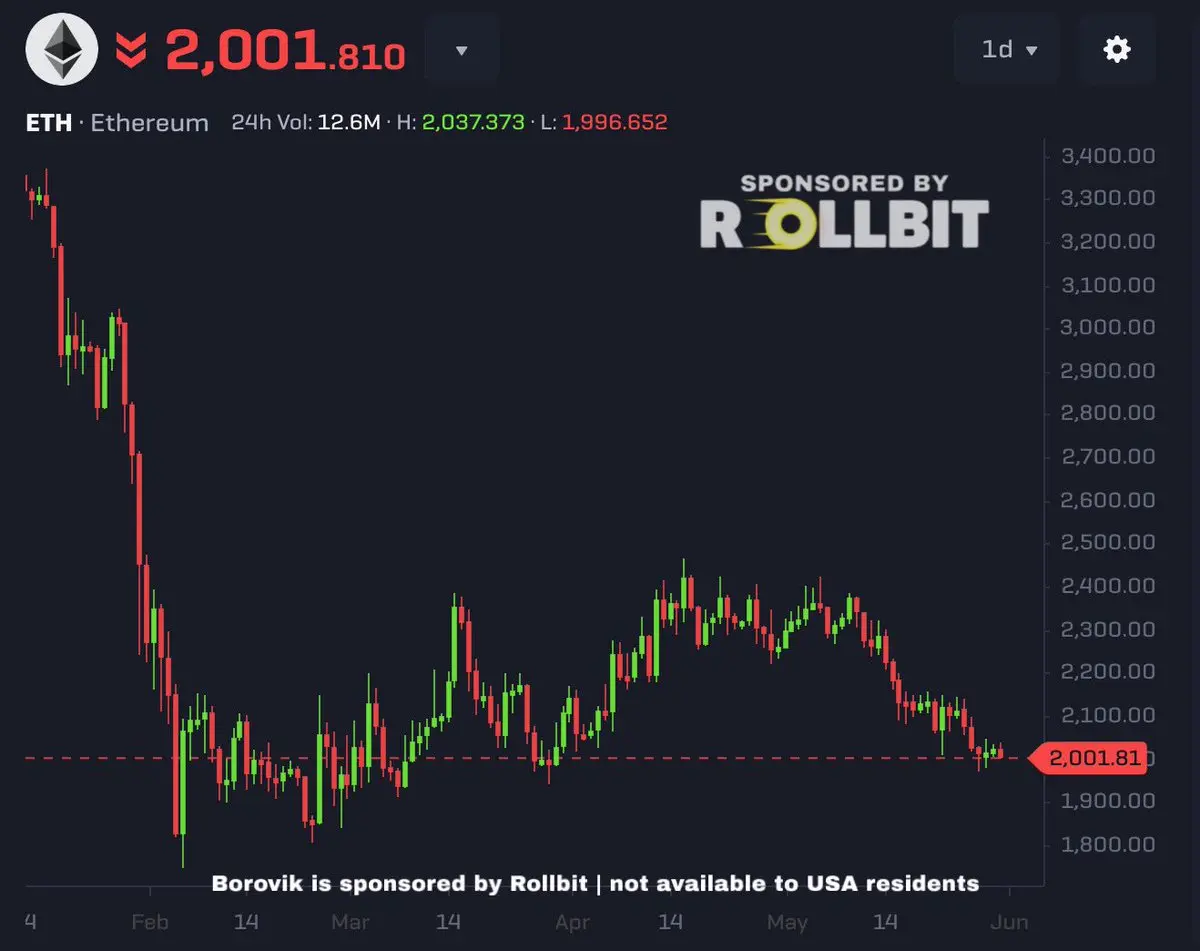
Ethereum even directly broke through the $2,000 psychological barrier, with a single-day drop of over 3%.
In just 24 hours, over 150k traders were liquidated, $735 million in wealth vanished into thin air, and the largest single liquidation order was worth as much as $15.34 million.
However, the sharp decline in prices is only the tip of the iceberg of this crisis.
More shocking than the digital price drop is the most severe talent earthquake in Ethereum Foundation since its founding—at least 8 core members have collectively left in less than four months, collapsing across management and technical backbone.
Meanwhile, Harvard University has completely liquidated its Ethereum ETF holdings, and Goldman Sachs has drastically reduced its Ethereum assets by 70%.
As the soul of technology and capital confidence exit simultaneously, the crypto industry stands at a crossroads that will determine its next decade, and an unprecedented deep reshuffle has already begun.
One Market Collapse: From "Digital Gold" to "Risk Asset" Identity Collapse
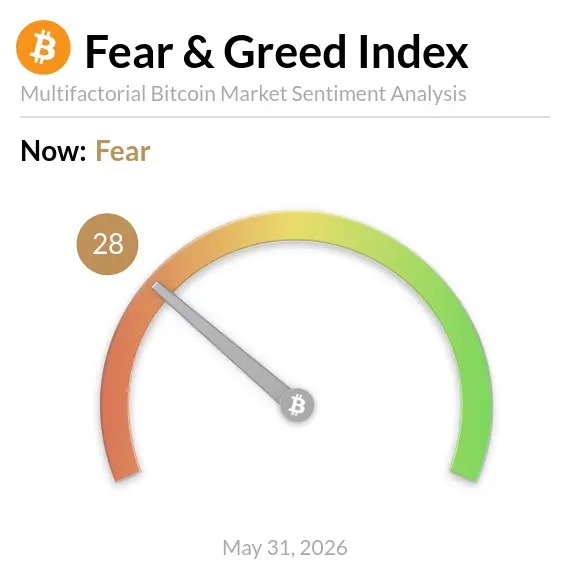
May 2026 is a thoroughly "Blood-colored May" for crypto investors.
From early May's $82.5k to the end-of-May $73k, Bitcoin evaporated nearly $1 trillion in market value within a month.
This is no longer a normal market correction but a panic sell-off triggered by a collapse of confidence.
Even more reflective of market panic are liquidation data.
According to CoinGlass statistics, on May 28, the total liquidation amount reached as high as $959 million, with over 90% being long liquidations.
This means the vast majority of investors betting on rising markets were ruthlessly wiped out.
In the high-leverage crypto market, every plunge is a "massacre," turning countless overnight from millionaires into heavily indebted gamblers.
Bitcoin was once touted as "Digital Gold," the best tool for hedging inflation and geopolitical risks.
However, its performance this year has completely shattered that myth.
While global stock markets hit new highs under expectations of Fed rate cuts, Bitcoin declined counter to the trend, with its correlation to the Nasdaq dropping from 0.8 last year to 0.3 now.
This indicates Bitcoin is no longer a safe-haven asset but has become a high-risk speculative tool.
When market risk appetite declines, funds first flee assets without actual cash flow support like Bitcoin.
Ethereum's situation is even more difficult.
As the world's second-largest cryptocurrency and leader in smart contract platforms, Ethereum once carried the dream of being "World Computer."
However, since this year, Ethereum's performance has lagged far behind Bitcoin, with the ETH/BTC rate dropping to 0.027, hitting a near two-year low.
This reflects growing market concerns about Ethereum's future development.
Two Ethereum's "Soul Departure": The Triple Collapse Behind the Talent Crisis
If price decline is an external injury, then the collective loss of core talent is an internal injury to Ethereum—fatal enough to threaten its survival.
For a public chain, core developers are its soul.
Without excellent developers, even the grandest blueprint is just a castle in the air.
The scale, level, and scope of the Ethereum Foundation's departure wave this time are unprecedented. Let's see who the key figures are:
Carl Beek: 7 years at Ethereum, core developer of the Beacon Chain, led Ethereum's historic shift from PoW to PoS, the "chief architect" of Ethereum's consensus mechanism
Tim Beiko: Protocol team leader, host of Ethereum core developer meetings, known as "Ethereum's chief steward"
Julian Ma: Lead of scalability logic, responsible for core proposals like EIP-7805, greatly optimized Layer 2 interaction efficiency
Josh Stark: Veteran of 7 years deep in Ethereum, involved in all major upgrades like The Merge and Dencun
Tomasz Stańczak: Newly appointed co-Executive Director, promoted key projects like privacy protection and decentralized AI
In just four months, 8 core personnel covering consensus mechanisms, client maintenance, protocol upgrades, scaling technology, and governance have left one after another, directly hollowing out more than half of the core R&D force of the Ethereum Foundation.
It's like a building's architects and engineers resign en masse; the remaining staff can barely keep the building from collapsing, let alone expand or renovate.
The direct consequence of talent loss is a comprehensive delay in technological upgrades. The planned June 2026 Glamsterdam upgrade has been postponed to Q3.
This upgrade was originally set to increase Ethereum's gas limit from 60 million to 200 million, significantly boosting network throughput—crucial for Ethereum to compete with emerging chains like Solana.
But due to the departure of core developers, progress has stalled severely, and the scope of the upgrade may even be reduced.
So why are these long-time core developers leaving collectively at this moment? A deeper analysis reveals three collapses behind it:
First Collapse: Salary System Collapse.
Ethereum Foundation has always prided itself on "idealism," with relatively conservative pay. Industry insiders say core developers earn about $150,000–$250k annually, while developers at new chains like Monad or Sui can earn 5–10 times more, plus substantial project tokens.
In a bull market, this salary gap was masked by Ethereum's halo;
but in a bear market, as token prices plummet, the illusion of idealism fades, and economic pressures become unbearable.
Second Collapse: Technical Roadmap Collapse.
This is the most fatal. In February, Ethereum co-founder Vitalik Buterin publicly stated "the previous scaling roadmap has failed," outright denying Ethereum's years-long Layer 2 scaling strategy.
Data shows active Layer 2 addresses have nearly halved from 58 million in May 2025 to 30 million now.
This means the billions of dollars and countless developer efforts poured into scaling solutions have proven to be failures.
For developers who believed in Layer 2, this is a huge blow. When their years of work are denied by their own leadership, leaving becomes inevitable.
Third Collapse: Governance Mechanism Collapse.
Ethereum Foundation has long been criticized for opaque governance and overly centralized decision-making.
Although Ethereum claims to be a decentralized network, most core decisions are made by Vitalik Buterin and a few Foundation members.
In recent years, the Foundation has tried to shift from an academic research organization to a more commercial ecosystem operator, but internal cultural conflicts and management chaos have intensified.
Many developers feel their opinions are ignored and are increasingly confused about the Foundation’s future direction.
As Wang Juan, director of the Blockchain Special Committee of Beijing Computer Society, said:
"In the crypto ecosystem, trust destroyers get rich and leave high-profile, while technically-oriented developers who value trust are increasingly disappointed—leaving is their way of expressing dissatisfaction."
Three Institutional "Foot-Dragging": The Complete Collapse of Capital Confidence
If the departure of core developers is a vote of no confidence from the tech community, then large-scale sell-offs by institutional investors are a vote of no confidence from the capital side. When both technology and capital abandon a project, its future becomes precarious.
The most symbolic event is Harvard University’s complete liquidation of its Ethereum ETF holdings. According to the latest 13F report, Harvard sold all approximately $86.8 million of its BlackRock Ethereum spot ETF in Q1 2026, incurring losses of over $30 million.
Harvard is one of the earliest institutions among U.S. university endowments to deeply participate in crypto ETFs; at its peak, its Bitcoin ETF holdings were valued at nearly $443 million.
As one of the smartest capital pools globally, Harvard’s liquidation sends a strong signal: institutional investors have lost confidence in Ethereum’s long-term prospects.
Following closely is Goldman Sachs.
In Q1 2026, Goldman reduced its Ethereum ETF holdings by about 70%, leaving only about $114 million. It also completely liquidated ETFs related to XRP and Solana.
In stark contrast, Goldman still holds about $700 million in Bitcoin ETFs.
This indicates Goldman is "streamlining" its crypto holdings, keeping only the most core and valuable—Bitcoin—while abandoning riskier altcoins.
Institutional selling is not accidental but based on a reassessment of crypto market fundamentals.
First, the Fed’s rate cut expectations have been delayed, liquidity has tightened, and high-risk assets are under pressure.
Second, the regulatory environment remains uncertain, with the U.S. SEC intensifying crackdowns on cryptocurrencies.
Most importantly, Ethereum’s technological edge is gradually eroding, as emerging chains like Solana and Monad surpass Ethereum in performance and user experience, attracting many developers and users.
Of course, there is also strategic divergence among institutions.
Abu Dhabi’s Mubadala increased its Bitcoin ETF holdings by about 15.9% in Q1, indicating that long-term, some sovereign funds still recognize Bitcoin as "Digital Gold."
But for Ethereum and other altcoins, institutional capital is retreating on a large scale, and this trend is unlikely to reverse in the short term.
Four Deep Reshuffle: The Era of "Big Escape" in Crypto Industry
Bitcoin’s $70k line is under threat, Ethereum’s core team is fleeing en masse, and institutions are dumping assets—these events mark a new phase: a deep reshuffle in the crypto industry.
The past bull market of "rising together" is gone forever; the future market will be a "stronger getting stronger, weaker getting weaker" survival race.
This reshuffle will first eliminate those without real applications—air coins and pyramid schemes relying solely on hype.
In bull markets, these projects attract investors through storytelling and market manipulation; but in bear markets, as rationality returns, projects without real value will ultimately zero out.
Statistics show that over 1,000 crypto projects died in 2025, and this number will significantly increase in 2026.
Second, the public chain sector will undergo a reshuffle.
Ethereum once dominated over 80% of the public chain market share, but recent years have seen the rise of chains like Solana, Sui, and Aptos, reducing Ethereum’s share to below 50%.
The talent crisis at Ethereum Foundation will accelerate this trend.
The future of the public chain market may form a "one super, many strong" pattern: Bitcoin as the dominant store of value as "Digital Gold," with Ethereum, Solana, Monad, and others competing fiercely in smart contracts.
Third, the business models of the crypto industry will undergo fundamental change.
In the past, projects mainly relied on issuing tokens for fundraising and attracting investors through hype.
This model is essentially a Ponzi scheme and unsustainable.
In the future, only projects with real applications and sustainable revenue will survive—such as providing blockchain solutions for traditional enterprises or creating user-valued products in gaming, social, and finance sectors.
For investors, this deep reshuffle is both a crisis and an opportunity.
The crisis: holding worthless tokens could lead to total loss;
The opportunity: after the market bubble deflates, truly valuable projects will appear at very low prices.
As Yu Jianing, co-chair of the Blockchain Committee of China’s Communications Industry Association, said:
"In a down cycle, survival is more important than returns."
Investors should reduce risk appetite, stay away from high leverage, and only invest in top projects with proven market validation, strong technology, and community support.
Five Future Outlook: After the Winter, Is It Spring or a Longer Winter?
In the face of current market crises, many ask:
Does the crypto industry still have a future?
Can Ethereum get through this difficult period?
Objectively, although Ethereum faces unprecedented challenges, it still has the strongest ecosystem and the broadest developer community.
The total value locked (TVL) on Ethereum remains over $50 billion, far exceeding all other chains combined.
Moreover, Vitalik Buterin has recognized the seriousness of the problem, announcing that the Ethereum Foundation will fully downsize, streamline functions, abandon its core ecosystem control, and focus all resources on key tracks.
If this "amputation for survival" strategy is executed properly, Ethereum might find its direction again.
But we must also soberly realize that the golden age of crypto is over.
The days of making big money just by launching a coin are gone forever.
The future of crypto will be more regulated, more rational, and more brutal.
Only projects and teams that can truly create value will survive fierce competition.
From a longer-term perspective, blockchain technology still holds enormous potential.
Its advantages in decentralization, transparency, and immutability give it broad application prospects in finance, supply chain, digital identity, and more.
But technological maturity takes time, and industry development will inevitably have ups and downs.
This deep reshuffle, though painful, is a necessary step toward maturity.
It will prune market bubbles, eliminate speculators, and leave only those with faith, technology, and patience.
The urgency of Bitcoin’s $70k defense line is not the end of crypto but a new beginning.
For the crypto industry, the hardest times are not over, but as long as genuine value remains, hope will never disappear.
What do you think about Ethereum’s talent crisis and the deep reshuffle in the crypto market? Do you believe Bitcoin can still hold the $70k psychological barrier? Feel free to share your views and judgments in the comments!







 LIVE
LIVE