Cross-chain bridging is a common on-ramp for L2 users entering the ecosystem: assets on the source chain must first be locked in the bridge contract, after which the target chain mints or mirrors an equivalent balance. The entire process relies on smart contracts and validator/relay mechanisms—not centralized custody promises. Manta Pacific, as a modular L2, aligns its bridge logic with Ethereum's mainnet settlement layer. Gas is paid in ETH on the source chain, and once funds arrive, Gas on the Pacific side is also denominated in ETH.
From an operational standpoint, bridging is a repeatable process—deposits and withdrawals can be executed at any time via the same path. The only variables are bridge direction, asset type, and network congestion. Mastering wallet setup, network configuration, and transaction hash verification forms the technical foundation for safe Pacific bridging.
What Do You Need to Prepare before Bridging?
Before bridging to Manta Pacific, users must satisfy three prerequisites: wallet, network, and Gas. The wallet must support EVM-compatible chain interactions, with MetaMask and similar browser extension wallets being common options. The wallet must hold the assets to be bridged as well as the source chain's Gas token—when bridging from Ethereum mainnet, Gas is paid in ETH.
Network configuration requires the wallet to switch between Ethereum mainnet (deposit source chain) and Manta Pacific mainnet (target chain). The Pacific mainnet must be manually added to the wallet, with chain identifiers including network name, RPC endpoint, Chain ID, and block explorer URL. Without the Pacific network configured, balances cannot be viewed on the target chain after bridging.
Gas preparation must account for both source and target chains: for deposits, L1 Gas is paid on Ethereum, and after arrival, Gas on the Pacific side is also paid in ETH. All three conditions—wallet compatibility, source chain assets, and target chain network setup—must be re-verified for each bridge. The wallet address remains the same across L1 and L2, with corresponding balances held on each chain.
Native Bridge or Third-Party Bridge? How to Choose?
Manta Pacific offers two bridge entry points: the Native Bridge and third-party bridges. The Native Bridge, provided by Manta Pacific at pacific-bridge.manta.network, is built on the OP Stack optimistic rollup architecture and provides a standard deposit/withdrawal path between Ethereum and Pacific. Third-party bridges include independent services like Symbiosis, Orbiter, and Meson, which are aggregated on the bridge page and each maintain their own liquidity pools and routing logic.
These two entry points differ in mechanism and use case. The Native Bridge follows the standard L1 lock → L2 mint flow: deposits typically complete within minutes, while withdrawals involve a challenge period and state proof process. Third-party bridges facilitate asset swaps through liquidity providers or cross-chain routing. Withdrawal times may be shorter than the Native Bridge's challenge period, but they introduce additional counterparty and contract risks. The entry point choice does not affect Gas denomination on Pacific; assets on L2 still use ETH for network fees.
| Bridge Entry |
Mechanism Type |
Typical Use Cases |
Key Considerations |
| Native Bridge |
OP Stack standard deposit/withdrawal |
ETH, officially supported ERC-20 |
Transparent security model; withdrawal includes challenge period |
| Third-Party Bridge |
Liquidity routing / cross-chain DEX |
Multi-source chain deposits, faster withdrawals |
Potentially faster; must assess bridge contract security |
Choosing a bridge entry point is a repeatable decision: the same user may switch between entry points per operation based on asset type, source chain, and timing needs, but each operation requires independent confirmation of the target chain and asset contract address.
How to Bridge Assets from Ethereum to Pacific?
Taking the Native Bridge deposit flow (Ethereum → Manta Pacific) as an example, initiating a cross-chain transfer follows a fixed five-step sequence. Step 1: The user visits the bridge interface and connects the wallet; the interface reads the wallet address and Ethereum mainnet balance. Step 2: The user selects Ethereum Mainnet as the source chain and Manta Pacific Mainnet as the target chain, specifying the asset type and amount. Step 3: The user signs a deposit transaction on Ethereum mainnet, locking the assets into the L1 bridge contract. Step 4: The bridge system detects the L1 lock event and mints or releases the corresponding mapped assets on Pacific. Step 5: The mapped assets are credited to the same wallet address on Pacific.
The internal state change can be summarized as "L1 lock → event confirmation → L2 mint." The withdrawal direction works in reverse: the user initiates a withdrawal on L2, locks assets, waits for the challenge period to expire, then claims on L1. Native Bridge withdrawals consist of two phases: verification and completion.
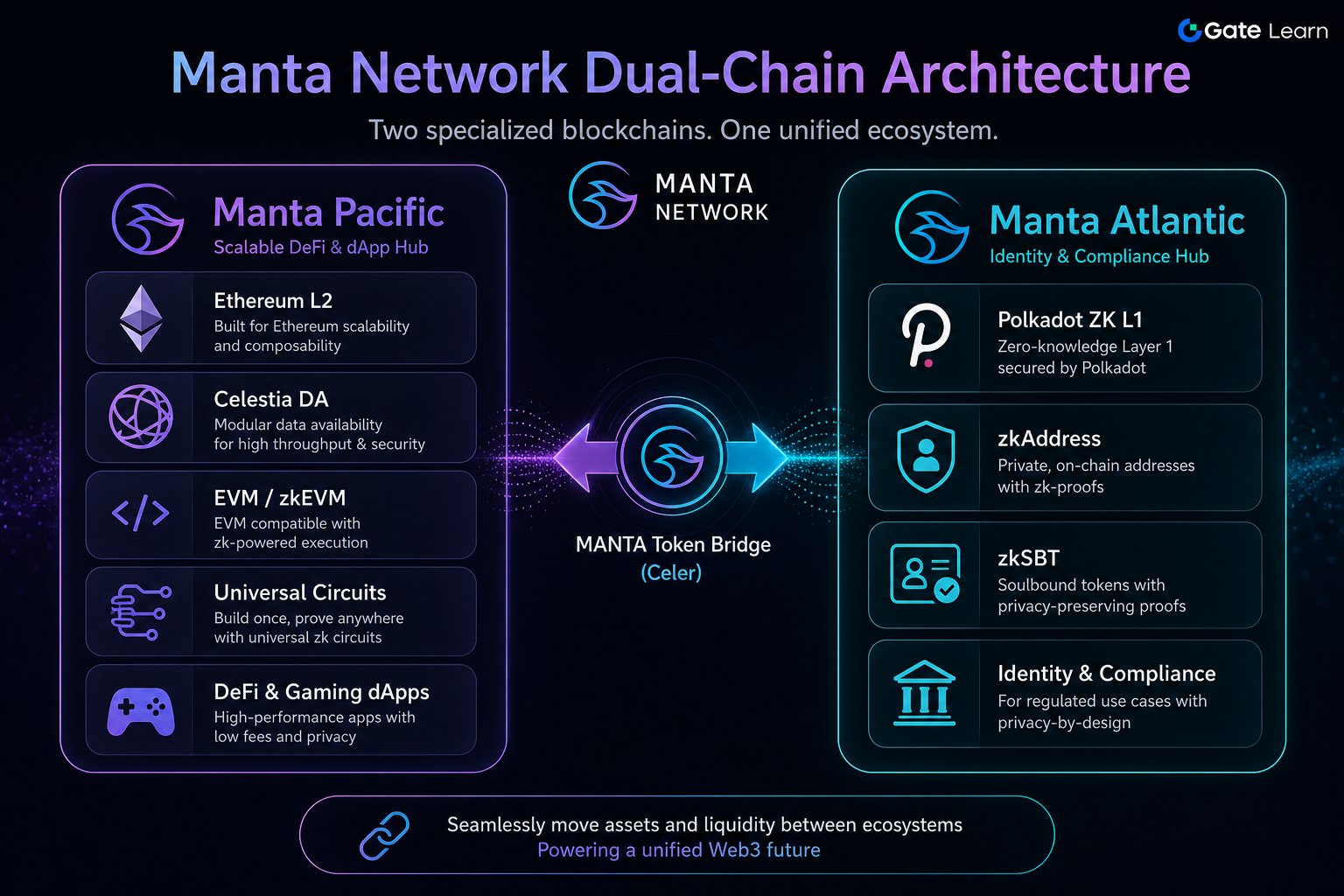 Figure 1. Six-step repeatable flow: wallet preparation, bridge selection, connection, L1 deposit signature, bridge processing, and Pacific balance verification.
For third-party bridges, assets pass through liquidity contracts and may not follow the Native Bridge's standard lock path. The user experience for both entry points is identical: Connect → Select chain → Enter amount → Sign transaction.
How to Confirm Arrival after Bridging?
After submitting a bridge transaction, arrival verification must confirm three aspects: transaction status, balance changes, and network switching. Transaction status can be viewed in the bridge interface's history tab. Deposits show "Processing" or "Completed"; withdrawals may display phases such as "Pending verification," "In Challenge Period," or "Claimable."
Balance verification requires switching the wallet to Manta Pacific mainnet. For ERC-20 bridges, the token's contract address must be manually added. The block explorer can be used to verify the mint transaction hash and receiving address.
| Verification Dimension |
Deposit Direction (L1→L2) |
Withdrawal Direction (L2→L1) |
| Interface Status |
Processing → Completed |
Pending verification → Challenge period → Claimable |
| Balance Check |
Switch to Pacific network |
Switch to Ethereum network |
| On-Chain Proof |
Pacific mint transaction hash |
L1 unlock transaction hash |
Arrival verification is a repeatable operation: these checks must be performed after each bridge, independent of prior history. If funds are delayed, users should trace the status on the corresponding block explorer using the transaction hash, rather than reinitiating a deposit.
How Does the Pacific Bridge Differ from the Atlantic Bridge?
Manta Pacific and Manta Atlantic belong to different underlying ecosystems, with distinct bridge paths, Gas tokens, and asset scopes. The Pacific bridge connects Ethereum mainnet with Pacific L2, pays L2 Gas in ETH, and supports cross-chain transfers of EVM assets like ETH and ERC-20. The Atlantic bridge connects the Polkadot ecosystem with Atlantic ZK L1, charges network fees in MANTA, and primarily uses the Celer bridge to lock and unlock MANTA tokens across chains.
The Pacific bridge is designed for EVM application-layer asset deposits, while Atlantic is for MANTA cross-chain transfers and identity credential layer operations. The two bridge paths are independent and cannot be mixed.
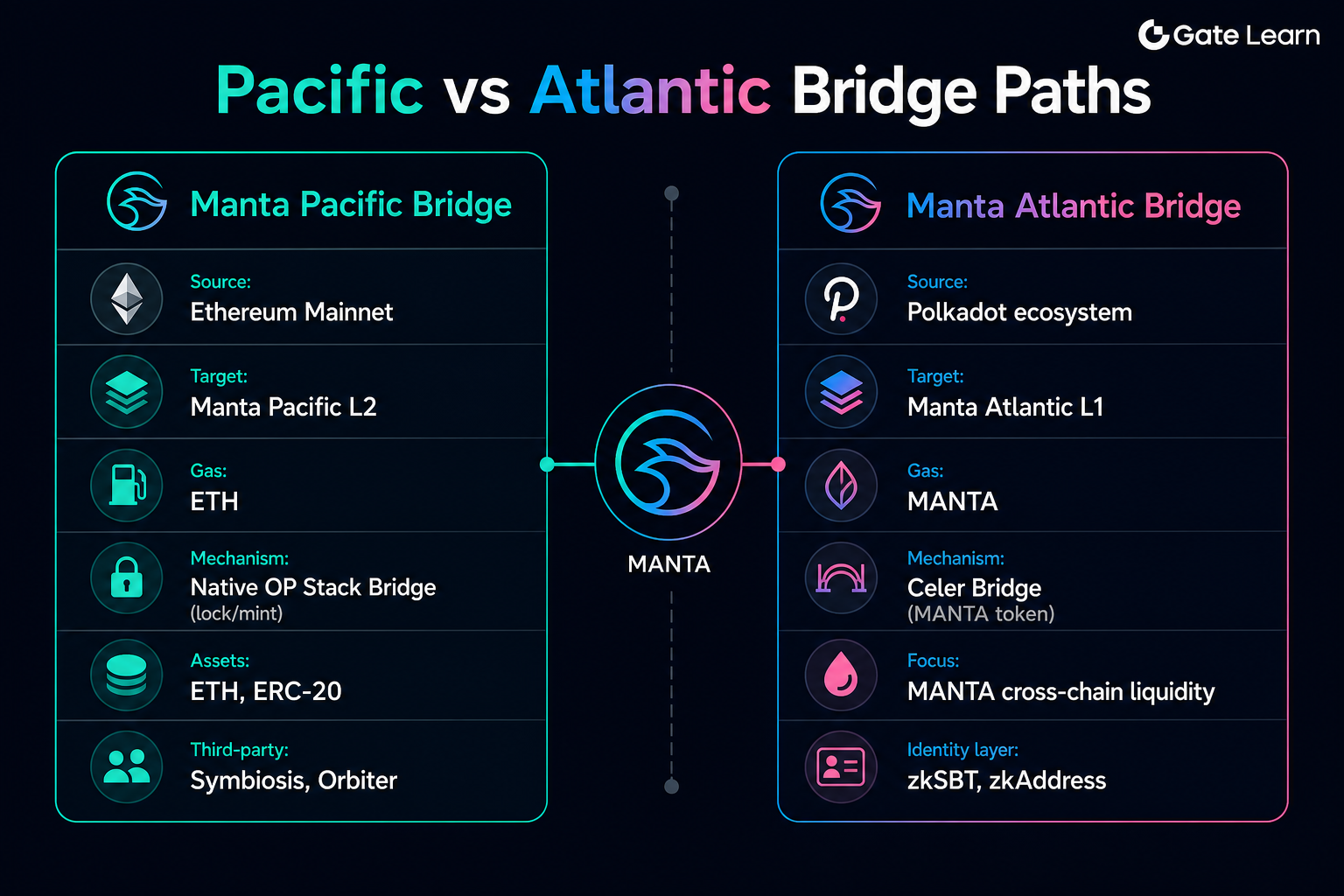 Figure 2. Side-by-side comparison of Pacific (Ethereum L2) and Atlantic (Polkadot L1) bridge mechanisms, gas tokens, and asset scope.
The table below compares the two bridges across five dimensions:
| Comparison Dimension |
Manta Pacific Bridge |
Manta Atlantic Bridge |
| Source Chain Ecosystem |
Ethereum |
Polkadot ecosystem |
| Target Chain Type |
Modular L2 (OP Stack) |
ZK Layer 1 |
| L2/L1 Gas |
ETH |
MANTA |
| Primary Bridged Assets |
ETH, ERC-20 |
MANTA token (primarily) |
| Core Bridge Protocol |
Native OP Stack Bridge + Third-Party |
Celer Bridge |
Understanding these differences prevents misapplying Pacific deposit/withdrawal processes to Atlantic, and vice versa. The two chains are connected through the MANTA token economy, but their asset bridge paths are mechanically independent.
What Risks Should Be Considered when Bridging?
Bridge operations involve three risk boundaries: smart contract risk, cross-chain state risk, and liquidity risk. Smart contract risk: the Native Bridge depends on L1/L2 bridge contracts and the Rollup state proof mechanism. Vulnerabilities or state root disputes could lead to asset locking or delayed unlocking. Third-party bridges add extra contract layers and liquidity provider counterparties. Users must always verify the contract addresses displayed on the bridge interface and confirm the asset types to be received.
Cross-chain state risk is most evident in the withdrawal challenge period. Optimistic rollups allow state objections within the challenge period; fast finality via restaking compresses the finality window, representing a structural trade-off between security and efficiency. Third-party bridge risks include insufficient liquidity, counterfeit contracts, and fake interfaces. Users must always verify operation targets using publicly disclosed contract addresses.
Summary
Bridging to Manta Pacific is a repeatable cross-chain operation sequence comprising four core stages: prerequisite verification, bridge entry selection, cross-chain transaction initiation, and Pacific arrival confirmation. The Native Bridge follows the OP Stack standard deposit/withdrawal path, while third-party bridges offer alternative liquidity routes. The Pacific bridge uses ETH for Gas and handles EVM assets, operating independently from the Atlantic-side MANTA bridge in terms of mechanism. Understanding the state transitions—L1 lock, L2 mint, and challenge period—enables users to independently complete bridging and verification without relying on outcome predictions.
FAQ
How do I bridge ETH to Manta Pacific?
Connect your wallet on the bridge interface, select Ethereum Mainnet as the source chain and Manta Pacific Mainnet as the target chain, enter the ETH amount, and sign a deposit transaction on Ethereum mainnet. The bridge system detects the L1 lock and mints the corresponding ETH on Pacific to your wallet address. After completion, switch your wallet network to Manta Pacific to verify the balance.
How long does a Manta Pacific Native Bridge deposit take?
Deposits (Ethereum → Pacific) typically complete L2 mint within minutes after L1 transaction confirmation. Actual time depends on Ethereum network confirmation speed and bridge system processing queues. This is not a fixed commitment—users should track status via bridge history and block explorers.
Why is there a waiting period for withdrawing from Manta Pacific back to Ethereum?
Manta Pacific is built on the optimistic rollup architecture. Withdrawals require a challenge period after locking assets on L2, during which validators can dispute incorrect state roots. After the challenge period expires, users must complete the verification and claim phases on the bridge interface to unlock assets on L1. This is a Rollup security mechanism, not a bridge failure.
Can the Pacific bridge and Atlantic bridge be used interchangeably?
No. The Pacific bridge connects Ethereum to Pacific L2 and handles EVM assets like ETH and ERC-20. The Atlantic bridge connects the Polkadot ecosystem to Atlantic L1 and uses the Celer bridge for MANTA cross-chain transfers. The two chains have different bridge paths, Gas tokens, and asset scopes—they must be operated separately.
What are the mechanism differences between third-party bridges and the Native Bridge?
The Native Bridge follows the OP Stack standard L1 lock → L2 mint path, with its security model tied to the Rollup settlement layer. Third-party bridges route assets through independent liquidity contracts or cross-chain routing, potentially reducing wait times but introducing additional contract and counterparty risks. Both entry points require users to independently confirm the target chain and asset contract address.
How do I use assets on Pacific after bridging?
After confirming arrival, switch your wallet to Manta Pacific mainnet to view the balance. Gas on Pacific is paid in ETH. Use the arrived assets to interact with Pacific ecosystem dApps. If you bridged ERC-20 tokens, manually add the corresponding token contract address in your wallet to display the balance.







