PSK (319660) is a South Korea-based semiconductor equipment manufacturer founded in 1990, specializing in the R&D and production of wafer processing equipment. Its core products include Dry Strip (dry stripping equipment), Dry Cleaning (wafer cleaning equipment), Selective Material Removal equipment, and advanced packaging-related tools, which are widely used across both front-end and back-end semiconductor manufacturing.
Within the global semiconductor supply chain, equipment sits at the most upstream layer, forming the critical infrastructure that determines chip manufacturing efficiency and yield. The "semiconductor equipment track" where PSK operates is defined by high technical barriers and strong cyclicality, with industry growth closely tied to wafer fab capital expenditure (CapEx).
As AI computing demand explodes, the global need for advanced-node chips and high-density packaging continues to rise, pushing wafer fab equipment investment into a new expansion cycle. PSK is a classic midstream equipment player benefiting from this structural trend.
PSK Company Profile: A Key Semiconductor Equipment Supplier in South Korea
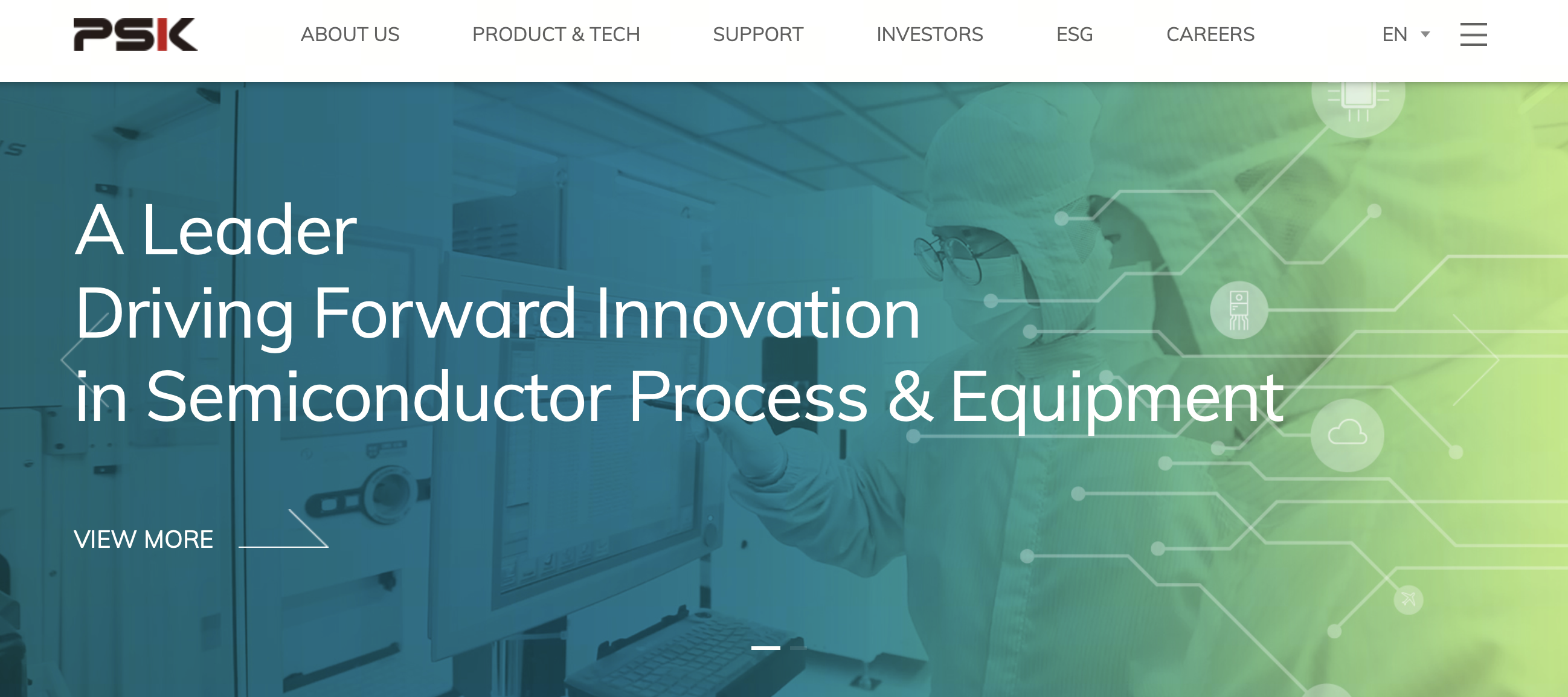
PSK is listed on South Korea's KOSDAQ market (ticker: 319660) under the semiconductor equipment sector. Its operations span multiple critical stages of wafer processing equipment, with customers that include major global wafer fabs and semiconductor manufacturers.
From an industry positioning standpoint, PSK does not produce chips directly; instead, it provides the "tools to make chips." This model means its revenue structure is highly synchronized with the global semiconductor investment cycle.
Market data shows the company's revenue and net profit have trended upward in recent years, though it remains significantly affected by industry cycle fluctuations.
Structural Opportunities in the Semiconductor Equipment Industry
The semiconductor equipment industry is characterized by a classic "three-high" profile:
- High technical barriers
- High capital intensity
- High cyclical volatility
In the AI-driven wave of semiconductor expansion, equipment companies broadly benefit from wafer fab capacity expansion. Advanced packaging (3D IC), high-performance computing (HPC), and AI GPU production all require more sophisticated wafer processing equipment.
The niche PSK occupies—Dry Strip and wafer cleaning—is a critical front-end process with a direct impact on chip yield, ensuring a stable foundation of technical demand.
Analysis of PSK's Core Business and Technical Moat
PSK's competitive edge rests on three main pillars:
Diverse Process Equipment Capability
The company covers multiple key process nodes—Dry Strip, Etch Back, Wafer Edge Clean, and others—with a strong product portfolio.
Advanced Packaging Equipment Positioning
As AI chips shift toward Chiplet architectures and 3D IC packaging demand rises, PSK's relevant equipment holds significant growth potential.
Global Customer Base
PSK's equipment has been adopted by multiple global semiconductor manufacturers, giving it a diversified international revenue structure.
Together, these factors form the company's technological moat in the semiconductor equipment space.
How Gate's Korean Stock Trading Covers PSK
With the launch of Gate's Korean stock trading feature, PSK is now included in the KRX/KOSDAQ tradable asset universe.
Under the platform's framework:
- Direct trading of KOSDAQ-listed stocks is supported
- Coverage spans core industries including semiconductors, AI, and consumer electronics
- USDT serves as the unified pricing and settlement asset
- A single unified stock account covers U.S., Hong Kong, and Korean stocks
- Features include position management, PnL statistics, and fund records
This structure allows investors to participate in semiconductor equipment investments like PSK without needing a traditional Korean brokerage account.
Complete Process for Buying PSK Stock on Gate
Here's the step-by-step process for trading PSK on Gate:
Step 1: Account Registration & KYC Verification
Complete registration and pass identity verification to unlock stock trading permissions.
Step 2: Transfer Funds to Your Stock Account
Transfer USDT from your spot account to the stock account for Korean stock settlement.
Step 3: Enter the Korean Stock Market Module
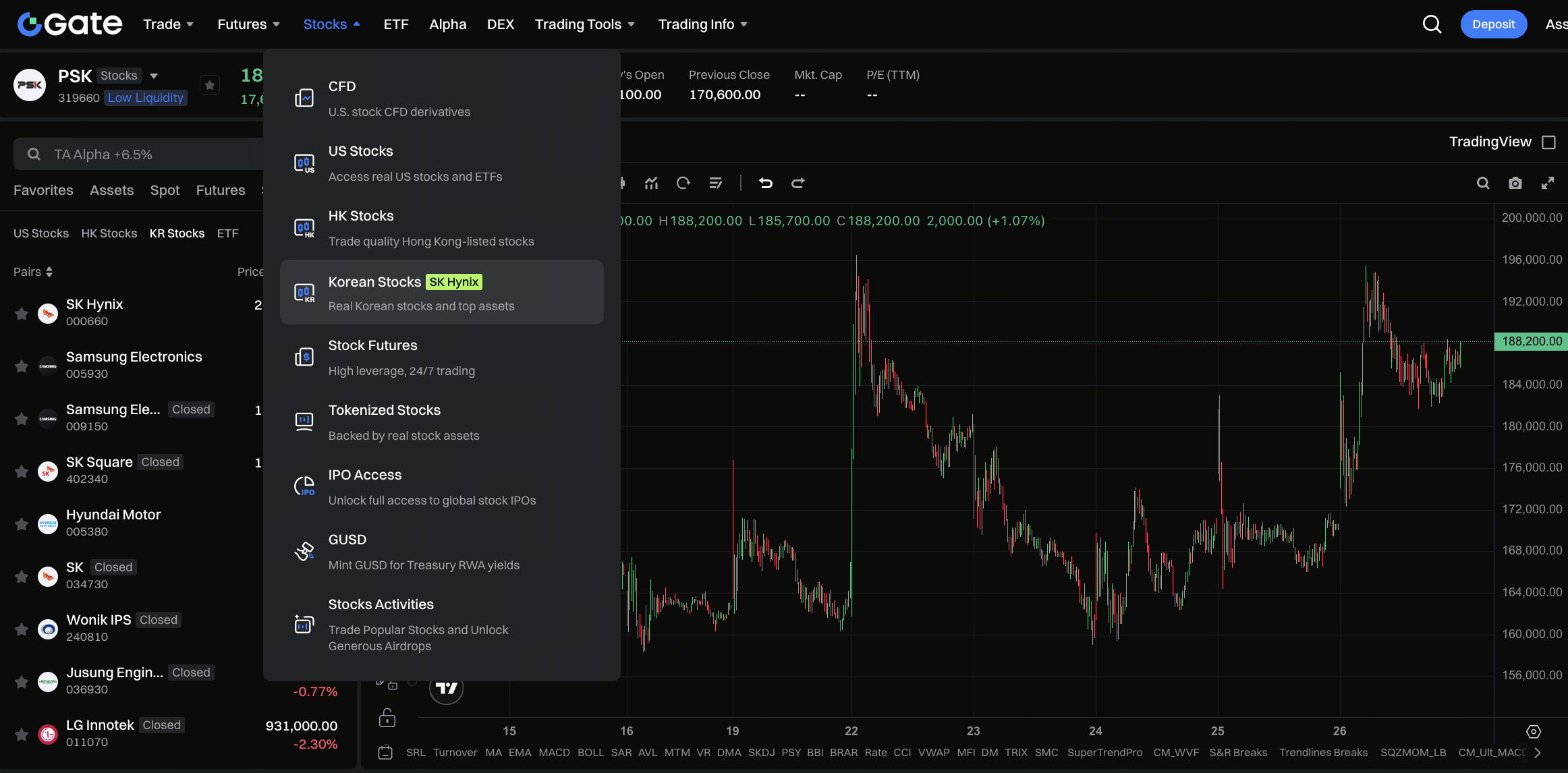 Search for PSK or ticker 319660 in the KOSDAQ section.
Step 4: Execute Trade Orders
Place a market order or limit order to buy. Once matched, a position record is generated.
Step 5: Unified Asset Management
The PSK position is displayed alongside U.S. and Hong Kong stock holdings, enabling cross-market portfolio management.
PSK's Growth Logic and Industry Drivers
PSK's long-term growth is driven by three key factors:
AI-Driven Wafer Fab Expansion Cycle: Rising demand for AI chips boosts global wafer fab CapEx, directly driving equipment demand.
Advanced Packaging Technology Upgrades: The proliferation of 3D IC and Chiplet architectures sustains growth in back-end wafer equipment demand.
Semiconductor Localization & Supply Chain Restructuring: The global trend toward supply chain diversification increases equipment vendors' need for a diversified customer base.
Together, these drivers form the foundation for PSK's medium-to-long-term growth.
Investment Risks and Cycle Volatility
PSK's investment risks center on the following:
- The semiconductor industry is highly cyclical and prone to sharp volatility
- Changes in customer capital expenditure directly impact orders
- Rapid technological iteration creates significant competitive pressure
- Exchange rates and USDT pricing may introduce additional volatility
- Global macroeconomic conditions affect the pace of equipment investment
For these reasons, PSK is better suited for cyclical allocation rather than as a stable income-generating asset.
PSK from a Global Asset Allocation Perspective
Within a global asset allocation framework, PSK is a classic "semiconductor upstream equipment asset." Through Gate's Korean stock trading system, investors can combine PSK with U.S. semiconductor equipment companies (e.g., Applied Materials, LAM Research) to build a global semiconductor supply chain portfolio.
This cross-market approach helps diversify single-market risk while capturing the global opportunities presented by the AI and chip cycle.
FAQs
Q1: Does PSK manufacture chips?
No. PSK is a semiconductor equipment company that produces wafer processing and cleaning tools.
Q2: Do I need a Korean brokerage account to trade PSK on Gate?
No. Users can directly trade KOSDAQ stocks through Gate's Korean stock trading module.
Q3: Which industry does PSK belong to?
It belongs to South Korea's semiconductor equipment industry, serving the wafer manufacturing supply chain.
Q4: What currency is used for Gate's Korean stock trading?
USDT is used as the unified pricing and settlement asset.
Q5: What are the main risks of investing in PSK?
The primary risks stem from semiconductor cycle volatility, changes in customer CapEx, and industry competition.
Q6: Is PSK suitable for long-term investment?
It is more appropriate for cyclical allocation, requiring assessment based on the semiconductor industry cycle.







