In traditional AI services, users typically pay model invocation fees via fiat currency or platform accounts. In decentralized AI networks, however, the native token consolidates resource settlement, node incentives, and governance mechanisms. Nesa chose NES to build its network economic model precisely to enable continuous and efficient flow of AI inference resources within an open network.
Together with key capabilities like the decentralized AI network, AI inference pipeline, and network governance mechanisms, NES forms the essential foundation for protocol operation, allowing resource allocation and value settlement to occur without a central coordinator.
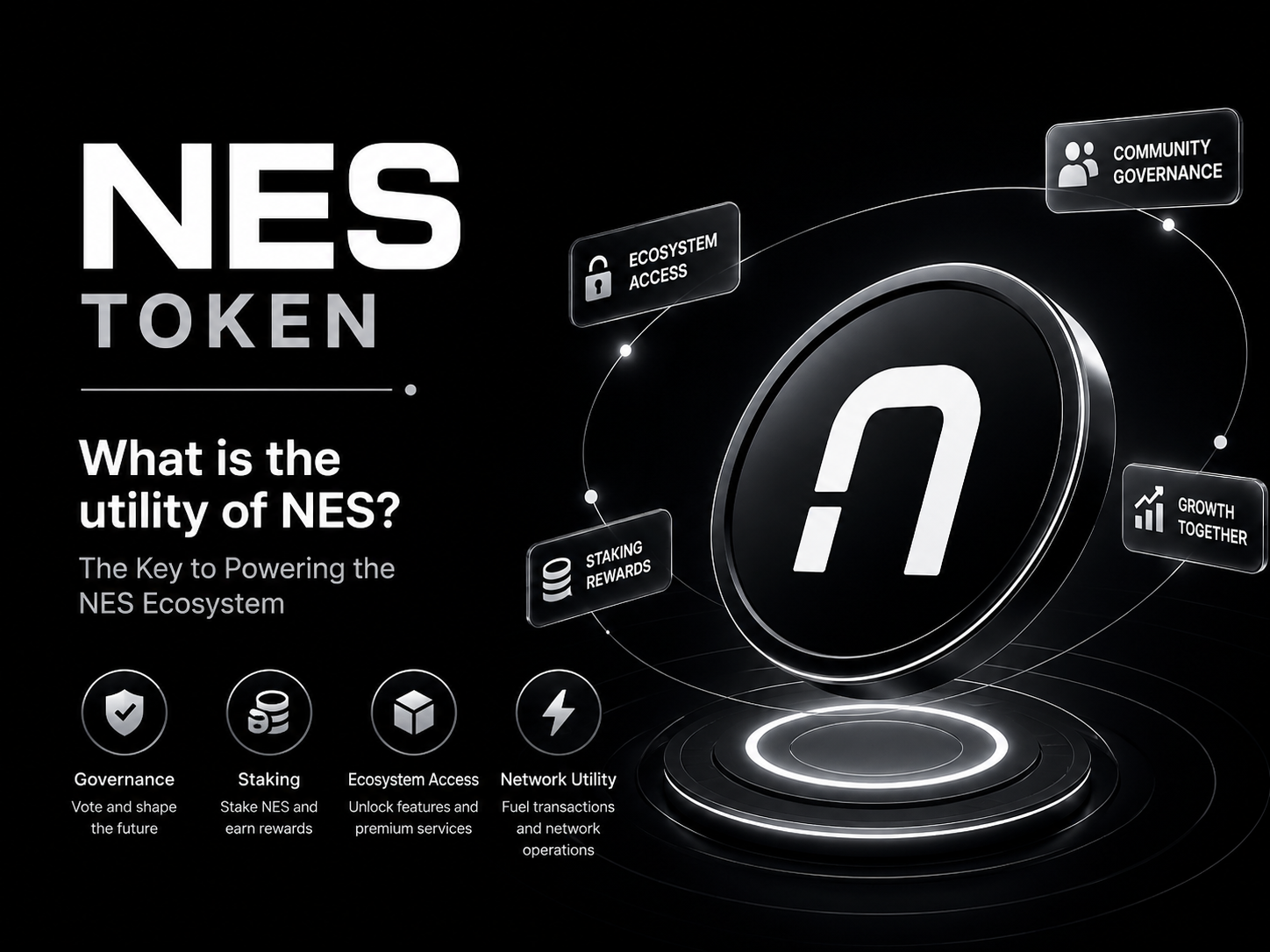
What Is NES
As the native token of the Nesa network, NES serves as the economic backbone of the entire protocol. AI inference fees, node incentives, governance participation, and resource settlement all revolve around NES to form a unified value-flow system.
Unlike many digital assets used solely as a medium of exchange, NES emphasizes real utility within the protocol. Developers invoking AI inference services, nodes providing computing resources, and the community participating in network governance must all use NES to complete their respective economic activities.
This design directly ties the token to network operations, creating a unified economic cycle that links AI service usage, resource supply, and governance decisions—rather than letting them operate in isolation.
Why Nesa Needs a Native Token
The core purpose of a native token is to establish a unified resource settlement and incentive system for a decentralized network.
Without a unified token, developers paying AI inference fees, nodes earning computational rewards, and the community engaging in governance would rely on disparate payment methods. This would not only increase system complexity but also reduce the collaborative efficiency of an open network.
NES connects AI inference resources, node contributions, and governance mechanisms within a single economic framework. Participants can exchange resources around a shared value medium, reducing network operating costs and improving resource allocation efficiency.
Compared with centralized AI platforms, Nesa uses a native token for on-protocol settlement. The token is used not only for AI inference fees but also for node incentives, community governance, and protocol operations. This native token unites developers, node operators, and network resources into one coherent economic system, enabling the open network to operate sustainably without a central operator.
| Comparison Dimension |
Nesa (NES) |
Centralized AI Platform |
| Payment Method |
Inference fees paid with NES |
Fiat or platform balance |
| Fee Recipient |
Decentralized network nodes |
Platform operator |
| Node Incentive |
Protocol auto-distributes rewards |
Platform maintains servers |
| Network Governance |
Community governance mechanism |
Centralized platform management |
| Value Flow |
Unified on-protocol settlement |
Internal platform settlement |
The two models have different priorities. Centralized AI platforms emphasize operational efficiency and unified management, while Nesa aims to build an open, self-sustaining AI infrastructure powered by its native token.
How NES Is Used for Inference Fee Payment
NES is primarily used to pay AI inference fees on the network. When a developer submits an inference request to the Nesa network via an API or application, the required computing resources consume network capacity, and fees are settled according to protocol rules.
This payment model resembles traditional AI cloud services charging per API call, but the fees go to resource providers across the entire decentralized network rather than a single platform. Developers do not need to settle individually with each node; the network automatically handles resource allocation and fee settlement based on task execution.
A unified payment mechanism lowers the barrier for developers and allows computing resources to be priced and exchanged under a single set of rules, enabling all nodes to participate in the same AI inference marketplace.
| Use Case |
Role of NES |
| AI Inference Request |
Pay computing fees |
| Network Resource Invocation |
Complete unified settlement |
| Node Reward |
Distribute computing proceeds |
| Protocol Operation |
Support value flow |
As more applications connect to the Nesa network, AI inference requests will increase, and on-protocol resource settlement activity will become more frequent. This is one of the key use cases for NES within the network.
Why Nodes Need to Stake NES
The primary purpose of node staking with NES is to enhance network security and establish a trusted node participation mechanism.
When nodes join the network, they must provide computing resources and assume corresponding responsibilities per protocol rules. Staking raises the cost of malicious behavior, incentivizing nodes to consistently deliver stable services and thereby strengthening overall network reliability.
After completing inference tasks, nodes receive rewards according to protocol rules, creating a positive feedback loop between resource contribution and economic incentives. This is one of the key foundations for the long-term operation of verifiable AI and decentralized resource scheduling.
The staking mechanism is not only about node admission; it also affects the trustworthiness of network resources. When nodes bear a tangible economic cost, the penalty for malicious behavior increases, encouraging them to maintain stable computing resources. For decentralized AI networks, staking is essential not just for reward distribution but also as a critical component of network security.
What Role Does NES Play in Network Governance
NES also serves a network governance function, providing a foundation for community participation in protocol upgrades and parameter adjustments.
In decentralized networks, governance means that important protocol decisions are no longer made by a single entity but are settled collectively by eligible participants. According to the official design, NES can be used to participate in network governance; specific processes and permissions are defined in the official governance rules.
Governance matters may include protocol upgrades, parameter optimization, feature iterations, and ecosystem development direction. As the network evolves, the governance mechanism enables the community to collectively drive continuous protocol improvement, making the network more open and sustainable.
Unlike centralized AI platforms where a single operator dictates the product roadmap, Nesa aims to boost community involvement through governance, allowing developers, node operators, and ecosystem participants to jointly shape network development. This is a key feature that distinguishes a decentralized AI network from traditional AI services.
Where Does Demand for NES Come From
Demand for NES stems primarily from real business activities generated during protocol operation, not merely from the token itself.
When developers invoke AI inference services, they pay inference fees; when nodes provide computing resources, they stake tokens and earn network incentives; when the community engages in governance, they must follow protocol rules. These genuine network activities form the main use cases for NES.
As more enterprise AI, AI agents, privacy computing, and on-chain AI applications connect to the Nesa network, the number of inference requests grows, driving more active resource scheduling and value settlement within the protocol and further increasing NES usage frequency.
Additionally, factors such as the number of network nodes, governance participation rate, and ecosystem application scale affect the demand for on-protocol resource flow. Therefore, demand for NES is driven more by the actual operational health of the network than by any single feature or short-term market factor.
| Source of Demand |
Impact on NES |
| Increase in AI inference requests |
Higher demand for inference fee payments |
| Growth in number of nodes |
Higher staking demand |
| Network governance participation |
Higher demand for governance usage |
| Expansion of ecosystem applications |
More active on-protocol settlement |
| Enterprise AI integration |
Sustained growth in network resource invocation |
Clearly, the value of NES is more about supporting protocol operations than existing independently outside the network. The more active the network, the more frequent the resource exchange and value flow within the protocol.
What to Note When Using NES
NES is an important component of the Nesa network, but the protocol may continue to evolve through version upgrades. Therefore, specific usage rules should always be verified against the officially published whitepaper, development documentation, and governance announcements.
For developers, it is essential to understand how AI inference fees are settled, how API calls are handled, and what charging mechanisms may apply to different applications. Node operators should pay close attention to node admission requirements, staking terms, and configuration changes introduced by network upgrades.
Moreover, governance mechanisms, protocol parameters, and certain aspects of the economic model may be adjusted over time through community governance. When developing applications, deploying nodes, or participating in governance, it is advisable to follow official updates rather than rely on historical documentation.
Summary
NES is the native token of the Nesa decentralized AI network, performing multiple functions including payment, staking, governance, and incentives. By unifying AI inference fee settlement, node incentives, and community governance, NES brings developers, node operators, and network resources into a single economic system, providing the economic foundation needed for a decentralized AI infrastructure to operate continuously.
As more AI applications connect to the network, the on-protocol use cases for NES will continue to expand. For developers and node operators, understanding the role of NES within the network is key to grasping Nesa's overall operating mechanism and the economic model of a decentralized AI infrastructure.
FAQ
What is NES?
NES is the native token of the Nesa decentralized AI network. It is primarily used to pay AI inference fees, stake nodes, participate in network governance, and provide ecosystem incentives. It is the critical economic foundation that keeps the protocol running.
Why does Nesa need the NES token?
Nesa uses NES to create a unified system for payments, incentives, and governance. This allows AI inference resources to settle value within an open network and supports the continuous operation of a decentralized AI network.
Why do developers need to use NES?
Developers use NES to pay AI inference fees, leveraging a unified resource settlement mechanism to access network computing power without having to settle fees individually with different nodes.
Why do nodes need to stake NES?
Nodes stake NES to meet network admission requirements, raise the cost of malicious behavior, and earn incentives by completing inference tasks. This helps maintain network security and stable operation.
What factors affect the demand for NES usage?
Demand for NES is primarily influenced by the volume of AI inference requests, the number of participating nodes, network governance activity, and the growth of ecosystem applications. As actual network usage increases, the token’s use cases within the protocol typically expand as well.







