


The developments in the last 48 hours have once again revealed how fragile the 14-article ceasefire agreement signed on June 17 between Iran and the US is. Mutual attacks between the parties, the struggle for control over the Strait of Hormuz, and ceasefire violations in Lebanon have once again rattled global markets. This article comprehensively examines the impact of recent developments on the global economy, oil prices, precious metals, and cryptocurrency markets.
⚔️ Current Status of the Conflict and Its Reflection on Markets
Tensions Escalate in the Strait of Hormuz
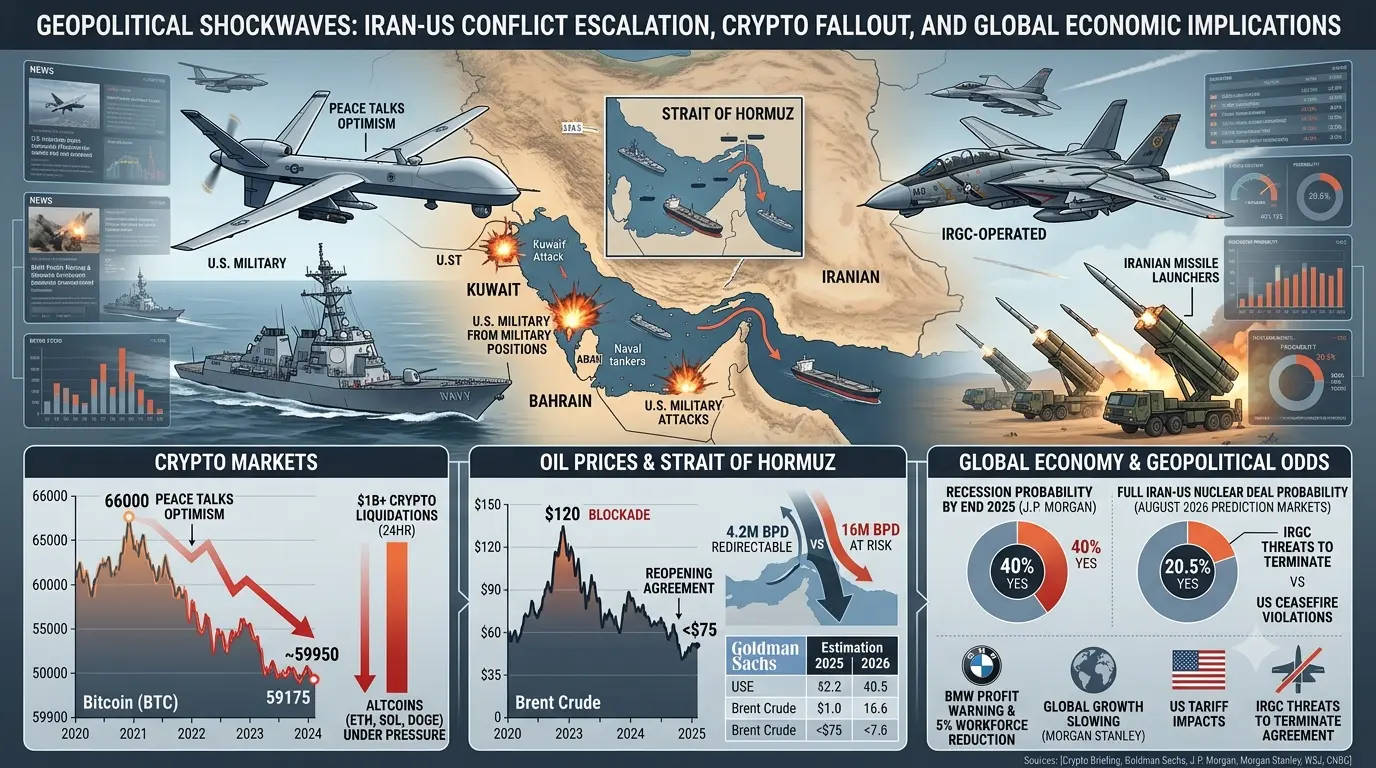
The US Central Command (CENTCOM) struck 10 Iranian military targets in and around the Strait of Hormuz in retaliation for Iran's drone attack on the Panama-flagged tanker MT Kiku. Struck targets included missile and drone depots, coastal radar stations, communication systems, and air defense positions.
Iran's Islamic Revolutionary Guard Corps (IRGC) retaliated against US attacks by launching ballistic missile and drone strikes on 8 US military facilities, including the Ali al-Salem base in Kuwait and the Fifth Fleet's Salman port in Bahrain. The IRGC claimed the targets were "destroyed" in the attacks.
US President Donald Trump issued a stern threat in a statement on his Truth Social platform, stating that military operations against Iran could continue: "There may come a point where we can no longer be reasonable and will have to finish what we started militarily. If that happens, the Islamic Republic of Iran will cease to exist!"
The IRGC, in turn, characterized the US attacks as a ceasefire violation, stating that this would lead to "the complete cessation of all diplomatic processes" and that US bases in the region "will experience hell in the coming days." Iran's Ministry of Foreign Affairs also accused the US of "not adhering to the agreement."
Reasons Behind the Events
The underlying cause of the conflict is the struggle for control over the Strait of Hormuz, through which approximately 20% of the world's oil supply passes. While the US defends the southern route along the Omani coast, Iran insists that ships use the northern route under its control and pay a transit fee. According to Iran, the attacked ships were using unauthorized routes.
Furthermore, Iran accuses the US of violating its commitment under the agreement to maintain the ceasefire in Lebanon. Israeli attacks on Hezbollah represent another breaking point of the ceasefire.
🛢️ Oil Markets: A New Surge in Risk Premium
Price Movements and Expectations
Oil prices had rapidly declined after the agreement was signed and the Strait of Hormuz partially reopened. As of June 26, Brent crude oil prices had fallen to approximately $72 per barrel, and WTI to $69. This meant a return to pre-conflict levels, and markets breathed a sigh of relief.
However, the recent attacks have shown how temporary this relief might be. According to Rystad Energy's chief geopolitical analyst Jorge Leon, the US-Iran deal is a significant de-escalation but not a solution. "Signing doesn't eliminate the risk premium; it just changes its form. The gap between what was agreed upon in the text of the deal and what the parties understand, along with uncertainty in Lebanon, causes the risk to persist."
Analysts predict that oil prices will continue to carry a geopolitical risk premium of between $5 and $10 per barrel despite the agreement. Goldman Sachs warns that if the Strait of Hormuz closes again, Brent crude could surge above $130 per barrel by the end of 2026.
Market Dynamics and Uncertainty
With the reopening of the Strait of Hormuz, approximately 40 million barrels of inventory to be released into the market and more than 70 tankers heading to the region are increasing concerns of oversupply. Goldman Sachs notes that by 2027, there could be a daily supply surplus of 3.2 million barrels in the market, which could push prices down.
On the other hand, the new attacks call this optimistic scenario into question. The re-escalation of the conflict could revive concerns about energy supply and push prices higher. Markets remain highly sensitive to every new development.
🥇️ Gold and Tokenized Gold (XAUT): Two Different Stories
Gold's New Role: Hedging Against Inflation Risk
Gold prices had declined for a while after the Strait of Hormuz reopened and oil prices fell. However, the new attacks and rising uncertainty have once again placed gold at the center of safe-haven demand. In recent days, gold has risen above $4,340 per ounce, gaining approximately 8% from the lows seen last week.
While some institutions like UBS predict prices could fall back to the $3,850–$4,000 range, Credit Agricole advocates buying at $4,338 with a target of $5,240. Citi has raised its 0–3 month target to $4,500, while European asset management firm Amundi maintains its $5,500 target, citing central bank gold purchases, de-dollarization, and persistent fiscal deficits.
Tokenized Gold (XAUT) and PAXG: Digital Transformation
Tokenized gold products combine the safe-haven feature of physical gold with the liquidity and accessibility provided by blockchain technology. Products like Paxos Gold (PAXG) and Tether Gold (XAUT) are attracting investor interest amid rising geopolitical uncertainty and inflation concerns. With the total market capitalization of these products approaching $50 billion, trading volume in the first quarter of 2026 reached $90.7 billion, surpassing the entire year of 2025.
The rise of tokenized gold indicates increasing demand from investors for digital access to traditional safe-haven assets. These products offer a significant alternative, especially for investors with limited access to traditional financial markets or those seeking faster and more flexible transactions.
₿ Bitcoin and Cryptocurrencies: Resilience Under Macro Pressure
Bitcoin Caught Between the Fed and Geopolitics
Bitcoin had risen to the $65,000 level after the Strait of Hormuz reopened and the agreement was signed. However, the hawkish decisions taken by Fed Chairman Kevin Warsh at his first FOMC meeting halted this rally, and Bitcoin fell back below $64,000. As of June 27, Bitcoin is trading sideways around $59,500.
The decline in risk appetite in global markets, the strengthening of the US dollar, and increased geopolitical uncertainty are putting pressure on Bitcoin. Bitcoin has lost 5.77% in the last 24 hours, falling to $59,876.
Market Dynamics and the Role of Strategy
While long-term Bitcoin investor supply has reached record levels, short-term institutional outflows and fund outflows from ETFs are pulling the price down. With 53% of Bitcoin supply in loss, this indicates that selling pressure may continue.
Concerns related to MicroStrategy (now called Strategy) are also negatively affecting market sentiment. Large losses in the company's Bitcoin holdings and the decline in value of its STRC preferred stock have cast doubt on the company's Bitcoin accumulation strategy. CryptoQuant suggests that the company should pause Bitcoin purchases to strengthen its cash reserves.
Future Expectations
Experts see the $58,000 level as critical support for Bitcoin. A break below this level could lead to the liquidation of over $2 billion in long positions and further price declines. Regaining the $64,000–$66,000 range would be interpreted as a sign that buyers are returning.
Geopolitical risks and macroeconomic developments will continue to determine Bitcoin's short-term direction. Markets are focused on key events in the coming days, such as the non-farm payrolls data and Fed Chairman Warsh's speech.
🌍️ Overall Assessment and Strategic Recommendations
Fragile Ceasefire and Risk Factors
The US-Iran ceasefire remains extremely fragile due to the struggle for control over the Strait of Hormuz and tensions in Lebanon. The outcome of the 60-day negotiation process and the parties' attitudes during this period constitute the main source of uncertainty in the markets.
Key Points by Asset Class:
• Oil: The geopolitical risk premium prevents prices from falling below $72. It should be noted that if the agreement breaks down, prices could rise rapidly.
• Gold and XAUT: Inflation concerns and central bank purchases support gold. Tokenized gold products stand out as part of the digital transformation.
• Bitcoin and Cryptocurrencies: Macroeconomic pressures and geopolitical uncertainties continue to weigh on cryptocurrencies. The $58,000 level is being watched as a critical threshold.
Recommendations for Investors:
1. Risk Management: Increased volatility requires strict risk management strategies. Position sizes and stop-loss levels should be carefully determined.
2. Diversification: A portfolio spread across different asset classes can mitigate the impact of volatility in the face of geopolitical risks.
3. Closely Monitor Developments: Developments in the Strait of Hormuz, Fed monetary policy decisions, and US-Iran talks remain the most important factors determining market direction.
This content is not investment advice and is for informational purposes only. All investment decisions should be based on personal research and risk assessment.
#IranUSConflictEscalates
#SaylorHintsAtMoreBTC
#
⚔️ Current Status of the Conflict and Its Reflection on Markets
Tensions Escalate in the Strait of Hormuz
The US Central Command (CENTCOM) struck 10 Iranian military targets in and around the Strait of Hormuz in retaliation for Iran's drone attack on the Panama-flagged tanker MT Kiku. Struck targets included missile and drone depots, coastal radar stations, communication systems, and air defense positions.
Iran's Islamic Revolutionary Guard Corps (IRGC) retaliated against US attacks by launching ballistic missile and drone strikes on 8 US military facilities, including the Ali al-Salem base in Kuwait and the Fifth Fleet's Salman port in Bahrain. The IRGC claimed the targets were "destroyed" in the attacks.
US President Donald Trump issued a stern threat in a statement on his Truth Social platform, stating that military operations against Iran could continue: "There may come a point where we can no longer be reasonable and will have to finish what we started militarily. If that happens, the Islamic Republic of Iran will cease to exist!"
The IRGC, in turn, characterized the US attacks as a ceasefire violation, stating that this would lead to "the complete cessation of all diplomatic processes" and that US bases in the region "will experience hell in the coming days." Iran's Ministry of Foreign Affairs also accused the US of "not adhering to the agreement."
Reasons Behind the Events
The underlying cause of the conflict is the struggle for control over the Strait of Hormuz, through which approximately 20% of the world's oil supply passes. While the US defends the southern route along the Omani coast, Iran insists that ships use the northern route under its control and pay a transit fee. According to Iran, the attacked ships were using unauthorized routes.
Furthermore, Iran accuses the US of violating its commitment under the agreement to maintain the ceasefire in Lebanon. Israeli attacks on Hezbollah represent another breaking point of the ceasefire.
🛢️ Oil Markets: A New Surge in Risk Premium
Price Movements and Expectations
Oil prices had rapidly declined after the agreement was signed and the Strait of Hormuz partially reopened. As of June 26, Brent crude oil prices had fallen to approximately $72 per barrel, and WTI to $69. This meant a return to pre-conflict levels, and markets breathed a sigh of relief.
However, the recent attacks have shown how temporary this relief might be. According to Rystad Energy's chief geopolitical analyst Jorge Leon, the US-Iran deal is a significant de-escalation but not a solution. "Signing doesn't eliminate the risk premium; it just changes its form. The gap between what was agreed upon in the text of the deal and what the parties understand, along with uncertainty in Lebanon, causes the risk to persist."
Analysts predict that oil prices will continue to carry a geopolitical risk premium of between $5 and $10 per barrel despite the agreement. Goldman Sachs warns that if the Strait of Hormuz closes again, Brent crude could surge above $130 per barrel by the end of 2026.
Market Dynamics and Uncertainty
With the reopening of the Strait of Hormuz, approximately 40 million barrels of inventory to be released into the market and more than 70 tankers heading to the region are increasing concerns of oversupply. Goldman Sachs notes that by 2027, there could be a daily supply surplus of 3.2 million barrels in the market, which could push prices down.
On the other hand, the new attacks call this optimistic scenario into question. The re-escalation of the conflict could revive concerns about energy supply and push prices higher. Markets remain highly sensitive to every new development.
🥇️ Gold and Tokenized Gold (XAUT): Two Different Stories
Gold's New Role: Hedging Against Inflation Risk
Gold prices had declined for a while after the Strait of Hormuz reopened and oil prices fell. However, the new attacks and rising uncertainty have once again placed gold at the center of safe-haven demand. In recent days, gold has risen above $4,340 per ounce, gaining approximately 8% from the lows seen last week.
While some institutions like UBS predict prices could fall back to the $3,850–$4,000 range, Credit Agricole advocates buying at $4,338 with a target of $5,240. Citi has raised its 0–3 month target to $4,500, while European asset management firm Amundi maintains its $5,500 target, citing central bank gold purchases, de-dollarization, and persistent fiscal deficits.
Tokenized Gold (XAUT) and PAXG: Digital Transformation
Tokenized gold products combine the safe-haven feature of physical gold with the liquidity and accessibility provided by blockchain technology. Products like Paxos Gold (PAXG) and Tether Gold (XAUT) are attracting investor interest amid rising geopolitical uncertainty and inflation concerns. With the total market capitalization of these products approaching $50 billion, trading volume in the first quarter of 2026 reached $90.7 billion, surpassing the entire year of 2025.
The rise of tokenized gold indicates increasing demand from investors for digital access to traditional safe-haven assets. These products offer a significant alternative, especially for investors with limited access to traditional financial markets or those seeking faster and more flexible transactions.
₿ Bitcoin and Cryptocurrencies: Resilience Under Macro Pressure
Bitcoin Caught Between the Fed and Geopolitics
Bitcoin had risen to the $65,000 level after the Strait of Hormuz reopened and the agreement was signed. However, the hawkish decisions taken by Fed Chairman Kevin Warsh at his first FOMC meeting halted this rally, and Bitcoin fell back below $64,000. As of June 27, Bitcoin is trading sideways around $59,500.
The decline in risk appetite in global markets, the strengthening of the US dollar, and increased geopolitical uncertainty are putting pressure on Bitcoin. Bitcoin has lost 5.77% in the last 24 hours, falling to $59,876.
Market Dynamics and the Role of Strategy
While long-term Bitcoin investor supply has reached record levels, short-term institutional outflows and fund outflows from ETFs are pulling the price down. With 53% of Bitcoin supply in loss, this indicates that selling pressure may continue.
Concerns related to MicroStrategy (now called Strategy) are also negatively affecting market sentiment. Large losses in the company's Bitcoin holdings and the decline in value of its STRC preferred stock have cast doubt on the company's Bitcoin accumulation strategy. CryptoQuant suggests that the company should pause Bitcoin purchases to strengthen its cash reserves.
Future Expectations
Experts see the $58,000 level as critical support for Bitcoin. A break below this level could lead to the liquidation of over $2 billion in long positions and further price declines. Regaining the $64,000–$66,000 range would be interpreted as a sign that buyers are returning.
Geopolitical risks and macroeconomic developments will continue to determine Bitcoin's short-term direction. Markets are focused on key events in the coming days, such as the non-farm payrolls data and Fed Chairman Warsh's speech.
🌍️ Overall Assessment and Strategic Recommendations
Fragile Ceasefire and Risk Factors
The US-Iran ceasefire remains extremely fragile due to the struggle for control over the Strait of Hormuz and tensions in Lebanon. The outcome of the 60-day negotiation process and the parties' attitudes during this period constitute the main source of uncertainty in the markets.
Key Points by Asset Class:
• Oil: The geopolitical risk premium prevents prices from falling below $72. It should be noted that if the agreement breaks down, prices could rise rapidly.
• Gold and XAUT: Inflation concerns and central bank purchases support gold. Tokenized gold products stand out as part of the digital transformation.
• Bitcoin and Cryptocurrencies: Macroeconomic pressures and geopolitical uncertainties continue to weigh on cryptocurrencies. The $58,000 level is being watched as a critical threshold.
Recommendations for Investors:
1. Risk Management: Increased volatility requires strict risk management strategies. Position sizes and stop-loss levels should be carefully determined.
2. Diversification: A portfolio spread across different asset classes can mitigate the impact of volatility in the face of geopolitical risks.
3. Closely Monitor Developments: Developments in the Strait of Hormuz, Fed monetary policy decisions, and US-Iran talks remain the most important factors determining market direction.
This content is not investment advice and is for informational purposes only. All investment decisions should be based on personal research and risk assessment.
#IranUSConflictEscalates
#SaylorHintsAtMoreBTC
#