Crypto Market Overview
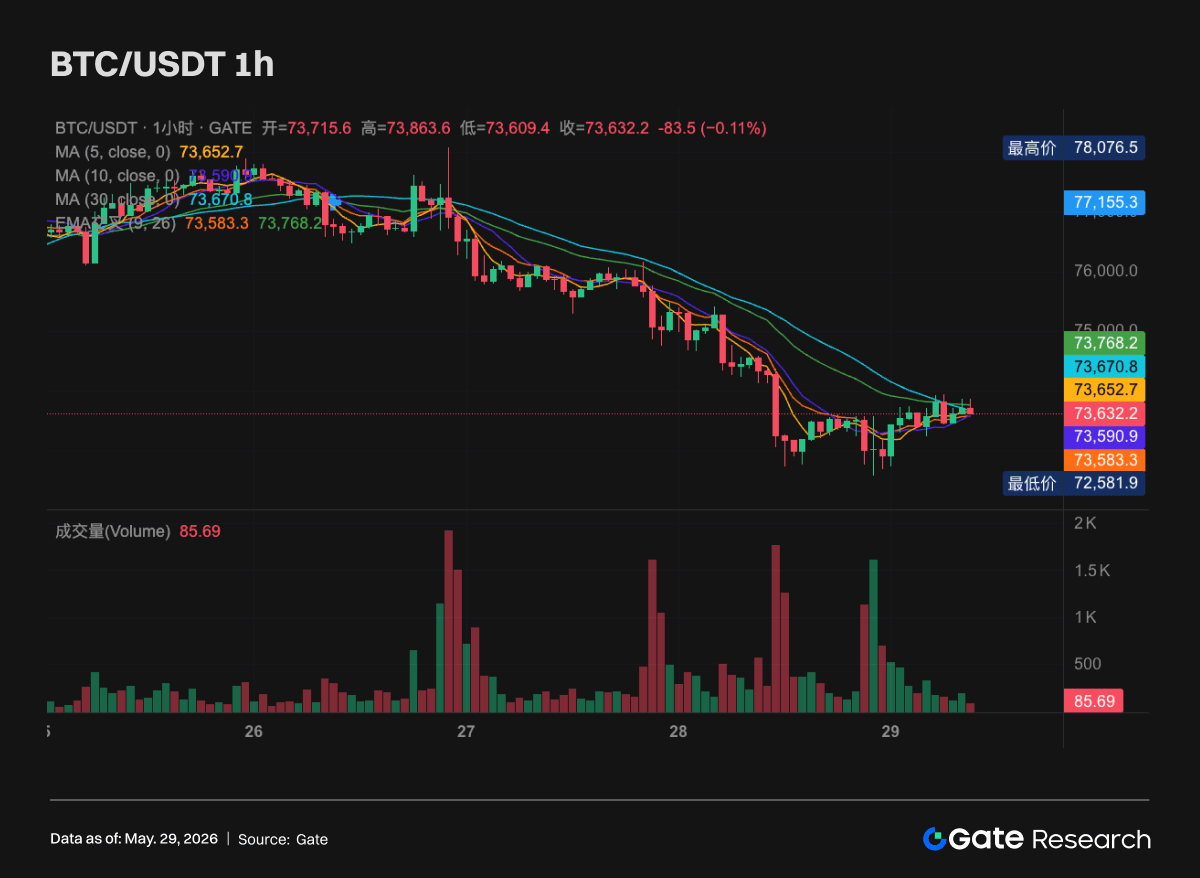
BBTC (-0.11% | Current Price: 73,632 USDT)
After previously rallying above $78,000, BTC experienced a series of pullbacks, briefly touching a short-term low near $72,581 before gradually stabilizing above $73,000. The price is currently consolidating around the $73,600 level. From a broader perspective, profit-taking following the earlier rally has been evident, and short-term market sentiment has shifted from strong bullish momentum to a consolidation and recovery phase. Technically, the MA5, MA10, and MA30 are all clustered within the $73,500–$73,700 range. The convergence of these short-term moving averages suggests a relatively balanced battle between bulls and bears, with no clear directional trend established yet. Trading volume expanded noticeably during the recent decline, indicating active selling pressure at higher levels. However, volume has since contracted, suggesting the market is waiting for a new catalyst to determine its next direction. In the short term, the $74,000–$74,500 zone serves as the primary resistance area. A breakout above this range accompanied by strong volume could pave the way for further recovery toward $75,000 and beyond. Conversely, if buying momentum remains weak, BTC may retest support near $73,000 and $72,500.
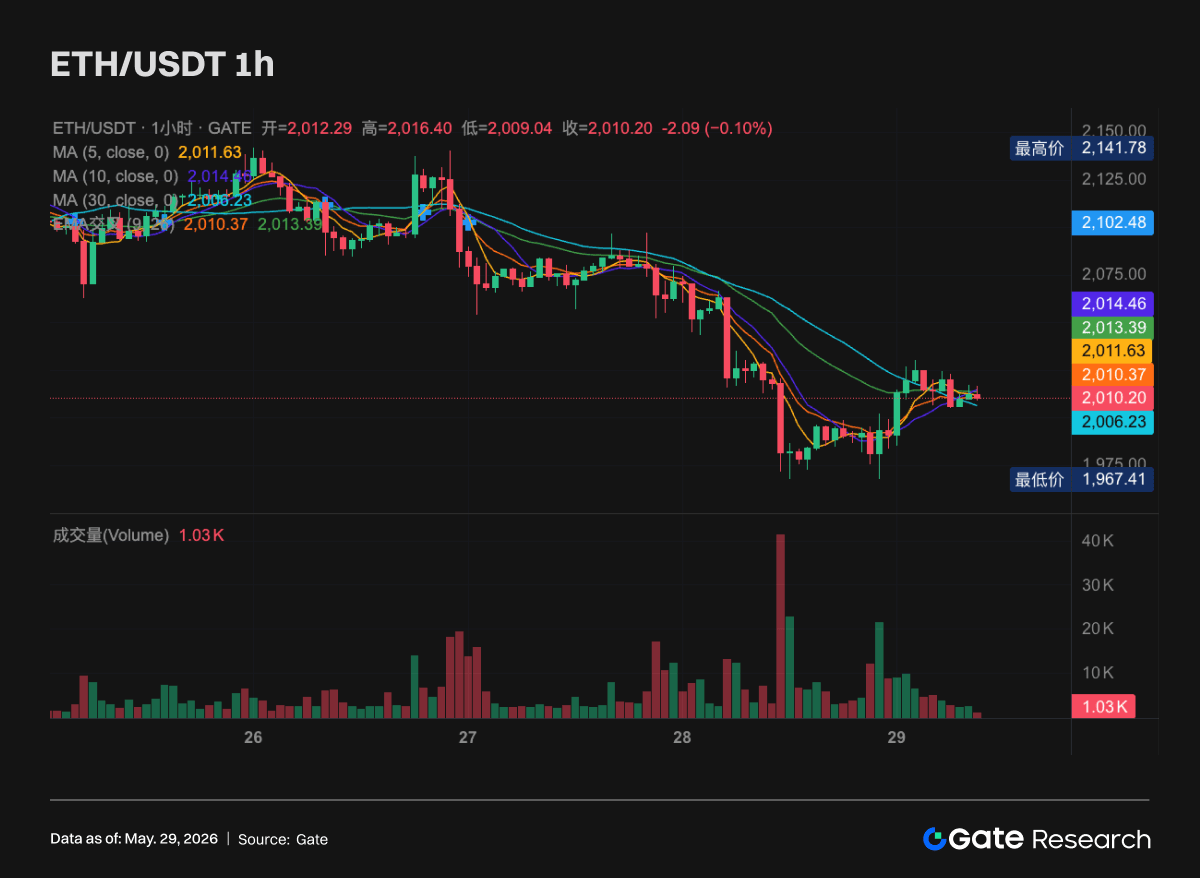
ETH (-0.10% | Current Price: 2,010 USDT)
ETH has been in a corrective phase since reaching a local high around $2,141. The price recently fell to a short-term low near $1,967 before rebounding modestly, and is currently trading within the $2,000–$2,020 range. Overall, ETH remains in a post-decline recovery stage. While the price has reclaimed the $2,000 level, overhead resistance from moving averages remains significant. From a technical standpoint, MA5 and MA10 are located around $2,011–$2,014, while MA30 sits near $2,006. The tight clustering of short-term moving averages indicates a narrow-range consolidation phase.Trading volume surged during the sharp decline, reflecting concentrated selling pressure when key support levels were breached. However, the recent rebound has been accompanied by relatively modest volume, suggesting that investors' willingness to chase higher prices remains uncertain. The $2,030–$2,050 area currently represents a significant resistance zone. A volume-backed breakout above this range could support a recovery toward $2,080. On the downside, if ETH falls below the $2,000 threshold again, support may be sought in the $1,960–$1,970 range.
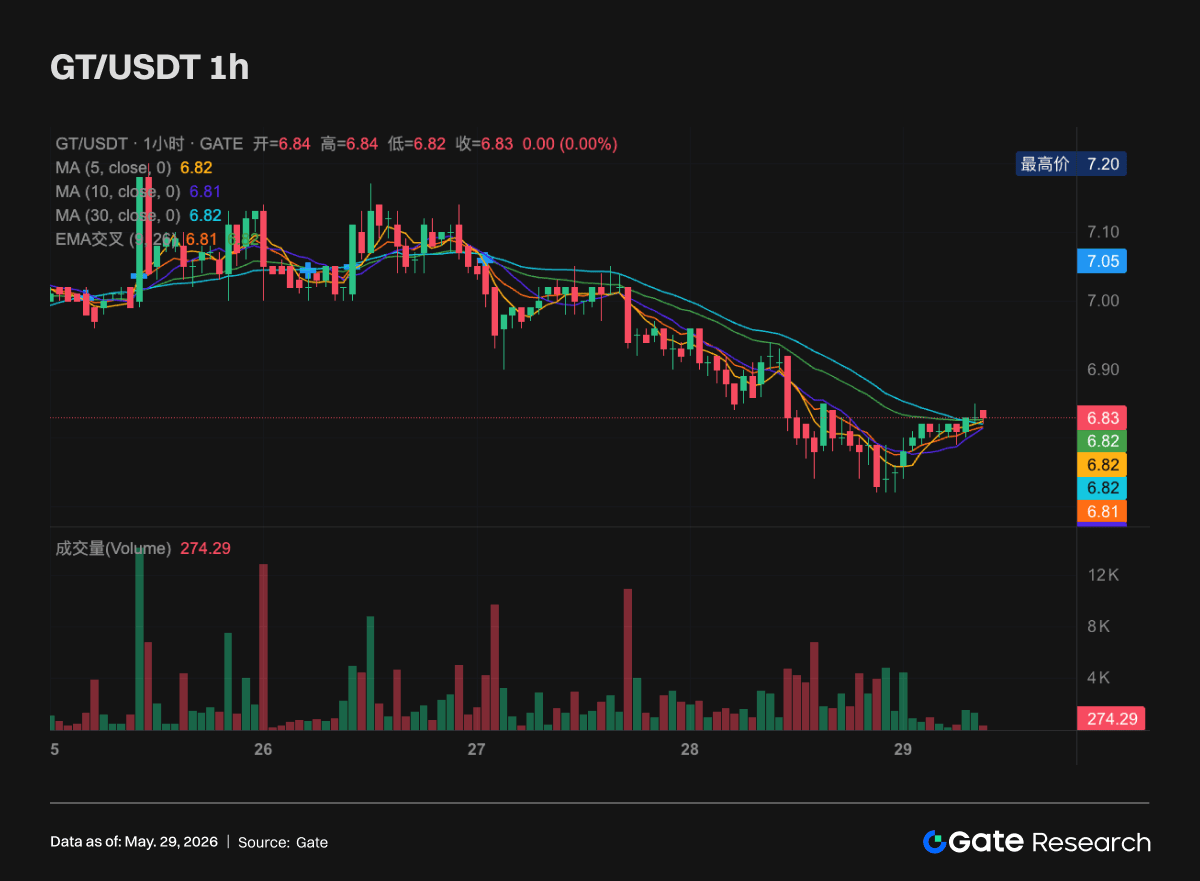
GT (0.00% | Current Price: 6.83 USDT)
GT has continued to pull back after previously rallying to around $7.20. The price once dipped to a short-term low near $6.70 before gradually stabilizing and posting a modest rebound. It is currently trading within a narrow range of $6.80–$6.85. Overall, GT's recent price action is characterized by a low-level recovery, with market sentiment becoming more stable than before, although overhead resistance has yet to be fully absorbed.
From a technical perspective, the MA5, MA10, and MA30 are all concentrated around the $6.81–$6.82 range. The price is trading slightly above these key short-term moving averages, suggesting preliminary signs of stabilization. However, the moving averages remain in a converging pattern and have not yet formed a clear bullish expansion structure. In terms of trading volume, volume increased during the previous decline, indicating that short-term selling pressure was partially released. Recently, volume has contracted significantly, suggesting that market participants remain cautious and are largely adopting a wait-and-see approach.
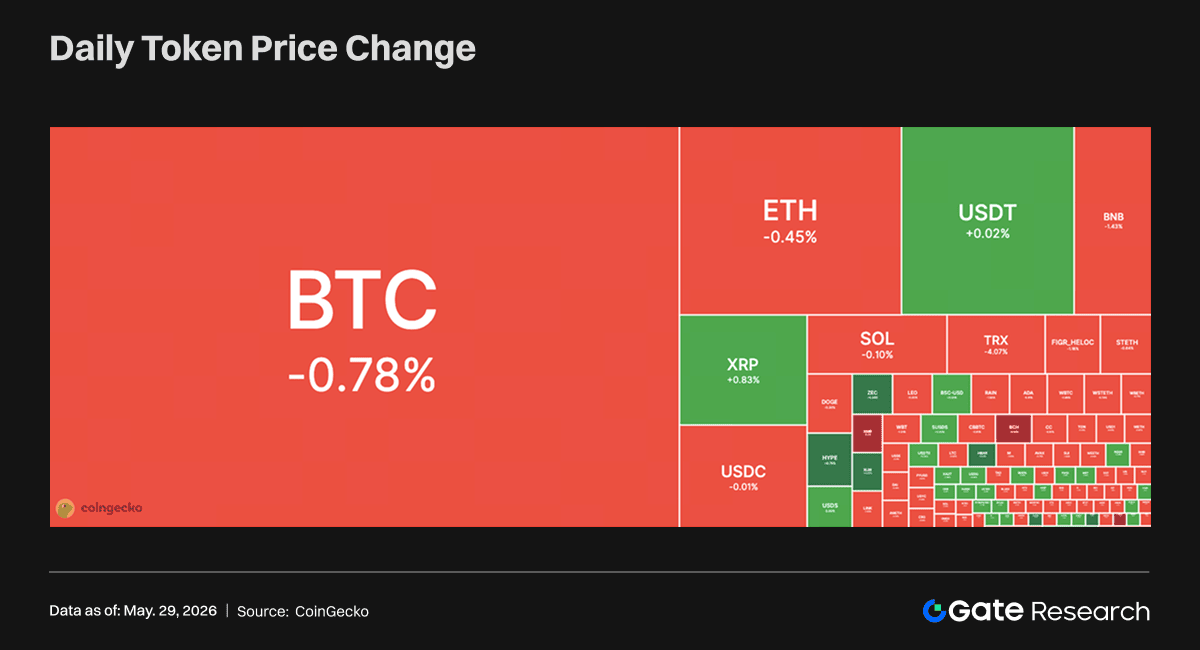
Tokens Heatmap
The crypto market overall remained in a corrective phase today, with major assets generally coming under pressure. BTC declined 0.78%, while ETH fell 0.45%. Other major assets, including SOL and TRX, also recorded varying degrees of losses, indicating a cooling in short-term market risk appetite. From a market structure perspective, capital remains primarily concentrated in leading assets such as BTC and ETH. However, despite the broader market pullback, some small- and mid-cap tokens still posted selective rebounds.
On the gainers list, assets related to AI, prediction markets, and GameFi remained particularly active. ALLO, GUA, and ESPORTS all recorded significant gains, highlighting investors' continued search for high-beta thematic opportunities during periods of consolidation among major cryptocurrencies. Nevertheless, most of these tokens have relatively small market capitalizations and high volatility. Their short-term price appreciation has been driven largely by capital rotation, sentiment catalysts, and changes in trading activity. Investors should continue monitoring the sustainability of trading volume and the risk of potential price retracements.
ALLO — Allora (+88.01%, Circulating Market Cap: $35.29M)
According to Gate market data, ALLO is currently trading at $0.17254, up 88.01% over the past 24 hours.Allora is a decentralized AI network designed to integrate various AI models, data sources, and predictive capabilities through an open intelligence collaboration framework. The project focuses on on-chain intelligence, prediction models, and AI agents, aiming to provide composable AI services for DeFi, trading strategies, and Web3 applications.
The recent surge in ALLO can largely be attributed to renewed market interest in AI-related narratives. Decentralized AI, AI agents, and intelligent prediction networks continue to attract capital inflows. Given ALLO's relatively small circulating market capitalization, it is particularly sensitive to capital rotation into high-beta assets. Improved trading activity and recovering sentiment within the AI sector have further fueled its sharp price appreciation.
GUA — SUPERFORTUNE (+52.25%, Circulating Market Cap: $35.09M)
According to Gate market data, GUA is currently trading at $0.76734, up 52.25% in the past 24 hours. SUPERFORTUNE combines AI, prediction markets, and Web3 applications to deliver market forecasting, interactive experiences, and in-app payment functionality through artificial intelligence and on-chain data analytics. GUA serves as the ecosystem's native token, powering platform access, in-app transactions, and ecosystem incentives.
The rally in GUA appears driven by growing market attention toward AI-powered prediction markets and the emerging InfoFi narrative. As investors search for new thematic opportunities, GUA's exposure to AI, prediction markets, and utility-token narratives has attracted speculative interest. Its relatively low market capitalization has amplified price responsiveness to incoming capital, contributing to the token's substantial gains.
ESPORTS — Yooldo (+42.35%, Circulating Market Cap: $13.89M)
According to Gate market data, ESPORTS is currently trading at $0.08648, up 42.35% over the past 24 hours. Yooldo is a multi-chain Web3 gaming platform focused on lowering barriers for Web2 users entering blockchain gaming through a user experience similar to centralized platforms. By integrating NFTs, tokenized assets, and cross-chain infrastructure, it provides gaming, digital ownership, and ecosystem interaction services. ESPORTS functions as the platform's governance, rewards, and utility token.
The recent price increase is largely driven by renewed capital inflows into selected GameFi and Web3 gaming projects. Market attention has shifted toward projects with real gaming use cases and established user acquisition channels. Combined with elevated trading activity and the token's small market capitalization, ESPORTS has exhibited strong price elasticity, resulting in a notable short-term rebound.
Hotpot Insights
Sui Mainnet Outage Triggered by Gas Accounting Bug in Version 1.72
The Sui team announced that a vulnerability introduced in the gas accounting logic of version 1.72 caused a temporary network halt, suspending transaction processing on the mainnet. Network activity has since resumed, and the team plans to release a comprehensive post-mortem report in the coming days. The incident has renewed market concerns regarding the stability of high-performance Layer 1 blockchains and their upgrade processes. In particular, vulnerabilities affecting core accounting mechanisms can directly impact transaction confirmation, application functionality, and user experience.
From an industry perspective, performance and reliability are increasingly becoming critical differentiators among Layer 1 networks. While Sui has attracted significant ecosystem growth through its high throughput, low latency, and object-centric architecture, this outage serves as a reminder that rapid innovation must be balanced with infrastructure security. A transparent explanation of the root cause, remediation efforts, and preventive measures could help restore community confidence; otherwise, recurring disruptions may weaken long-term developer and investor trust.
SpaceX Pre-IPO Contract on Hyperliquid Flash-Crashed 45%, Triggering Approximately $1.5 Million in Liquidations
According to CoinDesk, Hyperliquid’s SpaceX pre-IPO perpetual contract, SPACEX-USDH, experienced a severe flash crash. The price fell from approximately $2,277 to $1,254 within about 30 minutes, a decline of nearly 45%, before partially rebounding to around $2,169. The volatility resulted in approximately 405 users being liquidated, with a notional liquidation value of roughly $1.51 million. Market analysts believe that the contract lacked sufficient market depth and publicly available pricing benchmarks, leading to inadequate liquidity when faced with large sell orders and causing the rapid decline.
This event highlights the high-risk characteristics of on-chain synthetic assets and pre-IPO contracts. While such products provide investors with opportunities to participate in valuation fluctuations of private companies, their pricing depends on market consensus and limited liquidity rather than mature public-market pricing. Once order book depth becomes insufficient, leveraged trading can amplify the impact of individual sell orders and trigger cascading liquidations. As the on-chain derivatives market continues to expand, platforms may need stricter risk parameters, margin mechanisms, and liquidity protection measures when listing non-standardized assets.
Spot Bitcoin ETFs Recorded a Single-Day Net Outflow of $733.4 Million, with Institutional Capital Continuing to Withdraw
According to data from Farside Investors, spot Bitcoin ETFs recorded approximately $733.4 million in net outflows on May 27, extending the recent trend of capital withdrawals. Among them, BlackRock’s IBIT recorded a single-day outflow of approximately $527.8 million, Fidelity’s FBTC saw outflows of approximately $60.3 million, and Grayscale’s GBTC recorded outflows of approximately $104.8 million. The continued ETF outflows reflect phased position reductions and risk-control measures by institutional investors during BTC’s retreat from higher levels.
From a market impact perspective, ETF fund flows have become an important indicator for observing spot BTC demand. Previously, net inflows into spot ETFs provided sustained buying support for BTC’s upward movement. However, recent consecutive outflows may weaken market confidence in demand at higher price levels. If ETF outflows slow in the future, BTC may enter a consolidation and recovery phase near key support zones. However, if outflows continue to expand, they may exert additional short-term pressure on prices and intensify risk-off sentiment across the market.
References
Gate Research is a comprehensive blockchain and cryptocurrency research platform that provides deep content for readers, including technical analysis, market insights, industry research, trend forecasting, and macroeconomic policy analysis.
Disclaimer
Investing in cryptocurrency markets involves high risk. Users are advised to conduct their own research and fully understand the nature of the assets and products before making any investment decisions. Gate is not responsible for any losses or damages arising from such decisions.