




#GateLaunchesHongKongStockTrading
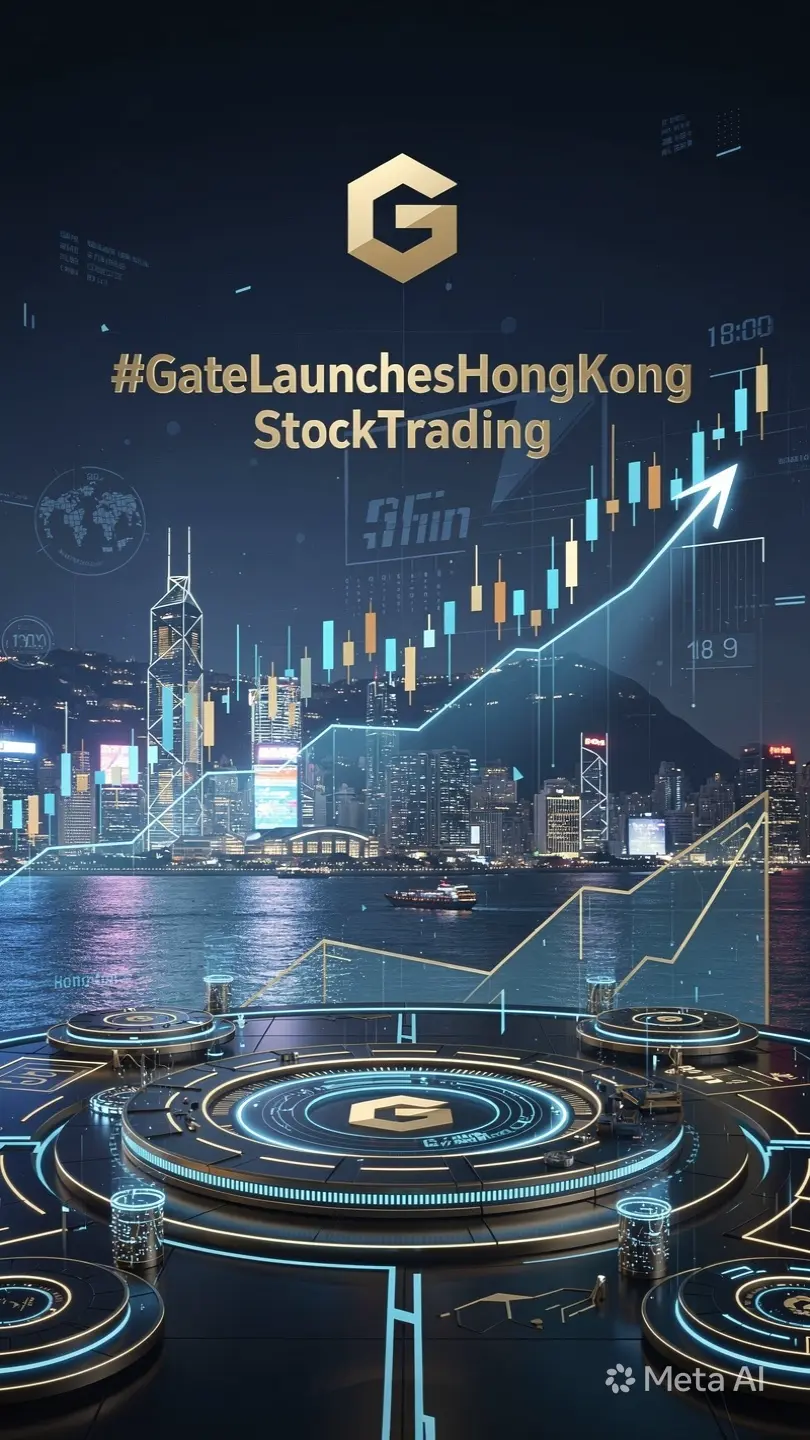
#GateLaunchesHongKongStockTrading
The launch of Hong Kong stock trading by Gate isn't just a new product—it's another signal that the boundaries between crypto infrastructure and traditional capital markets are disappearing.
For years, crypto exchanges competed on token listings and derivatives. The next competitive edge appears to be becoming a complete financial ecosystem, where users can seamlessly move between digital assets and traditional securities.
My Perspective 👇
The real innovation isn't that users can buy Hong Kong stocks. It's that capital is becoming increasingly "chain-agnostic." Investors no longer care whether value is stored in Bitcoin, stablecoins, or equities—they want frictionless access to opportunities.
If investors can use stablecoins like USDT to gain exposure to traditional markets, settlement becomes faster, global participation expands, and geographical barriers begin to fade.
What this could mean
🔹 Crypto exchanges may evolve into global investment super apps.
🔹 Traditional brokerages could face pressure to adopt blockchain-based settlement and digital asset integration.
🔹 Tokenization of real-world assets (RWAs) is moving from concept to practical adoption, bringing TradFi and DeFi closer together.
🔹 Hong Kong continues strengthening its position as a regulatory bridge between digital assets and conventional finance.
A strategic observation
The winners in the next financial cycle may not be the platforms with the most cryptocurrencies—they may be the ones that offer the widest range of investable assets within a unified user experience.
The future of finance isn't likely to be "crypto replacing stocks" or "stocks replacing crypto." Instead, it may be one interoperable ecosystem where investors choose exposure based on opportunity rather than asset class.
As infrastructure matures, the distinction between an exchange, a brokerage, and a digital asset platform may become increasingly irrelevant.
The convergence has already started. The question is not whether TradFi and crypto will merge—but which platforms will lead that transition.
@Gate_Square
#GateLaunchesHongKongStockTrading
The launch of Hong Kong stock trading by Gate isn't just a new product—it's another signal that the boundaries between crypto infrastructure and traditional capital markets are disappearing.
For years, crypto exchanges competed on token listings and derivatives. The next competitive edge appears to be becoming a complete financial ecosystem, where users can seamlessly move between digital assets and traditional securities.
My Perspective 👇
The real innovation isn't that users can buy Hong Kong stocks. It's that capital is becoming increasingly "chain-agnostic." Investors no longer care whether value is stored in Bitcoin, stablecoins, or equities—they want frictionless access to opportunities.
If investors can use stablecoins like USDT to gain exposure to traditional markets, settlement becomes faster, global participation expands, and geographical barriers begin to fade.
What this could mean
🔹 Crypto exchanges may evolve into global investment super apps.
🔹 Traditional brokerages could face pressure to adopt blockchain-based settlement and digital asset integration.
🔹 Tokenization of real-world assets (RWAs) is moving from concept to practical adoption, bringing TradFi and DeFi closer together.
🔹 Hong Kong continues strengthening its position as a regulatory bridge between digital assets and conventional finance.
A strategic observation
The winners in the next financial cycle may not be the platforms with the most cryptocurrencies—they may be the ones that offer the widest range of investable assets within a unified user experience.
The future of finance isn't likely to be "crypto replacing stocks" or "stocks replacing crypto." Instead, it may be one interoperable ecosystem where investors choose exposure based on opportunity rather than asset class.
As infrastructure matures, the distinction between an exchange, a brokerage, and a digital asset platform may become increasingly irrelevant.
The convergence has already started. The question is not whether TradFi and crypto will merge—but which platforms will lead that transition.
@Gate_Square