Bluesky launched its test version in 2023 and surpassed 10 million registered users within about 20 months of opening its beta. As more users began paying attention to data privacy, ad driven recommendation algorithms, and platform control, “decentralized social networking” gradually became an important direction for the internet industry. As a result, Bluesky has drawn broad interest from both technology and crypto communities.
At the same time, Bluesky’s core significance is not simply that it offers a new social app. From a deeper industry perspective, it is trying to redefine the underlying structure of social media, allowing users, developers, and communities to build a social ecosystem together on top of an open protocol instead of relying entirely on a single platform company.

Source: bsky.app
What Is Bluesky?
At its core, Bluesky is a social application similar to X, formerly Twitter, and Facebook, but its underlying architecture is clearly different from that of traditional social platforms. Traditional social media platforms usually manage user identity, content, and algorithms in a centralized way. Bluesky, by contrast, attempts to build an open social network through the “AT Protocol.”
The “AT Protocol” can be understood as an open social protocol that allows different social applications to share user identities, social relationships, and data structures. In other words, users in the future may not have to remain locked inside a single platform. Instead, they may be able to move their accounts and content across different applications.
From an industry perspective, Bluesky represents the trend toward turning social media into a protocol based system. In the past, platforms owned user data and controlled traffic distribution. Today, more developers are exploring models based on “open social protocols” and “user data ownership,” with the hope of returning the internet to a more open network structure.
How Bluesky Works: How the AT Protocol Builds a Social Network
The entire Bluesky system is built on how the AT Protocol works. This protocol allows users to have independent identities and manage social data through an open architecture. Unlike traditional platforms, Bluesky does not rely entirely on a single database to operate. The AT Protocol separates the identity system, data storage, content recommendation, and moderation mechanisms into multiple modules, while allowing third party developers to take part in building the ecosystem.
For example, user data can be managed by a personal data server, or PDS, while content recommendations can be provided by different “Feed Generators.” This means users can not only switch clients, but also freely choose feed algorithms and content moderation services.
The core goal of this structure is to reduce a platform’s control over users’ social relationships and data. For that reason, Bluesky is more like an “open social networking protocol” than just another ordinary social app.
Bluesky’s Custom Feeds and Algorithm Choice Mechanism
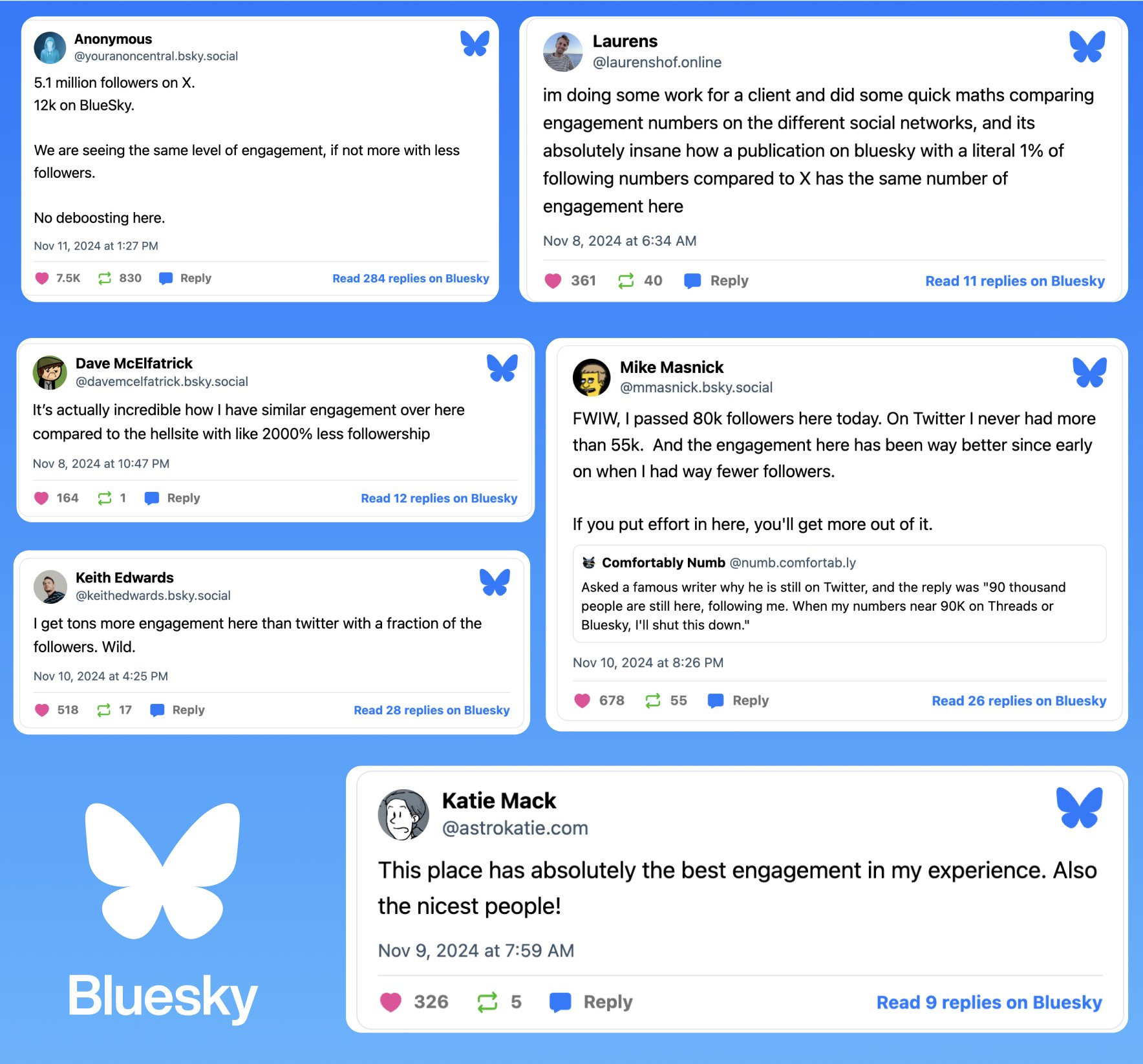
On traditional social media, recommendation algorithms are usually controlled entirely by the platform. Platforms recommend content based on advertising, engagement rates, and the amount of time users spend on the service, while users have little real visibility into how the algorithms work. Bluesky argues that the problem is not “algorithms” themselves, but opaque black box algorithms controlled by centralized platforms. For this reason, Bluesky has introduced the concept of an “open algorithm marketplace,” aiming to give users greater control over the content they see.
Bluesky currently supports tens of thousands of “custom feeds.” Users can view the timeline of people they follow, while also subscribing to content feeds around different topics, such as technology, art, crypto, or specific community content.
At the same time, the “Bluesky Feed algorithm” allows any developer to create their own recommendation system. This means users may eventually be able to choose algorithms according to their own needs, rather than having a platform decide the logic of content distribution for everyone.
Source: bsky.app
Bluesky’s User Data Sovereignty and Personal Data Servers, PDS
“User data sovereignty” is one of Bluesky’s most important ideas. On traditional social platforms, the content users post, their following relationships, and their interaction data are usually controlled centrally by the platform. In Bluesky, user data is stored on personal data servers, or PDSs. In theory, users can even host their own data.
Under the structure of the AT Protocol, each user has an independent data repository. A user’s posts, likes, follows, and interactions all become records inside that repository. These records are stored through a specific data structure and together form a complete “social graph.” At the same time, Bluesky also allows users to migrate their data and identity. This means that even if users change service providers or clients in the future, they can still keep their accounts and social relationships.
From the perspective of internet development, “decentralized identity systems” and “user data ownership” are becoming important directions for the next generation of social networks, and Bluesky is one of the major representatives of this trend.
How Bluesky’s Content Moderation and Labeling Services Work
Content moderation has always been one of the most controversial issues for social platforms, and Bluesky is trying to redesign this system through a “modular moderation mechanism.” In the AT Protocol, content moderation is not handled entirely by the platform alone. Instead, it is divided into multiple independent modules. For example, “Labelers” can classify and label content, while “Feed Generators” decide which posts enter a specific feed.
This structure means different communities can choose different moderation rules. Some communities may place greater emphasis on free expression, while others may apply stricter limits to spam or offensive content. At the same time, users can also choose the moderation services they trust. This model of “decentralized content moderation” is clearly different from the unified moderation systems used by traditional platforms.
From an industry perspective, however, this open moderation system also faces challenges. For example, if there are no shared standards, misinformation may spread more easily and community governance may become more complex. As a result, the balance between “open social protocols” and content governance remains an important topic in discussions about decentralized social networks.
The Relationship Between Bluesky, Web3, Blockchain, and the Decentralized Internet
Many users associate Bluesky with Web3 or blockchain based social platforms, but they are not exactly the same.
Bluesky’s core is an open social protocol, not a cryptocurrency system. Although it emphasizes decentralized identity and user control over data, it does not rely on a traditional blockchain as its underlying operating structure.
At the same time, there is indeed some connection between “decentralized identity,” or DID, and Web3 ideas. Both Web3 and Bluesky are essentially trying to solve the problem of excessive centralization on internet platforms.
From an industry structure perspective, Bluesky leans more toward the direction of an “open internet protocol,” while projects such as Lens and Farcaster are closer to “Web3 social protocols.” For that reason, the “difference between blockchain and decentralized protocols” is also a topic many users easily confuse.
Bluesky’s Role in the Future Social Internet Ecosystem
The significance of Bluesky is not merely that it has launched a new social platform. It is attempting to redefine the underlying structure of social media.
In the past, internet social platforms were often controlled by large technology companies, with user data, algorithms, and social relationships all managed centrally by the platform. The open protocol model represented by Bluesky, by contrast, seeks to give users back control over identity, content, and recommendation systems.
At the same time, as more users pay attention to advertising algorithms, data privacy, and platform governance, “decentralized social networking” is gradually becoming an important direction for the technology industry.
In the long run, Bluesky is more like an industry experiment around “open social protocols.” Whether it can truly change the global social media landscape remains uncertain, but it has already pushed the entire internet industry to reconsider one question: should the social networks of the future be built on open protocols rather than closed platforms?
FAQs
X is a centralized social platform, while Bluesky places greater emphasis on open social protocols and user control.
What Is the AT Protocol?
The AT Protocol is the underlying open protocol behind Bluesky. It is used to build social networks with portable identities and open data structures.
Does Bluesky Use Blockchain?
Bluesky does not rely on a traditional blockchain to operate. Its core is an open social protocol rather than a cryptocurrency system.
What Is a Personal Data Server, PDS?
A PDS is a server used to store user data and social records. In theory, users can host their own social data.
Why Does Bluesky Support Custom Feeds?
Because Bluesky wants users to be able to freely choose content recommendation algorithms instead of relying entirely on the platform’s default recommendation system.
Bluesky shares some conceptual overlap with Web3, but it leans more toward open internet protocols rather than being a typical blockchain social project.