In today’s Web3 market, NFTs have gradually moved beyond simple trading in digital images and into a broader range of asset ownership scenarios. Unlike traditional NFT projects that focus mainly on blockchain native digital content, Collect on Fanable places greater emphasis on the connection between physical collectibles and blockchain based ownership. Its goal is to use Web3 technology to build a more transparent and verifiable digital circulation system for collectible assets in the real world.
As markets for Pokémon cards, comics, gaming collectibles, limited edition figures, and similar items continue to grow, the traditional collectibles industry is also facing challenges such as difficult authenticity verification, inefficient cross border trading, and limited asset liquidity.
What Is Collect on Fanable?
As a Web3 platform that maps physical collectibles onto blockchain networks, Collect on Fanable is designed to connect physical assets with digital ownership. The collectibles on the platform may include Pokémon cards, limited edition comics, gaming collectibles, model figures, and other physical assets with collectible value.
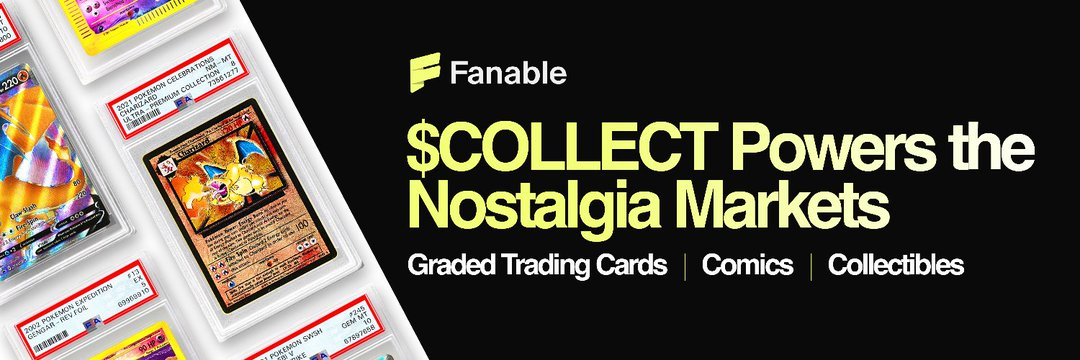
Unlike traditional NFT platforms, Collect on Fanable does not simply generate a digital image. Instead, it uses physical custody and on-chain ownership records to create a corresponding digital identity for real world collectibles. The platform generates a DOC, Digital Ownership Certificate, for each asset and records its ownership status and transaction history on the blockchain.
How Does Collect on Fanable Work?
The core logic of Collect on Fanable is “physical custody + on-chain ownership mapping.”
After a user submits a collectible, the platform first verifies the asset’s authenticity and grades it. Once verification is complete, the physical asset enters a professional custody system. At the same time, the system generates a DOC digital ownership certificate for the asset and maps it onto a blockchain network.
From that point on, users can trade the digital ownership of the collectible directly on an on-chain marketplace without repeatedly shipping the physical asset. Once a transaction is completed, the ownership information on-chain is updated accordingly, and the new holder receives the redemption right for the corresponding collectible.
What Is a DOC, Digital Ownership Certificate?
DOC is one of the core mechanisms in Collect on Fanable. It functions much like an on-chain ownership credential for a physical collectible.
In the traditional collectibles market, asset authenticity often depends on third party appraisal agencies or paper certificates. DOC digitizes that process. Each DOC corresponds to a specific physical asset and records its verification status, ownership transfers, and circulation history.
The value of DOC lies not only in proving who owns an asset, but also in creating an on-chain, verifiable circulation system for collectibles. Because blockchain records are tamper resistant, the trading history and ownership structure of collectibles can be made more transparent.
This mechanism also gives physical collectibles liquidity similar to NFTs. However, their underlying value does not depend entirely on digital content. Instead, it comes from actual assets in the real world.
What Is the COLLECT Token Used For?
COLLECT is the native token of the Collect on Fanable ecosystem. It is used to support the platform’s internal transactions, incentives, and governance structure.
Within the platform, COLLECT may serve as a payment medium for certain transactions and ecosystem functions. It also plays a role in community rewards and user incentives. For example, the platform may use COLLECT to encourage users to take part in market activities, contribute to the community, or help promote the ecosystem.
In addition, COLLECT may take on governance functions in the future, allowing community members to participate in decisions on platform rules, ecosystem development, and feature upgrades.
For Web3 projects, a native token is usually not just a payment tool. It is also an important medium that connects users, the community, and the broader platform ecosystem. The role of COLLECT reflects Fanable’s intention to build a long term collectibles community ecosystem rather than just a standalone trading platform.
How Are Physical Collectibles RWA Different from Traditional NFTs?
Physical collectibles RWA and traditional NFTs both rely on blockchain to record ownership, but they differ clearly in asset structure and source of value.
The value of a traditional NFT usually comes from digital scarcity and community consensus, with the asset itself existing mainly on-chain. By contrast, the collectibles RWA represented by Collect on Fanable emphasizes real world asset backing. Each on-chain ownership record corresponds to an actual physical collectible.
There are also differences in custody structure. NFTs usually do not involve real world asset management, while collectibles RWA must address physical storage, authenticity verification, logistics, redemption, and related issues.
| Comparison Dimension |
Collectibles RWA |
Traditional NFT |
| Asset Basis |
Physical collectibles |
Digital content |
| Requires Custody |
Yes |
No |
| Source of Ownership |
Real world asset mapping |
Blockchain native |
| Circulation Method |
on-chain + physical redemption |
Fully on-chain |
| Core Value |
Value of collectible assets |
Community and digital scarcity |
What Challenges Does Collect on Fanable Face?
Although the collectibles RWA market has growth potential, its development still faces several practical challenges.
First, a physical custody system brings relatively high operating costs. The platform needs to build secure warehousing, appraisal, and logistics systems to ensure asset safety and authenticity.
Second, collectible prices can be highly volatile. Compared with traditional RWA such as bonds or real estate, the collectibles market is more easily influenced by sentiment, pop culture trends, and community attention.
In addition, the regulatory framework for RWA is still evolving. Regulatory requirements for digital ownership, asset mapping, and on-chain trading vary across regions, which may also affect the development path of related platforms.
As a result, the long term development of Collect on Fanable depends not only on its technical capabilities, but also on demand in the collectibles market, the strength of its community ecosystem, and the maturity of the regulatory environment.
Summary
Collect on Fanable represents a new RWA model that combines physical collectibles with Web3 digital ownership. Through DOC digital ownership certificates, physical custody, and an on-chain trading structure, the platform aims to address authenticity verification, global circulation, and liquidity issues in the traditional collectibles market.
Compared with traditional NFT projects, Collect on Fanable places greater emphasis on real asset backing. Compared with the traditional collectibles market, its advantage lies in the transparency and digital circulation capabilities enabled by blockchain.
FAQs
Collect on Fanable shares some similarities with NFT platforms, but its core focus is closer to physical collectibles RWA rather than simply serving as a marketplace for digital image trading.
What Is DOC?
DOC, Digital Ownership Certificate, is an on-chain digital ownership certificate for physical collectibles. It is used to record asset ownership and circulation information.
What collectibles does Collect on Fanable support?
The platform mainly focuses on physical collectible assets such as Pokémon cards, comics, gaming collectibles, and model figures.
What is the core difference between collectibles RWA and NFTs?
Collectibles RWA are backed by real world assets, while NFTs are usually blockchain native digital assets.
Why do physical collectibles need to be brought on-chain?
Bringing physical collectibles on-chain can improve transaction transparency, global circulation efficiency, and digital ownership verification.