As interest rate cycles shift and stablecoin competition heats up, on-chain capital increasingly demands verifiable, composable cash management tools backed by real yields. OpenEden isn't just about slapping a label on TradFi assets and putting them on-chain—it's building a full-stack RWA issuance pipeline that combines fund structures, credit ratings, third-party audits, and regulatory licenses. This allows U.S. Treasury yields to serve as the foundational layer for DeFi collateral, settlement currencies, and treasury management.
Below, we break down OpenEden's role and logic in the RWA and on-chain Treasury ecosystem—covering the project's history, EDEN tokenomics, the TBILL/USDO product mechanics, technical and compliance architecture, real-world use cases, competitive positioning, investment risks, and what lies ahead.
What Is OpenEden (EDEN)? Project Background and Milestones
Founded around 2022 by Jeremy Ng and his team, OpenEden's mission is to bring real-world assets (RWA) into DeFi—enabling on-chain capital to safely and compliantly tap into traditional finance's core return engine: short-term U.S. Treasuries.
In early 2023, OpenEden launched the TBILL Vault, tokenizing short-term Treasuries on-chain. The product earned S&P Global's AA+ and Moody's investment-grade A ratings, making it one of the first tokenized Treasury funds recognized by major credit rating agencies. From there, OpenEden expanded rapidly across Asia-Pacific and Europe, becoming one of the largest tokenized Treasury issuers in these regions.
The ecosystem hit a major milestone in 2025: On September 30, the EDEN token held its TGE (Token Generation Event), kickstarting community incentives like the Bills Campaign. In December, a strategic RWA funding round closed with participation from Ripple, Lightspeed Faction, Gate Ventures, FalconX, and others. By 2026, USDO had been integrated into institutional channels such as FalconX, and OpenEden was advancing its Hong Kong compliance strategy alongside EX.IO. In January 2026, OpenEden teamed up with FalconX and Monarq to launch PRISM, a multi-strategy yield portfolio, further expanding its on-chain yield product lineup.
EDEN Tokenomics: How the Ecosystem Incentivizes Participation
EDEN is OpenEden's native utility and governance token, with a total supply of 1 billion. Its design prioritizes alignment with RWA fundamentals and protocol revenue—not speculative hype.
According to the official allocation breakdown, roughly 41.22% goes to the ecosystem and community, 20% to the team and advisors, 15.28% to investors, 10% to the foundation, 7.5% to the Bills airdrop, and 6% to early adopters. On TGE day, about 40.5% unlocked, with the remainder releasing linearly over three years. The team and investors face a six-month cliff followed by a 24-month vesting schedule.
Holding EDEN unlocks benefits like discounted fees, early access to new RWA products, and governance voting rights. Staking EDEN yields xEDEN—an auto-compounding governance token that doesn't require manual claiming. As protocol revenue flows in, the xEDEN-to-EDEN Convert Rate rises, so what starts as an inflationary staking asset can evolve into a genuine yield-bearing instrument backed by real-world returns. The protocol also plans to use a portion of fees or treasury revenue for open-market buybacks, creating a value feedback loop for long-term holders.
Additional incentives include the Bills Campaign credit airdrop and the EDEN Hodlers Bonus (a 120-day holding window with a shared reward pool), all designed to align the interests of early TBILL/USDO users with token holders.
How OpenEden Brings U.S. Treasuries and Real-World Assets On-Chain
OpenEden's tokenization approach boils down to three pillars: licensed fund management, on-chain certificate mapping, and institutional-grade custody and auditing.
- Fund Layer: TBILL is issued by a professional investment fund registered in the British Virgin Islands (BVI), operated by OpenEden's licensed investment management entity. The underlying assets are short-term U.S. Treasuries and dollar cash.
- Custody Layer: Assets are held by institutional custodians like BNY Mellon, ensuring bankruptcy remoteness from the protocol itself.
- On-Chain Layer: Users subscribe for TBILL using stablecoins like USDC, with smart contracts recording shares. Daily NAV is published, and all holdings and transactions are verifiable on-chain.
- Extension Layer: Derivative products like USDO and PRISM are built on top of TBILL, transmitting Treasury yields to a wider range of users and use cases.
This vertically integrated model lets OpenEden control product design, compliance, and on-chain distribution under one roof—rather than just being a front-end wrapper.
How USDO, TBILL, and the Yield-Bearing Stablecoin System Work
TBILL is OpenEden's flagship RWA token, a 1:1 representation of short-term U.S. Treasuries and dollar reserves. Holders get on-chain exposure to Treasury yields (historically around 5% APR, fluctuating with the rate environment). It's ideal for DAO treasuries, institutions, and anyone seeking low-risk on-chain yield.
USDO (OpenDollar) is issued by OpenEden Digital Limited, regulated by the Bermuda Monetary Authority. It's one of the world's first regulated yield-bearing stablecoins, pegged to 1 USD and fully collateralized by TBILL. Holders earn approximately 3.25% APR on-chain, distributed via daily rebasing. A non-rebasing version, cUSDO, keeps its balance constant while its price appreciates, making it easier to integrate with DeFi protocols.
Together, they form a clear hierarchy: TBILL provides the underlying asset and yield, while USDO packages that yield into a spendable on-chain dollar. By 2026, USDO was already being used as institutional collateral at FalconX and for OTC settlements among firms like Galaxy Digital and DeFiance Capital—showing its evolution from a savings tool to a settlement currency.
PRISM, built on top of TBILL and other RWA assets, is a multi-strategy quantitative portfolio managed by Monarq (cash arbitrage, over-collateralized lending, on-chain yield opportunities, etc.). Users stake to receive xPRISM, which reflects the portfolio's performance. PRISM targets qualified investors who want higher yields and can accept some strategy risk.
OpenEden's Core Technical Architecture and Compliance Framework
On the technical side, OpenEden deploys on multiple chains (primarily Ethereum, with expansion to others). Core components include the TBILL Vault smart contract, USDO's rebasing logic, EDEN/xEDEN staking contracts, and the PRISM conversion mechanism. All smart contracts have been audited by Ernst & Young and multiple security firms.
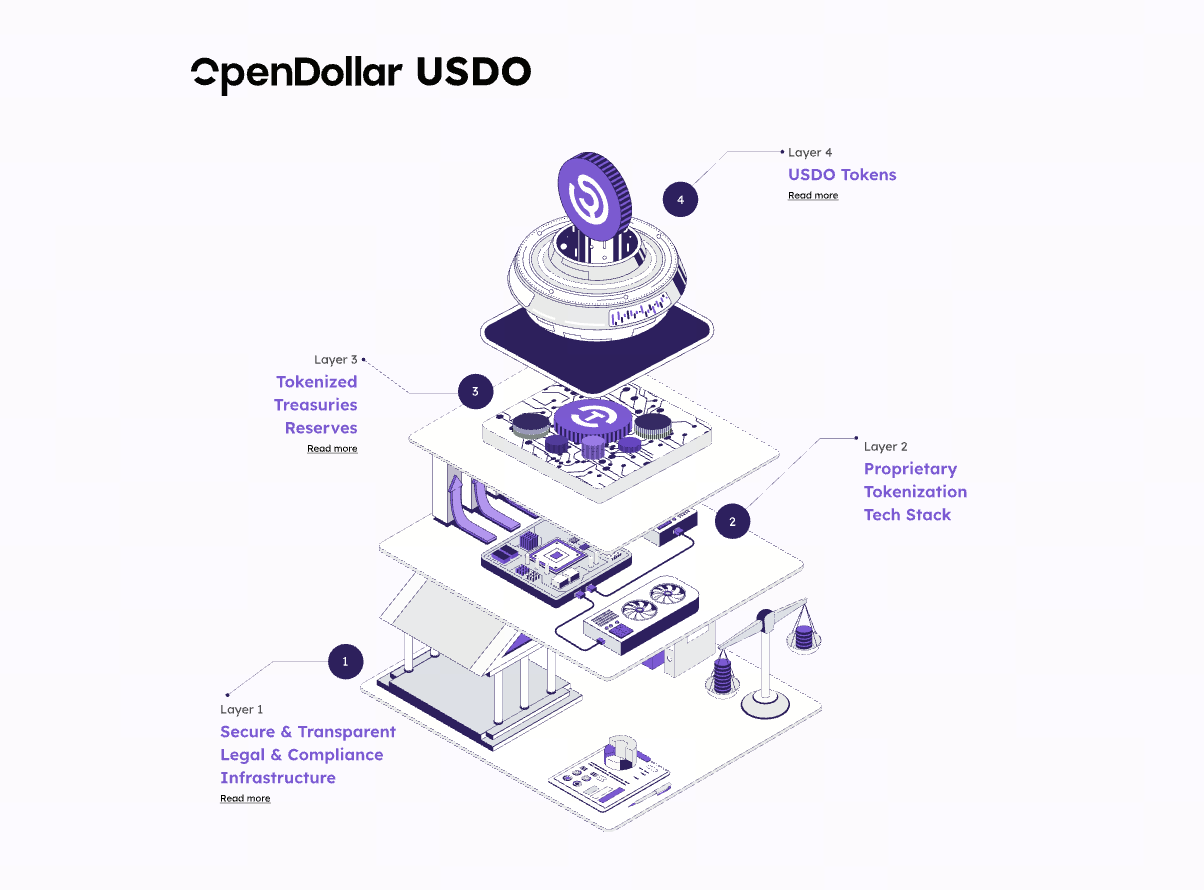
Compliance is OpenEden's real moat. The TBILL fund is regulated as a BVI professional fund. USDO and PRISM are issued by entities licensed by the Bermuda Monetary Authority (BMA), using a Segregated Accounts Company (SAC) structure for asset isolation. KYC/AML checks run throughout the subscription and redemption process, with some products available only to qualified investors or institutional users who complete onboarding.
Transparency is also a key differentiator. OpenEden publishes daily NAV reports, on-chain reserve proofs, and public rating documents—allowing holders to scrutinize its RWA products the same way they would a traditional fund. That level of transparency remains rare in the RWA space.
Use Cases of OpenEden in the RWA and DeFi Ecosystem
- DAO and Protocol Treasuries: Put idle USDC into TBILL or USDO to earn Treasury yields while staying liquid, reducing reliance on any single stablecoin issuer.
- DeFi Collateral and Lending: Use TBILL or cUSDO as collateral in lending protocols to boost capital efficiency.
- Institutional Cash Management: Through channels like FalconX, institutions use USDO as yield-bearing collateral or OTC settlement currency, bridging TradFi and on-chain with less friction.
- Yield-Bearing Stablecoin Race: USDO competes with Ethena's sUSDe, Ondo's USDY, and others in the "interest-bearing dollar" category, but OpenEden differentiates itself with regulatory licenses and direct Treasury backing.
- Multi-Strategy Yields: PRISM serves high-net-worth and institutional clients who want returns beyond single Treasury yields but still need a compliant framework.
How OpenEden Compares to Other RWA Protocols
| Dimension |
OpenEden |
Competitors (e.g., Ondo Finance) |
| Core Assets |
Short-term U.S. Treasuries (TBILL/USDO) |
Treasuries (USDY/OUSG) plus expansion into equities, etc. |
| Regulatory Path |
BVI fund + Bermuda licensed issuance |
Offshore SPV + broker partnerships, etc. |
| Rating Endorsement |
S&P AA+, Moody's A |
Primarily institutional partnerships |
| Custody |
Direct custody by BNY Mellon |
Varies by product |
| Chain Deployment |
Primarily Ethereum, gradually multi-chain |
Ondo has broader multi-chain coverage |
| Token |
EDEN/xEDEN tied to RWA revenue |
ONDO, etc. |
OpenEden's edge lies in its unique combo: credit ratings, a vertical fund structure, and a yield-bearing stablecoin. It's not just chasing TVL numbers. Compared to Ondo's institutional depth, OpenEden's ecosystem reach and multi-chain presence still have room to grow, but its Asia-Pacific compliance narrative and institutional custody path give it a distinct advantage.
Key Risks to Consider Before Investing in EDEN Tokens
- Token Unlock Pressure: About 40.5% unlocked on TGE day, with the rest releasing over three years—creating potential near-term selling pressure.
- RWA and Regulatory Risks: Changes in U.S. Treasury policy, cross-border securities regulations, or stablecoin laws could affect how TBILL and USDO are issued and sold in different regions.
- Yield Volatility: If the Fed eases policy, USDO and TBILL may become less attractive.
- Smart Contract and Operational Risks: Despite audits, DeFi integrations can introduce composability risks.
- Competition and Concentration: The RWA space is crowded. OpenEden's TVL is still relatively small, and its token price could diverge from fundamentals over the long term.
- Geographic and Access Restrictions: Some products require KYC and aren't available in all jurisdictions, limiting retail participation.
EDEN is best suited for investors who understand the RWA business model and can stomach crypto volatility and unlock cycles—not for those looking for quick speculative gains.
Future Direction and Market Potential of the OpenEden Ecosystem
In the near term, OpenEden will focus on deepening USDO's institutional adoption (more exchange, custody, and OTC channels), expanding PRISM to additional chains, and strengthening partnerships in compliant hubs like Hong Kong. Mid-term, it may pursue higher-tier licenses like Bermuda's Class F and broaden its range of tokenized assets.
Long-term potential hinges on whether RWA becomes a true "super cycle." If on-chain treasury management, yield-bearing stablecoins, and tokenized Treasuries become DeFi infrastructure staples, OpenEden—as one of the few players with ratings, licenses, and on-chain distribution—could capture significant market share. Industry forecasts see the tokenized real-world asset market reaching trillions of dollars, and Treasuries, as the most liquid and earliest-adopted asset class, remain OpenEden's core growth engine.
Risk and opportunity go hand in hand: Whether OpenEden can turn its funding, products, and EDEN token value into a sustainable flywheel will be the ultimate test of its long-term viability.
Summary
OpenEden is a compliant RWA infrastructure that bridges U.S. Treasuries and on-chain finance. Its stack uses TBILL as the underlying, USDO as the yield-bearing stablecoin, and EDEN/xEDEN for governance and value alignment—now expanding into multi-strategy yields with PRISM. Its investments in credit ratings, custody, and regulation give it a clear identity in the "on-chain Treasuries" niche.
As RWA moves from hype to infrastructure, OpenEden represents a "compliance first, scale later" approach. Whether it can consistently translate real-world yields into on-chain value and token returns will determine how high EDEN—and the entire ecosystem—can climb.
FAQs
-
What's the relationship between OpenEden and the EDEN token?
OpenEden is the protocol and product ecosystem for RWA tokenization. EDEN is its native token, used for governance, fee discounts, early access to new products, and value alignment. TBILL and USDO are underlying RWA products; EDEN doesn't represent a share of Treasuries—it's a governance and incentive token. Staking EDEN gives you xEDEN, which auto-compounds and entitles you to governance rights.
-
What's the difference between TBILL and USDO? Which should I choose?
TBILL is a 1:1 on-chain representation of short-term U.S. Treasuries, with yields floating with the market. It's best for DAO treasuries, institutions, and those wanting direct Treasury exposure. USDO is a yield-bearing stablecoin pegged to 1 USD and backed by TBILL, ideal for "spendable dollars + steady yield." For daily payments or DeFi integrations, USDO or cUSDO (non-rebasing) is more practical. If you want pure Treasury exposure and institutional-grade structure, go with TBILL.
-
Where does USDO's yield come from? Is it safe?
USDO's yield comes from the interest earned on the short-term U.S. Treasuries held by its underlying TBILL. It's distributed through daily rebasing or cUSDO price appreciation. Safety relies on multiple layers: Bermuda licensing, SAC bankruptcy isolation, institutional custody with BNY Mellon, smart contract audits, and daily NAV reports. That said, risks like falling interest rates, regulatory changes, and smart contract bugs exist—so it's not a risk-free deposit.
-
Do I need KYC to buy TBILL or USDO?
Most OpenEden products require KYC/AML-compliant onboarding. Access depends on the product, your jurisdiction, and investor type. Some tokens already trading on DEXs may not require going through OpenEden's minting process, but initial minting/redemption usually does. Always check your region's compliance requirements on the official website or app before participating.
-
Is EDEN a good investment? What are the main risks?
EDEN's value is tied to OpenEden's adoption, RWA product growth, and buyback/staking mechanisms. It's a governance and incentive token, not a direct claim on Treasuries. Key risks: ~40.5% unlock on TGE day creates short-term selling pressure, followed by three years of linear releases; RWA regulatory shifts; Treasury yield fluctuations; and competition from Ondo and others. This token is for investors who understand the RWA model and can handle crypto market volatility. This is not investment advice.







