In the traditional Web3 system, users need to rely on wallets to create accounts, manage private keys, and sign transactions. While this process ensures decentralized control, it also makes the user experience more complex and has become one of the main obstacles preventing many users from entering Web3.
As AI Agents become increasingly connected with blockchain, the way users interact with on-chain systems is changing. As the core gateway provided by Pieverse, Purr-Fect Claw is designed to turn on-chain operations into a chat like interaction, allowing users to complete transactions without needing to understand the underlying mechanisms. This model lowers the barrier to entry while also helping Web3 reach a broader user base.
Basic Concept of Purr-Fect Claw
Purr-Fect Claw is an AI Agent interaction tool within the Pieverse ecosystem. It is used to convert user input into on-chain operations.
Its core role is to act as an intermediary layer between users and blockchain. By interpreting natural language instructions and calling the corresponding execution logic, it makes complex on-chain actions easier to understand and use.
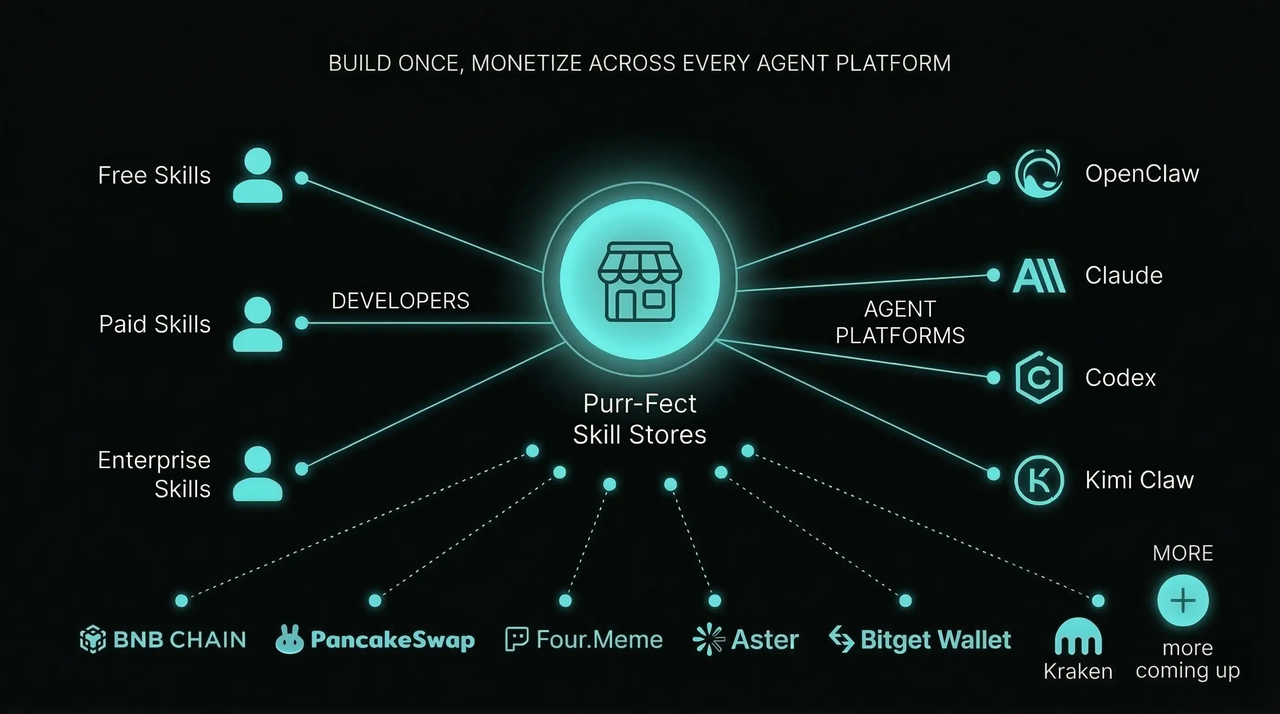
How Web2 Chat Connects to Web3 Transactions
One important feature of Purr-Fect Claw is its chat based interaction model. Users can enter instructions in common communication tools, such as sending a text request or describing an action they want to perform.
After receiving the instruction, the system has the AI Agent interpret it and map it to a specific on-chain transaction. From the user’s perspective, the whole process feels more like using a chatbot than a traditional blockchain tool.
This approach makes Web3 operations more intuitive and reduces the learning curve.
Why Purr-Fect Claw Does Not Require a Traditional Wallet
In the traditional model, wallets handle account management and signing. In Purr-Fect Claw, these functions are abstracted into the system layer.
Users do not need to interact directly with private keys, nor do they need to manually complete signatures. Transaction authorization and execution are handled through the agent mechanism, reducing the number of steps required from the user.
This design makes wallet-free Web3 possible and changes how users interact with blockchain.
Purr-Fect Claw’s Identity Abstraction and Agent Mechanism
To enable a wallet-free experience, the system typically uses identity abstraction to decouple user identity from specific addresses.
AI Agents play the role of executors in this process, completing transaction operations according to user permissions. Identity information can be managed in various ways, such as account binding or in-app identifiers.
This structure allows users to participate in transactions without directly managing on-chain accounts.
Purr-Fect Claw’s User Experience and Interaction Flow
In actual use, users trigger actions by entering instructions, such as making a transfer or calling a contract function.
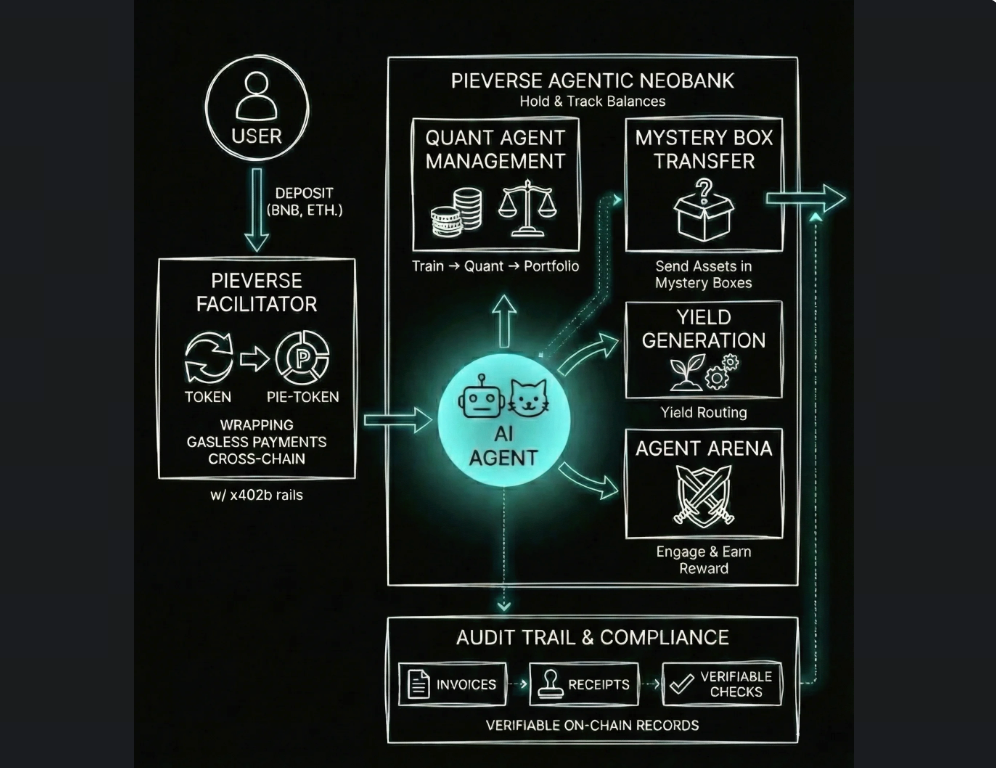
The system then interprets the instruction and executes the transaction while handling the related fees and signing process. The final result is returned to the user in a readable format, and a record is generated on-chain.
The entire flow reduces the multi-step operations common in traditional Web3, making interaction smoother and more continuous.
Purr-Fect Claw’s Security Mechanisms and Potential Challenges
Although the wallet-free design improves usability, it also introduces new security considerations.
For example, users need to rely on the system’s permission management rather than maintaining full control over private keys. In addition, the execution logic of AI Agents needs appropriate security limits to prevent mistaken operations or abuse.
As a result, systems usually combine audit mechanisms with permission controls to balance convenience and security.
How Purr-Fect Claw Differs from Traditional Web3 Interaction
Traditional Web3 requires users to actively operate wallets to complete transactions, while Purr-Fect Claw turns this process into instruction driven interaction.
This difference changes not only how operations are performed, but also the overall user experience, making Web3 feel closer to the logic of Web2 applications.
A comparison between wallet-free Web3 and the traditional wallet model makes the practical differences between the two easier to understand.
Conclusion
Through AI Agents and identity abstraction, Purr-Fect Claw turns complex on-chain operations into simple chat based interactions, enabling a wallet-free Web3 experience. This model lowers the barrier to entry while providing foundational support for automated execution and large scale adoption.
FAQs
Does Purr-Fect Claw require no wallet at all?
Users do not need to operate a wallet directly during use, but the underlying system still relies on on-chain accounts.
How does Purr-Fect Claw execute transactions?
The system uses AI Agents to interpret user instructions and complete signing and transaction execution in the background.
Is the wallet-free model safe?
Security depends on the system’s permission controls and audit mechanisms. Users need to rely on the security design provided by the platform.
What operations does Purr-Fect Claw support?
It typically supports transfers, contract calls, and other on-chain interactions, depending on the system implementation.
Will this model replace traditional wallets?
The two serve different use cases. The wallet-free model is better suited to low barrier and automated scenarios.