GLQ vs OP: Exploring the Impact of Different Optimization Algorithms on Machine Learning Performance

2025-10-12 00:06:06
Altcoins
Crypto Insights
DeFi
Ethereum
Layer 2
Article Rating : 3.7
half-star
0 ratings
This article explores the investment comparison between GraphLinq Protocol (GLQ) and Optimism (OP), two distinctive cryptocurrency assets with unique applications. It covers historical price trends, current market status, supply mechanisms, and institutional adoption, offering critical insights into which token is potentially a better buy. GLQ is noted for its DeFi data monitoring, while OP stands as an efficient Ethereum Layer 2 solution. Readers seeking investment strategies and risk assessments, particularly among new and institutional investors, will find valuable guidance. Key topics include price prediction, risk comparison, and investment advice, with real-time price data available on Gate.
GLQ vs OP: Exploring the Impact of Different Optimization Algorithms on Machine Learning Performance

Introduction: GLQ vs OP Investment Comparison

In the cryptocurrency market, the comparison between GraphLinq Protocol (GLQ) vs Optimism (OP) has been an unavoidable topic for investors. The two not only show significant differences in market cap ranking, application scenarios, and price performance, but also represent different positioning in crypto assets.

GraphLinq Protocol (GLQ): Since its launch in 2021, it has gained market recognition for its decentralized DeFi data monitoring and automation capabilities.

Optimism (OP): Introduced in 2022, it has been hailed as a low-cost, high-speed ETHereum Layer 2 solution, becoming one of the most widely adopted scaling platforms.

This article will provide a comprehensive analysis of the investment value comparison between GLQ and OP, focusing on historical price trends, supply mechanisms, institutional adoption, technological ecosystems, and future predictions, attempting to answer the question investors care about most:

"Which is the better buy right now?"

I. Price History Comparison and Current Market Status

  • 2024: GLQ reached its all-time high of $0.19361 on March 18, 2024.
  • 2024: OP achieved its all-time high of $4.84 on March 6, 2024.
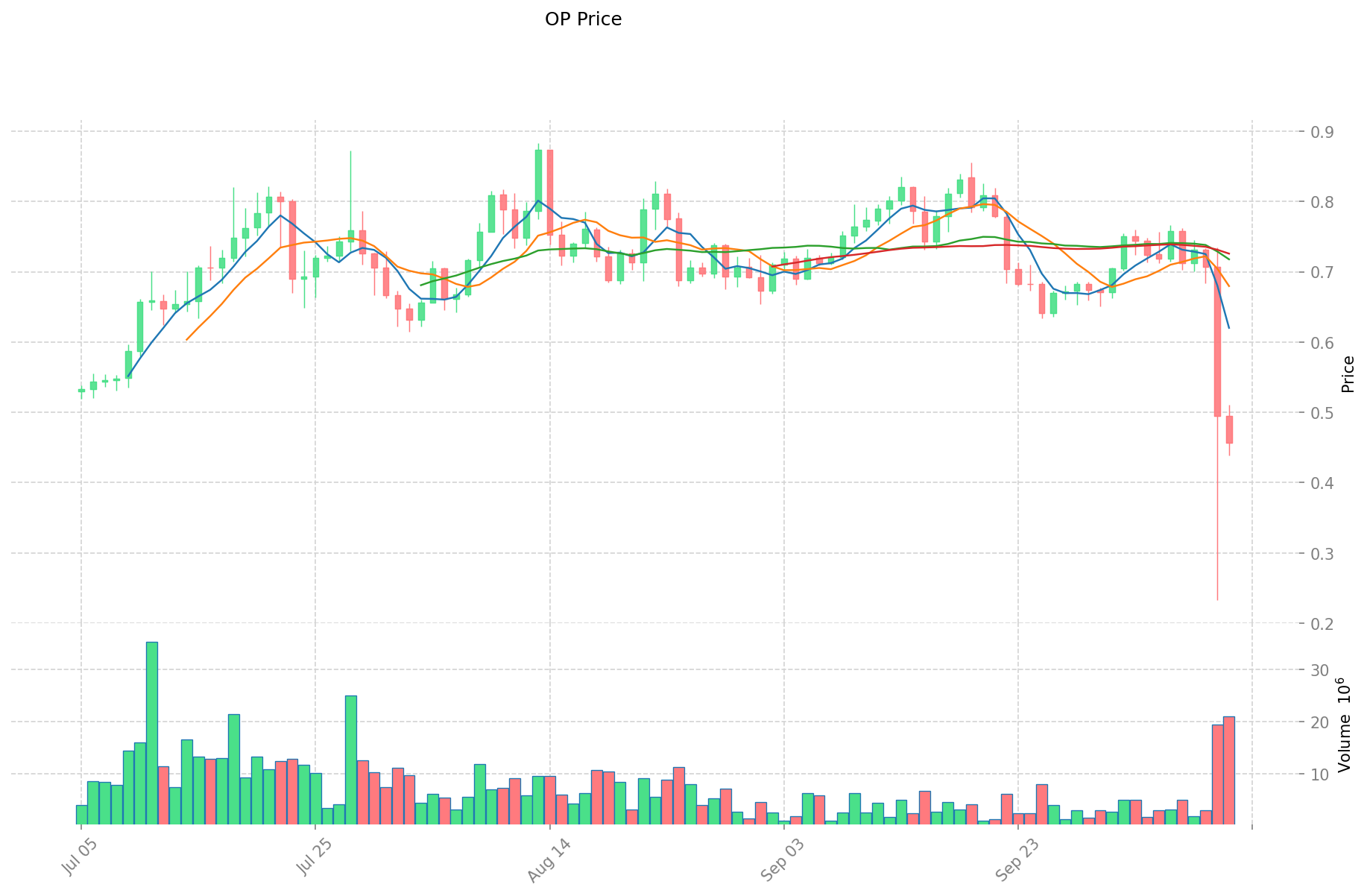
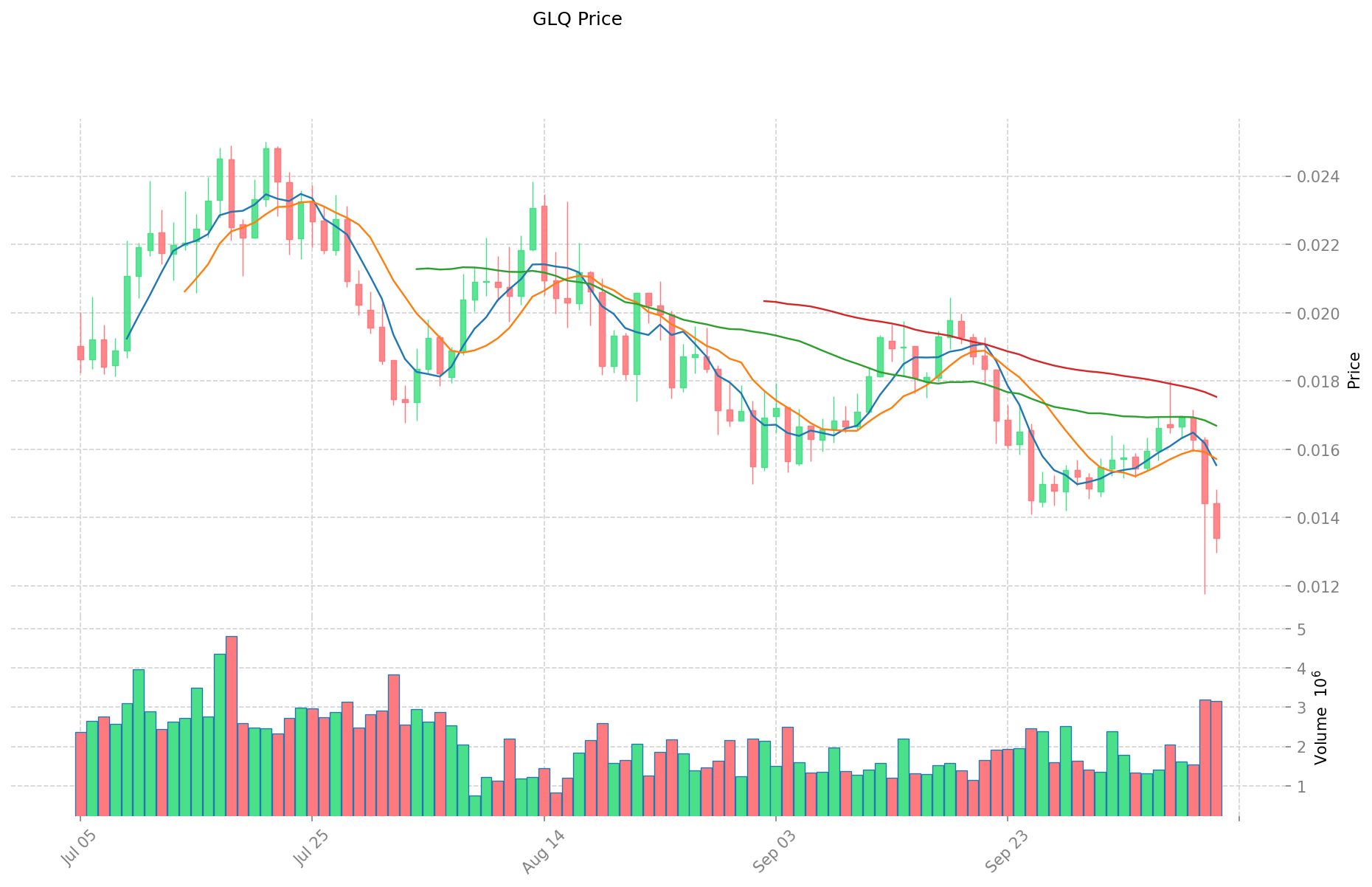
  • Comparative Analysis: In the recent market cycle, GLQ dropped from its high of $0.19361 to a current price of $0.01341, while OP declined from $4.84 to $0.4559.

Current Market Situation (2025-10-12)

  • GLQ current price: $0.01341
  • OP current price: $0.4559
  • 24-hour trading volume: GLQ $44,625.58 vs OP $10,268,131.77
  • Market Sentiment Index (Fear & Greed Index): 27 (Fear)

Click to view real-time prices:
price_image1 price_image2

II. Key Factors Affecting GLQ vs OP Investment Value

Supply Mechanism Comparison (Tokenomics)

  • GLQ: Insufficient data on supply mechanism
  • OP: Limited information available on tokenomics
  • 📌 Historical Pattern: Supply mechanisms have historically been significant price drivers in cryptocurrency markets, though specific patterns for these tokens cannot be determined from available data.

Institutional Adoption and Market Applications

  • Institutional Holdings: Available data does not indicate clear institutional preference
  • Enterprise Adoption: Insufficient information on enterprise applications for either token
  • National Policies: Regulatory attitudes toward these tokens are not specified in the provided information

Technical Development and Ecosystem Building

  • GLQ Technical Upgrades: No specific technical upgrade information available
  • OP Technical Development: No clear data on development roadmap
  • Ecosystem Comparison: Insufficient information to compare DeFi, NFT, payment, and smart contract implementations

Macroeconomic Factors and Market Cycles

  • Performance in Inflationary Environments: The US May core PPI annual rate shows a value of 3, exceeding expectations, which benefits the US dollar, potentially affecting the broader crypto market
  • Macroeconomic Monetary Policies: Producer price indices excluding food and energy serve as indicators for evaluating price changes in US manufacturing markets
  • Geopolitical Factors: International tensions such as the Russia-Ukraine conflict may influence market dynamics, though specific impacts on GLQ and OP are not detailed in the provided sources

III. 2025-2030 Price Prediction: GLQ vs OP

Short-term Prediction (2025)

  • GLQ: Conservative $0.00858-$0.01341 | Optimistic $0.01341-$0.01529
  • OP: Conservative $0.42883-$0.4562 | Optimistic $0.4562-$0.66149

Mid-term Prediction (2027)

  • GLQ may enter a growth phase, with estimated prices of $0.00981-$0.02049
  • OP may enter a bullish phase, with estimated prices of $0.59098-$0.74857
  • Key drivers: Institutional investment, ETF developments, ecosystem growth

Long-term Prediction (2030)

  • GLQ: Base scenario $0.02209-$0.02620 | Optimistic scenario $0.02620-$0.03005
  • OP: Base scenario $1.07597-$1.22123 | Optimistic scenario $1.22123-$1.36649

View detailed price predictions for GLQ and OP

Disclaimer

GLQ:

年份 预测最高价 预测平均价格 预测最低价 涨跌幅
2025 0.0152874 0.01341 0.0085824 0
2026 0.02008818 0.0143487 0.012339882 7
2027 0.0204899436 0.01721844 0.0098145108 28
2028 0.022247946324 0.0188541918 0.010746889326 40
2029 0.0236337294213 0.020551069062 0.01274166281844 53
2030 0.030045662968644 0.02209239924165 0.015906527453988 64

OP:

年份 预测最高价 预测平均价格 预测最低价 涨跌幅
2025 0.66149 0.4562 0.428828 0
2026 0.75444075 0.558845 0.29618785 22
2027 0.7485728775 0.656642875 0.5909785875 44
2028 1.03985965685 0.70260787625 0.3864343319375 54
2029 1.2807136368285 0.87123376655 0.784110389895 91
2030 1.366486601145347 1.07597370168925 1.03293475362168 136

IV. Investment Strategy Comparison: GLQ vs OP

Long-term vs Short-term Investment Strategies

  • GLQ: Suitable for investors focused on DeFi data monitoring and automation potential
  • OP: Suitable for investors interested in Ethereum scaling solutions and Layer 2 technology

Risk Management and Asset Allocation

  • Conservative investors: GLQ: 30% vs OP: 70%
  • Aggressive investors: GLQ: 50% vs OP: 50%
  • Hedging tools: Stablecoin allocation, options, cross-currency portfolios

V. Potential Risk Comparison

Market Risks

  • GLQ: Limited market cap and liquidity may lead to higher volatility
  • OP: Dependent on Ethereum's performance and overall Layer 2 adoption

Technical Risks

  • GLQ: Scalability, network stability
  • OP: Network congestion during high demand, potential smart contract vulnerabilities

Regulatory Risks

  • Global regulatory policies may impact both tokens differently, with Layer 2 solutions potentially facing less scrutiny than niche DeFi projects

VI. Conclusion: Which Is the Better Buy?

📌 Investment Value Summary:

  • GLQ advantages: Specialized in DeFi data monitoring and automation
  • OP advantages: Widely adopted Ethereum Layer 2 scaling solution with lower transaction costs

✅ Investment Advice:

  • New investors: Consider allocating a smaller portion to GLQ and a larger portion to OP due to OP's higher market cap and liquidity
  • Experienced investors: Evaluate both tokens based on their unique value propositions and potential in their respective niches
  • Institutional investors: OP may be more suitable due to its larger market presence and role in Ethereum scaling

⚠️ Risk Warning: The cryptocurrency market is highly volatile, and this article does not constitute investment advice. None

VII. FAQ

Q1: What are the main differences between GLQ and OP? A: GLQ specializes in decentralized DeFi data monitoring and automation, while OP is an Ethereum Layer 2 scaling solution offering lower transaction costs and higher speeds.

Q2: Which token has shown better price performance recently? A: Based on the provided data, OP has shown better price performance and trading volume compared to GLQ. OP's current price is $0.4559 with a 24-hour trading volume of $10,268,131.77, while GLQ's price is $0.01341 with a trading volume of $44,625.58.

Q3: What are the long-term price predictions for GLQ and OP? A: For 2030, GLQ's base scenario predicts a price range of $0.02209-$0.02620, while OP's base scenario predicts $1.07597-$1.22123.

Q4: How do the supply mechanisms of GLQ and OP compare? A: Unfortunately, there is insufficient data on the supply mechanisms (tokenomics) for both GLQ and OP to make a meaningful comparison.

Q5: What are the main risk factors for investing in GLQ and OP? A: For GLQ, main risks include limited market cap, liquidity, and potential scalability issues. For OP, risks include dependence on Ethereum's performance and potential network congestion during high demand periods.

Q6: How might institutional investors view GLQ vs OP? A: Institutional investors may find OP more suitable due to its larger market presence and significant role in Ethereum scaling. However, specific data on institutional preferences is not available.

Q7: What investment strategies are recommended for GLQ and OP? A: Conservative investors might consider allocating 30% to GLQ and 70% to OP, while aggressive investors might opt for a 50-50 split. New investors may want to allocate a smaller portion to GLQ and a larger portion to OP due to OP's higher market cap and liquidity.

* The information is not intended to be and does not constitute financial advice or any other recommendation of any sort offered or endorsed by Gate.
Related Articles
2025 LRC Price Prediction: Analyzing Market Trends, Tokenomics and Growth Potential in the Layer 2 Ecosystem

2025 LRC Price Prediction: Analyzing Market Trends, Tokenomics and Growth Potential in the Layer 2 Ecosystem

This article provides an in-depth analysis of Loopring (LRC) within the layer-2 ecosystem, focusing on its market position, historical price trends, and growth potential as of 2025. It offers professional price predictions from 2025 to 2030, exploring key factors such as tokenomics, macroeconomic impacts, and technological advancements influencing LRC's future value. Targeting investors and crypto enthusiasts, the piece outlines investment strategies, risk management frameworks, and addresses potential market, regulatory, and technical risks. Readers will gain insights into LRC's investment value, trading methods, and FAQs on future price projections.
2025-09-26 07:47:40
JUICE vs UNI: The Battle of Decentralized Exchanges - Which Will Dominate the Crypto Market?

JUICE vs UNI: The Battle of Decentralized Exchanges - Which Will Dominate the Crypto Market?

Discover the comparative investment value between JUICE and UNI, two leading decentralized exchanges. This article examines historical price trends, current market status, brand value, and potential growth to determine which token may dominate the crypto market. It answers key investor questions about token differences, strategies for portfolio allocation, and associated risks, offering insights for new, experienced, and institutional investors. Check real-time prices via Gate for informed decision-making. Ideal for those seeking a concise analysis on JUICE and UNI's market position and future potential.
2025-11-02 15:11:42
HORD vs OP: The Battle for Decentralized Finance Supremacy

HORD vs OP: The Battle for Decentralized Finance Supremacy

The article "HORD vs OP: The Battle for Decentralized Finance Supremacy" scrutinizes the investment landscapes of HORD and OP in the cryptocurrency market. It evaluates their historical price trends, market exposure, risk management, and technological ecosystems to determine which could be the preferred choice for investors. The analysis addresses questions concerning price projections, risk comparisons, and portfolio allocation strategies tailored for both new and seasoned investors. Keywords such as "investment strategy," "market risk," and "price prediction" accentuate the article's structure, enhancing readability for quick scans. Check real-time price updates on Gate.

2025-10-30 01:11:59
GET vs LRC: Comparing Two Popular Approaches to Lyric Synchronization in Music

GET vs LRC: Comparing Two Popular Approaches to Lyric Synchronization in Music

This article provides a comprehensive comparison between Global Entertainment Token (GET) and Loopring (LRC), focusing on their investment potential. It analyzes historical price trends, technological ecosystems, and market performance of both tokens while addressing questions on which is the better buy. Key insights include the market cap, trading volume, and technical applications in entertainment and DeFi sectors. Suitable for investors seeking to compare crypto asset positioning, the article also highlights potential risks and investment strategies. For real-time price updates, view GET and LRC current prices on Gate.

2025-11-24 18:15:44
2025 MITO Price Prediction: Expert Analysis and Market Forecast for the Year Ahead

2025 MITO Price Prediction: Expert Analysis and Market Forecast for the Year Ahead

The article provides an in-depth analysis of the MITO token's market position, price trajectory, and investment potential through 2025-2030. It examines MITO's historical price patterns, current market status, key factors affecting future prices, and investment strategies tailored for various investor profiles. The piece addresses concerns such as liquidity volatility, regulatory, and technical risks, offering practical guidance for investors. Suitable for DeFi-focused and risk-tolerant individuals or institutions, it emphasizes MITO's role in enhancing cross-chain liquidity. The report advocates monitoring trends and employing strategic risk management.
2025-12-21 01:32:25
How Do Cryptocurrency Competitors Compare: Market Cap, Performance, and User Base Analysis in 2026?

How Do Cryptocurrency Competitors Compare: Market Cap, Performance, and User Base Analysis in 2026?

# Article Overview: Cryptocurrency Market Competitors Analysis 2026 This comprehensive guide examines how Bitcoin, Ethereum, BNB, and emerging cryptocurrencies compete across market cap, performance metrics, and user adoption. Readers gain actionable insights into market dominance shifts, transaction speed comparisons, and security features differentiating top blockchain platforms. The article addresses critical investor questions: Which cryptocurrencies lead in 2026? How do performance metrics influence adoption? What distinguishes emerging competitors? Through data-driven analysis of market capitalization hierarchy, technical innovation, and geographic user distribution, this resource equips traders, institutional investors, and blockchain enthusiasts with essential competitive intelligence. Discover why Layer 2 solutions and AI coins gain traction, how stablecoins reshape payment infrastructure on Gate, and why market cap alone doesn't determine real-world adoption success. Perfect for decision-makers nav
2026-01-01 08:30:13
Recommended for You
How to Evaluate Exchange Fund Security: Understanding Proof of Reserves Mechanisms and Verification Methods

How to Evaluate Exchange Fund Security: Understanding Proof of Reserves Mechanisms and Verification Methods

Explore effective strategies to evaluate the security of your funds on Gate. Understand the fundamentals of Proof of Reserves (PoR), learn how to verify reserves through Merkle Trees, and see why third-party audits play a critical role.

2026-01-08 22:00:33
Vitalik Criticizes Web3 Apps Relying on Centralized Services Like Google Login

Vitalik Criticizes Web3 Apps Relying on Centralized Services Like Google Login

This article examines Vitalik Buterin's critical concerns about Web3 applications that contradict decentralization principles by relying on centralized authentication systems like Google login. The piece reveals how this paradox undermines blockchain's core values of user sovereignty and data ownership. It outlines the vulnerabilities introduced by centralized dependencies, including single points of failure and privacy compromises. The article then presents technical solutions for true decentralization, including blockchain-based identity mechanisms, Ethereum Name Service (ENS), and self-sovereign identity frameworks. Finally, it discusses implications for Web3 development, emphasizing the need for clearer standards and architectural alignment with decentralization principles. This guide serves developers, project teams, and crypto stakeholders seeking to build authentic decentralized applications on Gate and other platforms while maintaining ideological consistency with Web3's foundational values.
2026-01-08 21:56:57
What is a Memo/Tag?

What is a Memo/Tag?

Discover the role of memos and tags in crypto wallets—unique identifiers required for XRP, XLM, and other token transfers on Gate. Learn how to properly use memos for deposits and withdrawals. A comprehensive beginner’s guide to web3.
2026-01-08 21:53:36
In-Depth Analysis of MEV Bot Scams: How to Identify and Avoid Web3 Arbitrage Traps

In-Depth Analysis of MEV Bot Scams: How to Identify and Avoid Web3 Arbitrage Traps

This comprehensive guide exposes MEV Bot scams that deceive users through three manipulation stages: enticing smart contracts on video platforms, displaying fake profits to build false trust, and stealing funds through hidden withdrawal functions. The article addresses the critical gap between Web3 opportunities and security risks, serving crypto investors and DeFi users vulnerable to sophisticated fraud. It provides essential protection strategies including vigilant assessment of high-return claims, thorough smart contract audits, transaction simulation tools, and minimal-amount testing before major investments. Beyond technical safeguards, the guide emphasizes critical thinking and community awareness, offering practical FAQ answers on MEV mechanics, legitimate arbitrage differentiation, and protection tools. By combining technical knowledge with cautious skepticism and verification processes, users can navigate cryptocurrency investments on Gate while minimizing exposure to fraudulent schemes.
2026-01-08 21:50:38
What is a Spot Ethereum ETF?

What is a Spot Ethereum ETF?

Explore the complete guide to spot Ethereum ETFs, including their definition, benefits, how they work, and investment strategies. Review SEC approval, participating institutions, and a comparison with futures-based ETFs. Gain easy access to Ethereum with minimized theft risk, lower costs, and full regulatory compliance.

2026-01-08 21:48:27
Optimistic Rollup vs. Zero-Knowledge Rollup: What Are the Differences?

Optimistic Rollup vs. Zero-Knowledge Rollup: What Are the Differences?

This comprehensive guide explores two leading Layer 2 scaling solutions for blockchain networks: Optimistic Rollups and Zero-Knowledge Rollups. Optimistic Rollups bundle transactions off-chain with fraud-proof validation, offering simplicity and lower computational costs but featuring extended finality periods. Zero-Knowledge Rollups employ cryptographic validity proofs to ensure transaction correctness mathematically, delivering immediate finality and superior security without requiring active network monitoring. The article examines key differences in validation mechanisms, data efficiency, withdrawal times, and security models, highlighting how Optimistic Rollups prioritize implementation ease while ZK Rollups emphasize robust cryptographic guarantees. Understanding these trade-offs helps developers and users select the appropriate solution on platforms like Gate based on specific scalability, security, and speed requirements for their blockchain applications.
2026-01-08 21:39:06