MUSE vs LINK: Comparing Two Innovative AI Language Models for Creative Writing

2025-10-10 00:34:26
Altcoins
Blockchain
DeFi
Investing In Crypto
NFTs
Article Rating : 3.8
half-star
0 ratings
The article "MUSE vs LINK: Comparing Two Innovative AI Language Models for Creative Writing" offers a deep dive into the investment comparison between MUSE and LINK in the cryptocurrency market. Targeting investors, it analyzes historical price trends, supply mechanisms, and institutional adoption, guiding readers on which might be the better buy now. Additional insights into technical ecosystems and strategic investment approaches ensure a well-rounded perspective for portfolio allocation decisions. The FAQ section further clarifies key differences and future expectations, making it a comprehensive resource for crypto investment strategies.
MUSE vs LINK: Comparing Two Innovative AI Language Models for Creative Writing

In the cryptocurrency market, the comparison between MUSE and LINK has always been an unavoidable topic for investors. The two not only show significant differences in market cap ranking, application scenarios, and price performance, but also represent different positioning in the crypto asset space.

MUSE (MUSE): Since its launch, it has gained market recognition for its role in NFT tokenization and decentralized exchange governance.

LINK (LINK): Since its inception in 2017, it has been hailed as a leader in blockchain oracles, becoming one of the cryptocurrencies with the highest global trading volume and market capitalization.

This article will comprehensively analyze the investment value comparison between MUSE and LINK, focusing on historical price trends, supply mechanisms, institutional adoption, technical ecosystems, and future predictions, attempting to answer the question that investors care about most:

"Which is the better buy right now?"

I. Price History Comparison and Current Market Status

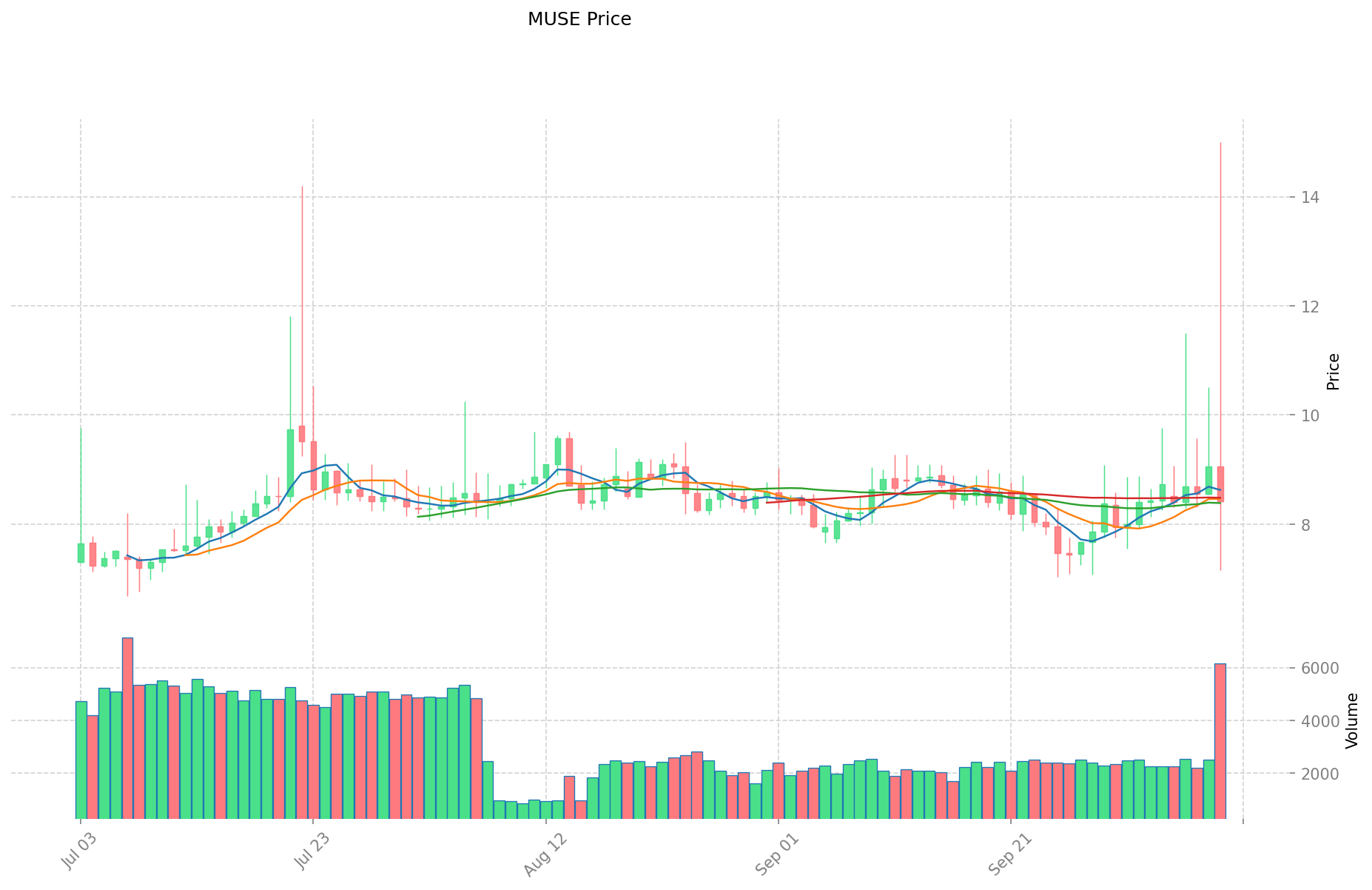
  • 2021: MUSE reached its all-time high of $124.14 on March 14, 2021, likely due to increased interest in NFT-related projects.
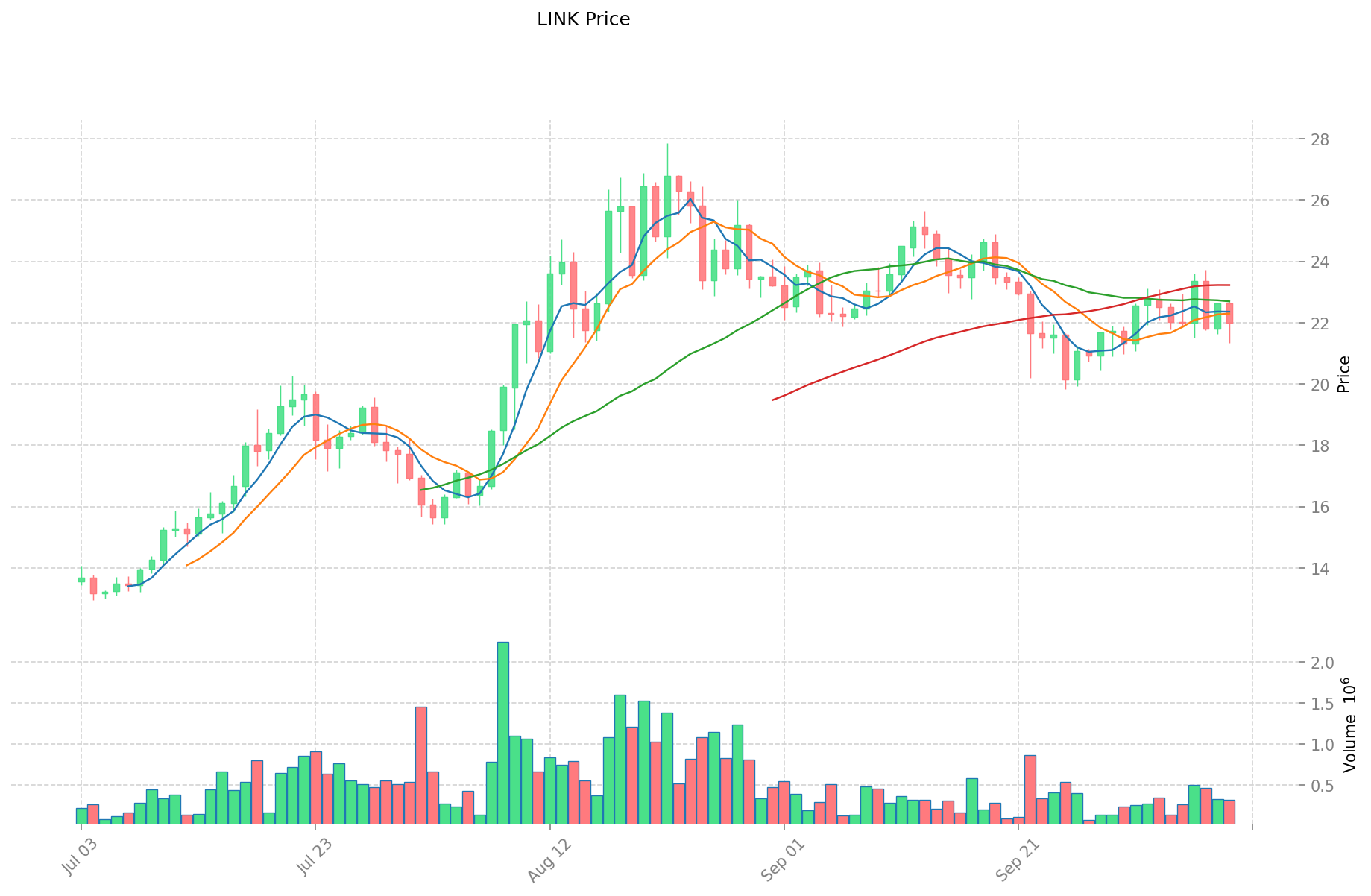
  • 2021: LINK hit its all-time high of $52.7 on May 10, 2021, possibly influenced by the growing adoption of decentralized oracle networks.
  • Comparative analysis: Since their respective all-time highs, both MUSE and LINK have experienced significant price corrections. MUSE has fallen from $124.14 to its current price of $8.422, while LINK has dropped from $52.7 to $22.081.

Current Market Situation (2025-10-10)

  • MUSE current price: $8.422
  • LINK current price: $22.081
  • 24-hour trading volume: MUSE $54,375.20067 vs LINK $6,976,530.93136
  • Market Sentiment Index (Fear & Greed Index): 64 (Greed)

Click to view real-time prices:
price_image1 price_image2

Supply Mechanism Comparison (Tokenomics)

  • MUSE: The token employs a deflationary model with buyback and burn mechanisms using protocol revenue
  • LINK: Fixed supply cap of 1 billion tokens with a controlled release schedule, currently with approximately 538 million in circulation
  • 📌 Historical Pattern: Deflationary tokenomics like MUSE's tend to create upward price pressure when adoption grows, while LINK's measured distribution has provided price stability during its ecosystem expansion.

Institutional Adoption and Market Applications

  • Institutional Holdings: LINK has gained significant institutional adoption with major backers including Grayscale's Digital Large Cap Fund and widespread use across DeFi protocols
  • Enterprise Adoption: LINK leads in enterprise integration with hundreds of projects using its oracle services, while MUSE focuses on more specialized music industry applications
  • Regulatory Stance: Both tokens generally face similar regulatory environments, though LINK's longer market presence has provided more regulatory clarity

Technical Development and Ecosystem Building

  • MUSE Technical Upgrades: Development of decentralized music streaming infrastructure and creator-focused tools
  • LINK Technical Development: Implementation of CCIP (Cross-Chain Interoperability Protocol) and ongoing oracle network expansion
  • Ecosystem Comparison: LINK has established dominance in the oracle space with widespread DeFi integration, while MUSE is building a more specialized ecosystem focused on the music industry vertical

Macroeconomic Factors and Market Cycles

  • Inflation Performance: LINK has demonstrated resilience during inflationary periods due to its utility-driven demand
  • Monetary Policy Impact: Both tokens show sensitivity to broader crypto market reactions to interest rate changes
  • Geopolitical Factors: LINK's cross-chain infrastructure provides some insulation from regional disruptions III. 2025-2030 Price Prediction: MUSE vs LINK

Short-term Prediction (2025)

  • MUSE: Conservative $6.91-$8.42 | Optimistic $8.42-$11.71
  • LINK: Conservative $16.17-$22.15 | Optimistic $22.15-$30.12

Mid-term Prediction (2027)

  • MUSE may enter a growth phase, with an estimated price range of $7.72-$13.60
  • LINK may enter a consolidation phase, with an estimated price range of $23.54-$32.96
  • Key drivers: Institutional capital inflow, ETFs, ecosystem development

Long-term Prediction (2030)

  • MUSE: Base scenario $14.94-$19.38 | Optimistic scenario $19.38-$21.82
  • LINK: Base scenario $32.63-$36.87 | Optimistic scenario $36.87-$41.12

View detailed price predictions for MUSE and LINK

Disclaimer: This analysis is based on historical data and current market trends. Cryptocurrency markets are highly volatile and unpredictable. This information should not be considered as financial advice. Always conduct your own research before making investment decisions.

MUSE:

年份 预测最高价 预测平均价格 预测最低价 涨跌幅
2025 11.70797 8.423 6.90686 0
2026 12.98447565 10.065485 7.54911375 19
2027 13.5994767835 11.524980325 7.72173681775 36
2028 13.315962267505 12.56222855425 8.9191822735175 49
2029 16.950214988249525 12.9390954108775 9.704321558158125 53
2030 21.819196591362728 14.944655199563512 14.197422439585336 77

LINK:

年份 预测最高价 预测平均价格 预测最低价 涨跌幅
2025 30.1172 22.145 16.16585 0
2026 29.266832 26.1311 19.075703 18
2027 32.96176954 27.698966 23.5441211 25
2028 31.2402788031 30.33036777 20.3213464059 37
2029 34.479562080936 30.78532328655 29.8617635879535 39
2030 41.11687778151618 32.632442683743 27.08492742750669 47

Long-term vs Short-term Investment Strategy

  • MUSE: Suitable for investors focused on NFT and music industry potential
  • LINK: Suitable for investors seeking established utility and cross-chain infrastructure

Risk Management and Asset Allocation

  • Conservative investors: MUSE 20% vs LINK 80%
  • Aggressive investors: MUSE 40% vs LINK 60%
  • Hedging tools: Stablecoin allocation, options, cross-token portfolio

V. Potential Risk Comparison

Market Risk

  • MUSE: Higher volatility due to smaller market cap and niche focus
  • LINK: Exposure to broader DeFi market fluctuations

Technical Risk

  • MUSE: Scalability, network stability
  • LINK: Oracle network reliability, smart contract vulnerabilities

Regulatory Risk

  • Global regulatory policies may affect both tokens, with LINK potentially facing more scrutiny due to its wider adoption

VI. Conclusion: Which Is the Better Buy?

📌 Investment Value Summary:

  • MUSE advantages: Deflationary model, specialized music industry focus
  • LINK advantages: Established oracle network, widespread adoption, cross-chain utility

✅ Investment Advice:

  • New investors: Consider a higher allocation to LINK for its established position
  • Experienced investors: Balanced portfolio with both MUSE and LINK for diversification
  • Institutional investors: Focus on LINK for its institutional-grade infrastructure and adoption

⚠️ Risk Warning: Cryptocurrency markets are highly volatile. This article does not constitute investment advice. None

VII. FAQ

Q1: What are the main differences between MUSE and LINK in terms of their market positioning? A: MUSE focuses on NFT tokenization and decentralized exchange governance, particularly in the music industry. LINK, on the other hand, is a leader in blockchain oracles with widespread adoption across the DeFi ecosystem.

Q2: How do the supply mechanisms of MUSE and LINK differ? A: MUSE employs a deflationary model with buyback and burn mechanisms using protocol revenue. LINK has a fixed supply cap of 1 billion tokens with a controlled release schedule, currently with approximately 538 million in circulation.

Q3: Which token has shown better performance during inflationary periods? A: LINK has demonstrated resilience during inflationary periods due to its utility-driven demand across various blockchain networks.

Q4: What are the key technical developments for each token? A: MUSE is developing decentralized music streaming infrastructure and creator-focused tools. LINK is implementing the Cross-Chain Interoperability Protocol (CCIP) and expanding its oracle network.

Q5: How do institutional adoptions compare between MUSE and LINK? A: LINK has gained significant institutional adoption, including major backers like Grayscale's Digital Large Cap Fund, and is widely used across DeFi protocols. MUSE has less institutional adoption, focusing more on specialized music industry applications.

Q6: What are the long-term price predictions for MUSE and LINK by 2030? A: For MUSE, the base scenario predicts $14.94-$19.38, with an optimistic scenario of $19.38-$21.82. For LINK, the base scenario predicts $32.63-$36.87, with an optimistic scenario of $36.87-$41.12.

Q7: How should investors allocate their portfolio between MUSE and LINK? A: Conservative investors might consider allocating 20% to MUSE and 80% to LINK, while aggressive investors might opt for 40% MUSE and 60% LINK. However, individual allocations should be based on personal risk tolerance and investment goals.

* The information is not intended to be and does not constitute financial advice or any other recommendation of any sort offered or endorsed by Gate.
Related Articles
2025 SUPERPrice Prediction: Forecasting Market Trends and Investment Potential in the Digital Asset Landscape

2025 SUPERPrice Prediction: Forecasting Market Trends and Investment Potential in the Digital Asset Landscape

The article offers a comprehensive analysis on the price prediction of SuperFarm (SUPER) within the cryptocurrency landscape from 2025 to 2030, examining market trends, investment potential, and risk management strategies. It addresses critical issues such as market volatility, regulatory challenges, and ecosystem development, making it essential for investors seeking long-term DeFi and NFT opportunities. The article is structured to explore SUPER's market position, historical price evolution, token distribution, and future outlook. It provides strategic recommendations for beginners, experienced investors, and institutional stakeholders, emphasizing calculated risk and diversified investment.
2025-09-23 08:08:05
Is Dego Finance (DEGO) a Good Investment?: Analyzing Potential Returns and Risks in the NFT Gaming Ecosystem

Is Dego Finance (DEGO) a Good Investment?: Analyzing Potential Returns and Risks in the NFT Gaming Ecosystem

Is Dego Finance (DEGO) a potential investment opportunity within the NFT and DeFi sectors? This article explores DEGO's market status as of October 2025, evaluating its price history, future outlook, and investment risks. It addresses critical factors affecting DEGO's value, including supply scarcity, institutional adoption, and macroeconomic influences. The article provides investment strategies and risk management tips, targeting crypto investors ranging from beginners to institutions. Readers gain insights into DEGO's role as an open NFT ecosystem, its current performance metrics, and long-term potential. Visit Gate for real-time DEGO market prices and investment forecasts.
2025-10-04 04:19:47
Is Zora (ZORA) a good investment?: Analyzing the potential and risks of this emerging cryptocurrency

Is Zora (ZORA) a good investment?: Analyzing the potential and risks of this emerging cryptocurrency

This article provides a comprehensive analysis of Zora (ZORA) as a potential investment option, exploring its investment value, historical price performance, and future market outlook. It addresses key factors influencing ZORA's value, such as supply mechanics, institutional interest, and macroeconomic impacts. The piece is structured to guide investors through ZORA's short- and long-term forecasts, investment strategies, and associated risks. The target audience includes both novice and experienced investors, offering actionable insights into market trends and strategic allocation of assets. Additionally, the article highlights real-time ZORA prices through Gate, enhancing its utility for trade decisions.
2025-10-17 04:23:04
Is Story Network (IP) a good investment?: Analyzing the potential of this emerging content platform

Is Story Network (IP) a good investment?: Analyzing the potential of this emerging content platform

This article provides a comprehensive analysis of Story Network (IP) as an investment opportunity, evaluating its current market status, historical price trends, and influencing factors such as token supply, institutional adoption, and technological developments. It aims to answer whether IP is a good investment by exploring short-term and long-term price outlooks and offering investment strategies. Suitable for investors of all levels, it tackles potential risks including market volatility, regulatory uncertainties, and network vulnerabilities while suggesting risk management strategies. The article serves as a guide for those considering investing in Story Network (IP) and reflects on its long-term potential amidst high-risk factors inherent in cryptocurrency investments.
2025-10-16 04:05:37
NEXO vs FLOW: Comparing Two Innovative Blockchain Platforms for Digital Asset Management

NEXO vs FLOW: Comparing Two Innovative Blockchain Platforms for Digital Asset Management

This article delves into the comparison between two blockchain platforms, NEXO and FLOW, for digital asset management. It analyzes investment values, historical price trends, supply mechanisms, and market adoption, focusing on which may be the better buy presently. The piece addresses key questions regarding their differences, price predictions until 2030, and strategic portfolio allocation for investors. Targeting crypto investors and financial analysts, it guides decision-making with considerations of market sentiment, risks, and regulatory angles. Designed for easy navigation, it optimizes readability and keyword density for SEO enhancement.
2025-10-16 00:23:13
Is ThetaDrop (TDROP) a Good Investment?: Analyzing the Potential and Risks of This NFT Platform Token

Is ThetaDrop (TDROP) a Good Investment?: Analyzing the Potential and Risks of This NFT Platform Token

The article titled "Is ThetaDrop (TDROP) a Good Investment?: Analyzing the Potential and Risks of This NFT Platform Token" delves into TDROP's current market position, its historical price trends, and forecasting its future outlook. It evaluates TDROP's investment value influenced by its supply mechanism, technological advancements, and macroeconomic impacts. The piece also addresses strategy considerations for investing in TDROP, including risk management and market risks associated with NFT tokens. Targeting both beginner and experienced investors, it provides insights for informed decision-making in the volatile crypto landscape. Readers will gain understanding of TDROP's long-term potential amid short-term fluctuations, alongside FAQs for clarity.
2025-10-07 04:23:01
Recommended for You
Is Crypto Legal in Kosovo?

Is Crypto Legal in Kosovo?

This article provides a comprehensive analysis of cryptocurrency's legal status in Kosovo, exploring the government's ongoing ban on crypto mining, trading, and usage implemented in 2022. It examines the restrictive regulatory framework and its far-reaching consequences for investors, traders, and everyday users seeking to participate in global digital finance. The article contrasts Kosovo's prohibitive approach with Albania's emerging regulatory framework, illustrating how divergent policy choices impact economic opportunities and technological development. Through empirical data showing 10% of national energy consumption fueled by illegal mining and 60% public support for legalization, the analysis reveals significant enforcement challenges and disconnect between government policy and citizen sentiment. The piece offers critical insights into regional dynamics, legal risks for stakeholders, and the potential for future policy reform, making it essential reading for anyone navigating cryptocurrency opportuni
2026-01-08 22:47:19
¿Cuál es el Riesgo de Stakear Criptomonedas?

¿Cuál es el Riesgo de Stakear Criptomonedas?

This comprehensive guide explores the multifaceted risks and rewards of cryptocurrency staking in the modern blockchain ecosystem. Staking has emerged as a lucrative opportunity for crypto investors and traders, offering periodic rewards and governance participation, yet it carries significant complexities including liquidity constraints, smart contract vulnerabilities, validator performance issues, and market volatility. The article examines real-world examples such as major DeFi exploits costing hundreds of millions and validator penalties on networks like Tezos, alongside current statistics showing over 500 billion dollars locked in staking protocols globally. Readers will understand critical risk factors: illiquidity during market downturns, technical security flaws in smart contracts, validator failures triggering slashing penalties, and price fluctuations eroding returns. The guide provides actionable strategies for risk mitigation through thorough platform research, careful validator selection, market
2026-01-08 22:42:55
虛擬貨幣網格交易是什麼?2種網格交易和套利策略完整解析

虛擬貨幣網格交易是什麼?2種網格交易和套利策略完整解析

本文為網格交易策略完整教學指南,幫助投資者掌握虛擬貨幣市場的系統化交易方法。文章首先介紹網格交易的核心原理——利用價格波動在預設區間內反覆低買高賣。隨後深入講解現貨網格與合約網格兩大策略類型,闡述各自優勢與適用場景。重點分析網格套利的均值回歸機制與實戰案例,展示如何通過對沖倉位捕捉價差機會。最後詳細剖析三大風險——單邊爆倉、手續費侵蝕及合約交割問題,提供防範建議。FAQ部分解答初學者常見問題,適合所有經驗層級的交易者在Gate等主流交易所實際操作參考。
2026-01-08 22:40:53
Cryptocurrency Staking ETFs in the United States: Ushering in a New Era for Institutional Investment

Cryptocurrency Staking ETFs in the United States: Ushering in a New Era for Institutional Investment

Find the top Ethereum ETFs for investors in 2024. Explore how to invest in ETH spot and staking ETFs, and understand their benefits, returns, and potential risks with Gate. This complete guide is designed for both beginners and intermediate-level users.

2026-01-08 22:35:51
Tom Lee Invests $70M in Ethereum, Signaling Institutional Bullish Shift

Tom Lee Invests $70M in Ethereum, Signaling Institutional Bullish Shift

BitMine's $70 million Ethereum investment marks a pivotal moment in institutional adoption, with Tom Lee directing capital to acquire 23,773 ETH and establishing a strategic position targeting 5% of total supply. This substantial accumulation demonstrates institutional confidence in Ethereum's long-term fundamentals beyond short-term speculation. BitMine's MAVN staking infrastructure bridges traditional finance and decentralized networks, addressing institutional concerns regarding custody and compliance. The investment signals market maturation and validates Ethereum's role as core digital infrastructure for institutional portfolios. Institutional participation patterns typically drive price appreciation through increased demand and reduced available supply. This capital inflow aligns with broader trends of mainstream adoption on Gate and other major platforms, positioning Ethereum for sustained institutional growth.
2026-01-08 22:31:48
How to Evaluate Exchange Fund Security: Understanding Proof of Reserves Mechanisms and Verification Methods

How to Evaluate Exchange Fund Security: Understanding Proof of Reserves Mechanisms and Verification Methods

Explore effective strategies to evaluate the security of your funds on Gate. Understand the fundamentals of Proof of Reserves (PoR), learn how to verify reserves through Merkle Trees, and see why third-party audits play a critical role.

2026-01-08 22:00:33