SWAP vs NEAR: Understanding the Key Differences Between These Blockchain Protocols

2025-10-10 00:02:06
Altcoins
Blockchain
Crypto Ecosystem
Investing In Crypto
Layer 2
Article Rating : 4.3
0 ratings
This article delves into the key differences between TrustSwap (SWAP) and NEAR Protocol, offering a comprehensive analysis of their investment values in the cryptocurrency market. Focusing on historical price trends, supply mechanisms, and technological ecosystems, it addresses the crucial question for investors: "Which is the better buy right now?" Designed for both novice and experienced investors, the article guides strategic allocation and risk management using detailed projections and comparisons. With insights on institutional adoption and scalability, it aids in discerning which token aligns with long-term investment goals. Real-time prices available through Gate links.
SWAP vs NEAR: Understanding the Key Differences Between These Blockchain Protocols

Introduction: SWAP vs NEAR Investment Comparison

In the cryptocurrency market, the comparison between TrustSwap (SWAP) vs NEAR (NEAR) has always been an unavoidable topic for investors. The two not only show significant differences in market cap ranking, application scenarios, and price performance, but also represent different positioning in the crypto asset landscape.

TrustSwap (SWAP): Launched in 2020, it has gained market recognition for its innovative payment platform designed for secure and reliable fund exchanges.

NEAR (NEAR): Introduced in 2020, it has been hailed as a highly scalable foundation protocol, ensuring fast support for DApp operations on mobile devices.

This article will comprehensively analyze the investment value comparison between SWAP and NEAR, focusing on historical price trends, supply mechanisms, institutional adoption, technological ecosystems, and future predictions, attempting to answer the question investors care about most:

"Which is the better buy right now?"

I. Price History Comparison and Current Market Status

  • 2021: SWAP reached its all-time high of $5 on April 16, 2021.
  • 2022: NEAR hit its all-time high of $20.44 on January 17, 2022.
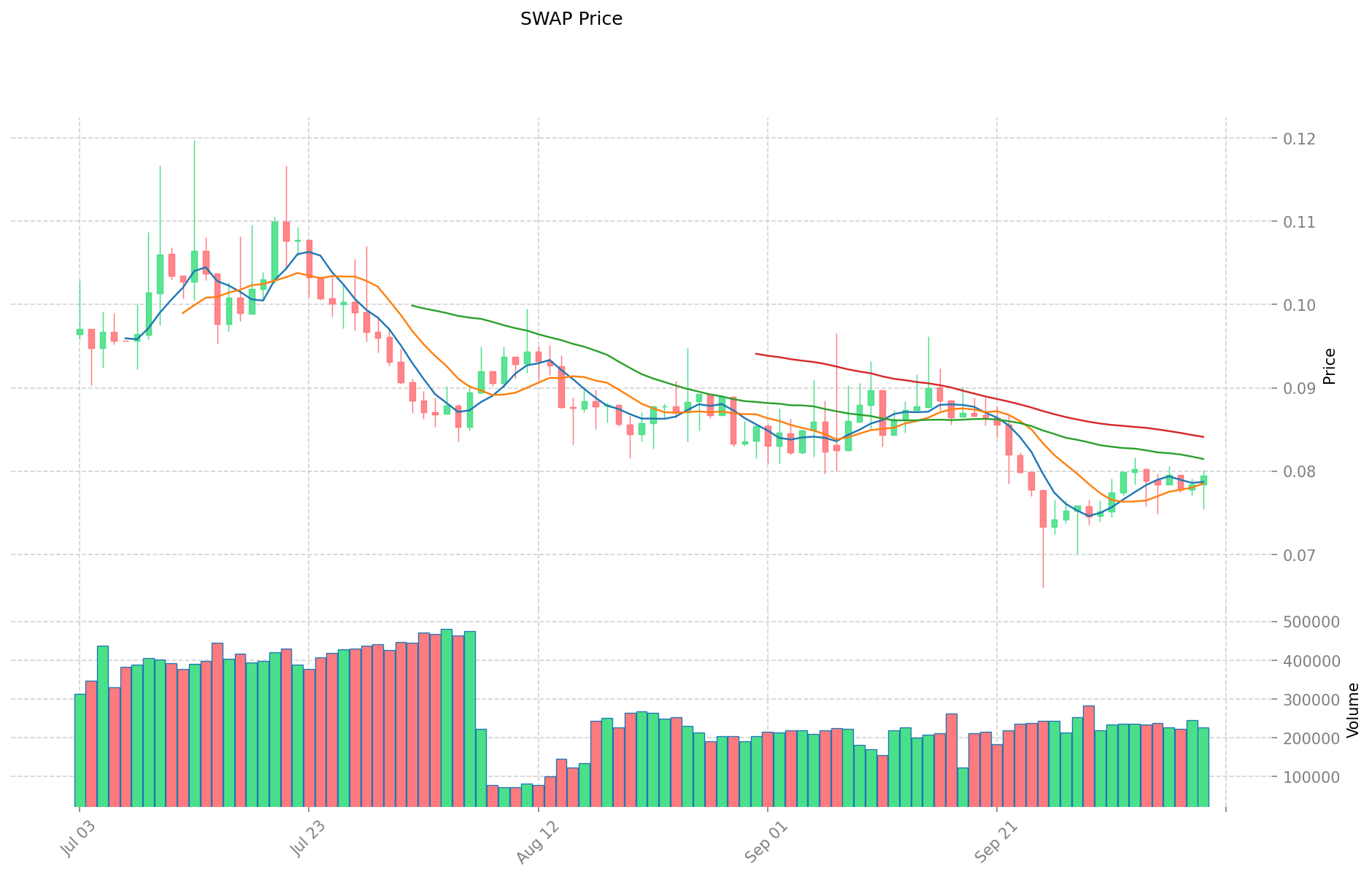
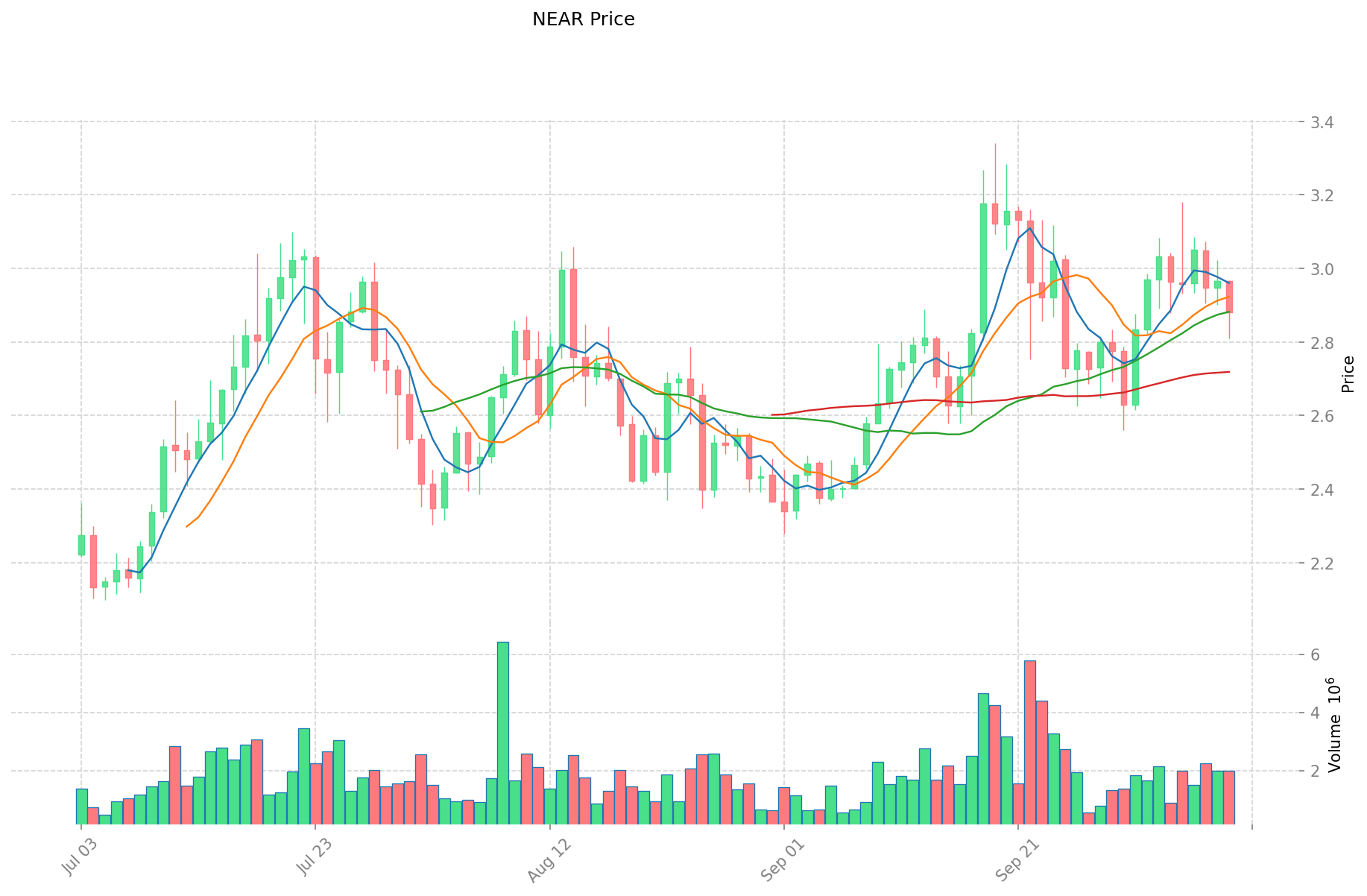
  • Comparative analysis: Since their respective all-time highs, SWAP has declined from $5 to $0.07939, while NEAR has fallen from $20.44 to $2.888.

Current Market Situation (2025-10-10)

  • SWAP current price: $0.07939
  • NEAR current price: $2.888
  • 24-hour trading volume: $17,784.23 (SWAP) vs $5,662,377.81 (NEAR)
  • Market Sentiment Index (Fear & Greed Index): 70 (Greed)

Click to view real-time prices:

price_image1 price_image2

II. Key Factors Affecting Investment Value of SWAP vs NEAR

Supply Mechanisms Comparison (Tokenomics)

  • SWAP: No clear tokenomics information available in the provided data
  • NEAR: Uses an inflationary model with annual issuance rate of 5%, which decreases over time; 1 billion tokens initially minted at genesis
  • 📌 Historical Pattern: Deflationary or fixed supply models typically drive cyclical price movements in bull markets, while clear issuance schedules provide long-term predictability for investors.

Institutional Adoption and Market Applications

  • Institutional Holdings: NEAR has secured investments from notable VCs including a16z, Coinbase Ventures, and Dragonfly Capital
  • Enterprise Adoption: NEAR offers cross-chain interoperability through Aurora (EVM) and Rainbow Bridge, enabling seamless integration with Ethereum ecosystem
  • Regulatory Attitudes: No specific regulatory information provided for either token in the reference material

Technical Development and Ecosystem Building

  • NEAR Technical Upgrades: Implements sharding technology called Nightshade for scalability; features WebAssembly-based runtime for developer flexibility
  • SWAP Technical Development: No specific technical information provided in the reference material
  • Ecosystem Comparison: NEAR ecosystem supports DeFi applications, NFT marketplaces, and dApps with transaction capacity of 100,000 TPS through sharding

Macroeconomic Factors and Market Cycles

  • Performance in Inflationary Environments: No specific comparative data available
  • Macro Monetary Policy Impact: No specific comparative data available
  • Geopolitical Factors: No specific comparative data available III. 2025-2030 Price Prediction: SWAP vs NEAR

Short-term Prediction (2025)

  • SWAP: Conservative $0.0587 - $0.0794 | Optimistic $0.0794 - $0.0977
  • NEAR: Conservative $2.36 - $2.88 | Optimistic $2.88 - $4.03

Mid-term Prediction (2027)

  • SWAP may enter a growth phase, with expected prices ranging from $0.0647 to $0.1061
  • NEAR may enter a bullish market, with expected prices ranging from $3.42 to $5.50
  • Key drivers: Institutional capital inflow, ETF, ecosystem development

Long-term Prediction (2030)

  • SWAP: Base scenario $0.1129 - $0.1265 | Optimistic scenario $0.1265 - $0.1265
  • NEAR: Base scenario $6.09 - $6.64 | Optimistic scenario $6.64 - $6.64

View detailed price predictions for SWAP and NEAR

Disclaimer: This analysis is based on historical data and market projections. Cryptocurrency markets are highly volatile and unpredictable. These predictions should not be considered as financial advice. Always conduct your own research before making investment decisions.

SWAP:

年份 预测最高价 预测平均价格 预测最低价 涨跌幅
2025 0.0976866 0.07942 0.0587708 0
2026 0.091209899 0.0885533 0.057559645 11
2027 0.10606028741 0.0898815995 0.06471475164 13
2028 0.1018897811932 0.097970943455 0.07935646419855 23
2029 0.125912256528366 0.0999303623241 0.050964484785291 25
2030 0.12647186655738 0.112921309426233 0.108404457049183 42

NEAR:

年份 预测最高价 预测平均价格 预测最低价 涨跌幅
2025 4.0348 2.882 2.36324 0
2026 4.876344 3.4584 3.11256 19
2027 5.50093104 4.167372 3.41724504 44
2028 5.800981824 4.83415152 4.4957609136 67
2029 6.85966100688 5.317566672 4.09452633744 84
2030 6.6365890849896 6.08861383944 4.0184851340304 110

IV. Investment Strategy Comparison: SWAP vs NEAR

Long-term vs Short-term Investment Strategy

  • SWAP: Suitable for investors focusing on payment solutions and ecosystem potential
  • NEAR: Suitable for investors seeking scalability and DApp infrastructure

Risk Management and Asset Allocation

  • Conservative investors: SWAP: 30% vs NEAR: 70%
  • Aggressive investors: SWAP: 50% vs NEAR: 50%
  • Hedging tools: Stablecoin allocation, options, cross-currency portfolios

V. Potential Risk Comparison

Market Risk

  • SWAP: Lower trading volume may lead to higher volatility
  • NEAR: Potential price fluctuations due to token inflation

Technical Risk

  • SWAP: Scalability, network stability
  • NEAR: Sharding implementation challenges, potential security vulnerabilities

Regulatory Risk

  • Global regulatory policies may have different impacts on both tokens

VI. Conclusion: Which Is the Better Buy?

📌 Investment Value Summary:

  • SWAP advantages: Innovative payment platform, potential for growth in niche market
  • NEAR advantages: Scalable infrastructure, strong institutional backing, developed ecosystem

✅ Investment Advice:

  • Novice investors: Consider a higher allocation to NEAR due to its more established ecosystem
  • Experienced investors: Balanced approach, potentially higher allocation to SWAP for higher risk-reward
  • Institutional investors: NEAR may be more attractive due to its scalability and institutional adoption

⚠️ Risk Warning: Cryptocurrency markets are highly volatile. This article does not constitute investment advice. None

VII. FAQ

Q1: What are the main differences between SWAP and NEAR? A: SWAP is focused on providing a secure payment platform for fund exchanges, while NEAR is a highly scalable foundation protocol supporting DApp operations on mobile devices. NEAR has a more established ecosystem and stronger institutional backing, whereas SWAP operates in a more niche market.

Q2: Which token has performed better historically? A: Based on the available data, NEAR has shown better historical performance. It reached its all-time high of $20.44 in January 2022, while SWAP's all-time high was $5 in April 2021. As of 2025-10-10, NEAR is trading at $2.888, while SWAP is at $0.07939.

Q3: How do the supply mechanisms of SWAP and NEAR differ? A: NEAR uses an inflationary model with an annual issuance rate of 5% that decreases over time, starting with 1 billion tokens at genesis. There is no clear information available about SWAP's tokenomics in the provided data.

Q4: What are the key technical features of NEAR? A: NEAR implements sharding technology called Nightshade for scalability and features a WebAssembly-based runtime for developer flexibility. It also offers cross-chain interoperability through Aurora (EVM) and Rainbow Bridge, enabling seamless integration with the Ethereum ecosystem.

Q5: How do the long-term price predictions for SWAP and NEAR compare? A: For 2030, SWAP's base scenario price range is predicted to be $0.1129 - $0.1265, while NEAR's base scenario range is $6.09 - $6.64. This suggests a potentially higher growth rate for NEAR in the long term.

Q6: What are the main risks associated with investing in SWAP and NEAR? A: For SWAP, the main risks include lower trading volume leading to higher volatility, and potential scalability and network stability issues. For NEAR, risks include potential price fluctuations due to token inflation and challenges in implementing sharding technology. Both tokens face regulatory risks depending on global policies.

Q7: Which token might be more suitable for different types of investors? A: Novice investors might consider a higher allocation to NEAR due to its more established ecosystem. Experienced investors could take a balanced approach, potentially with a higher allocation to SWAP for higher risk-reward. Institutional investors may find NEAR more attractive due to its scalability and existing institutional adoption.

* The information is not intended to be and does not constitute financial advice or any other recommendation of any sort offered or endorsed by Gate.
Related Articles
2025 SUI价格预测:区块链新贵的未来发展与投资价值分析

2025 SUI价格预测:区块链新贵的未来发展与投资价值分析

本文从市场地位、历史价格走势、持仓分布及影响因素等方面全面分析SUI的投资价值。重点预测2025-2030年价格走势,并提供专业投资策略和风险管理框架以帮助投资者决策。适用于关注区块链技术发展和加密货币市场趋势的个人及机构投资者。文章逻辑清晰,结构包括引言、市场回顾、影响因素分析、价格预测、投资策略及风险评估,旨在支持加密投资和决策。
2025-09-09 10:38:03
INV vs AVAX: A Comparative Analysis of Two Leading Blockchain Platforms

INV vs AVAX: A Comparative Analysis of Two Leading Blockchain Platforms

This article provides an in-depth comparison between Inverse (INV) and Avalanche (AVAX), two prominent blockchain platforms in the cryptocurrency market. It covers key aspects such as price history, supply mechanisms, institutional adoption, and technological ecosystems, offering insights into which platform might be a better investment. The piece addresses investor concerns about risk management, market trends, and future price predictions, particularly from 2025 to 2030. Intended for novice, experienced, and institutional investors, it evaluates long-term vs. short-term strategies and potential risks. For real-time pricing, readers are directed to Gate.

2025-10-04 00:39:10
2025 INITPrice Prediction: Market Analysis and Future Outlook for Initial Network Token Growth

2025 INITPrice Prediction: Market Analysis and Future Outlook for Initial Network Token Growth

This article explores the 2025 INIT price prediction, analyzing historical trends and potential growth factors, providing valuable insights and strategies for investors. It addresses factors influencing price, investment approaches, risks, and recommends trading methods exclusively on Gate. Ideal for long-term and active traders interested in the Initia blockchain. Structured with an introduction, market review, key factors, predictions, strategies, risks, and conclusion, offering comprehensive guidance for effective investment and risk management in the evolving cryptocurrency landscape.

2025-09-30 10:47:34
ALPINE vs APT: Comparing Package Management Systems for Linux Distributions

ALPINE vs APT: Comparing Package Management Systems for Linux Distributions

This article offers an in-depth comparison of the investment value between Alpine F1 Team Fan Token (ALPINE) and Aptos (APT), analyzing historical price trends, supply mechanisms, institutional adoption, and technical ecosystems. It addresses key questions investors may have, such as "Which is the better buy right now?" and discusses risk management strategies tailored for different investor types. The article also predicts price movements up to 2030 while highlighting essential factors that affect both tokens' values, including market sentiment, regulatory attitudes, and technological developments. Readers can access real-time data and detailed predictions through Gate's platform for informed investment decisions.
2025-10-06 00:40:47
Is Polygon Ecosystem Token (POL) a good investment?: Analyzing the potential and risks of this layer-2 scaling solution

Is Polygon Ecosystem Token (POL) a good investment?: Analyzing the potential and risks of this layer-2 scaling solution

This article explores the investment potential of Polygon Ecosystem Token (POL), analyzing its historical price trends, current market status, and technological advancements. It evaluates POL’s fixed supply, scarcity, institutional adoption, and the impact of macroeconomic factors, providing insights for investors considering POL for hedging or diversification. Suitable for various investors from beginners to institutional players, the article discusses investment strategies like HODL and active trading, while addressing associated risks such as market volatility and regulatory challenges. Access real-time POL prices on Gate to inform investment decisions.
2025-10-15 04:43:35
Is Astar Token (ASTR) a good investment?: Analyzing the potential and risks of this Polkadot ecosystem token

Is Astar Token (ASTR) a good investment?: Analyzing the potential and risks of this Polkadot ecosystem token

The article provides an in-depth analysis of Astar Token's (ASTR) investment potential within the Polkadot ecosystem. It examines historical price trends, current market status, key factors influencing investment value, and future price outlook from 2025 to 2030. The content addresses risks associated with ASTR investment and outlines strategies for beginners, experienced, and institutional investors, including risk management and investment techniques. Key features such as supply mechanism, institutional adoption, and ecosystem development are highlighted. A comprehensive FAQ section answers critical queries, enhancing SEO optimization and readability for investors seeking cryptocurrency insights.
2025-10-19 04:26:33
Recommended for You
Gold Price Predictions for the Next 5 Years Explained

Gold Price Predictions for the Next 5 Years Explained

Search demand for gold price predictions for next 5 years is rising sharply in the UK as investors respond to persistent inflation, central bank policy shifts, and heightened geopolitical uncertainty. Gold has reasserted itself as a strategic asset, moving beyond its traditional role as a crisis hedge into a core component of diversified portfolios. As of January 7, 2026, the spot gold price is approximately $4,439.30 per ounce, reflecting a powerful multi year rally. Major banks and institutional analysts now forecast gold prices ranging from $4,000 to above $5,000 per ounce over the next five years, with some high end scenarios projecting prices above $11,000 by 2030. This article breaks down five year gold price forecasts, the forces driving long term demand, downside risks, and how UK traders and investors position themselves to profit from gold’s evolving role in global markets.
2026-01-07 07:26:20
Best Forex Robot Guide for Consistent Trading Profits

Best Forex Robot Guide for Consistent Trading Profits

Search interest for best forex robot continues to rise across the UK as traders look for systematic ways to trade the currency markets without emotional decision making. Forex robots, also known as Expert Advisors or EAs, are automated trading programs that execute trades based on predefined strategies and risk rules. When chosen carefully, they can help traders participate in the forex market with discipline, speed, and consistency. There is no single best forex robot for everyone. The right choice depends on verified performance, trading logic, drawdown tolerance, and how well the robot aligns with a trader’s risk profile. In 2026, most high performing robots operate on MetaTrader 4 and MetaTrader 5, platforms widely used by UK traders. This guide explains how the best forex robots work, which robots are most trusted, and how traders use them to make money responsibly.
2026-01-07 07:21:43
Best Super Investment Strategy for SMSFs and Crypto Exposure in 2026

Best Super Investment Strategy for SMSFs and Crypto Exposure in 2026

The best super investment strategy in 2026 for Australians is no longer about chasing short term gains or reacting to market noise. It is about consistency, risk management, tax efficiency, and aligning investments with long term retirement goals. As digital assets mature and institutional participation increases, crypto is increasingly being considered as a small but strategic component within superannuation, particularly through SMSFs. Platforms such as Gate.com have become popular research and execution venues for experienced investors who want broader access to digital assets while maintaining disciplined portfolio construction. This guide explains how Australians can approach super investing in 2026 with a structured mindset, combining traditional principles with modern crypto exposure while staying compliant with Australian regulations.
2026-01-07 07:17:20
MoonPay Meaning In Crypto, Payments Infrastructure For Digital Assets

MoonPay Meaning In Crypto, Payments Infrastructure For Digital Assets

MoonPay is a financial technology company that provides payment infrastructure for buying, selling, and swapping cryptocurrencies and NFTs using familiar payment methods such as credit cards, debit cards, bank transfers, and digital wallets. In simple terms, MoonPay acts as a bridge between traditional finance and the crypto ecosystem. Instead of opening a full exchange account, users can move between fiat money and crypto directly through apps, wallets, and platforms that integrate MoonPay. For Australian investors and traders, MoonPay has become increasingly relevant as crypto adoption expands beyond early adopters. It is commonly embedded into wallets, NFT marketplaces, and Web3 applications, allowing users to access digital assets without complex onboarding. Recent regulatory progress, including MoonPay securing a New York trust charter, highlights how payment focused crypto firms are moving closer to the standards of traditional financial infrastructure.
2026-01-07 07:12:58
What Is TradFi vs DeFi? A Complete Comparison Between TradFi and DeFi

What Is TradFi vs DeFi? A Complete Comparison Between TradFi and DeFi

# Article Introduction **TradFi vs DeFi: A Complete Comparison Between Traditional and Decentralized Finance** This comprehensive guide decodes the fundamental structural differences between Traditional Finance (TradFi) and Decentralized Finance (DeFi), helping readers understand how centralized institutions compare to blockchain-based systems. Discover how money moves differently across each ecosystem, analyze real cost breakdowns revealing fee structures and value flows, and explore where each system excels in speed, access, and innovation. Whether you're a beginner evaluating which system suits your financial goals or an investor seeking to understand both worlds, this article clarifies TradFi's regulatory protections versus DeFi's borderless efficiency, asset custody models, and why Gate enables seamless navigation between both financial ecosystems for optimal opportunity capture.
2026-01-07 07:02:23
How to Go from TradFi to DeFi? A Complete Guide in 2026

How to Go from TradFi to DeFi? A Complete Guide in 2026

# How to Go from TradFi to DeFi? A Complete Guide in 2026 This comprehensive guide bridges Traditional Finance and Decentralized Finance, equipping professionals with actionable strategies for seamless transition. Discover how DeFi eliminates intermediaries through blockchain infrastructure, smart contracts, and crypto wallets—reducing fees and settlement times while offering 24/7 global access. The guide addresses critical concerns: understanding TradFi vs DeFi architecture, mastering essential tools like wallets and smart contracts, implementing robust risk management protocols, and navigating the institutional integration wave through tokenized real-world assets. Perfect for banking professionals, finance managers, and institutional investors seeking to diversify into decentralized markets on Gate. A step-by-step roadmap combined with security best practices ensures informed decision-making throughout your DeFi adoption journey.

2026-01-07 06:47:15