Why Is Asset Control Back in the Spotlight?
In the early days of crypto trading, efficiency and liquidity were the main priorities. Users consolidated their assets in exchange accounts to enjoy instant trading. As holdings increased and risk events became more frequent, control quickly became a central concern.
Although platform custody offers convenience, it also centralizes critical decisions and access permissions. When unexpected issues arise, users have limited ability to intervene. This has brought renewed focus to the concept of self-custody, making the balance between security and convenience a pressing challenge.
Structural Risks of the Single Private Key Model
Most traditional decentralized wallets rely on a single private key. While this setup is straightforward, it presents clear vulnerabilities:
- Losing the private key means permanent loss of assets
- If leaked, assets can be fully drained
- No built-in risk mitigation
The single point of failure problem makes many users hesitant about self-custody. While security enhances control, it also increases the complexity of managing assets.
MPC Technology: Dividing Risk Instead of Concentrating It
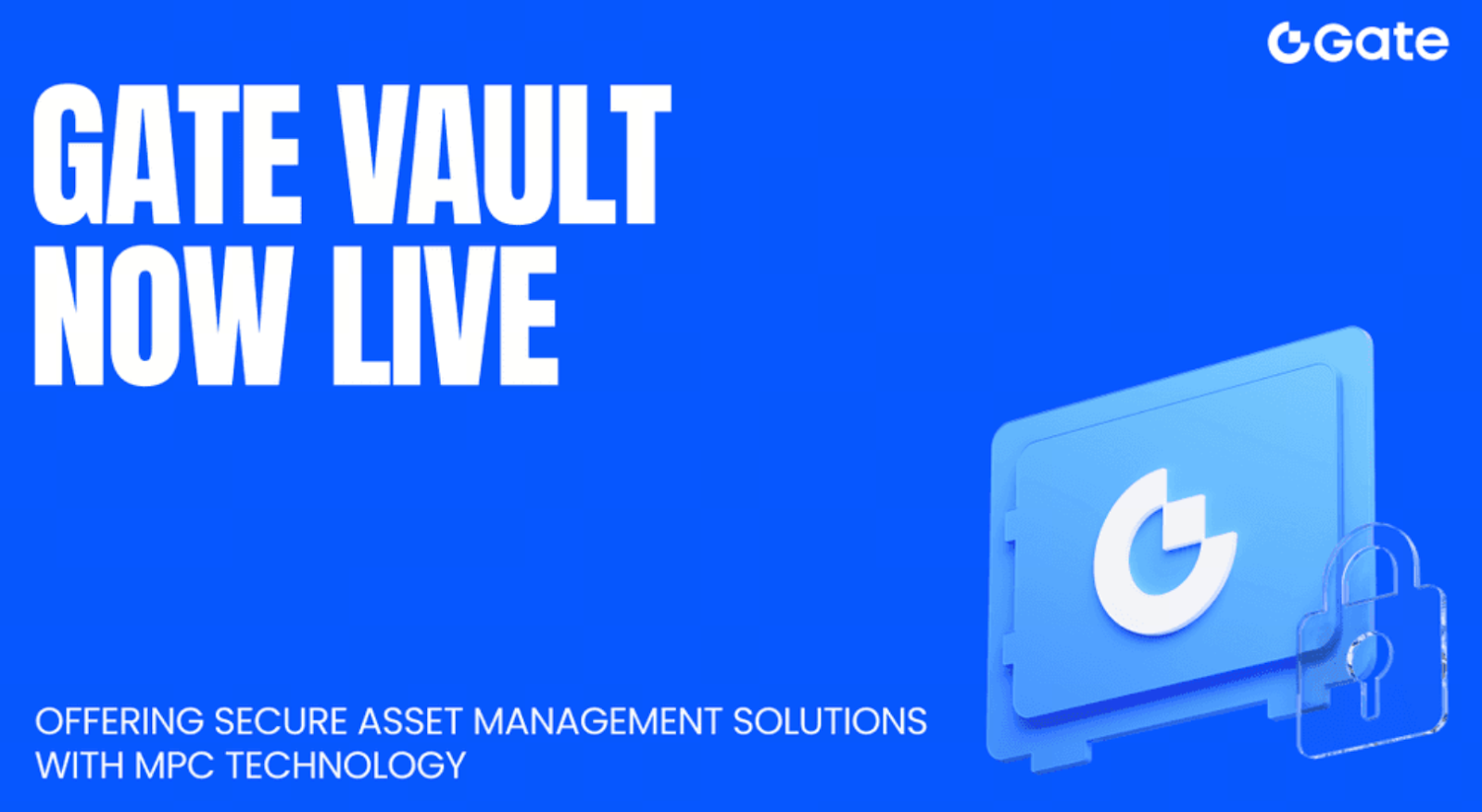
Gate Vault leverages an MPC (Multi-Party Computation) architecture, fundamentally changing how private keys are stored. Instead of existing as a single key, the private key is split into multiple fragments distributed across independent nodes.
Key benefits of this approach include:
- No single node can reconstruct the full private key
- Attackers who obtain partial information cannot gain full control
- Minimizes exposure from device loss or targeted attacks
By decentralizing the technical architecture, risk is no longer concentrated in one device or location.
Multi-Signature Mechanism: Collaborative Security
Gate Vault uses a 2-of-3 multi-signature structure. Three key fragments are held by separate parties, and transactions require approval from at least two.
This ensures:
- The user remains the core initiator and final authorizer
- No single system can access assets independently
- The security framework remains intact even if one node fails
This collaborative model raises the security standard and avoids total reliance on a single manager.
Delayed Settlement: Integrating Time into Risk Management
Beyond technical safeguards, process design is essential. Gate Vault implements a 48-hour delayed settlement, meaning asset transfers are not immediate.
This feature provides:
- A buffer period for detecting abnormal activity
- Opportunities for users to review and freeze transactions
- An added risk defense for high-value accounts
Using time as a security variable extends risk management beyond technical controls.
Multi-Chain Integration: Simplifying Asset Management
Today’s crypto assets often span multiple public blockchains. Differing security strategies across chains increase operational complexity and the risk of errors. Gate Vault supports unified management of multi-chain assets, enabling consistent security protocols across diverse blockchains. This centralized approach significantly reduces complexity in cross-chain operations.
With the rise of Web3, platforms are evolving from traditional roles. Future asset management will likely shift from purely centralized or decentralized models to hybrid security architectures, giving users core control and relying on technology for structured support.
Gate Vault is designed with this philosophy, not to replace self-custody but to optimize its risk profile—bringing control and robust security together.
Gate Vault User Guide: https://www.gate.com/help/guide/functionalguidelines/47328/gate-vault-user-guide
Summary
Digital asset management has entered a new era focused on collaborative security and self-sovereignty. Gate Vault delivers a structured self-custody solution through MPC-based decentralized key architecture, multi-signature mechanisms, and delayed settlement. As Web3 continues to expand, the real challenge is not just technical innovation, but achieving a sustainable balance between convenience and security. Empowering users with control and reducing operational risk through technology will be key to the next evolution in digital asset management.