


crypto symbols
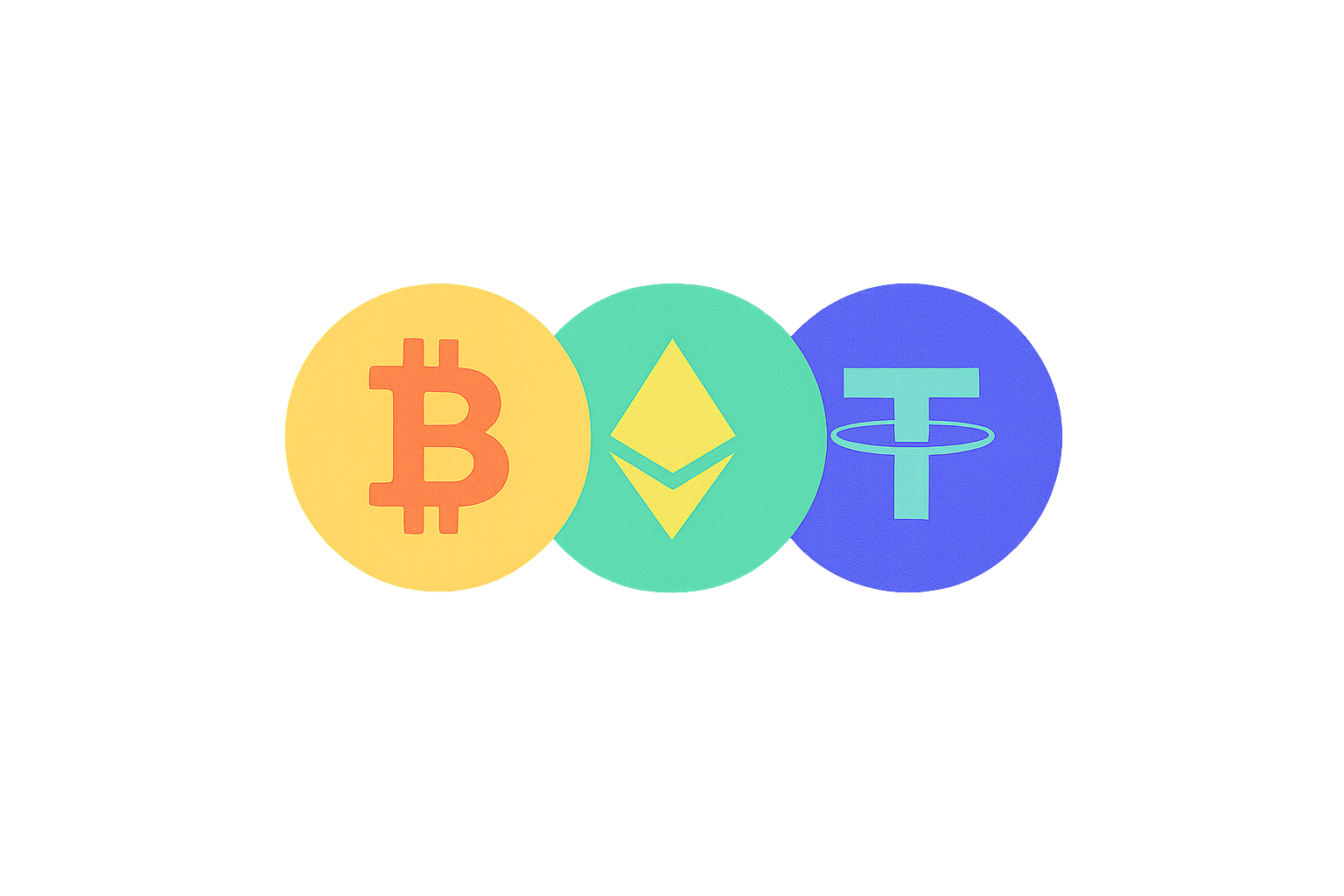
What Is a Crypto Symbol (CryptoSymbol/Ticker)?
A crypto symbol, or ticker, is the abbreviated code representing a cryptocurrency.
This shorthand is used by exchanges, wallets, and market data platforms to identify a specific digital asset. For example, BTC stands for Bitcoin, ETH for Ethereum, and USDT for Tether stablecoin. Crypto symbols make searching and displaying assets easier, but they are not unique identifiers. To ensure you are interacting with the correct asset, always check the blockchain network and the token contract address—this prevents accidental purchases or deposits of the wrong token.
Why Is Understanding Crypto Symbols Important?
Recognizing crypto symbols helps minimize mistakes during trading, deposits, and cross-chain operations.
On exchanges, trading pairs are usually displayed using symbols, such as ETH/USDT. If you rely solely on the symbol without checking the contract or network, you might buy a token with a similar name but from a different project, or deposit assets to an incorrect network—leading to delayed retrieval or even permanent loss.
For beginners active in DeFi, NFTs, or cross-chain bridges, correctly identifying crypto symbols helps you avoid fraudulent pools or collections, improving both the safety and efficiency of your transactions.
How Do Crypto Symbols Work?
Crypto symbols are determined by project teams or communities and serve as short labels on user interfaces.
On exchanges and in wallets, the main function of a symbol is readability and quick searchability. For example, on Gate's spot market, ETH/USDT denotes the Ethereum-to-Tether trading pair, making it easy for users to find, place orders, and view market depth.
Symbols are not unique identifiers. The only unique marker is the token contract address—a blockchain-level identifier pointing to a specific token contract. Different blockchains are like separate city grids; the same symbol on different chains may refer to entirely different assets. For instance, USDT exists on Ethereum, TRON, and multiple other chains—the symbol remains the same but contract addresses and chain names differ.
Platforms display chain labels and contract addresses alongside symbols to help users determine which network and contract an asset belongs to. Using the symbol is just the first step; confirming both the chain and contract address is critical.
Where Do Crypto Symbols Commonly Appear in the Crypto World?
Crypto symbols are most visible in trading, deposits/withdrawals, and on-chain interactions.
On exchange spot and derivatives pages, trading pairs like ETH/USDT or BTC/USDT are common. Symbols facilitate order placement and market tracking. However, always check the asset’s chain label and contract details before trading to avoid confusion with tokens of similar names.
When depositing or withdrawing funds, symbols work together with network selection. For example, on Gate’s deposit page for USDT, you must choose between networks like Ethereum or TRON. Despite sharing the symbol USDT, selecting the wrong network can result in failed deposits or require complex recovery processes.
In DeFi and NFT scenarios, symbols identify pools or collection names—for instance, a liquidity pool labeled “ETH-USDC,” or an NFT series marked by a short symbol. Always verify contract addresses before joining pools to confirm their legitimacy and avoid phishing scams.
How Can You Avoid Losses Due to Crypto Symbol Confusion?
The key is cross-checking symbols, networks, and contract addresses together.
Step 1: When searching or placing orders on an exchange, click into asset details to view its “chain label” and “contract address.” The contract address is unique—always obtain it from official websites or verified social media channels for comparison.
Step 2: When depositing funds, select the correct network before copying the address. For USDT, make sure whether you are depositing Ethereum-based USDT or TRON-based USDT; also check if the address format matches the chosen network (e.g., Ethereum addresses typically start with 0x).
Step 3: Before interacting with DeFi protocols or NFTs, use a blockchain explorer to verify contract details. Check token decimals, total supply, and holder distribution; always confirm against official project announcements to avoid fake contracts.
Step 4: Watch out for similar-looking symbols and “visual tricks.” Some imitation projects use near-identical letters or punctuation to deceive users. Always verify the source and contract of any unfamiliar symbol before taking action.
What Are Recent Trends or Notable Data About Crypto Symbols?
In the past year, duplicate symbols and same-name tokens across multiple chains have become increasingly common, prompting platforms to highlight network and contract details more prominently.
As of Q4 2025, most crypto market data sites list over 10,000 digital assets. The number of cross-chain tokens with identical symbols continues to rise as multi-chain deployments and copycat projects proliferate. Platforms are responding by making chain labels and contract addresses more prominent on trading pairs and asset detail pages.
For stablecoins like USDT in 2025, coverage remains across more than ten major networks. Users are prompted more often to select a network when depositing funds, and platforms emphasize “network selection reminders” and risk controls to reduce misdirected deposits.
Additionally, more projects now add suffixes or prefixes to their symbols—such as USDT.e, BTCB, stETH—to differentiate cross-chain versions or staking derivatives, helping users quickly identify asset types.
What Is the Difference Between a Crypto Symbol and a Token Contract Address?
A crypto symbol is a front-end abbreviation; a contract address is a unique identifier on the blockchain.
Crypto symbols focus on readability and searchability but can be duplicated across different chains or projects. In contrast, each token contract address is unique to one specific token on a given chain. In practice: always start by finding the official contract address, then verify its symbol and network—treating the symbol as supplemental information rather than your sole reference point.
Related Terms
- Cryptocurrency: Digital currency based on cryptographic principles that enables decentralized transactions and storage via blockchain technology.
- Blockchain: A distributed ledger technology that records transaction data in a chained structure, ensuring transparency and immutability.
- Wallet: A tool for storing and managing cryptocurrencies that contains both public and private keys for transactions and asset custody.
- Mining: The process of validating transactions and generating new blocks through computational power; miners receive new coins and transaction fee rewards.
- Consensus Mechanism: The set of rules by which nodes in a blockchain network reach agreement (such as PoW or PoS), ensuring transaction validity.
FAQ
How can I quickly find my desired coin when trading on Gate?
Searching by crypto symbol is the fastest method. For instance, searching “BTC” brings up Bitcoin while “ETH” finds Ethereum. Gate’s search bar supports both symbol and full-name queries—memorizing common crypto symbols can greatly improve your trading efficiency.
If a coin has different symbols on different platforms, how should I verify it?
Symbols are generally consistent across platforms but must be checked alongside contract addresses for authenticity. For example, USDT has the same symbol on both Ethereum and Binance Chain but completely different contract addresses. Before trading on Gate, always confirm both the network and contract address of your selected asset to avoid buying counterfeit or imitation coins.
Why do some crypto symbols look very similar and cause confusion?
Some projects intentionally design similar-looking symbols to confuse newcomers. Examples include “UNI” (Uniswap) versus “UNI-V2,” or “USDT” versus “USDC.” When trading on Gate, always click on the coin name to view complete information and official links—this is the most effective way to prevent trading mistakes.
Why do I sometimes see multiple coins with the same symbol?
This usually happens across different blockchain networks. The same symbol may represent different contracts on Ethereum, Binance Chain, Polygon, etc. Gate trading pairs clearly indicate the specific network (for example, “USDT-ETH” means USDT on Ethereum). Pay close attention to these details to avoid cross-chain mistakes.
What happens if a newly listed coin does not have a widely recognized symbol?
Project teams typically define their own symbols but must be approved by exchanges before listing. Gate conducts a review process for new coins to ensure their symbols are appropriate and do not conflict with existing tokens. If you encounter an irregular or suspicious coin symbol, you can report it via Gate’s feedback channels.
Related Articles

Exploring 8 Major DEX Aggregators: Engines Driving Efficiency and Liquidity in the Crypto Market

What Is Copy Trading And How To Use It?
