


kimchi premium
What Is the Kimchi Premium?
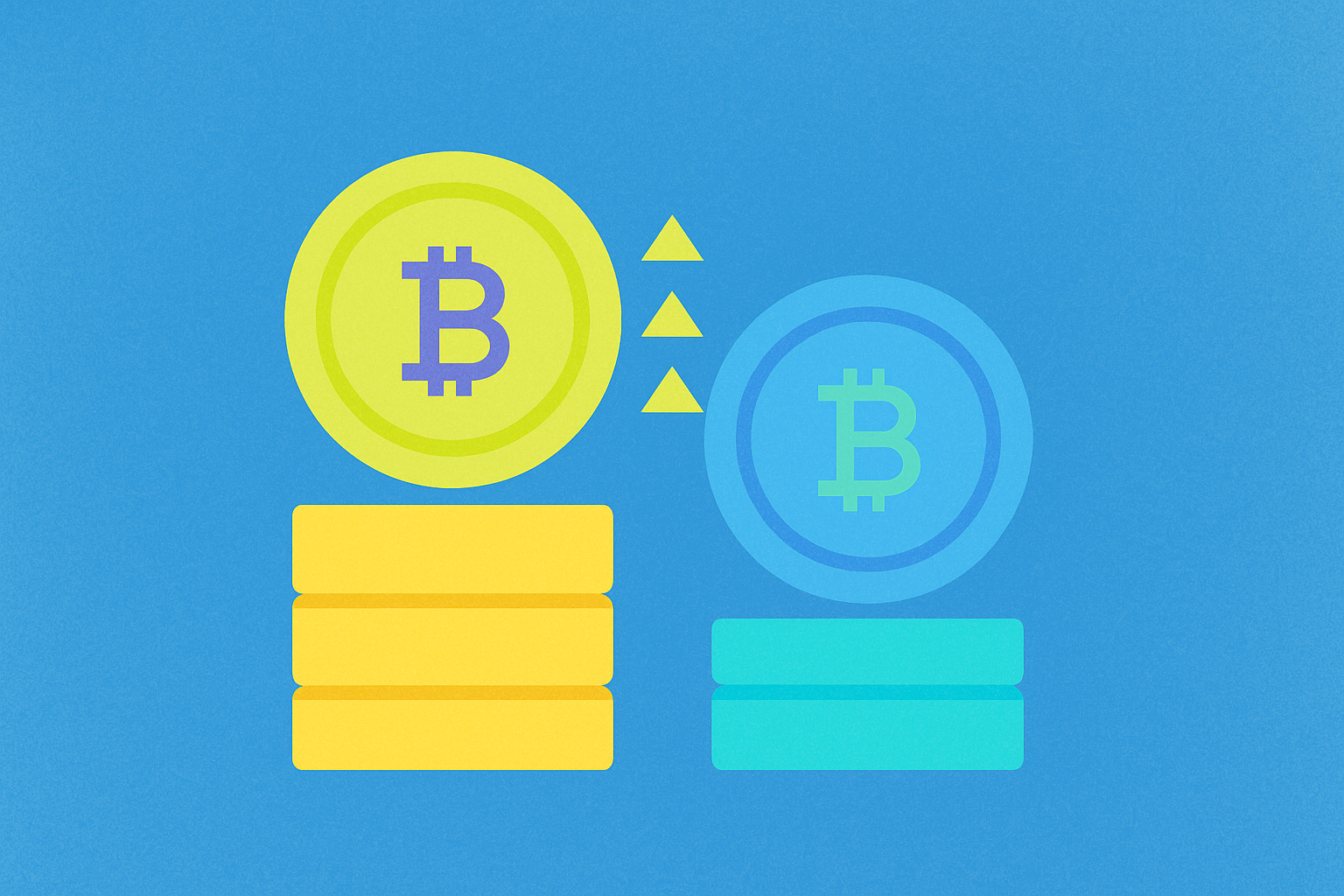
The Kimchi Premium refers to the price gap where cryptocurrencies quoted in Korean won (KRW) on local South Korean exchanges trade at higher prices than the same assets quoted in US dollars (USD) or stablecoins on global platforms. The "premium" here indicates that local buyers are paying more compared to international markets—it does not reflect an absolute price increase, but rather a relative difference.
For example, if Bitcoin (BTC) trades at $40,000 on global exchanges (BTC/USDT), but the equivalent price on a Korean exchange is $48,000 after conversion, the gap is $8,000, or 20% above the global price—this is the Kimchi Premium. It reflects regional pricing differences caused by local capital controls, regulatory constraints, and fiat on/off-ramp conditions.
Why Does the Kimchi Premium Occur?
The Kimchi Premium arises from a combination of local demand and restrictions on capital movement. Korean investors often have strong demand for Bitcoin and other cryptocurrencies, but cross-border capital flows are tightly regulated, resulting in limited local sell-side liquidity and pushing prices higher.
"Fiat on/off-ramp" refers to depositing or withdrawing KRW between a bank account and an exchange. Local identity verification (commonly called KYC, or Know Your Customer) and foreign exchange regulations restrict who can quickly convert KRW into crypto assets or vice versa. These constraints limit neutral arbitrageurs' ability to enter the Korean market, making it harder to close the price gap efficiently.
During periods of high volatility, factors such as on-chain transaction confirmation times and fees, exchange withdrawal/deposit windows, and local risk appetite can amplify the premium.
How Is the Kimchi Premium Calculated?
Calculating the Kimchi Premium involves converting the KRW price of an asset on a Korean exchange into USD, then comparing it to the global USD or stablecoin price to determine the percentage difference.
Step 1: Obtain the latest KRW quote for an asset (e.g., BTC/KRW) from a Korean exchange.
Step 2: Convert the KRW price to USD using a public exchange rate (KRW→USD).
Step 3: Get the global benchmark price, such as BTC/USDT on Gate’s spot market or via Gate’s API.
Step 4: Use this formula: (Korean KRW price converted to USD − Global USD price) ÷ Global USD price × 100%. For example, if the local USD-equivalent price is $48,000 and the global price is $40,000, the Kimchi Premium is 20%.
How to Monitor and Track the Kimchi Premium
Effective tracking requires a consistent global benchmark, a reliable exchange rate source, and synchronized timing.
Step 1: Use Gate to check global prices for major pairs like BTC/USDT as your reference point; record timestamps and prices.
Step 2: Simultaneously record KRW prices from Korean exchanges and convert them using the KRW/USD rate at that moment.
Step 3: Compile intraday or daily premium percentages into a time series, setting alerts when premiums exceed certain thresholds (e.g., over 10%). Use minute-level data for short-term monitoring; daily or weekly data is better for long-term trends.
Ensure time consistency between data points to avoid "false premiums" caused by different update frequencies. Also, watch for blockchain congestion or banking holidays that may temporarily impact price gaps.
Arbitrage Opportunities and Constraints of the Kimchi Premium
In theory, arbitrage means buying in a low-price market and selling in a high-price market to profit from the spread. In practice, arbitraging the Kimchi Premium faces significant banking, regulatory, and operational barriers.
Step 1: Buy assets on a global market (e.g., with USDT).
Step 2: Transfer assets to a Korean exchange to sell for KRW.
Step 3: Withdraw KRW to a local bank account, then convert or reinvest as needed.
Constraints include: non-residents are usually unable to open local accounts or complete KYC quickly; KRW withdrawals and FX conversion are restricted; on-chain transfers may face delays and fees; market volatility during transfer periods can erode profits. Even qualified institutions require hedging tools, banking channels, and compliance capacity—cross-border arbitrage is not recommended for beginners.
How Does the Kimchi Premium Affect Market Behavior?
The Kimchi Premium is often seen as an indicator of strong regional demand. A rising premium suggests that local buying pressure exceeds selling pressure in Korea, which may attract global sellers to move assets into the Korean market, boosting local liquidity and trading volume.
Globally, the Kimchi Premium is not a guaranteed leading indicator for price moves up or down, but it highlights structural capital constraints in Korea. When local premiums stay elevated for long periods, it may encourage more cross-border flows or market-making capital to enter, gradually narrowing the gap. Conversely, a rapid decline in the premium often signals cooling demand or improved fiat channels locally.
How Is the Kimchi Premium Different From Other Regional Premiums?
Unlike premiums in some countries driven by inflation or currency devaluation—where domestic buyers seek crypto as a safe haven—the Kimchi Premium primarily reflects structural supply-demand imbalances under a mature financial system with cross-border and identity restrictions.
In some markets, stablecoin and over-the-counter trading channels (using bank transfers through OTC desks) are more accessible, allowing arbitrageurs to close price gaps more easily. However, in Korea, banking, identity, and FX rules make premiums more persistent. As a result, the Kimchi Premium tends to widen during volatile periods and its normalization depends on channel accessibility.
Historical Highs of the Kimchi Premium
Public data shows that the Kimchi Premium tends to spike during bull markets. According to CoinDesk’s January 2018 report, Korea’s local BTC price exceeded global prices by over 40%-50% at one point; in April 2021, multiple data sites recorded around 20% premiums; throughout 2023, public monitoring showed fluctuations mostly between 5%-10%; as of 2024, premiums continue to expand temporarily during sharp market rallies. These figures come from media reports and historical market data—the actual level varies by asset and timing.
Risks of the Kimchi Premium for Beginners
The main risk is mistaking relative price gaps for "guaranteed profits." Without local residency and banking access, cross-border processes are difficult to execute; even if qualified, you face risks like on-chain confirmations, withdrawal/deposit windows, slippage (price deviation due to low liquidity), and volatility. Regulatory changes can also affect fiat access and FX conversions.
For beginners trading only on global platforms, following the Kimchi Premium as a trading signal is not always effective since it reflects another market’s relative pricing. Always manage position sizes, use limit orders, assess fees and capital costs, and beware of losses due to information lag. This information does not constitute investment advice.
Key Takeaways on the Kimchi Premium
The Kimchi Premium is a structural price difference between Korean local markets and global benchmarks, driven by domestic demand combined with cross-border, identity, and banking limitations. To understand or track it: choose a global benchmark (e.g., BTC/USDT on Gate), ensure synchronized timestamps, convert using prevailing FX rates before calculating the percentage. Arbitrage is highly constrained in practice; most investors should treat it as a regional sentiment indicator rather than a replicable strategy. For all capital operations, always evaluate process complexity, costs, and compliance risks.
FAQ
How can I profit from high Kimchi Premium?
When the Kimchi Premium is high, you could theoretically engage in cross-border arbitrage: buy crypto at lower prices overseas and sell at higher prices on Korean exchanges. However, fees, FX volatility, and withdrawal limits may offset potential gains—always start with small amounts for testing. Also note that Korea regulates cross-border transfers; be sure to understand local policies before attempting arbitrage.
Why does the Kimchi Premium sometimes disappear suddenly?
The premium typically disappears when arbitrageurs rush in to balance prices, when Korean regulations change, or during market volatility that increases risk. If potential profits don’t cover transaction fees and FX costs, arbitrage ceases to function effectively—causing price gaps to shrink. This demonstrates the market’s self-correcting nature.
Will coins I buy on Gate be affected by the Kimchi Premium?
Not directly. The Kimchi Premium reflects pricing differences specific to Korean exchanges compared to global markets. As an international platform, Gate’s prices are generally aligned with global averages. However, if you monitor Korean market trends for trading signals, changes in the premium can provide insights into market sentiment.
Does a high Kimchi Premium mean crypto prices will rise?
A high premium signals strong demand or limited liquidity in Korea but does not necessarily predict global price increases. It primarily reflects heightened enthusiasm among Korean investors—it can be useful as a sentiment indicator but should not be your sole basis for investment decisions. Ultimately, prices are determined by overall supply and demand; use multiple metrics when analyzing markets.
Is the "Kimchi Premium" just another term for 泡菜溢价?
Yes—"Kimchi Premium" is simply the English term for 泡菜溢价. The name comes from kimchi’s iconic status in Korean culture and describes this phenomenon of Korean crypto prices trading above global levels. Regardless of language, both terms refer to the same market situation.
Related Articles

Exploring 8 Major DEX Aggregators: Engines Driving Efficiency and Liquidity in the Crypto Market

What Is Copy Trading And How To Use It?
