layered switches
What Is a Layered Switch?
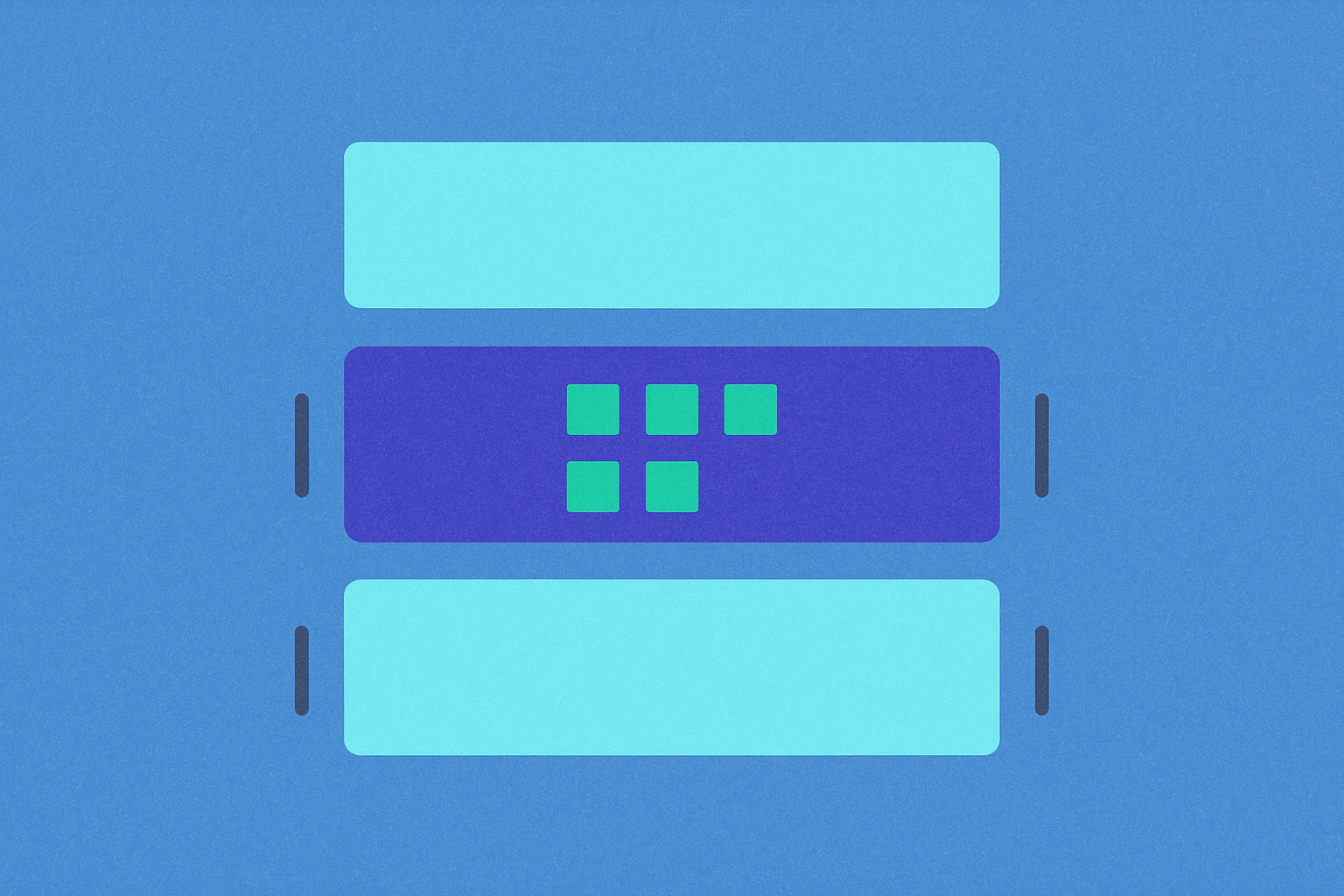
A layered switch is a network architecture concept that organizes network devices into three functional layers—access, aggregation (also known as distribution), and core—each with switches optimized for their specific roles. Instead of focusing on a single device model, this approach emphasizes the division of responsibilities: which devices connect to the network, where traffic is aggregated, and how it enters the core.
You can think of switches as the network's "junction boxes," connecting devices and forwarding data. Layering breaks down complex networks into manageable segments: the access layer connects endpoints, the aggregation layer manages aggregation and policy control, and the core layer delivers high speed and stability.
How Do Layered Switches Work?
Layered switches combine Layer 2 switching (MAC address-based forwarding) with Layer 3 routing (IP address-based traffic management) and policy controls to guide network traffic along defined paths. Locally, traffic uses "proximity forwarding" at Layer 2; for cross-domain communication, Layer 3 routing provides rule-based direction.
Layer 2 switching uses MAC addresses, similar to delivering mail within the same building floor; Layer 3 routing uses network addresses (commonly IPs), like distributing packages between buildings. VLANs segment a physical network into multiple logical subnets, preventing unnecessary interference; ACLs (Access Control Lists) act like security checkpoints, allowing or blocking specific traffic.
To prevent network loops, mechanisms like STP (Spanning Tree Protocol) are deployed, or dual uplinks and Multi-Chassis Link Aggregation (MLAG) are used for higher bandwidth and fault tolerance. The core layer focuses on high throughput and low latency; the aggregation layer enforces policies and isolation; the access layer maximizes port density and convenient connections.
Comparison: Layered Switches vs. Layer 2 & Layer 3 Switches
Layered switches emphasize architectural roles and division of labor, while Layer 2 and Layer 3 switches refer to device capabilities. They are complementary, not mutually exclusive.
Layer 2 switches excel at intra-VLAN communication—simple and efficient. Layer 3 switches enable routing between different VLANs and support more advanced policies. In a layered design, the access layer typically uses Layer 2 switches, while aggregation and core layers introduce Layer 3 functionality and policy enforcement.
As networks scale, relying solely on Layer 2 can cause broadcast storms and fault propagation. Adding Layer 3 capabilities and layering helps localize faults and allows orderly upgrades and expansion.
How to Design Access, Aggregation, and Core Layers with Layered Switches
When designing with layered switches, clarify the responsibilities for each layer: the access layer handles connectivity and convenience, the aggregation layer manages isolation and policy enforcement, and the core layer provides speed and redundancy.
The access layer prioritizes port density, PoE support, and basic Layer 2 functions. Examples include employee workstations, server NICs, and cameras—all grouped at this layer. VLAN segmentation occurs here, organizing different business units into isolated segments.
The aggregation layer aggregates uplinks from multiple access switches and routes between VLANs at Layer 3. This is where you deploy ACLs (access controls), QoS (Quality of Service for prioritizing critical traffic), dual-device redundancy, and link aggregation.
The core layer aims for ultra-low latency and high throughput using high-performance switches with redundant routing, active-active paths, and fast convergence protocols. The core should remain policy-light for rapid transit, leaving complex controls to the aggregation layer.
Use Cases of Layered Switches in Web3
In Web3 environments, layered switches organize nodes, gateways, and backend systems into distinct tiers to maximize performance while maintaining strong isolation and security. For trading platforms, wallets, or RPC services, clear separation helps minimize cross-system interference.
For example: validator nodes and databases are grouped at the access layer via VLANs; RPC gateways and API services are routed and isolated at the aggregation layer using ACLs; the core layer links to external networks or inter-region connections to ensure low latency and stability.
If you are designing an internal network for an exchange like Gate, you can assign matching engines, risk control systems, and hot wallet services to separate VLANs at the access layer. At the aggregation layer, implement ACLs and QoS so that trading and market data traffic is prioritized. Use dual-active uplinks and high-performance equipment in the core to maintain reliability. Even if one section fails, this layered design prevents widespread disruption.
How Do Layered Switches Ensure Security and High Availability?
Layered switches secure networks and maximize availability through a "segregate first, permit selectively, then add redundancy" approach. This confines incidents to smaller scopes and enables rapid recovery.
For security: VLANs create business partitions; ACLs determine who can access what. Firewalls can be integrated at aggregation or core layers for multi-tier defense. Sensitive systems (such as hot wallet interfaces) can be further protected with whitelists and audit logs.
For high availability: common strategies include redundant uplinks, dual-device hot standby, MLAG (Multi-Chassis Link Aggregation), and fast route convergence. Monitoring and alerts should cover port status, latency, packet loss, and configuration changes to prevent outages from human error.
Steps for Selecting and Deploying Layered Switches
Select and deploy in manageable phases by breaking down the complexity into actionable steps:
- Analyze Business Needs & Traffic: Inventory endpoints, peak bandwidth requirements, and critical paths; mark latency-sensitive services such as matching engines or RPC gateways.
- Plan VLANs & Addressing: Segment VLANs by business domain; assign address ranges per segment; define cross-VLAN access rules.
- Select Devices for Each Layer: Choose high-density Layer 2 switches for the access layer; select high-performance switches supporting Layer 3 routing, ACLs, QoS, and redundancy for aggregation/core.
- Design Redundancy & Uplinks: Deploy dual uplinks/link aggregation at aggregation/core to avoid single points of failure; define failover strategies and test plans.
- Implement & Validate: Roll out in phases during low-impact periods; validate bandwidth/latency with benchmarks; ensure rollback plans are ready.
- Operate & Evolve: Establish change approval/configuration backup systems; monitor capacity/logs; review capacity quarterly for optimization.
Relationship Between Layered Switches and Leaf-Spine Architecture
Layered switching and Leaf-Spine architecture are related but distinct concepts. Leaf-Spine ensures all leaf switches have consistent hop counts to spine switches—ideal for east-west data center traffic. Traditional layered designs are more common in campus networks or multi-business isolation.
As of 2025, data centers increasingly use Leaf-Spine architectures with overlays like EVPN/VXLAN for horizontal scaling and consistent latency. Campus/multi-service scenarios still heavily rely on layered switching concepts. These approaches can be combined: use layered designs at the edge/access, Leaf-Spine in the data center backbone.
Risks & Limitations of Layered Switching
The main risks with layered switching are increased complexity and potential bottlenecks—especially if the aggregation layer becomes overloaded, causing latency spikes. Excessive policies can also hurt performance; misconfigured ACLs may interrupt business operations; slow STP convergence can trigger network loops.
In high-stakes environments involving finance or trading, a single network failure could impact order placement or withdrawals. It's essential to have change approvals, rollback drills, and multi-path redundancy to avoid single points of failure—and to consider cost factors, device compatibility, and vendor lock-in risks.
Key Takeaways on Layered Switching
Layered switching is a design methodology that divides networks into access, aggregation, and core layers—using VLANs, Layer 3 routing, and ACLs for clear traffic segmentation. It is especially useful in Web3 or trading environments where low latency and stability are critical. Device selection and deployment should prioritize business needs and traffic patterns, with robust redundancy and monitoring. Understand how it complements Leaf-Spine architectures. When layers are clearly defined, policies are balanced, and change management is controlled, layered switching delivers scalable networks with high availability.
FAQ
What is the main role of access layer switches in a layered network?
Access layer switches form the foundation of the network by directly connecting endpoint devices (such as servers or workstations) and performing fast Layer 2 forwarding. They typically use non-blocking architectures to ensure low-latency communication between devices. Port density and cost efficiency are important considerations here—the access layer is closest to users in a layered design.
What are the key functions of the aggregation layer in layered switching?
The aggregation (distribution) layer serves as an intermediate hub between the access and core layers by aggregating traffic from multiple access switches. It implements network policies, inter-VLAN routing, link aggregation, etc., while requiring high throughput and robust redundancy. The aggregation layer is critical for traffic control and network isolation.
Why is a dedicated core layer needed in a layered switching network?
The core layer is the central exchange point for all network traffic—it provides high-speed forwarding for data coming from the aggregation layer. A dedicated core prevents performance bottlenecks at the aggregation level by using high-end switches with redundant links. Its main goals are maximizing overall throughput and disaster recovery capabilities.
What are common link redundancy techniques in layered switch networks?
Typical redundancy techniques include Link Aggregation (LAG), Spanning Tree Protocol (STP), and Virtual Router Redundancy Protocol (VRRP). Link Aggregation enables parallel use of multiple physical links for increased bandwidth; STP prevents loops; VRRP provides gateway-level redundancy. These methods are often combined to ensure high availability.
How should small-to-medium businesses simplify deployment of layered switching?
Small- to medium-sized enterprises can use a two-layer or simplified three-layer model by merging aggregation/core roles into a single high-performance switch. This approach preserves scalability benefits while reducing costs and management complexity. Choosing modular switches allows for future growth without major redesigns.
Related Articles

Blockchain Profitability & Issuance - Does It Matter?

An Overview of BlackRock’s BUIDL Tokenized Fund Experiment: Structure, Progress, and Challenges