


multicoin
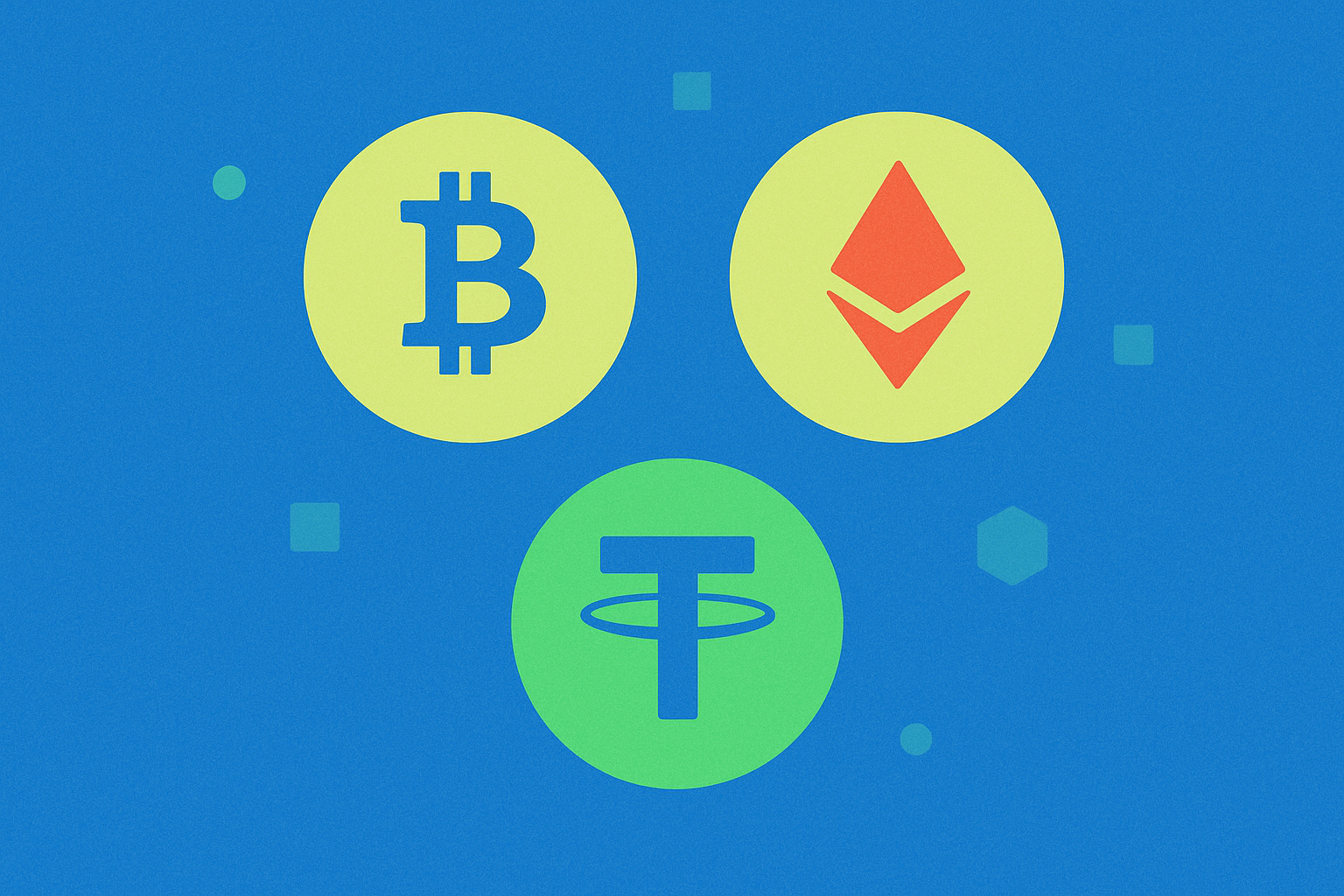
What Does Multi-currency Mean?
Multi-currency refers to the ability to support and use multiple tokens or cryptocurrencies simultaneously.
In crypto, this term covers both individuals holding a diversified portfolio and platforms that enable pricing, deposits, withdrawals, and settlements in various tokens. For example, you can manage BTC, ETH, USDT, and other assets within the same account and place orders in different quote currencies. At the wallet level, a typical multi-currency wallet allows users to manage multiple blockchain addresses and asset lists within a single application. The advantages include risk diversification and flexible payments, but users must also handle challenges like exchange rates, transaction fees, and network differences.
Why Is Understanding Multi-currency Important?
Understanding multi-currency directly enhances your capital efficiency and risk management.
From an investment perspective, diversifying across multiple assets helps buffer your portfolio’s net value when any single asset experiences significant price drops. In payments, accepting stablecoins (tokens pegged to fiat currencies like USD) can reduce price volatility and improve settlement stability. For trading, different tokens and networks have varying transaction fees and levels of congestion—choosing wisely can save on costs. From a compliance and record-keeping standpoint, managing multiple currencies requires unified valuation and transaction tracking, so learning early can help you avoid common pitfalls.
How Does Multi-currency Work?
Multi-currency functionality relies on the coordination of pricing, settlement, and custody.
For pricing, exchanges divide trading pairs into quote currency zones such as USDT, USDC, BTC, or ETH. The currency you use as the “unit of account” determines how your orders are priced, enabling multiple trading pairs for the same underlying asset.
For settlement, after a trade is matched, the system adjusts balances according to the chosen quote currency. When switching between different currencies, the platform initiates conversions or uses internal liquidity to facilitate the swap. On decentralized exchanges (DEXs), swaps occur via liquidity pools—user-funded pools containing two or more tokens where trades are executed based on pool ratios and pricing formulas.
For custody, centralized platforms track your multi-currency balances using sub-accounts or ledgers. Self-custody wallets assign addresses by blockchain; most apps show assets across multiple chains within one interface. Note the importance of “gas tokens”: many public blockchains require their native token (e.g., ETH on Ethereum) to pay gas fees for transactions—always ensure you have a sufficient balance.
How Is Multi-currency Used in Crypto?
Multi-currency is most commonly seen in trading, asset management, payments, and cross-chain transfers.
On exchanges, you’ll encounter various quote currency markets. For example, on Gate, spot markets often use USDT, USDC, BTC, or ETH as settlement currencies—allowing users to choose their preferred accounting unit. Derivatives products may also offer margin or settlement in multiple currencies.
In DeFi and liquidity protocols, some products accept different tokens for subscriptions or staking. For instance, you might deposit stablecoins into “earn” products for interest or provide two different tokens into a liquidity pool to earn a share of transaction fees—but watch out for impermanent loss caused by price fluctuations between the two tokens.
For payments, merchants may accept several stablecoins, letting you settle in your preferred token and reducing exchange costs. Cross-border payments and freelancer earnings particularly benefit from this flexibility.
During cross-chain transfers, you might send the same stablecoin across different blockchains or swap one token for another before bridging to another chain. Both scenarios involve multi-currency operations but differ in user experience and costs.
How Can You Simplify Multi-currency Management?
Set clear goals and use tools and workflows to turn complexity into simplicity.
- Standardize your valuation: Choose a primary reference currency (commonly USDT or USDC) and convert your total portfolio value and P&L into this unit to avoid being misled by having “many tokens but unclear value.”
- Categorize assets by purpose: Divide your holdings into “long-term allocation,” “trading capital,” “payment reserve,” and “gas fee reserve.” Set target proportions and minimum balances for each to prevent resource misallocation.
- Manage gas fee tokens: Reserve small amounts of ETH on Ethereum, BNB on BSC, etc., and enable low balance alerts. On Gate, you can set fee deduction preferences or pre-fund native tokens as needed.
- Reduce unnecessary tokens: Exit or consolidate illiquid or high-risk long-tail assets into stablecoins to lower management costs.
- Recordkeeping and reconciliation: Regularly export statements or use accounting tools to label sources, uses, and chains; review portfolio structure and yield sources monthly.
- Automate and manage risk: Pre-set recurring buys (DCA), stop-losses, or take-profit rules. When swapping tokens, prioritize pairs or aggregators with higher liquidity to minimize slippage and fees.
Recent Trends and Data in Multi-currency
Over the past year, platform support for multi-currency features has expanded alongside increased stablecoin adoption and unified pricing habits.
Exchanges now support more markets: According to dashboard statistics from Q4 2025, leading platforms list thousands of spot trading pairs with multiple quote currency zones as standard. On Gate’s public listings, stablecoin-denominated markets continue to grow while new long-tail assets are regularly introduced (as of Q4 2025; numbers may vary with new listings).
Stablecoins are gaining ground: In 2025, stablecoins maintained a total circulating supply in the tens of billions USD range. Their market share rebounded compared to 2024, with steady demand from merchants and individuals for USDT, USDC, etc., in payments and cross-border settlements (data from 2025 full year; see major market cap trackers).
Valuation habits are unifying: In H2 2025 through Q4, trading pairs priced in stablecoins crypto-to-crypto trading further increased their share while BTC- and ETH-based pairs declined proportionally. This shift helps users standardize P&L and net worth calculations using a single stablecoin unit.
Fee sensitivity is rising: In late 2025, users became more attentive to transaction fees and settlement speed when choosing chains and tokens. Transfer volumes for stablecoins on low-fee blockchains grew rapidly, leading to more dispersed distribution among multi-chain versions of the same token (data from the past six months).
What’s the Difference Between Multi-currency and Multi-chain?
Multi-currency answers “what assets do you own”; multi-chain addresses “on which networks do those assets reside.”
Multi-currency focuses on asset types like BTC, ETH, or USDT—the “money” itself; multi-chain highlights underlying networks such as Ethereum, BSC, Solana—the “roads.” The same stablecoin may exist on multiple chains; holding USDT across different blockchains involves both multi-chain management and multi-currency tracking.
In practice, distinguish between swapping coins and cross-chain transfers. Exchanging token A for token B is a multi-currency swap; transferring the same token from chain X to chain Y is a cross-chain transfer. The former emphasizes price and slippage; the latter focuses on bridge security, transaction fees, and settlement times. A common mistake is depositing tokens on the wrong chain to an exchange address—always verify network names and contract details before transacting.
Related Terms
- Cross-chain bridge: Technology connecting different blockchain networks to enable asset transfers and interoperability.
- Liquidity pool: A decentralized trading mechanism where users supply various tokens into a pool for others to swap between assets.
- Smart contract: Self-executing code supporting token swaps, staking, governance functions, etc.
- Gas fee: Transaction fees required to perform multi-currency operations on blockchains.
- Wallet address: A unique identifier used to store and manage multiple cryptocurrencies.
- Trading pair: A unit composed of two different tokens (e.g., BTC/USDT) used for price discovery and exchange.
FAQ
What does the symbol ₮ represent?
₮ is the currency symbol for the Mongolian Tögrög. Every country has its own fiat currency symbols—knowing these helps you quickly identify currencies in global transactions. In crypto, distinguishing between blockchain-specific token symbols is equally important to prevent trading mix-ups.
What does the symbol € represent?
€ is the symbol for the euro—the common currency used by European Union member countries. The euro is one of the most prominent international currencies in multi-currency scenarios. Recognizing major currency symbols helps you better understand multi-currency concepts in global payments and settlements.
How do I manage multiple currencies on Gate?
Gate supports multi-currency asset management—you can hold various cryptocurrencies in your wallet at once. The system automatically displays each token’s value at current exchange rates for a comprehensive view of your asset allocation. It’s recommended to regularly review your portfolio’s composition and adjust based on market conditions.
What risks should I be aware of when holding multiple currencies?
Holding multiple currencies exposes you to exchange rate volatility—price swings directly affect your portfolio value. Additionally, liquidity differences between tokens can impact trading efficiency and costs. Beginners should start with mainstream tokens before expanding into more diverse assets as they become familiar with each token’s characteristics.
Is multi-currency or single-currency investing better for beginners?
Multi-currency investing spreads risk but requires more knowledge for decision-making. Beginners are advised to start with one or two mainstream tokens (such as BTC or ETH) to get familiar with the market before expanding into a diversified portfolio. Gate provides comprehensive token information and trading tools to help you gradually build your investment strategy.
References & Further Reading
Related Articles

Exploring 8 Major DEX Aggregators: Engines Driving Efficiency and Liquidity in the Crypto Market

What Is Copy Trading And How To Use It?
