What Is a Soulbound Token?
A Soulbound Token (SBT) is a non-transferable on-chain credential that links a specific qualification or status to your wallet address. Rather than representing a tradable asset, an SBT serves as a “tag” on your account, signifying a credential you possess.
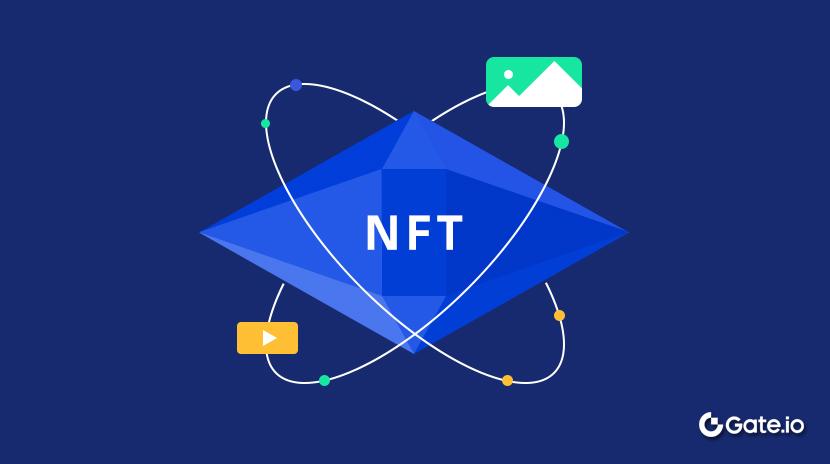
Soulbound Tokens are often compared to NFTs (NFT), which are unique digital certificates that can typically be transferred or traded. In contrast, SBTs are explicitly non-transferable and permanently associated with a single address, representing non-tradable identities or relationships.
When an issuer mints an SBT, it uses a smart contract to record the token on the blockchain. Smart contracts are essentially sets of automated rules written in code, enabling actions to be executed without manual intervention.
How Do Soulbound Tokens Work?
The non-transferability of Soulbound Tokens is enforced by smart contract logic. The contract disables or intercepts standard transfer operations, so once minted, the token is “locked” to an address.
A common approach is to extend existing token standards such as ERC-721 or ERC-1155, overriding functions like transfer and approve to prohibit movement, or adding validation checks to reject transfers. ERC refers to Ethereum’s general token standards, making it easier for wallets and applications to recognize and display tokens.
EIP-5192 introduced a minimal Soulbound Token model with a “locked state.” These proposals offer standardized interfaces so wallets can visually indicate non-transferability. Some implementations also allow issuers to revoke (burn) or update tokens, supporting error correction or expiry management.
What Identity and Reputation Problems Do Soulbound Tokens Address?
Soulbound Tokens aim to prevent the commodification of credentials by bringing non-transferable identity or relationship status on-chain, enabling automated verification by applications.
Common use cases include universities issuing degree certificates, clubs granting non-transferable memberships, and projects distributing compliance verifications (often called KYC) or attendance badges. Since these tokens cannot be transferred, they close loopholes for “purchasing identities.”
In terms of governance and empowerment, communities or DAOs can grant special permissions or benefits based on addresses holding specific SBTs—such as allowing only certain qualified addresses to participate in reviews or claim airdrops. This supports more merit-based and contribution-driven distribution.
How Do You Use a Soulbound Token?
As a holder, you typically “claim” or mint a Soulbound Token rather than purchase one. The process is straightforward:
Step 1: Prepare your wallet and ensure it supports the relevant blockchain. Your wallet acts as your on-chain account—use Gate’s Web3 wallet or any compatible wallet.
Step 2: Visit the issuer’s site, connect your wallet, and complete any required off-chain verification (such as email, student ID, or ticket number), then click the mint or claim button.
Step 3: After minting, view your SBT on a blockchain explorer or in your wallet’s assets page. If your wallet supports the relevant standards, it will indicate that the token is non-transferable.
On Gate’s Web3 platform, you can connect to supported project websites to claim SBTs. How tokens are displayed and interacted with depends on both project standards and wallet compatibility.
How Do Soulbound Tokens Differ from NFTs?
The key difference is transferability. NFTs can generally be traded on open marketplaces, while Soulbound Tokens are designed to be non-transferable—only issuers can mint or revoke them.
Their purposes also diverge: NFTs are mostly used for collectibles, game items, or tickets—tradable assets—while Soulbound Tokens focus on identity, credentials, and relationships. SBTs prioritize verifiability and non-tradability over market value.
In terms of user experience, NFT marketplaces emphasize rarity and transaction history; SBTs are more concerned with issuer credibility, issuance conditions, and validity periods. Both can be recognized by wallets but are displayed differently.
How Do Soulbound Tokens Relate to DID and Verifiable Credentials?
A DID (Decentralized Identifier) is a user-controlled, cross-platform identity marker designed for self-sovereign management instead of platform control.
Verifiable Credentials are digitally signed statements from issuers that can be independently validated but are not necessarily stored on-chain. They function like digitally signed certificates, relying on cryptographic signatures rather than blockchain queries for validation.
Soulbound Tokens bring certain important credentials on-chain so applications can directly read qualifications linked to an address. DIDs and Verifiable Credentials focus more on off-chain signature verification and privacy preservation. In practice, SBTs are often combined with off-chain Verifiable Credentials and zero-knowledge proofs (proving eligibility without revealing details) to minimize privacy exposure.
What Are the Risks and Limitations of Using Soulbound Tokens?
Privacy risk: Publishing identity or sensitive credentials on-chain may de-anonymize you. It’s recommended to use dedicated wallets for public credentials and carefully consider what information you want on-chain.
Revocation and corrections: Whether you can revoke or correct information depends on both the contract and issuer design. Choose projects that support revocation or updating mechanisms, and always review contract documentation.
Trusted issuers: Anyone can issue tokens, so fake credentials are a risk. Always verify project websites, contract addresses, and signature domains via blockchain explorers to avoid phishing or counterfeit contracts.
Funds and account security: Minting usually requires paying small network gas fees. Be cautious of malicious pages requesting full asset approvals—check your wallet’s authorization list and revoke unnecessary permissions promptly. Losing your private key means losing control over the address; while attackers cannot transfer your SBTs, they could exploit permissions associated with those tokens.
Compliance and discrimination: On-chain credentials may be used for differentiated treatment in applications. Stay informed about local regulations and platform policies to avoid unintended disclosure or misuse.
What Is the State of Soulbound Token Standards and Ecosystem Development?
From a standards perspective, EIP-5192 defines a minimal interface for “locked state,” while EIP-4671 explores ways to represent non-transferable credentials. Standardization helps wallets and applications display and recognize SBTs accurately.
Ecosystem-wise, research since 2022 has advanced identity narratives with use cases like educational credentials, memberships, attendance records, and governance rights. As of 2025, more projects on Ethereum mainnet and sidechains are implementing generalized interfaces for “non-transferable qualifications,” often integrating off-chain Verifiable Credentials and zero-knowledge proofs for enhanced privacy.
At the application layer, DAOs and communities use SBTs as reference signals against Sybil attacks (multiple accounts per person), usually in combination with other indicators (like contribution records or off-chain verification) rather than as the sole criterion for decision-making.
How Do You Technically Implement a Soulbound Token?
- Choose an implementation: ERC-721 is most common for metadata display; ERC-1155 suits batch issuance.
- Disable transfers: Override transfer, safeTransfer, and approve functions to universally block transfers and approvals, or use locked state interfaces so wallets recognize non-transferability.
- Issuance permissions: Restrict minting to issuers or whitelisted accounts; optionally support user applications with admin review before issuance.
- Revocation and updates: Provide functions for burning (revocation) and status updates; clarify permissions and conditions for their use; log events for traceability.
- Metadata and privacy: Store sensitive data off-chain (e.g., encrypted links), keeping only pointers and necessary identifiers on-chain to reduce exposure.
- Security and auditing: Protect against reentrancy attacks, privilege abuse, and authorization bypass; thoroughly test on testnets and seek third-party audits.
- Deployment and integration: Deploy to target networks; verify contract source code; build front-end interfaces for claiming tokens; ensure wallet compatibility with SBT display interfaces.
Key Takeaways of Soulbound Tokens
Soulbound Tokens bring “non-tradable qualifications and identities” on-chain with secure binding ensured by non-transferable contract logic. They’re ideal for diplomas, memberships, compliance credentials, and governance rights—often used alongside DIDs and Verifiable Credentials for both verifiability and privacy. Issuers should follow standards while implementing revocation/update mechanisms; holders must safeguard privacy and account security. Ecosystem-wide, standards are unifying, with applications favoring multi-signal strategies over relying solely on SBTs for decision-making.
FAQ
What Are Practical Use Cases for Soulbound Tokens?
Soulbound Tokens are suitable for scenarios requiring identity verification and reputation tracking. Educational institutions can issue degree certificates; enterprises can record employee accreditations; lending platforms can track user credit histories. Compared to traditional centralized solutions, SBTs offer transparent, verifiable, and tamper-resistant on-chain credentials.
If I Lose My Wallet Address, Will My Soulbound Tokens Be Lost?
This is a core risk of SBTs. Because each token is permanently linked to a specific wallet address, losing your private key renders these credentials inaccessible and untransferable. Some projects provide recovery mechanisms like social recovery or admin intervention—but not all do—so you should understand the recovery process before storing important credentials as SBTs.
Do Soulbound Tokens Reveal My Entire On-Chain Activity History?
It depends on implementation. Some SBTs only store credential data (such as certificate content) without exposing your wallet’s entire transaction history. However, since wallet addresses are public, anyone can view all activity associated with that address on-chain. If privacy is a concern, opt for projects that support privacy-preserving features or use privacy-focused wallets.
Can I Buy or Trade Soulbound Tokens Directly on Gate?
SBTs cannot be transferred or traded; therefore centralized exchanges like Gate do not support buying or selling them. However, many DeFi projects and ecosystem partners supported by Gate issue SBTs as achievement badges or proof of qualification. You can earn these tokens by participating in project activities—but they can only be viewed and used within your bound wallet.
Can I Delete a Soulbound Token If I Disagree With Its Content?
This depends on the issuer’s design. Most SBTs are controlled by issuers (such as universities or platforms), so users cannot unilaterally delete them. However, many projects provide a “revoke” mechanism—allowing users to reject issuance or request removal by the issuer. For errors or disputes regarding token contents, contact the issuer directly for assistance; permanent deletion generally requires issuer support.