


what is a wick
What Is a Candlestick Wick?
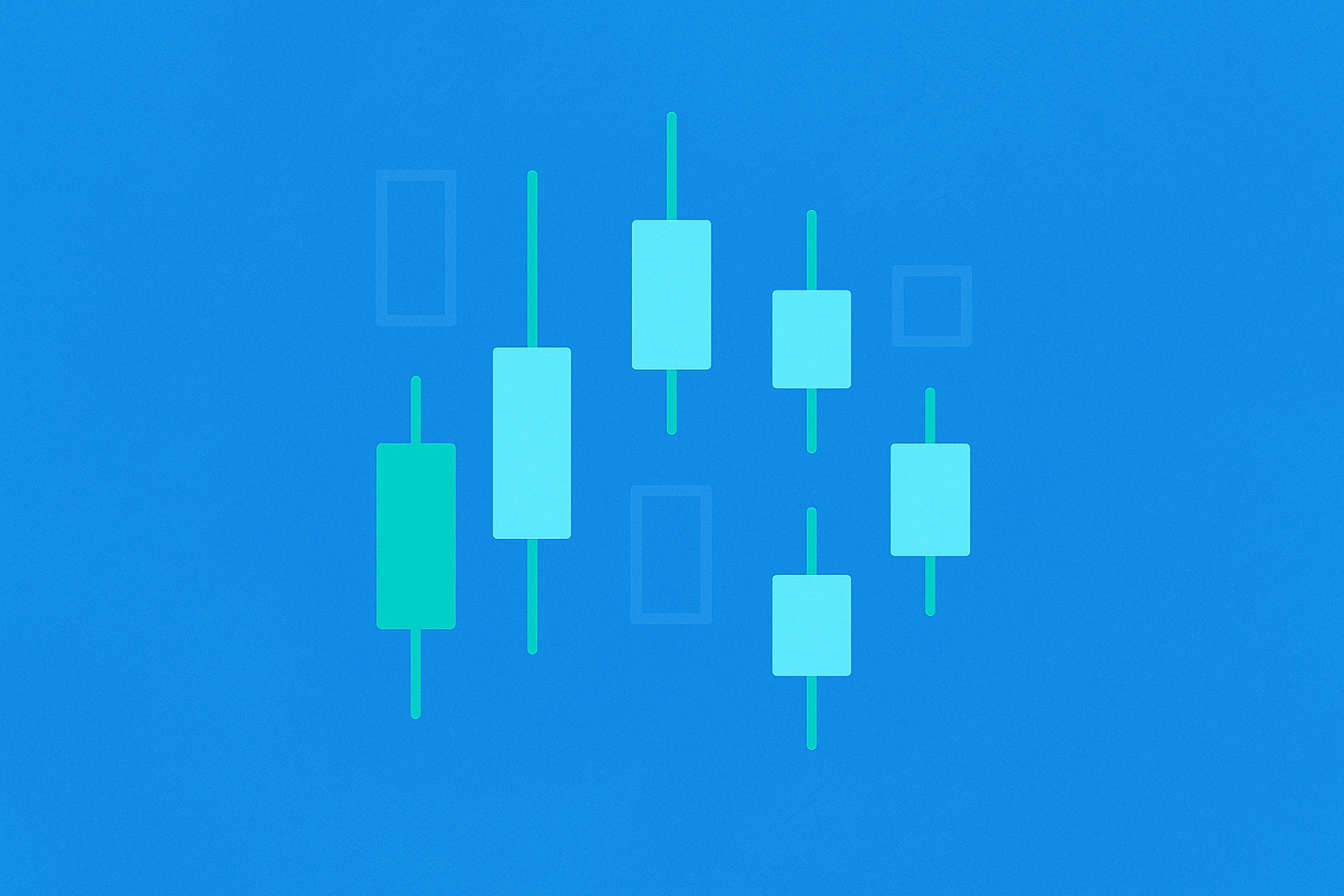
A candlestick wick refers to the thin lines extending above and below the main body of a candlestick on a price chart.
A candlestick wick consists of two parts: the upper wick and the lower wick. The upper wick represents the distance between the highest price reached during the period and either the opening or closing price, while the lower wick indicates the distance between the lowest price and the opening or closing price. The longer the wick, the greater the intraday volatility and price retracement it signals. This often occurs during periods of large trades, low liquidity, or news-driven events.
Why Is Understanding Candlestick Wicks Important?
Wicks help traders assess buying and selling pressure within a given period and distinguish between genuine breakouts and false moves, directly impacting entry points, stop-loss placement, and position management.
Many beginners mistake long wicks for trend confirmation, only to buy at highs and get trapped by reversals. A wick often means "the price reached this level but couldn't hold." If a candle has a small body with a long wick, it typically indicates aggressive orders were quickly absorbed by counterparties, showing a lack of sustained trading at those levels. Recognizing wick behavior helps you differentiate between "valid breakouts" (with follow-through trades and retests) and "false moves" (price whipsaws due to liquidity sweeps).
In crypto markets, wicks are closely linked to contract liquidations. When price briefly pierces through clusters of stop-loss or liquidation orders—a phenomenon known as a "wick" or "scam wick"—it often quickly returns to its previous range. Being able to identify these moves can help reduce forced stop-outs and avoid unnecessary slippage.
How Do Candlestick Wicks Form?
Wicks are formed when order matching and liquidity are rapidly triggered within a short timeframe.
When large market orders hit a thin order book, or when there are few resting limit orders at certain price levels, price can quickly cut through multiple levels, activating distant limit and stop orders. This results in a temporary spike to new highs or lows, after which counterparties absorb trades in a new high-liquidity zone, bringing the closing price back toward the middle—leaving behind a long wick and a relatively small body.
In spot trading, this often happens in illiquid pairs or during low-activity times such as market open or late night. In derivatives trading, leverage and forced liquidation mechanisms amplify this effect: as price approaches clusters of liquidation levels, chains of forced buying or selling can push price to extremes, creating even longer wicks.
Wick analysis often uses two simple ratios: (1) the length of the wick as a proportion of the entire candlestick’s high-low range; (2) the ratio of wick length to body length. The higher these ratios, the more pronounced the "liquidity sweep and retracement" effect.
How Do Candlestick Wicks Manifest in Crypto Markets?
Wicks are most prominent in periods of concentrated liquidity, news-driven volatility, and leveraged positions.
During token listings on exchanges—for example, on Gate during the first week of a new coin—1-minute and 5-minute charts often display large wicks both up and down. This happens because market making is not yet fully established and order books are thin, so large orders can move prices across several levels before arbitrage and market makers pull prices back.
On contract liquidation days, major cryptocurrencies often show pronounced wicks as price triggers clusters of stop-losses and forced liquidations ("scam wicks"), then returns to its previous range. These wicks are usually accompanied by high volume and spikes in funding rates, signaling traders to avoid chasing entries at extremes.
In DeFi, wick behavior relates to on-chain pricing. Leading oracles commonly use time-weighted average price (TWAP) feeds to smooth out short-lived extreme prices and reduce the risk of false on-chain liquidations due to isolated wicks. However, in small pools or high-slippage pairs, flash loans or large trades can still create extreme wicks that impact collateralization and liquidation events on-chain.
Time zone differences across global markets also contribute to wick formation. For instance, during major US data releases or Asian market openings, shifts in liquidity structure on centralized spot and derivatives exchanges make "liquidity sweeps followed by retracements" more likely.
How Can You Reduce Risks Associated With Candlestick Wicks?
- Choose the Right Trading Times and Pairs: Avoid trading immediately after new listings when volatility is highest; refrain from placing large orders during low-liquidity periods; prioritize deep-liquidity pairs for better execution.
- Optimize Order Placement: Favor limit orders to control acceptable entry prices; if you must use market orders, split them into smaller tranches to minimize single-order book impact. Set strict slippage limits when chasing prices.
- Adjust Stop-Loss Placement: Position stops outside obvious wick zones rather than close to "stop-hunt" areas. Reference volatility measures like Average True Range to leave adequate buffer room, reducing the chance of getting "wicked out" before price returns to trend.
- Use Higher Timeframes for Confirmation: Confirm trend direction on higher timeframes before entering on lower timeframes to reduce noise from short-term wicks. Wicks are more common on 1-minute charts but provide more reliable signals on 4-hour or daily charts.
- Monitor Liquidation and Market Alerts: During potential high-impact news or funding rate volatility, lower leverage and avoid concentrated positions. Set up price alerts or liquidation warnings on platforms like Gate to avoid missing critical moves.
- Review Wick Behavior With Volume: Analyze volume, retracement speed, and support at wick locations—these factors are more important than wick length alone. If volume dries up after a long wick and key levels aren't reclaimed, trend continuation is more likely.
What Recent Trends or Data About Candlestick Wicks Are Worth Watching?
Over the past year, the correlation between wicks and liquidations has remained prominent. According to public liquidation dashboards (such as Coinglass), there were several days in 2025 when total daily crypto contract liquidations exceeded billions of dollars industry-wide. During these windows, Bitcoin and Ethereum often displayed significant wicks on 1- to 15-minute charts. The more concentrated the liquidations, the longer the wicks—followed by price reverting toward equilibrium.
For new listings and low-cap coins throughout 2025 and in recent months, initial trading periods saw longer wicks on lower timeframes. A replicable monitoring method is to track the percentage of 1-minute and 5-minute candles during a token’s first week where "wick length exceeds 50% of the total high-low range," then compare this with data from week two; typically, this ratio declines as market making deepens.
On-chain pricing and risk management have also evolved: since H2 2025, leading oracles and lending protocols increasingly use time-weighted and multi-source aggregated pricing feeds. This reduces the direct impact of short-term wicks on liquidations. However, in illiquid long-tail assets, extreme wicks can still trigger on-chain liquidations—so it’s advisable to maintain higher collateral health ratios for these positions.
Data notes: All trends described can be independently confirmed using exchange candlestick data from 2025 YTD or recent months; liquidation volumes can be cross-checked against public dashboards; oracle mechanism updates are available in protocol docs and announcements. Since behavior varies greatly across pairs and timeframes, always clarify your monitoring window and use exchange-specific data relevant to your trades.
Key Terms
- Candlestick Wick: The thin line above or below a candlestick body representing highest or lowest prices reached within that period.
- Candlestick Chart: A chart format displaying asset price movements using candle-shaped bars that show open, close, high, and low.
- Technical Analysis: The practice of forecasting future market movements by analyzing historical price and volume data.
- Support Level: A price point where downward movement tends to pause or reverse due to increased buying interest; often identified via historical lows or technical indicators.
- Resistance Level: A price point where upward movement tends to stall or reverse due to increased selling interest; commonly marked by previous highs or technical indicators.
FAQ
What does the length of a candlestick wick indicate?
The length of a candlestick wick reflects the degree of emotional volatility among market participants. A long upper wick signals that buyers pushed prices higher but faced selling pressure; a long lower wick shows that sellers drove prices down but were met by buying interest. Both scenarios suggest possible trend reversals. Generally, long-wicked candles indicate high disagreement or uncertainty in the market.
What do long upper wicks versus long lower wicks mean?
A long upper wick means that although buyers tried to push prices higher during the period, they failed to maintain those levels—potentially signaling increased selling pressure or waning bullish momentum. A long lower wick indicates sellers tried to push prices lower but couldn't sustain those lows—implying stronger buyer support or weakening bearish momentum. Recognizing these patterns helps identify potential short-term support and resistance levels.
What does it mean if a candle has no wick?
A candlestick with no wick (a full-bodied candle) suggests that market direction was clear and market participants were in strong agreement. For example, a bullish candle with no upper or lower wick means buyers controlled the session from start to finish; a bearish candle with no wicks means sellers dominated throughout. Such candles typically appear during strong one-sided trends.
Do candlestick wicks behave differently across timeframes (minute vs daily charts)?
Yes—their significance varies greatly by timeframe. Wicks on shorter timeframes (like 5-minute charts) are more influenced by small-scale volatility and may offer less reliable signals; wicks on longer timeframes (such as daily charts) aggregate broader market dynamics and better reflect true sentiment. Beginners are advised to study wick patterns first on daily or 4-hour charts before applying them to short-term trading.
How are candlestick wicks related to support and resistance levels?
The tips of wicks often become future support or resistance levels. When long wicks repeatedly form at certain prices, it signals that strong buying or selling forces exist at those points. On platforms like Gate, you can use wick tips as references for setting stop-losses or take-profits—but remember not to rely solely on this indicator.
References & Further Reading
Related Articles

Exploring 8 Major DEX Aggregators: Engines Driving Efficiency and Liquidity in the Crypto Market

What Is Copy Trading And How To Use It?
