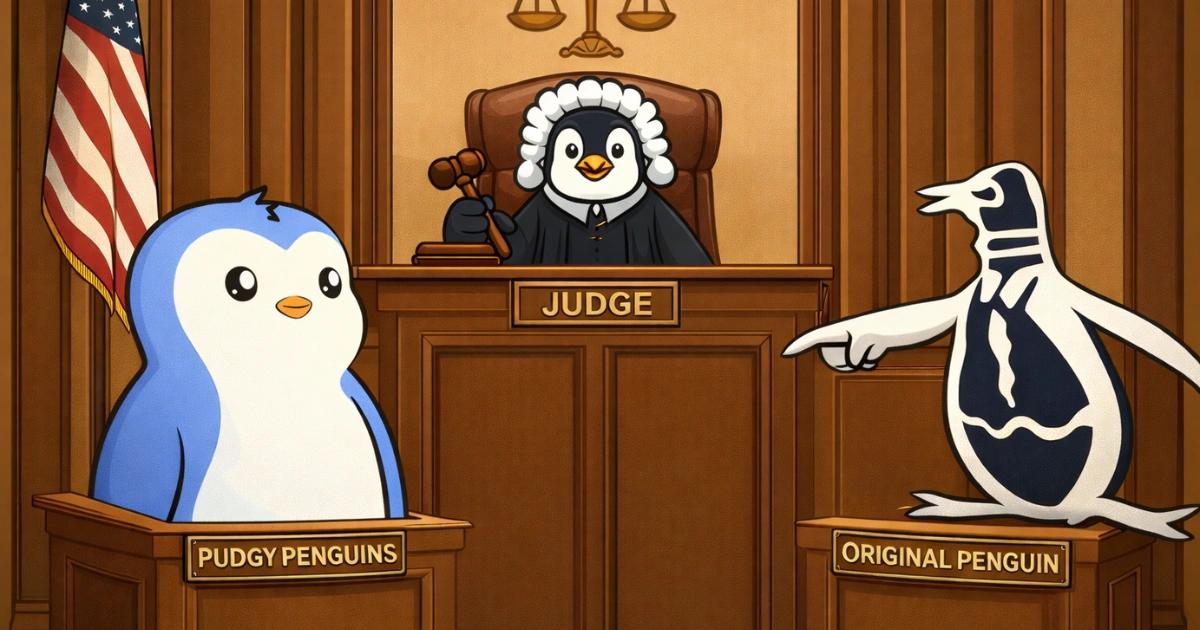
Original Penguin Sues Pudgy Penguins for Trademark Infringement, Dispute Continues for Two Years as NFTs Enter Physical Retail and Face Traditional Brand Challenges
Established Clothing Brand Files Lawsuit Alleging NFT Penguin Image Infringement
American apparel brand Original Penguin’s trademark licensing company PEI Licensing recently filed a lawsuit in the Southern District of Florida, accusing the well-known NFT project Pudgy Penguins of trademark infringement. The company claims that Pudgy Penguins used multiple “Penguin” related words and images without authorization, violating fair competition and trademark protection laws.
According to court documents, PEI Licensing’s Original Penguin brand dates back to 1955, with its clothing products featuring a penguin logo since 1956, and the “Penguin” word trademark officially registered in 1967. Over the years, the brand has established a certain level of recognition in the global apparel market.
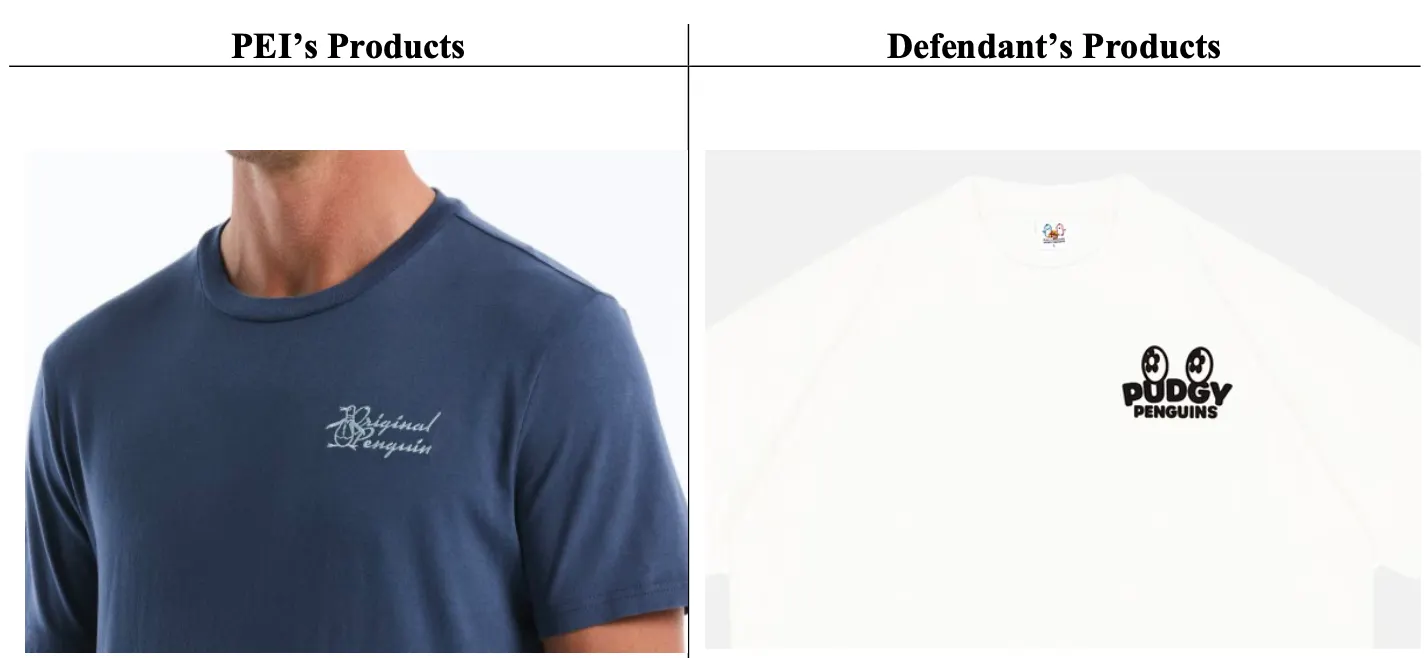
Image Source: PEI Licensing PEI Licensing believes Pudgy Penguins’ use of the brand name and penguin imagery may mislead consumers
The lawsuit states that Pudgy Penguins’ use of the brand name and penguin imagery could cause consumers to mistakenly believe there is a partnership or affiliation between the two. PEI argues that such confusion could damage Original Penguin’s brand reputation and commercial credibility, and may have long-term impacts on the value of its existing trademarks.
NFT Brand Expands into Physical Goods, Sparks Trademark Dispute
Pudgy Penguins initially launched its NFT collection on the Ethereum blockchain in 2021, quickly becoming one of the most recognizable native IPs in the crypto industry. As the NFT market cooled, the brand shifted focus toward physical products and brand licensing, aiming to expand new revenue streams.
Starting in 2023, Pudgy Penguins released plush toys and apparel, successfully entering major retail outlets like Walmart and Target. According to company data, its physical toys sold over 1 million units in less than a year, generating more than $10 million in revenue.
However, PEI Licensing points out that the penguin images, slogans, and brand names used on Pudgy Penguins’ apparel and accessories are highly similar to Original Penguin’s existing trademarks. The lawsuit includes comparison images of products such as hats, hoodies, and other clothing items, claiming that the brand identifiers are likely to cause market confusion.
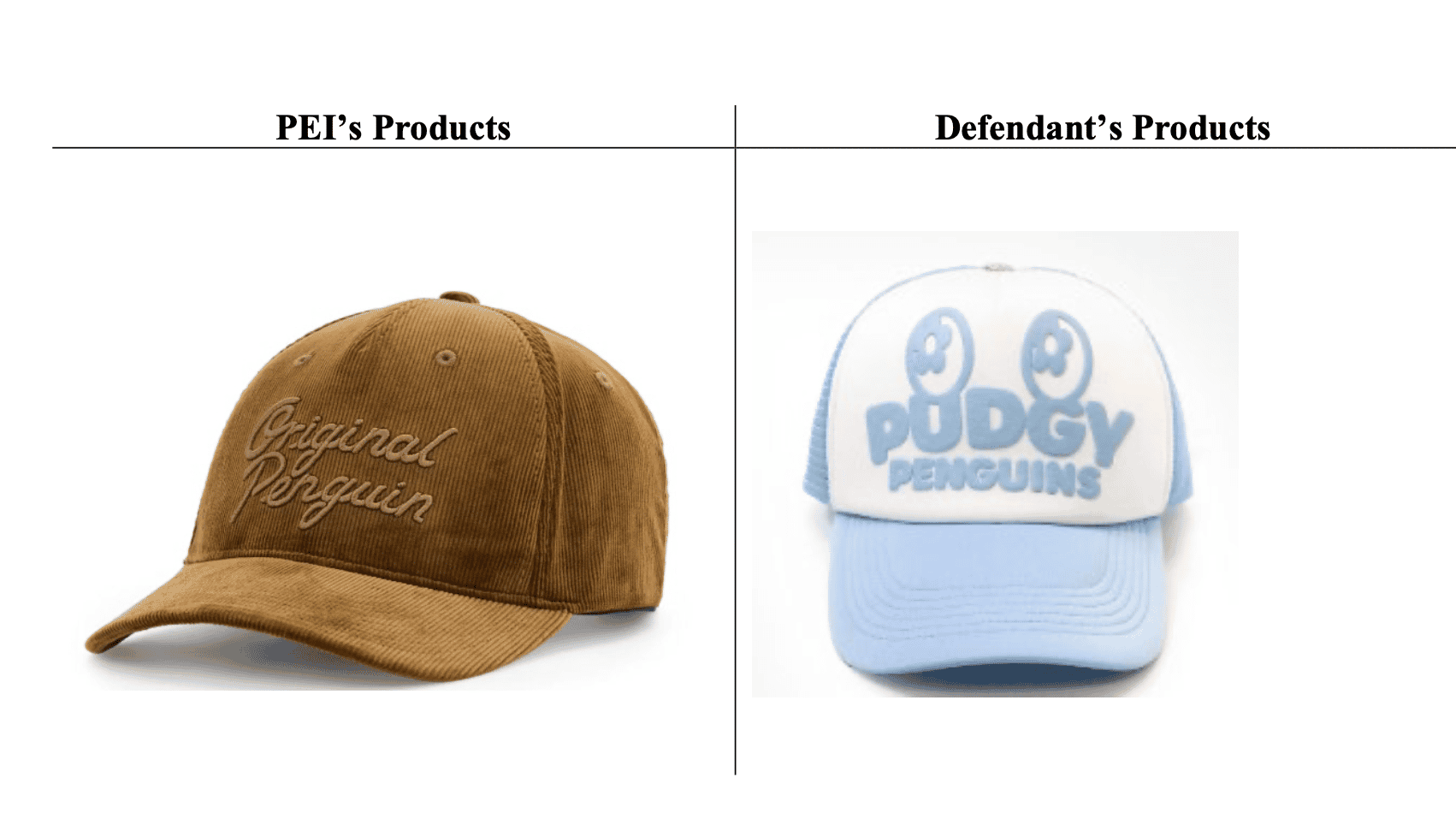
Image Source: PEI Licensing PEI Licensing states that Pudgy Penguins’ use of penguin images, slogans, and brand names on apparel and accessories closely resembles Original Penguin’s trademarks
Trademark Application and Warning Letter Dispute Lasts Two Years
PEI Licensing states that it sent a cease and desist letter to Pudgy Penguins as early as October 20, 2023, demanding that the project stop using potentially confusing penguin trademarks on apparel and related products.
However, the company notes that after receiving the notice, Pudgy Penguins continued to sell related products and applied for multiple trademark registrations with the U.S. Patent and Trademark Office (USPTO), including “Pengu Nation” and the slogan “I am my penguin and my penguin is me.”
In 2024, PEI also formally opposed at least two of these trademark applications with the USPTO. The lawsuit states that these applications cover product categories that are nearly identical to those used by Original Penguin for clothing and accessories, potentially creating direct competition.
Legal documents accuse Pudgy Penguins of “deliberately exploiting existing brand reputation and goodwill,” and suggest that their continued use of related marks is an intentional act.
Pudgy Penguins Responds, Saying Brand Positions Are Different
Pudgy Penguins expressed surprise at the lawsuit. Legal Director Jennifer McGlone stated that the company had been negotiating privately with the plaintiff, hoping to resolve the dispute through dialogue, and was taken aback by the sudden filing of the lawsuit.
The company believes that its brand design and visual style differ significantly from Original Penguin’s trademarks, and that their target audiences and market positioning are also distinct. They point out that the USPTO has approved multiple trademark applications related to Pudgy Penguins, indicating regulatory recognition that there is no clear confusion. Pudgy Penguins also posted a meme on X mocking the situation.
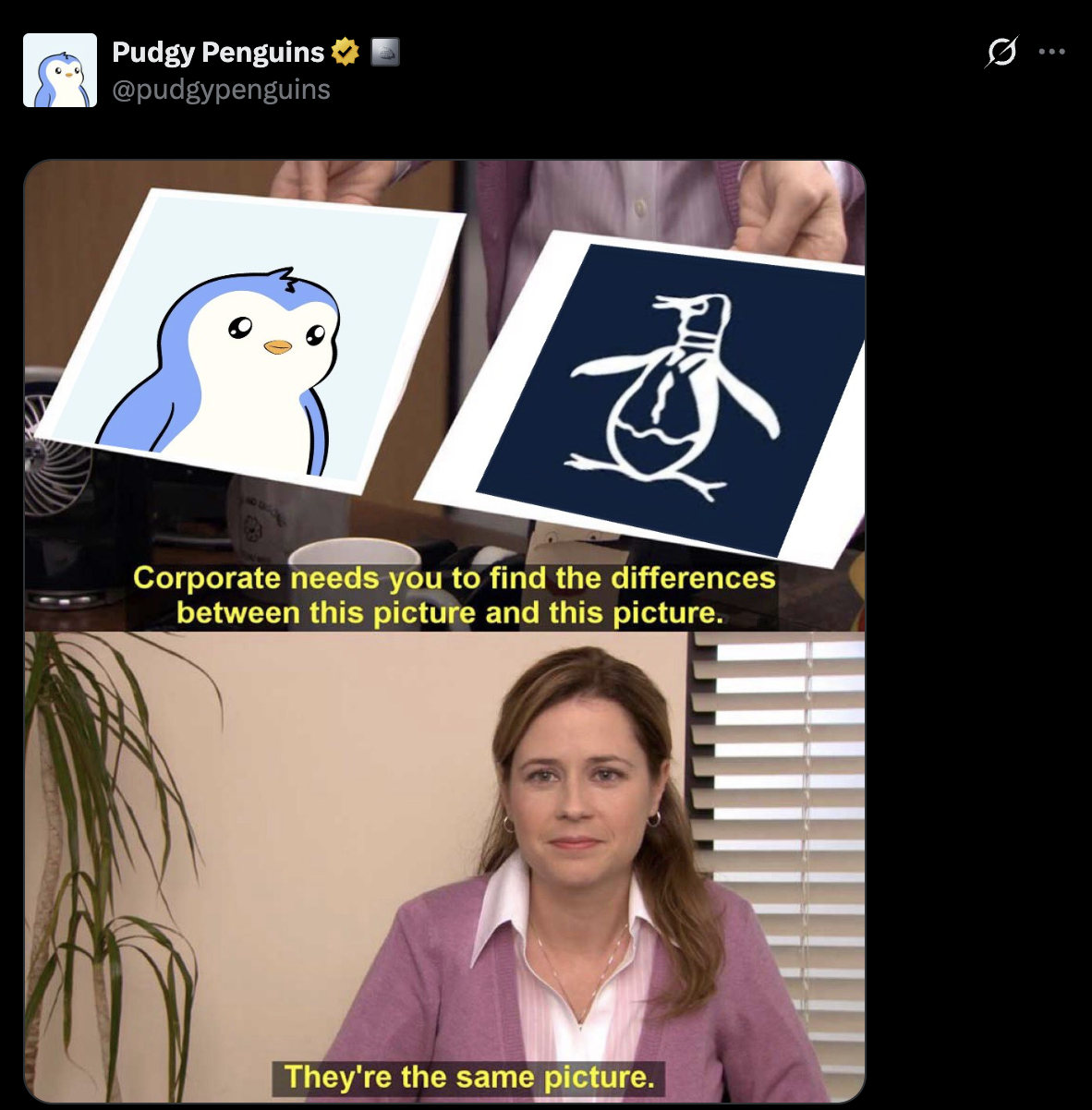
Image Source: X/@pudgypenguins Pudgy Penguins posted a meme on X mocking the incident
Currently, PEI Licensing is requesting the court to order Pudgy Penguins to cease using the disputed trademarks, revoke its trademark applications, and recover all profits from sales of related products. The plaintiff also seeks an order to destroy all potentially confusing goods.
This case highlights the emerging legal challenges faced by NFT projects as they expand into physical retail markets. As blockchain-native IPs enter broader consumer markets, trademark and copyright issues are likely to become key legal concerns for the industry’s future development.
This article is compiled by Crypto Agent from various sources, reviewed and edited by Crypto City. It is still in training and may contain logical errors or inaccuracies. Content is for informational purposes only and should not be considered investment advice.
Disclaimer: The information on this page may come from third parties and does not represent the views or opinions of Gate. The content displayed on this page is for reference only and does not constitute any financial, investment, or legal advice. Gate does not guarantee the accuracy or completeness of the information and shall not be liable for any losses arising from the use of this information. Virtual asset investments carry high risks and are subject to significant price volatility. You may lose all of your invested principal. Please fully understand the relevant risks and make prudent decisions based on your own financial situation and risk tolerance. For details, please refer to
Disclaimer.


