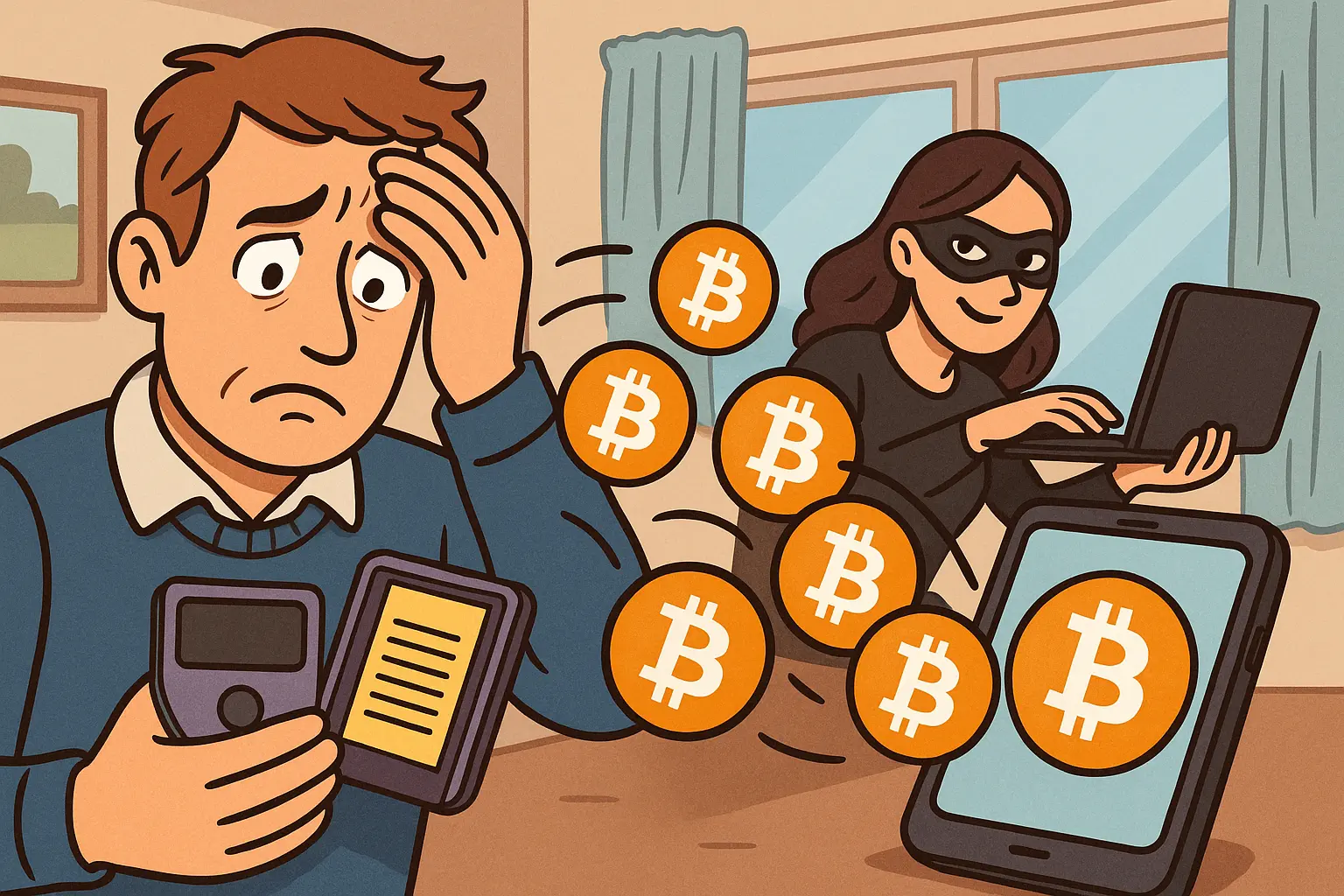
Last week, the High Court of England and Wales permitted a lawsuit involving 2,323 bitcoins to proceed to trial. Ping Fai Yuen, a resident of the UK, alleges that his estranged wife, Fun Yung Li, secretly recorded him entering his Trezor cold wallet’s 24-word seed phrase using home CCTV surveillance equipment in August 2023, and subsequently transferred the bitcoins without authorization.
Case Progress: From Surveillance Recording to UK High Court Filing
According to court records from the High Court of England and Wales, the key details of the case are as follows:
Technical vulnerabilities of the cold wallet: The bitcoins involved are stored in a Trezor cold wallet protected by a PIN. However, the court pointed out that anyone who possesses the 24-word seed phrase can reconstruct the wallet on any device and transfer the funds freely—regardless of whether the original device is present. This design makes the seed phrase the last line of defense for the security of the cold wallet.
Subsequent movements of the stolen bitcoins: After the transfer, the funds were dispersed through multiple consecutive transactions into 71 blockchain addresses not held on any exchanges. Court records show that these funds have not moved since December 21, 2023, and remain static across these addresses.
Yuen’s response actions: Yuen stated that after his daughter warned him, he installed audio and video recording devices at home. Upon discovering the bitcoin transfer, he confronted Li Fun Yung and attacked her. In 2024, he admitted to charges of actual bodily harm and two common assault charges. Police later searched Li’s residence, seizing multiple hardware wallets and recovery seeds, but since no new criminal evidence was found, authorities have not taken further action.
Legal Dispute: How Traditional Property Law Addresses Digital Assets
The major legal controversy in this case revolves around the concept of “conversion” under English common law. Li Yung Li requested the court to dismiss the case, arguing that “conversion” traditionally applies only to tangible property in UK law, and since bitcoins are digital assets that cannot be “possessed,” this claim is inapplicable.
The judge agreed with the wife’s argument that “conversion” does not apply here but also ruled that the case could proceed under other legal avenues. The judge stated that if Yuen’s allegations are true, he might still pursue other legal claims to recover the involved bitcoins. The case will now proceed to a formal trial.
This ruling reveals the current limitations of UK property law in applying to digital assets, while also indicating that existing legal frameworks are not entirely without scope—multiple legal pathways remain available to seek judicial relief in cases of digital asset theft.
Frequently Asked Questions
Q: How does the 24-word seed phrase protect the cold wallet, and what vulnerabilities does it have?
A: The seed phrase (Seed Phrase) of a cold wallet is used to restore the entire private key of the crypto wallet. Anyone who possesses these 24 words can fully reconstruct the wallet on any device and transfer all assets without needing the original hardware. Its security depends entirely on the physical confidentiality of the seed phrase—common risks include being recorded by cameras (as in this case), theft of paper backups, cloud storage breaches, or loudly reading the phrase in insecure environments.
Q: Can the funds in the 71 blockchain addresses stolen in this case still be recovered?
A: Technically, because of the transparency of the Bitcoin blockchain, the flow of funds can be fully traced. Law enforcement agencies and on-chain analysis firms (such as Chainalysis, Arkham) have the capability to track and label these addresses. However, if the control of these addresses is maintained passively or the funds are moved through obfuscation methods, actual recovery becomes more difficult. Legally, if the court ultimately orders the funds to be returned, they can be frozen via court orders, but enforcement depends on the cooperation of the address holders or timing of funds entering regulated exchanges.
Q: What potential long-term impact does this case have on UK digital asset property law?
A: This case is an important example of the UK courts attempting to extend existing property law frameworks to digital assets. While the judge acknowledged that “conversion” does not currently apply, the allowance for other legal claims to continue indicates that the UK judicial system is exploring innovative applications of current laws. As similar cases accumulate, the UK may develop case law regarding digital asset property rights or push legislators to establish clearer legal protections for digital assets.
Disclaimer: The information on this page may come from third parties and does not represent the views or opinions of Gate. The content displayed on this page is for reference only and does not constitute any financial, investment, or legal advice. Gate does not guarantee the accuracy or completeness of the information and shall not be liable for any losses arising from the use of this information. Virtual asset investments carry high risks and are subject to significant price volatility. You may lose all of your invested principal. Please fully understand the relevant risks and make prudent decisions based on your own financial situation and risk tolerance. For details, please refer to
Disclaimer.


