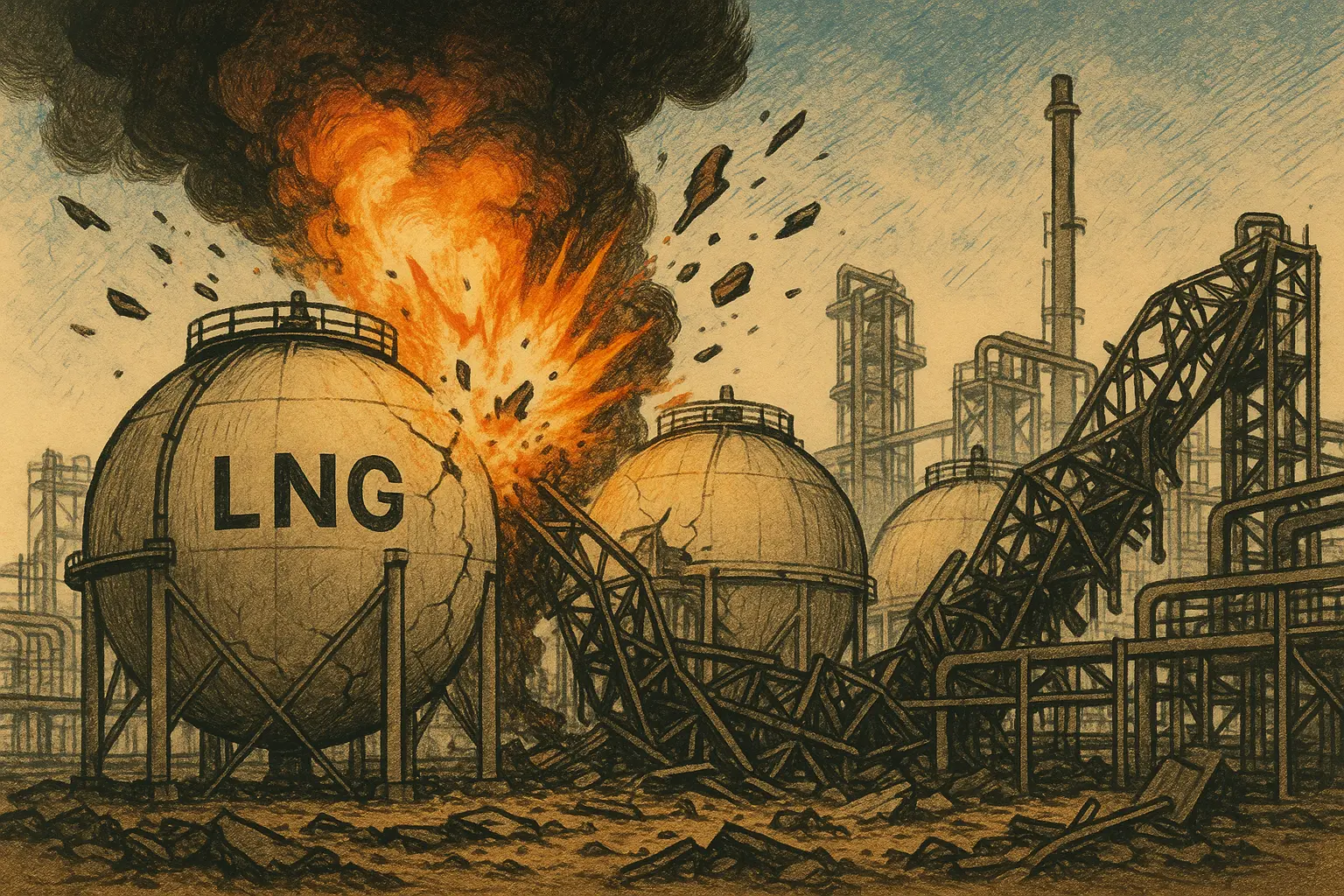
Reuters reported on Thursday, citing QatarEnergy CEO Saad Al-Kaabi, that Iran’s recent missile attack on Qatar has damaged approximately 17% of Qatar’s liquefied natural gas (LNG) production capacity, with repairs expected to take 3 to 5 years. QatarEnergy confirmed that a missile strike on the world’s largest LNG production facility—located in the Ras Laffan gas field—caused “severe damage.”
Extent of Damage and Timeline for Ras Laffan Facility
The scale of damage and repair timeline for Ras Laffan are more severe than initially expected. Previously, the facility had been temporarily shut down due to a drone attack, but the damage caused by this missile strike is more serious—it’s not just a short-term disruption but a structural, long-term reduction in capacity.
Key data points:
Supply Gap: Qatar’s 17% LNG export capacity loss corresponds to about 3%–3.5% of global LNG supply (Qatar supplies roughly 20% of the world’s LNG).
Repair Time: QatarEnergy CEO Saad Al-Kaabi directly confirmed to Reuters that repairs will take three to five years.
Facility Nature: Ras Laffan Industrial City is the world’s largest LNG complex, encompassing LNG processing, storage, and export infrastructure.
A repair cycle of 3 to 5 years means this airstrike’s impact is not a short-term shock that markets can absorb in a few months but a structural, multi-year global LNG supply gap.
Immediate Market Impact and Long-term Effects on Natural Gas
Immediate Market Reaction: European natural gas futures surged over 35% on Thursday morning, the largest single-day increase in three weeks, doubling pre-conflict levels. This reflects a market re-pricing of the “17% long-term gap” rather than the previous expectation of a temporary disruption.
Alternative Pressures for Asian Buyers: The prolonged shutdown of Ras Laffan will force Asian LNG buyers—Japan, South Korea, and China being the largest recipients of Qatar LNG—to seek alternative supplies urgently. Global LNG spare capacity is quite limited, and large-scale spot procurement could further drive up global LNG spot prices.
Broader Inflation Risks: Analysts note that this damage confirms a 3- to 5-year energy price premium basis, with far-reaching impacts on global inflation. High energy costs will transmit through import-driven inflation channels—especially electricity and industrial production costs—downstream, creating a longer-term dilemma for the Federal Reserve and other major central banks.
Frequently Asked Questions
Can the 17% LNG gap in Qatar be filled by other supply sources?
In the short term, it’s difficult to fully compensate. Major alternative LNG sources include Australia, the U.S. (notably Sabine Pass and other export terminals), and Norway. However, these facilities have limited spare capacity, and LNG trade logistics are constrained by fleet size and regasification terminal capacities. Existing long-term contracts also limit buyers’ flexibility to quickly switch suppliers. Over the next 3-5 years, this gap is expected to manifest as sustained spot market premiums.
How will the 3- to 5-year repair cycle impact global energy market strategies?
Such a lengthy repair window will force energy-importing countries to reassess their energy security strategies. Europe may accelerate renewable energy deployment, Japan and South Korea might reevaluate nuclear power’s strategic role, and Qatar itself could expedite expansion plans for undamaged facilities to offset capacity shortfalls. This will also influence long-term LNG contract negotiations, with premiums likely remaining high during this period.
What is Iran’s strategic intent in attacking Qatar’s LNG facilities?
According to reports, this attack on Ras Laffan is seen as retaliation for Iran against Israeli and U.S. military actions. Ras Laffan is one of the most strategically important facilities in the global energy system—attacking it not only strikes Qatar’s economic lifeline but also exerts maximum indirect pressure on major LNG importers, including European countries and U.S. allies in East Asia, through the global energy supply chain.
Disclaimer: The information on this page may come from third parties and does not represent the views or opinions of Gate. The content displayed on this page is for reference only and does not constitute any financial, investment, or legal advice. Gate does not guarantee the accuracy or completeness of the information and shall not be liable for any losses arising from the use of this information. Virtual asset investments carry high risks and are subject to significant price volatility. You may lose all of your invested principal. Please fully understand the relevant risks and make prudent decisions based on your own financial situation and risk tolerance. For details, please refer to
Disclaimer.


