


Futures
Access hundreds of perpetual contracts
TradFi
Gold
One platform for global traditional assets
Options
Hot
Trade European-style vanilla options
Unified Account
Maximize your capital efficiency
Demo Trading
Introduction to Futures Trading
Learn the basics of futures trading
Futures Events
Join events to earn rewards
Demo Trading
Use virtual funds to practice risk-free trading
Launch
CandyDrop
Collect candies to earn airdrops
Launchpool
Quick staking, earn potential new tokens
HODLer Airdrop
Hold GT and get massive airdrops for free
Launchpad
Be early to the next big token project
Alpha Points
Trade on-chain assets and earn airdrops
Futures Points
Earn futures points and claim airdrop rewards


More




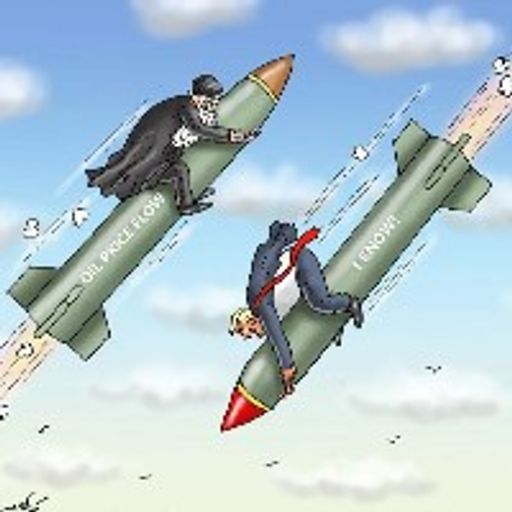

# Latest Signs Show Weakening Market Expectations for Fed Rate Cuts Amid Surging Energy Prices and Inflation Concerns
Recent signs indicate that as energy prices surge and inflation concerns emerge, market expectations for Federal Reserve rate cuts are weakening, while a global tightening wave is likely to arrive faster……Over the past few days, traders have rapidly abandoned expectations that the Fed will ease monetary policy in early summer.
This shift in thinking coincides with U.S.-Israeli strikes on Iran and oil prices soaring to around ($100 per barrel). According to CME's FedWatch calculation, before this round of Middle East conflict erupted, the market had expected the Fed to cut rates by 25 basis points in June, again in September, and there was even a minimal possibility of a third rate cut within the year depending on economic performance.
The main logic behind this thinking was: a weak labor market, easing inflation, and a new dovish chairman taking office in May would push the Fed toward an accommodative stance. However, the sudden Iran conflict that erupted at the end of last month has clearly disrupted all of this. The latest FedWatch probabilities show that traders in the federal funds futures market have now essentially ruled out a rate cut in September, currently believing the Fed might only cut rates once in December.
Meanwhile, interest rate swap contracts linked to Fed policy meeting dates show that swap traders, for the first time, are not 100% confident the Fed will cut rates this year……As shown below, swap traders overnight only expected the Fed to cut rates by 17 basis points this year—falling short of a single 25 basis point rate cut. This expectation was around 40 basis points in trading late Wednesday.
Whether this outlook can be maintained may depend on developments in the Middle East. If tensions ease and improve, markets may return to normal and reignite hopes for more accommodative policies. But if shipping through the Strait of Hormuz continues to be disrupted, soaring oil prices could clearly push up global interest rates.
Notably, as of this Wednesday, global bond markets have given back nearly all gains from the start of the year. Not only U.S. Treasuries, but from the UK to Germany, from Australia to Japan, government bond yields across countries have surged significantly.
Currently, the Bloomberg Global Aggregate Bond Index, which tracks total returns of investment-grade government and corporate bonds, is roughly flat with levels at the start of the year. Oil prices rebounded above $100 per barrel on Thursday, extending the global bond market selloff. The index had risen as much as 2.1% through February 27 earlier this year, but subsequently U.S. President Trump launched attacks on Iran, highlighting how geopolitical shocks can rapidly reverse market sentiment.
As war costs continue to mount, fiscal deficits face expansion risks, and investors may demand higher returns for longer-duration bonds. Combined with inflation pressures from soaring energy prices, this is undoubtedly an uncertain situation for fixed income investors. This week, U.S. Treasury yields have climbed further to multi-month highs, with the benchmark 10-year Treasury yield, often called the "global anchor for asset pricing," rising 4.9 basis points on Thursday to reach 4.255%—the highest level since February 5.
This indicates investors have priced in the risk of conflict escalation. Many fund managers are betting that any inflation pressure will outweigh investors' traditional safe-haven demand for sovereign bonds. It's foreseeable that as multiple central banks, including the Fed, hold rate decision meetings next week, each central bank's monetary policy choices under geopolitical tensions and soaring oil prices will undoubtedly become the focus of all parties.
Keep in mind that unlike the Fed, which currently still maintains a rate-cut inclination, market traders' rate expectations for other global central banks have truly shifted toward anticipating more rate hike actions within the year: based on current rate pricing, traders expect the Bank of England to hike rates by approximately 10 basis points this year, the European Central Bank by approximately 40 basis points, the Bank of Canada by approximately 30 basis points, and the Reserve Bank of Australia, which already led with a rate hike in February, could potentially hike further by approximately 65 basis points……