


Futures
Access hundreds of perpetual contracts
TradFi
Gold
One platform for global traditional assets
Options
Hot
Trade European-style vanilla options
Unified Account
Maximize your capital efficiency
Demo Trading
Introduction to Futures Trading
Learn the basics of futures trading
Futures Events
Join events to earn rewards
Demo Trading
Use virtual funds to practice risk-free trading
Launch
CandyDrop
Collect candies to earn airdrops
Launchpool
Quick staking, earn potential new tokens
HODLer Airdrop
Hold GT and get massive airdrops for free
Launchpad
Be early to the next big token project
Alpha Points
Trade on-chain assets and earn airdrops
Futures Points
Earn futures points and claim airdrop rewards


More

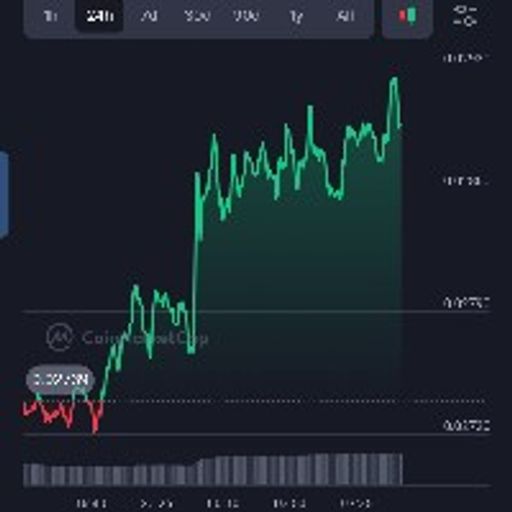



#TrendResearchSuspectedShorting27KETH
Recently, the cryptocurrency market has seen renewed speculation and strategic positioning around Ethereum, particularly at the 27,000 USD price level, where significant suspected shorting activity has caught the attention of traders, analysts, and on‑chain researchers. This trend, widely discussed across social forums, trading desks, and analytics channels, reflects deeper dynamics in both spot and derivatives markets—and points to how advanced participants may be positioning themselves amid current market structure and forward expectations.
In this detailed post, we explore the suspected shorting trend, its possible causes, market context, technical structure, implications for ETH price behavior, and what it might mean for traders and investors.
1. Understanding the Suspected Shorting Trend at 27K ETH
The term “shorting” refers to selling an asset with the expectation that its price will decline. In crypto markets—especially in futures and perpetual swap markets—traders can open short positions with leverage, allowing them to profit if the price falls.
The 27,000 USD level for ETH has emerged as a focal point for suspected shorting activity. Analysts monitoring order books, funding rates, and derivatives positioning have noted:
Large sell walls or concentrated limit sell orders around the 27K mark in exchange order books.
Funding rate imbalances that suggest aggressive leverage on the short side.
Spike in liquidation data indicating that market makers and sophisticated traders may be initiating short positions in anticipation of downside movement.
These data points combined have led some on‑chain and market researchers to label this level as a potential shorting magnet—an area where selling pressure could be concentrated.
**2. Technical and Psychological Importance of the 27K Level
To understand why 27,000 USD has become significant, we must look at several technical factors:
A. Historical Price Action
27K has previously acted as both support and resistance in multiple timeframes. When a price level is tested repeatedly, it becomes psychologically significant to traders:
As a support zone, because buyers historically stepped in near that price;
As a resistance zone, because sellers controlled momentum at that price in the past.
These psychological anchors often attract strategic positioning, including shorting from participants anticipating rejection.
B. Risk Management Regions
Large institutional traders and derivatives desks often place large orders near significant levels that already show repeated interaction—such as 27K—because these areas typically:
Provide defined risk levels;
Allow traders to set tight stop‑losses;
Offer opportunities for multiple scenario playbooks, whether the price respects or breaks the level.
**3. Derivatives Positioning: Funding Rates and Open Interest
The derivatives market is an important indicator to understand supply and demand for leverage:
A. Funding Rate Signals
When short funding rates are dominant, it means traders who are short are paying long traders to maintain their positions. Persistent negative funding rates imply:
Short positions outnumber long positions;
Sentiment could be skewed toward a bearish expectation at that level;
Risk appetite favors downside bias.
B. Open Interest Concentration
A rise in open interest—especially around 27K—suggests that both longs and shorts are entering new contracts. When open interest increases notably at a specific price, it often represents a “battleground” between buyers and sellers.
The suspected shorting narrative is reinforced when large chunks of open interest cluster around a psychological pivot like 27K.
**4. Macro and Sentiment Drivers
Beyond pure technicals and positioning, several macro‑level factors influence why traders might anticipate downward movement for Ethereum:
A. Liquidity Conditions
When global financial markets tighten liquidity, risk assets—especially crypto—tend to see selling pressure as capital shifts out of riskier instruments.
B. Regulatory Uncertainty
Any sign of regulatory scrutiny in key markets can trigger defensive positioning. Traders may short in anticipation of price weakness around news‑driven events.
**C. Correlation with Bitcoin
Ethereum often correlates with Bitcoin on broader trends. If Bitcoin shows weakness near key resistance levels while ETH attempts to test 27K, shorts may build on the assumption that ETH will follow BTC’s lead.
**5. Market Implications: What This Means for Traders & Investors
The suspected shorting around 27K ETH has several implications:
A. Increased Volatility
When significant positioning is occurring around a price level, markets tend to become more volatile as traders react to breakouts or rejections.
**B. Liquidity Squeezes
If price moves against the majority of short positions (i.e., breaks above 27K), it can trigger forced liquidations that accelerate upward moves—a classic short squeeze.
**C. Range‑Bound Swing
In many cases, the market spends extended time oscillating around major levels when both bulls and bears are actively engaged, leading to sideways movement before a decisive breakout.
**D. Institutional Strategy Interpretation
Large trading desks often hedge their exposure with both directional and non‑directional strategies. The presence of suspected shorting could mean these desks are either hedging long exposure elsewhere, playing volatility, or positioning for a macro move.
**6. Personal Analysis and Experience
From my observation of past market cycles and trader behavior:
Key psychological levels (like 27K for ETH) are rarely random; they become focal points because they represent collective decision zones where many algorithmic strategies and discretionary traders align.
Market makers and professional desks often use large limit orders at these levels to create liquidity barriers that induce stop clustering.
During periods of suspected shorting bias, confirmation comes not only from price rejection but also from funding rate behavior, liquidation patterns, and institutional order flow—data sets that traders must monitor alongside price charts.
A break above this level with strong conviction would signal a shift in narrative, possibly triggering a cascade of short covers.
In markets, narrative ultimately drives positioning—whether it’s bullish breakouts or bearish anticipation. The growing conversation around shorting at 27K could become a self‑fulfilling theme if enough participants adopt that bias.
**7. Key Takeaways
To summarize the current trend:
27K ETH is a psychologically significant level where market participants are concentrating strategic positioning, including suspected short biases.
Derivative indicators, including funding rates and open interest, suggest a bearish tilt in leveraged markets near this zone.
Macro conditions, sentiment, and cross‑asset correlations influence traders’ directional views.
Volatility is likely to remain elevated while this dynamic persists.
Long‑term investors should watch for decisive breakouts or breakdowns, rather than reacting to intra‑range noise.