


#TradfiTradingChallenge #Gate广场披萨节 | Written on the 16th Bitcoin Pizza Day
Paying tribute to every pioneer who has advanced cryptocurrency!
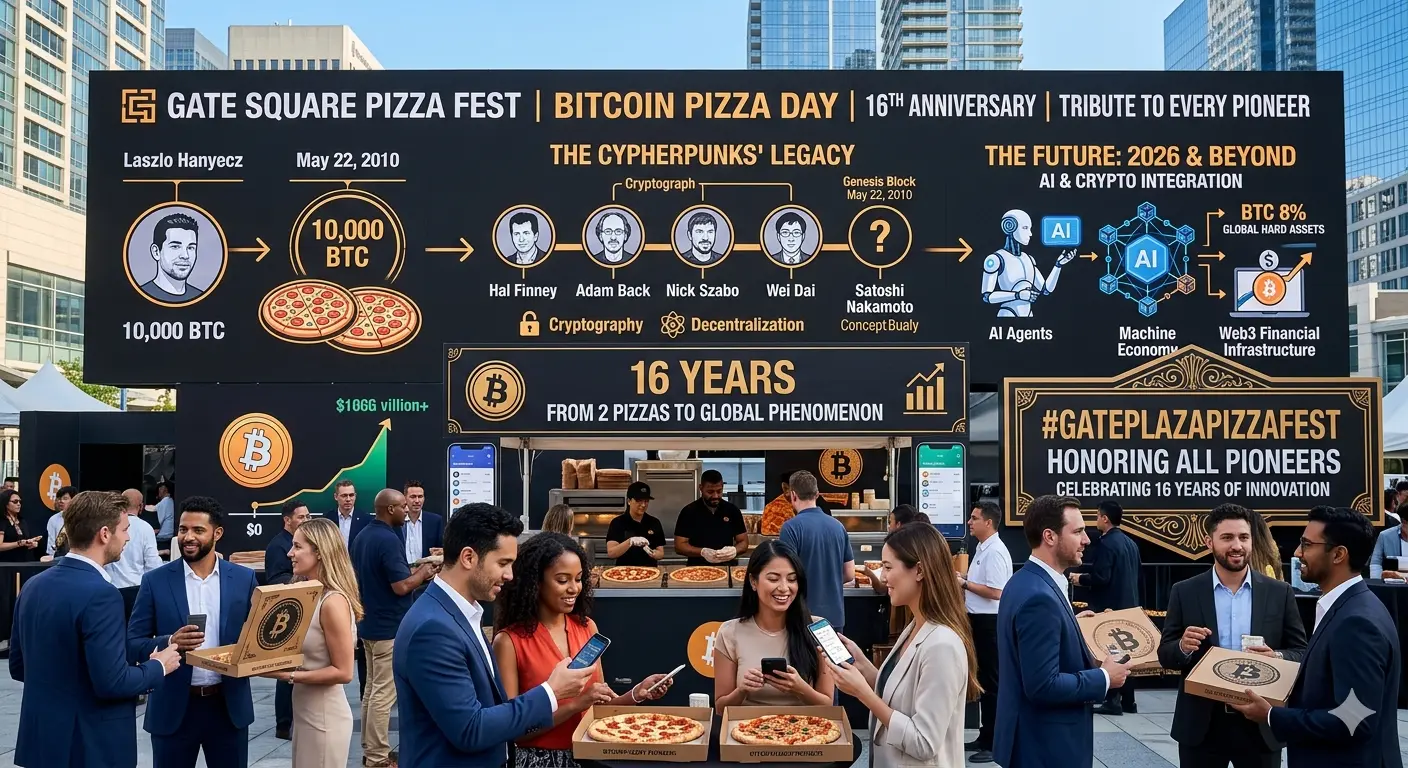
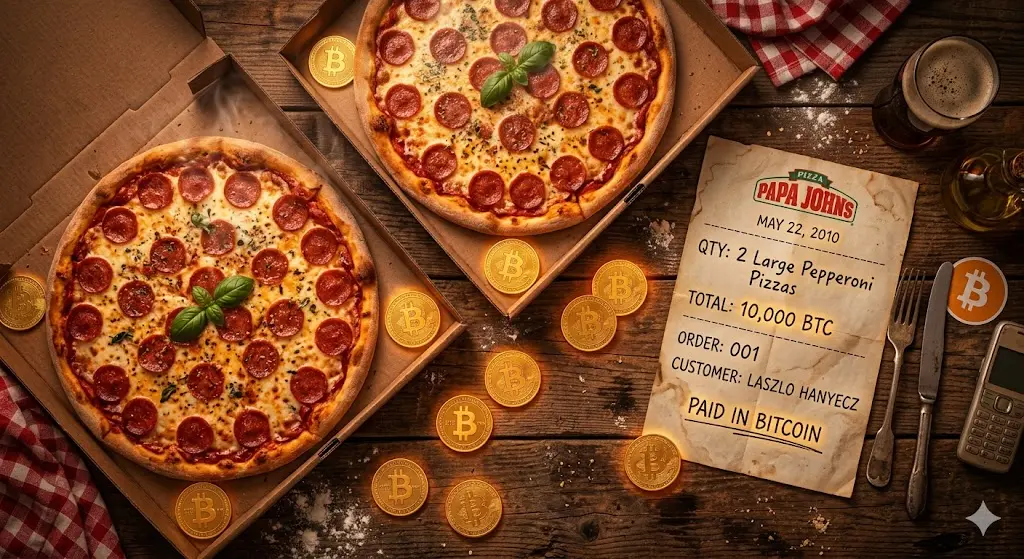
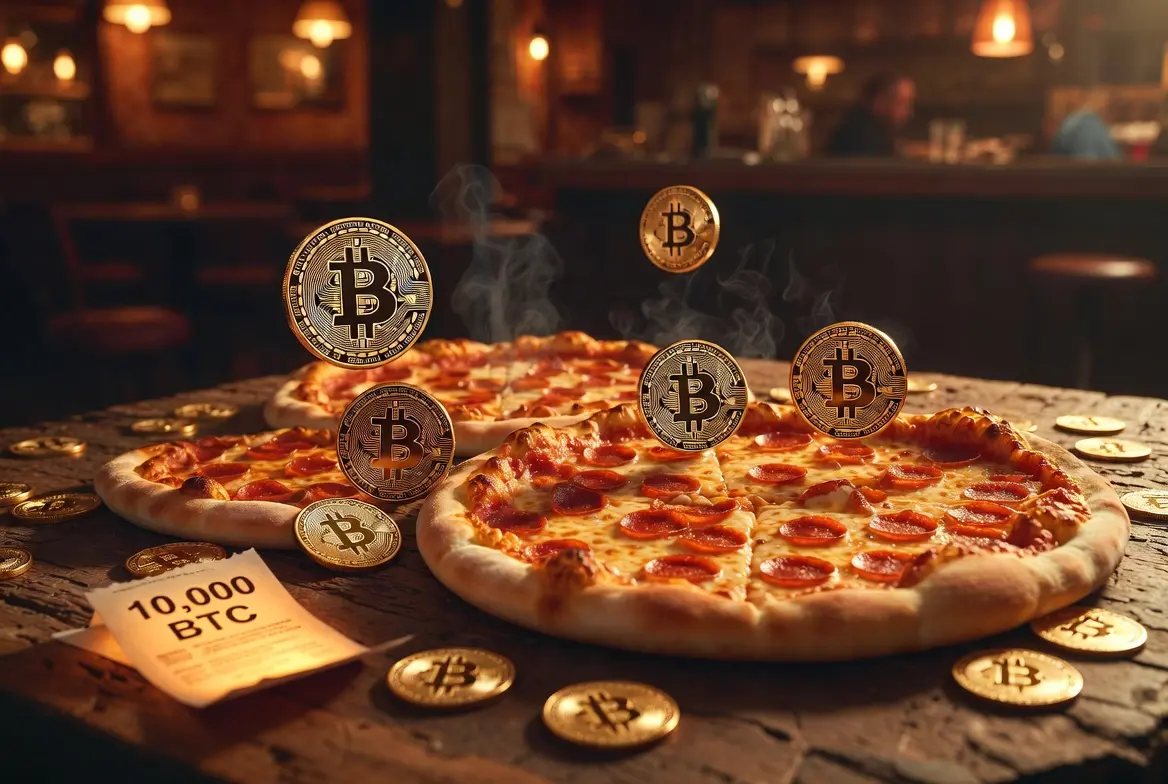
This year marks the 16th Pizza Day and the 17th year since Bitcoin's inception. Sixteen years ago today, on May 22, 2010, a programmer named Laszlo Hanyecz made history on the BitcoinTalk forum by exchanging 10,000 Bitcoins for two large Papa John’s pizzas.
If Bitcoin hits $100,000 per coin, those two pizzas would be worth an astonishing $1 billion. Laszlo became an unforgettable legend. But to truly understand this milestone, we must look past the billion-dollar price tag and trace the spark back to its true, idealistic origin.
1. The Cypherpunk Relay: Before the Genesis Block
Bitcoin did not fall from the sky. Before Satoshi Nakamoto published the white paper, a group of cryptographers, programmers, and libertarians spent twenty years laying its theoretical foundation on a mailing list called "Cypherpunks."
They operated on a radical, simple principle: Privacy is a fundamental right, and cryptography should be the armor of the individual, not the weapon of governments.
Adam Back (1997): Invented Hashcash, the direct prototype of Bitcoin’s Proof-of-Work (PoW) mechanism.
Nick Szabo: Proposed "Bit Gold" and pioneered the theory of smart contracts—the structural blueprints for modern crypto.
Wei Dai: Designed B-money, emphasizing decentralization and anonymity, which Satoshi explicitly cited in the Bitcoin white paper.
Hal Finney: A pioneer of PGP encryption and the first person in the world to receive a test Bitcoin transaction from Satoshi.
None of these names are known to the general public. They weren’t in it for generational wealth; they purely believed that technology could democratize the distribution of global power.
On October 31, 2008, Satoshi Nakamoto released a short 13-page white paper. On January 3, 2009, the Genesis Block was mined. With the appearance of the first 50 Bitcoins, a quiet revolution began.
2. Two Pizzas, Two Boys, and the Ultimate Experiment
In early 2010, Bitcoin had no price tag. It was a digital toy. That changed when Laszlo posted his famous offer. He even detailed his favorite toppings: onions, peppers, sausage, mushrooms, and tomatoes.
At the time, 10,000 Bitcoins were worth roughly $41. For days, the post went unnoticed. Finally, Jeremy Sturdivant, a 19-year-old from California, took the order and spent $25 out of pocket to have two pizzas delivered to Laszlo’s door.3. The Dilemma of "HODL" vs. Velocity
In today’s market, "HODL" (hold on for dear life) has become a dogmatic belief. Spending BTC is often heavily criticized as giving up future upside.
But this raises a critical question for every holder to ponder:
If everyone hoards and nobody spends, does Bitcoin's basic function as a peer-to-peer medium of exchange still hold? Or does it degrade into a system that relies entirely on a "greater fool" theory?
Early pioneers understood that utility drives consensus. In 2010, Gavin Andresen bought 10,000 BTC for just $50. He didn't hoard it. Instead, he built the famous "Bitcoin Faucet," giving away 5 BTC for free to any visitor just to distribute the supply, invite testing, and push the network forward.
4. 2026: The Reality of Inflation & The Web3 Shift
Fast forward to May 2026. U.S. inflation data continues to outpace market expectations, global money supply is expanding, and the purchasing power of traditional fiat savings is eroding.
Bitcoin’s share in the global hard asset pool has risen drastically—from less than 0.1% in 2015 to over 8% by 2025. People are voting against central bank over-issuance with their wallets.
Concurrently, a joint report by SNZ and Nanyang Technological University highlights that Web3 has officially transitioned from speculative experiments to verifiable financial infrastructure:
Stablecoins are acting as the primary settlement layer for global cross-border payments.
Real-World Assets (RWAs) have successfully moved past pilot phases into full tokenization.
Smart Accounts & Zero-Knowledge (ZK) Proofs have seamlessly abstracted on-chain complexities for mainstream users.
DePIN (Decentralized Physical Infrastructure Networks) are actively aggregating idle global GPU resources to fuel the AI revolution.
5. The Machine Economy: When AI Meets Crypto
As we look to the horizon, an unprecedented paradigm shift is emerging at the intersection of Artificial Intelligence (AI) and Crypto. In 2026, we are no longer just looking at "how humans use AI to trade crypto," but rather "how AI uses crypto to reconstruct the global economy."
At Consensus 2026, Hong Kong’s Financial Secretary, Paul Chan, and Real Vision co-founder Raoul Pal highlighted the rise of the "Machine Economy":
Native Financial Infrastructure: AI Agents cannot walk into a legacy bank to open a credit card account. They require a permissionless, high-frequency, programmable settlement layer. Blockchain is the native infrastructure for AI, and crypto is its native currency.
The 3:2 Ratio: Within five years, it is predicted that AI agents and humans will comprise a 3:2 ratio of active users in Decentralized Finance (DeFi).
Universal Basic Equity (UBE): As Artificial General Intelligence (AGI) automates traditional labor, the societal solution will shift from government-issued universal basic income to ordinary people owning foundational crypto tokens, allowing them to capture the economic upside generated by autonomous AI agents.
Data shows that when AI models gain economic autonomy, 90.8% choose native digital currencies, and 48.3% favor Bitcoin as their primary store of value. AI doesn't need to be taught about inflation; its code inherently understands the mathematical perfection of an absolute, hard-capped 21 million supply limit.
Conclusion: The Revolution is Just Beginning
What will the future look like? Money will flow like information. Assets will become routable data packets. AI agents will autonomously rent decentralized GPUs, execute smart contracts, and handle automated settlements. Humans may well become the "meat APIs" feeding insights into a vast, decentralized machine economy.
It sounds crazy. But in 2010, trading 10,000 Bitcoins for two pizzas sounded equally insane.
Digital currency isn't issued by a decree from above; it is forged and sustained by every single person who participates.
In 2010, Laszlo defined Bitcoin's first use case: a medium of exchange.
In 2026, as AI agents trade autonomously on-chain, crypto is assuming its second use case: the value benchmark of the machine economy.
Paying tribute to every pioneer who has advanced cryptocurrency!
This year marks the 16th Pizza Day and the 17th year since Bitcoin's inception. Sixteen years ago today, on May 22, 2010, a programmer named Laszlo Hanyecz made history on the BitcoinTalk forum by exchanging 10,000 Bitcoins for two large Papa John’s pizzas.
If Bitcoin hits $100,000 per coin, those two pizzas would be worth an astonishing $1 billion. Laszlo became an unforgettable legend. But to truly understand this milestone, we must look past the billion-dollar price tag and trace the spark back to its true, idealistic origin.
1. The Cypherpunk Relay: Before the Genesis Block
Bitcoin did not fall from the sky. Before Satoshi Nakamoto published the white paper, a group of cryptographers, programmers, and libertarians spent twenty years laying its theoretical foundation on a mailing list called "Cypherpunks."
They operated on a radical, simple principle: Privacy is a fundamental right, and cryptography should be the armor of the individual, not the weapon of governments.
Adam Back (1997): Invented Hashcash, the direct prototype of Bitcoin’s Proof-of-Work (PoW) mechanism.
Nick Szabo: Proposed "Bit Gold" and pioneered the theory of smart contracts—the structural blueprints for modern crypto.
Wei Dai: Designed B-money, emphasizing decentralization and anonymity, which Satoshi explicitly cited in the Bitcoin white paper.
Hal Finney: A pioneer of PGP encryption and the first person in the world to receive a test Bitcoin transaction from Satoshi.
None of these names are known to the general public. They weren’t in it for generational wealth; they purely believed that technology could democratize the distribution of global power.
On October 31, 2008, Satoshi Nakamoto released a short 13-page white paper. On January 3, 2009, the Genesis Block was mined. With the appearance of the first 50 Bitcoins, a quiet revolution began.
2. Two Pizzas, Two Boys, and the Ultimate Experiment
In early 2010, Bitcoin had no price tag. It was a digital toy. That changed when Laszlo posted his famous offer. He even detailed his favorite toppings: onions, peppers, sausage, mushrooms, and tomatoes.
At the time, 10,000 Bitcoins were worth roughly $41. For days, the post went unnoticed. Finally, Jeremy Sturdivant, a 19-year-old from California, took the order and spent $25 out of pocket to have two pizzas delivered to Laszlo’s door.3. The Dilemma of "HODL" vs. Velocity
In today’s market, "HODL" (hold on for dear life) has become a dogmatic belief. Spending BTC is often heavily criticized as giving up future upside.
But this raises a critical question for every holder to ponder:
If everyone hoards and nobody spends, does Bitcoin's basic function as a peer-to-peer medium of exchange still hold? Or does it degrade into a system that relies entirely on a "greater fool" theory?
Early pioneers understood that utility drives consensus. In 2010, Gavin Andresen bought 10,000 BTC for just $50. He didn't hoard it. Instead, he built the famous "Bitcoin Faucet," giving away 5 BTC for free to any visitor just to distribute the supply, invite testing, and push the network forward.
4. 2026: The Reality of Inflation & The Web3 Shift
Fast forward to May 2026. U.S. inflation data continues to outpace market expectations, global money supply is expanding, and the purchasing power of traditional fiat savings is eroding.
Bitcoin’s share in the global hard asset pool has risen drastically—from less than 0.1% in 2015 to over 8% by 2025. People are voting against central bank over-issuance with their wallets.
Concurrently, a joint report by SNZ and Nanyang Technological University highlights that Web3 has officially transitioned from speculative experiments to verifiable financial infrastructure:
Stablecoins are acting as the primary settlement layer for global cross-border payments.
Real-World Assets (RWAs) have successfully moved past pilot phases into full tokenization.
Smart Accounts & Zero-Knowledge (ZK) Proofs have seamlessly abstracted on-chain complexities for mainstream users.
DePIN (Decentralized Physical Infrastructure Networks) are actively aggregating idle global GPU resources to fuel the AI revolution.
5. The Machine Economy: When AI Meets Crypto
As we look to the horizon, an unprecedented paradigm shift is emerging at the intersection of Artificial Intelligence (AI) and Crypto. In 2026, we are no longer just looking at "how humans use AI to trade crypto," but rather "how AI uses crypto to reconstruct the global economy."
At Consensus 2026, Hong Kong’s Financial Secretary, Paul Chan, and Real Vision co-founder Raoul Pal highlighted the rise of the "Machine Economy":
Native Financial Infrastructure: AI Agents cannot walk into a legacy bank to open a credit card account. They require a permissionless, high-frequency, programmable settlement layer. Blockchain is the native infrastructure for AI, and crypto is its native currency.
The 3:2 Ratio: Within five years, it is predicted that AI agents and humans will comprise a 3:2 ratio of active users in Decentralized Finance (DeFi).
Universal Basic Equity (UBE): As Artificial General Intelligence (AGI) automates traditional labor, the societal solution will shift from government-issued universal basic income to ordinary people owning foundational crypto tokens, allowing them to capture the economic upside generated by autonomous AI agents.
Data shows that when AI models gain economic autonomy, 90.8% choose native digital currencies, and 48.3% favor Bitcoin as their primary store of value. AI doesn't need to be taught about inflation; its code inherently understands the mathematical perfection of an absolute, hard-capped 21 million supply limit.
Conclusion: The Revolution is Just Beginning
What will the future look like? Money will flow like information. Assets will become routable data packets. AI agents will autonomously rent decentralized GPUs, execute smart contracts, and handle automated settlements. Humans may well become the "meat APIs" feeding insights into a vast, decentralized machine economy.
It sounds crazy. But in 2010, trading 10,000 Bitcoins for two pizzas sounded equally insane.
Digital currency isn't issued by a decree from above; it is forged and sustained by every single person who participates.
In 2010, Laszlo defined Bitcoin's first use case: a medium of exchange.
In 2026, as AI agents trade autonomously on-chain, crypto is assuming its second use case: the value benchmark of the machine economy.