Understanding SK Hynix is essential for grasping the underlying asset; verifying the product requires clarity on the anchoring mechanism and platform execution process. gStocks Tokenized Securities establishes the relationship between tokenized units, the order book, and unified accounts. This section focuses on SKHYNIXG: first detailing the 1:1 mapping, then comparing alternative approaches, and finally outlining the search and order placement process.
What Is SKHYNIXG and How Does It Relate to SK Hynix Stock?
SKHYNIXG is a gStocks product that tokenizes SK Hynix—a stock listed on the Korean exchange—into a tradable security unit on Gate. Users hold a tokenized position linked to the company’s stock, rather than a registered Korean equity position in a conventional brokerage account.
The relationship is two-tiered: the underlying layer provides economic exposure to SK Hynix stock, while the upper layer is the gStocks unit within the Gate platform, identified by the code SKHYNIXG, commonly traded as SKHYNIXG/USDT. The fundamentals are influenced by storage chips, HBM technology, and AI industry value chain position; the form of holding and execution experience are shaped by anchoring, matching, and account rules.
| Concept |
Meaning |
Key Verification Points |
| SK Hynix Stock |
Korean-listed semiconductor storage company |
Company entity & industry logic |
| SKHYNIXG |
gStocks unit representing the stock |
Code, name, and product terms |
| SKHYNIXG/USDT |
Gate spot trading pair |
Order book, fees, trade review |
The table distinguishes between the “company asset” and the “tokenized trading unit.” Do not confuse SKHYNIXG with other products containing “SK” in their names.
How Does SKHYNIXG Maintain a 1:1 Peg with SK Hynix? Understanding Reserves and Redemption
A 1:1 peg means the circulating SKHYNIXG tokens are fully backed by corresponding SK Hynix shares in reserve. gStocks enforces a fully collateralized real-stock reserve: tokens cannot be issued without matching reserves, and supply changes are directly linked to reserve management. This peg clarifies what asset each unit represents but does not fix the price or eliminate market cap volatility from the storage chip cycle.
The reserve logic is as follows: when SKHYNIXG is issued, corresponding real shares must be deposited into the reserve system; when redeemed or converted back to native shares, the reserve is released accordingly. Users typically do not interact directly with the reserve pool, but can verify the mapping through product documentation, position records, and the company’s corporate actions settlement. See gStocks 1:1 Backing and Conversion for a detailed overview of issuance, redemption, and two-way conversion.
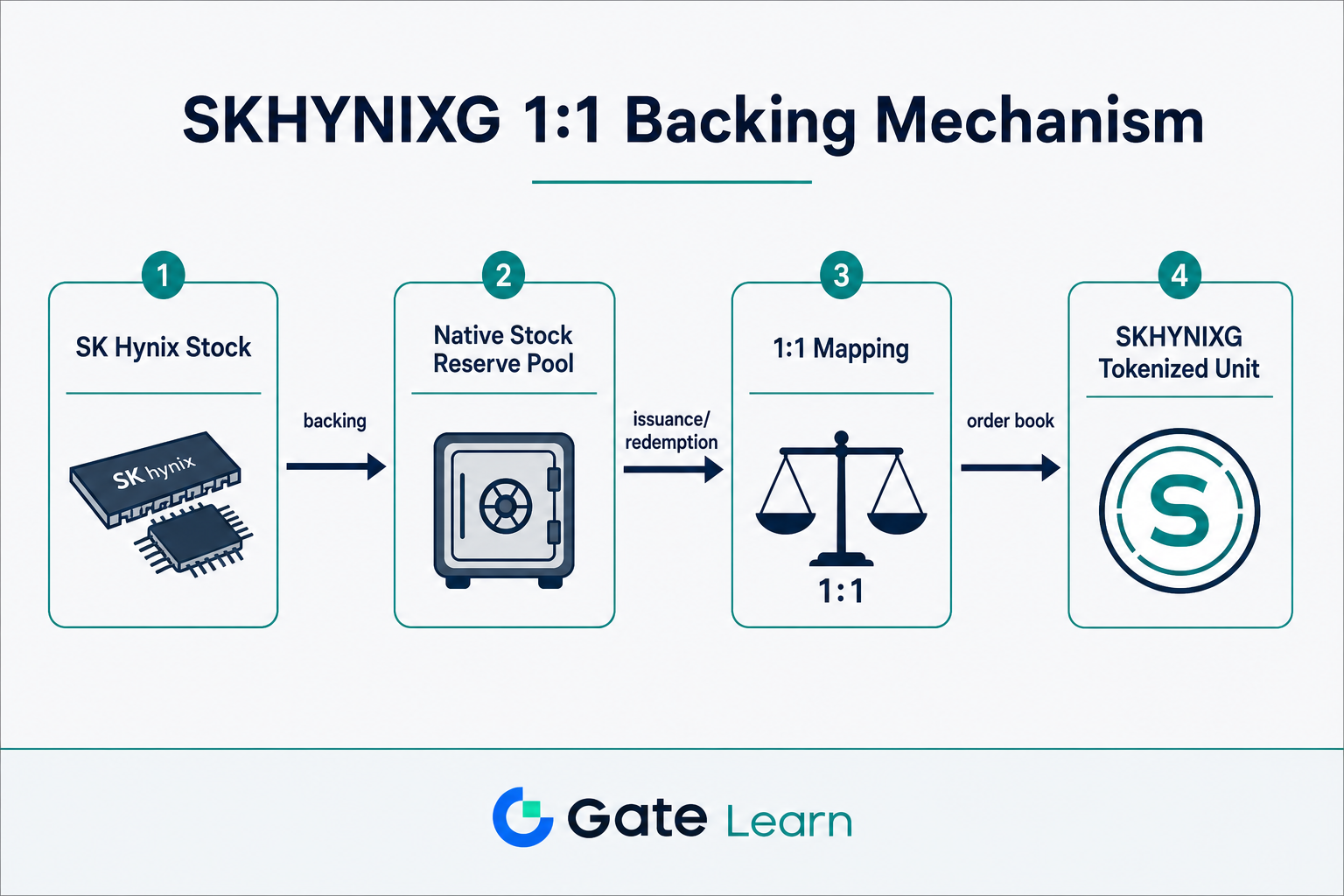 Figure 1. SKHYNIXG 1:1 Peg: Correspondence between SK Hynix stock, the real-stock reserve pool, and tokenized units.
Gate plans to support 1:1 two-way conversion between stocks and gStocks; whether SKHYNIXG currently supports this, as well as fees and processing times, should be confirmed on the product page and in official announcements. Dividends and other corporate actions are typically settled automatically by the system, and should be verified in your account records upon distribution.
How Do SKHYNIXG, Gate Stocks Korean Stocks, and Traditional Brokerage Paths Differ?
All three options provide exposure to SK Hynix, but differ in account structure, rights, and infrastructure. SKHYNIXG uses the gStocks framework and Gate order book; the Gate Stocks Korean path focuses on direct stock trading and settlement within the platform; the traditional brokerage path involves holding registered shares in a licensed account, subject to Korean market hours and settlement conventions.
| Comparison Dimension |
SKHYNIXG (gStocks) |
Gate Stocks Korean Path |
Traditional Brokerage Path |
| Position Structure |
Tokenized security unit |
Platform stock holding rules |
Broker-registered shares |
| Trading Interface |
Gate spot order book (e.g., SKHYNIXG/USDT) |
Gate Stocks access points |
Broker/exchange system |
| Anchoring Mechanism |
1:1 real-stock reserve mapping |
As per product rules |
Direct securities holding |
| Trading Hours |
Extended per platform rules |
As specified on product page |
Follows Korean market hours |
| Shareholder Rights |
As per gStocks terms |
As per Stocks product terms |
Full traditional rights |
This table highlights structural differences, not pros and cons. gStocks vs Traditional Stocks vs CFD further distinguishes real-stock-backed tokenization from CFD exposure. Before choosing, confirm whether you require registered shareholder rights, platform-based stock holding, or tokenized units traded via order book.
What Should You Prepare Before Trading SKHYNIXG on Gate?
Before trading, ensure account eligibility, product permissions, and available funds: account and identity verification are complete; gStocks is available in your region; relevant permissions are enabled; and USDT is available.
| Preparation Item |
What to Confirm |
Purpose |
| Account & Verification |
KYC, account is unrestricted |
Ensure access to features |
| Regional Availability |
Check user agreement and announcements for service coverage |
Avoid misinterpreting global access |
| Trading Permissions |
gStocks/spot access is enabled |
Ensure you can reach trading page |
| Available Funds |
Sufficient USDT balance for orders and fees |
Prevent order failures |
| Asset Awareness |
Confirm SKHYNIXG, not other SK codes |
Reduce selection errors |
Once all five items are confirmed, proceed to the trading page. For a step-by-step guide, refer to the Gate gStocks Trading Process.
How to Search for SKHYNIXG/USDT and Place an Order
In the Gate spot or gStocks section, search for SKHYNIXG or SKHYNIXG/USDT. On the trading page, verify that the entity is SK Hynix or a related name, and that the code matches the company. The key is to align the entity, code, and product type—not just to find any “SK” result.
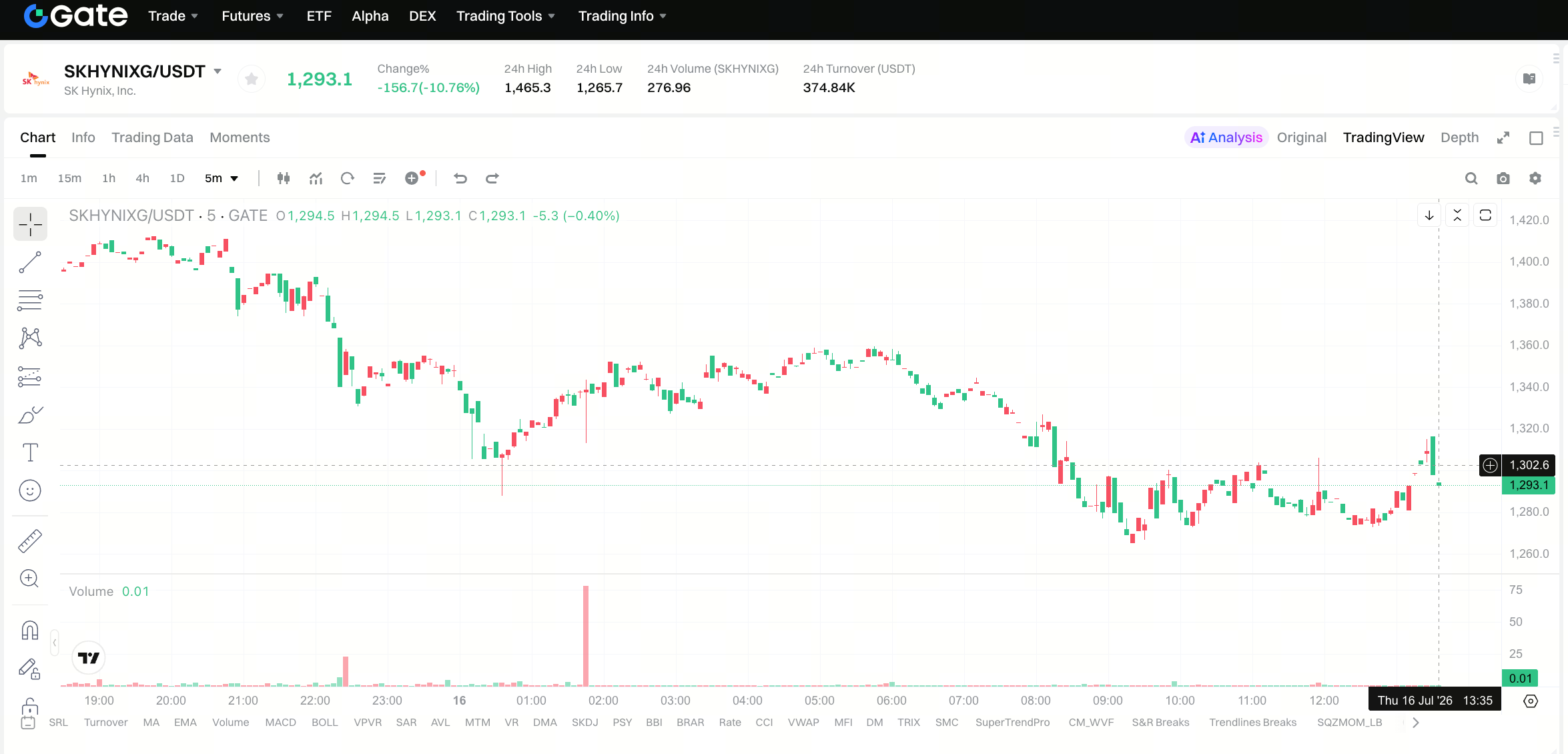
After verifying the asset, select the trade direction and limit/market order type (as supported), enter the quantity or amount, check estimated fees and available balance, and submit. Limit orders are matched at the specified or better price; market orders are filled as quickly as possible at current depth, which may result in slippage. After execution, verify SKHYNIXG quantity and fund changes under positions and trade records.
| Step |
Action |
Key Points |
| 1 |
Search SKHYNIXG |
Verify company entity name |
| 2 |
Open SKHYNIXG/USDT |
Confirm correct spot trading pair |
| 3 |
Select order type |
Understand limit vs market orders |
| 4 |
Enter quantity/amount |
Check available USDT |
| 5 |
Submit & review position |
Compare with trade details |
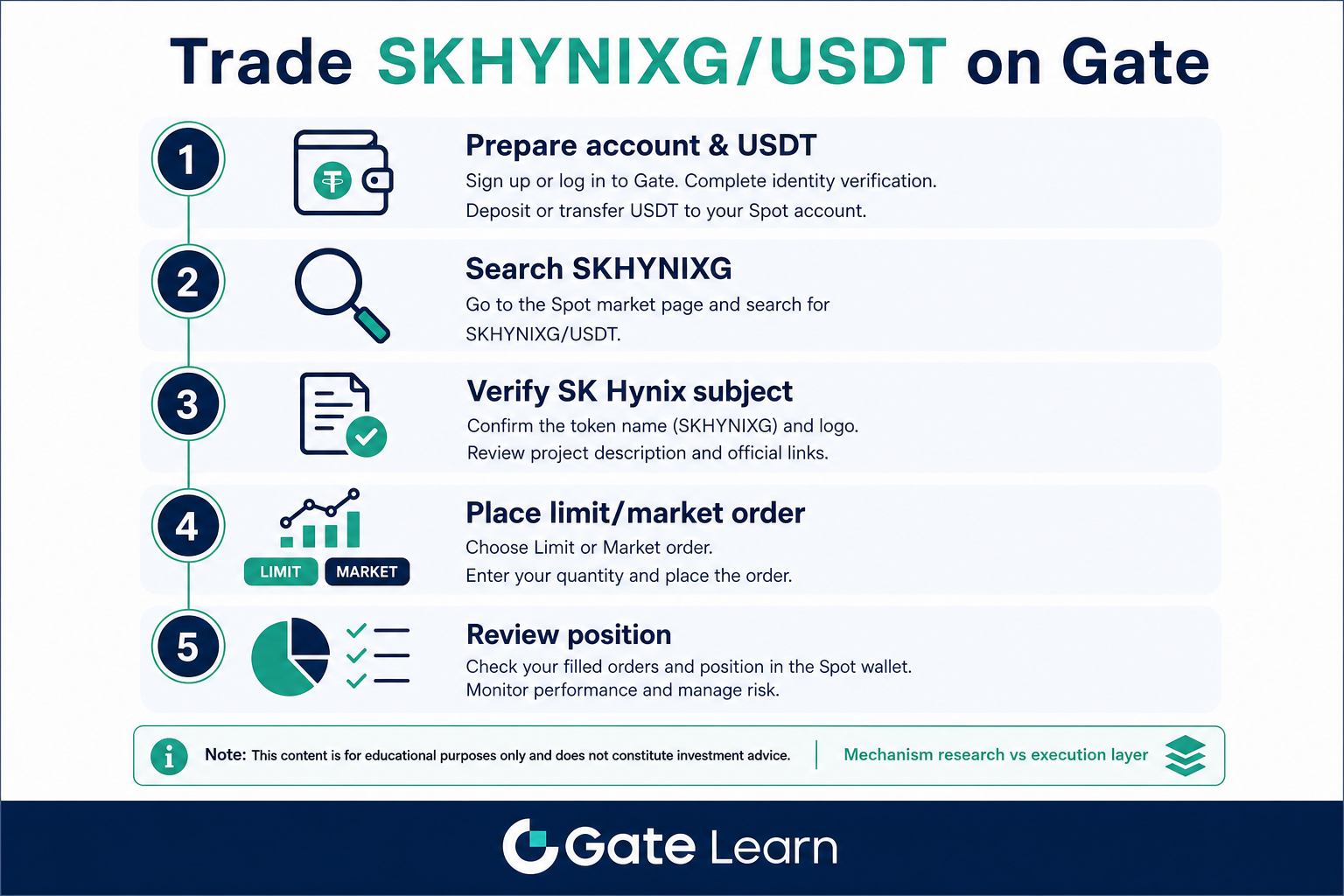 Figure 2. Trading SKHYNIXG on Gate: fund preparation, code search, entity verification, order placement, and position review.
Distinguish between company research and platform execution: industry competition, Korean semiconductor industry landscape, or SK Hynix vs Micron are research topics; search, order type, and position review are execution tasks.
What Fees, Rules, and Trading Hours Should Be Confirmed for SKHYNIXG?
Spot trading typically involves Maker/Taker fees, with rates depending on account level and the trading page; always check estimated fees and total order value before confirming. SKHYNIXG trades under Gate’s order book rules, which may not fully align with the Korean securities market’s regular hours, and order book depth varies by time. Minimum order size and fractional share support depend on product parameters; for large market orders, insufficient depth can increase slippage, so consider splitting orders or using limit orders.
After trading, check that all orders are settled, position quantities match expectations, and USDT changes reflect the correct fee deductions.
What Risks and Compliance Boundaries Are Associated with Using SKHYNIXG?
Market risk: SK Hynix stock price fluctuations are reflected in SKHYNIXG’s value; storage chip and HBM demand cycles are asset-specific variables, distinct from the peg mechanism. Liquidity risk: order book depth affects execution price and slippage. Operational risk: errors in code selection, order direction, or fund allocation can lead to execution mistakes.
Compliance and rights: tokenized units do not automatically confer full traditional shareholder rights; voting and other rights are governed by gStocks product terms. Gate may restrict or prohibit certain services in some jurisdictions—always verify local availability before use. Clear pegging does not eliminate risk; see gStocks Risk and Compliance Boundaries for common misunderstandings.
| Risk Type |
Typical Manifestation |
Key Verification Points |
| Market Risk |
Asset price volatility |
Distinguish position vs fundamentals |
| Liquidity Risk |
Shallow depth, increased slippage |
Monitor order book, split orders |
| Rule Risk |
Regional restrictions, rule changes |
User agreement & product announcements |
| Operational Risk |
Code or order parameter errors |
Review positions & statements post-trade |
| Rights Misunderstanding |
Assuming full shareholder rights |
Check product terms for governance and corporate actions |
Each of these five risk categories should be considered independently.
Summary
SKHYNIXG tokenizes SK Hynix stock as a gStocks unit, with full 1:1 real-stock reserve and Gate spot order book execution. Clarify the peg and path differences, then proceed through “preparation → search SKHYNIXG/USDT → order placement → review,” and clearly separate company research from platform execution.
FAQ
What is SKHYNIXG?
SKHYNIXG is a tokenized security under Gate gStocks, mapped to SK Hynix listed stock. Users hold tokenized units linked to the company’s stock via the order book, trading through pairs like SKHYNIXG/USDT.
What is the relationship between SKHYNIXG and SK Hynix stock?
The underlying layer provides economic exposure to SK Hynix stock; the upper layer is a gStocks tokenized unit. Price and fundamentals are still driven by the company’s business and industry cycle, while position structure and rights are determined by gStocks product rules.
Is SKHYNIXG 1:1 pegged to real stock?
gStocks enforces a 1:1 fully-backed native stock reserve, with SKHYNIXG supply always matching SK Hynix shares in reserve. The peg ensures asset mapping but does not eliminate price volatility or order book liquidity differences.
How do I trade SKHYNIXG on Gate?
Once your account and region are eligible, ensure available USDT, search for SKHYNIXG or SKHYNIXG/USDT, verify the company, select limit or market order, submit, and review your position and transaction history.
What’s the difference between gStocks tokenized stocks and buying Korean stocks directly?
The tokenized path emphasizes real-stock reserve mapping and Gate’s order book experience; direct Korean stock purchases are held in broker accounts as registered shares, following local market hours and settlement rules. The two differ in holding structure, rights, and infrastructure.
What are the risks of trading SKHYNIXG?
Key risks include underlying asset price volatility, order book liquidity and slippage, regional and product rule restrictions, and operational errors such as code selection. The peg does not eliminate these risks or guarantee full traditional shareholder governance rights.