The U.S. stock market remains one of the most important investment destinations for global investors. As digital asset adoption continues to grow, investors now have more ways than ever to gain exposure to U.S. equities. In addition to traditional brokerage accounts, investors can access stocks through services such as Gate Stocks or participate in market movements through stock CFDs.
2026-06-25 07:49:33
Gate IPOs is Gate’s IPO Access service, designed to help eligible users discover, apply for, and manage participation in IPO and selected Pre-IPO opportunities through a digital platform. By bringing project information, subscription applications, allocation procedures, and post-allocation arrangements into one interface, Gate IPOs provides a more streamlined way for users to explore opportunities connected to traditional capital markets.
2026-06-25 06:27:40
The key distinction between Gate IPOs and traditional IPO subscriptions lies in the participation model and infrastructure. Traditional IPOs typically depend on securities accounts, brokerage channels, and regional market rules, while Gate IPOs leverage the IPO Access service to consolidate project display, subscription applications, allocation management, and stock distribution onto a single digital platform, offering users a more streamlined participation experience.
2026-06-25 05:18:55
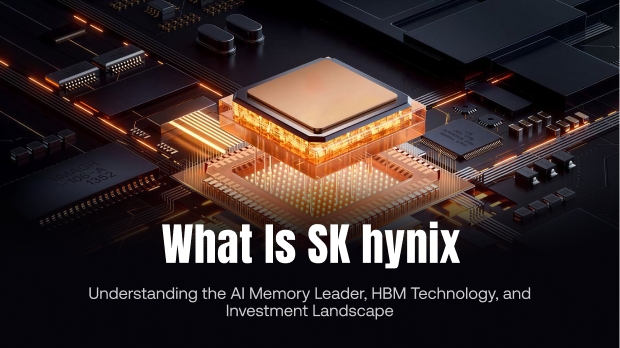
SK hynix, a South Korea-based semiconductor company, specializes in developing and manufacturing memory chip products including DRAM, NAND Flash, SSDs, and High Bandwidth Memory (HBM). As a leading global supplier of memory chips, SK hynix plays a critical role in artificial intelligence (AI), data centers, cloud computing, smartphones, and high-performance computing.
2026-06-25 02:34:24
HBM (High Bandwidth Memory) is an advanced memory technology purpose-built for high-performance computing and artificial intelligence workloads. By vertically stacking multiple DRAM chips and using a silicon interposer to connect the processor with memory, HBM delivers higher bandwidth, lower power consumption, and superior energy efficiency—all within a compact footprint.
2026-06-25 02:32:34
SK hynix, a global leader in memory chip manufacturing, plays a key role as a high-performance memory supplier in the AI supply chain. Its core products—DRAM, HBM (High Bandwidth Memory), and enterprise-grade SSDs—are widely deployed in AI chips, GPU servers, cloud computing platforms, and large data centers.
2026-06-25 02:31:44
WeFi is an on-chain financial infrastructure with Deobank (Decentralized Bank) at its core. By integrating blockchain networks, payment systems, digital asset custody, banking services, and incentive mechanisms, it delivers a unified on-chain banking solution for users, financial institutions, and Desarrollador. Its ecosystem comprises WeChain, Deobank Network, WFI token, and the Energy Incentive System, designed to bridge the infrastructure layer between traditional finance and decentralized finance.
2026-06-25 01:14:49
WeFi operates on the Deobank (Decentralized Bank) architecture, with the WeChain network, Deobank service layer, WFI tokens, and Energy incentive system working in tandem. Users manage their digital Actifs within a Compte unifié system and execute financial activities—including payments, settlements, custody, and asset management—via the on-chain infrastructure.
2026-06-25 01:14:37
Gate IPO Access is a direct IPO service offered by Gate, enabling users to digitally express their interest in subscribing to IPO projects like SpaceX. During the campaign, users submit subscription applications using USDT. The system calculates allocation weights based on the average locked amount during the subscription period and finalizes distribution based on the actual stock quota received by the platform.
2026-06-24 12:57:26
A stop-loss order for buying US stocks on Gate is a risk-control setting that helps a user plan an exit if the stock price moves against the position. Stop-profit works in the opposite direction by defining a planned exit if the price reaches a target level. Availability, order type, and execution rules may vary by product, region, session, and the live Gate interface.
2026-06-24 10:31:31
To sell Gate US stocks, users generally open their Stock Account, select the supported U.S. stock or ETF position, choose Sell, review the price, quantity, spread, fee, and session status, then submit the order. After execution, the proceeds settle in USDT within the stock account structure, and users may then move or withdraw the supported asset according to Gate’s current account and withdrawal rules.
2026-06-24 10:30:22
Buying Samsung stock on Gate means using USDT to trade Samsung Electronics through the Gate Korean Stocks section, subject to Gate Stocks account rules and Korean market trading hours. Users can review Samsung stock information, place buy or sell orders, and manage holdings in a unified stock account, but traditional shareholder rights may differ from a direct Korean brokerage account. Key checks include USDT settlement, KRW price display, order timing, fees, liquidity, dividends, voting rights, and regional eligibility.
2026-06-24 09:51:24
When users buy Alibaba Hong Kong Stock on Gate, they receive real price exposure to Alibaba Hong Kong Stock and can participate in its price movements, while dividend handling, voting rights, transfer options, and shareholder-related rights may differ from traditional stockholding methods as of June 2026. The key difference is not only the funding asset, but also the account structure, rights framework, settlement process, and product-rule dependency.
2026-06-24 09:46:06
Users can buy Samsung Electronics stock on Gate with USDT through Gate Stocks, without opening a traditional brokerage account. The process starts with a Gate account and USDT balance, then moves through stock account transfer, asset search, order review, and confirmation. Product availability, fees, rights, and regional rules should be checked on Gate before trading.
2026-06-24 09:39:29
Tokenized stocks are digital assets that represent stock rights or stock value on a blockchain network. Because they carry securities characteristics, they are typically subject to securities laws, asset custody rules, anti-money laundering (AML) requirements, investor protection regimes, and cross-border regulatory frameworks. While regulatory treatment of tokenized stocks varies by jurisdiction, the core issues generally center on three areas: whether the issuer is qualified to offer securities, whether the underlying assets are held in compliant custody, and whether investors are afforded the same legal protections as in traditional securities markets.
2026-06-24 06:20:35