Strategy (MSTR) filed an 8-K with the SEC on July 13, disclosing that from July 6 to July 12, it sold 4,818,781 shares of Class A common stock through a market issuance (ATM) program, raising approximately $466.7 million. This week, Strategy bought and sold no Bitcoin; its BTC holdings remained at 843,775 BTC, marking two consecutive weeks with no movement.
Strategy raises $466.7 million; cash reserves increase to $3 billion
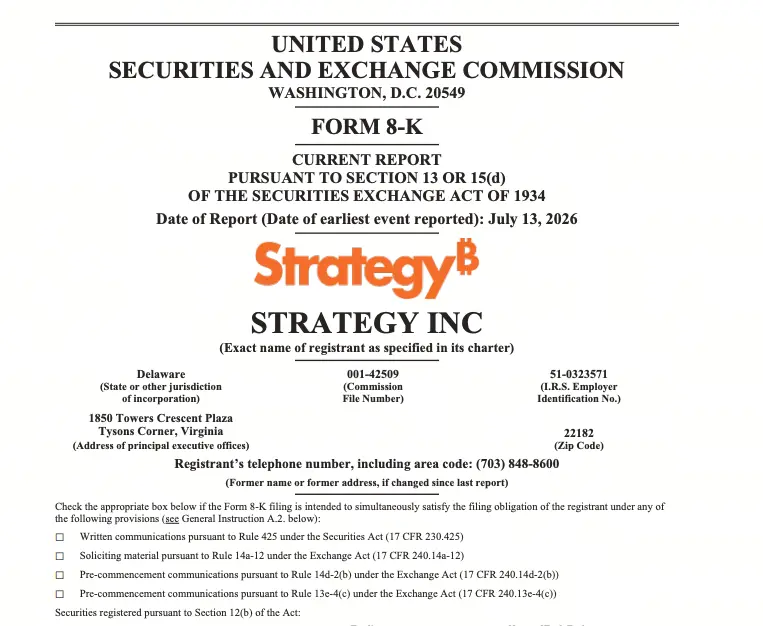 (Source: SEC website)
According to the 8-K filing Strategy submitted to the SEC, the following are the details of the stock sales for the period from July 6 to July 12:
· The shares sold were Class A common stock, totaling 4,818,781 shares;
· Executed through a market issuance (ATM) program;
· Raised approximately $466.7 million;
· Proceeds were used for cash reserves (not for buying Bitcoin), resulting in net additional cash of about $450 million;
· Cash reserves increased from last week to approximately $3 billion.
During the same period, no preferred stock was issued through other ATM issuance mechanisms. Selling common stock will dilute shareholders’ equity but does not affect the company’s Bitcoin assets.
BTC holdings and book loss: 843,775 BTC, down $10.7 billion vs. the current price
Based on Strategy’s latest disclosure, the key figures for its BTC holdings are as follows:
Holdings: 843,775 BTC (unchanged for two consecutive weeks)
Accumulated cost: approximately $63.69 billion (including fees and expenses)
Average cost basis: $75,476 per BTC
Current market value (about $63,000): approximately $53 billion
Book loss: about $10.7 billion
Share of total Bitcoin supply: about 4% (total supply of 21 million BTC)
MSTR stock is down 38% year-to-date. On Monday, ahead of the market open, it continued to fall by nearly 3%.
Strategy shifts from buying Bitcoin to accumulating cash
According to reports, Strategy’s strategic shift has clear structural reasons: the introduction of STRC preferred instrument tools expands the company’s capital structure while also creating fixed cost obligations for dividends and interest; the existence of cash reserves is to ensure funding is available to support these fixed payments regardless of whether the Bitcoin price rises or falls.
A clear turning point occurred on July 5: Strategy sold 3,588 BTC for $216 million (the largest single BTC sale in its history); afterward, even though Saylor’s posts on X continued the older pattern (including Bitcoin charts), the focus of the documents shifted from announcing acquisitions to adjusting fundraising and capital framework.
Selling stocks (diluting shareholders’ equity) and selling Bitcoin (reducing core assets) are two different financing options; this week, Strategy chose the former.
FAQ
Why did Strategy choose to sell stocks rather than Bitcoin to raise funds?
According to reports, selling common stock dilutes shareholders’ equity but does not affect the company’s Bitcoin assets; selling Bitcoin is the opposite (reducing core assets but not affecting the share structure). Strategy chose to sell stocks this week, which analysts interpret as a decision to prioritize protecting its BTC holdings amid the backdrop of Bitcoin book losses. The main use of cash reserves is to pay STRC preferred stock dividends and interest on outstanding debt.
What are Strategy’s current cash reserves and Bitcoin book loss?
Based on the 8-K filing, Strategy’s cash reserves are about $3 billion (up approximately $450 million this week); its Bitcoin holdings are 843,775 BTC with an accumulated cost of about $63.69 billion. Using a market value of approximately $63,000 per BTC, its valuation is about $53 billion, with a book loss of about $10.7 billion.
How is MSTR stock performing right now?
According to reports, MSTR stock fell by nearly 3% ahead of trading on Monday, with a year-to-date decline of 38%; its book loss reached $10.7 billion. Bitcoin continued to slide over the weekend to around $62,500, which also dragged down MSTR’s share price. For specific real-time prices, refer to market quotes; the above does not constitute investment advice.


