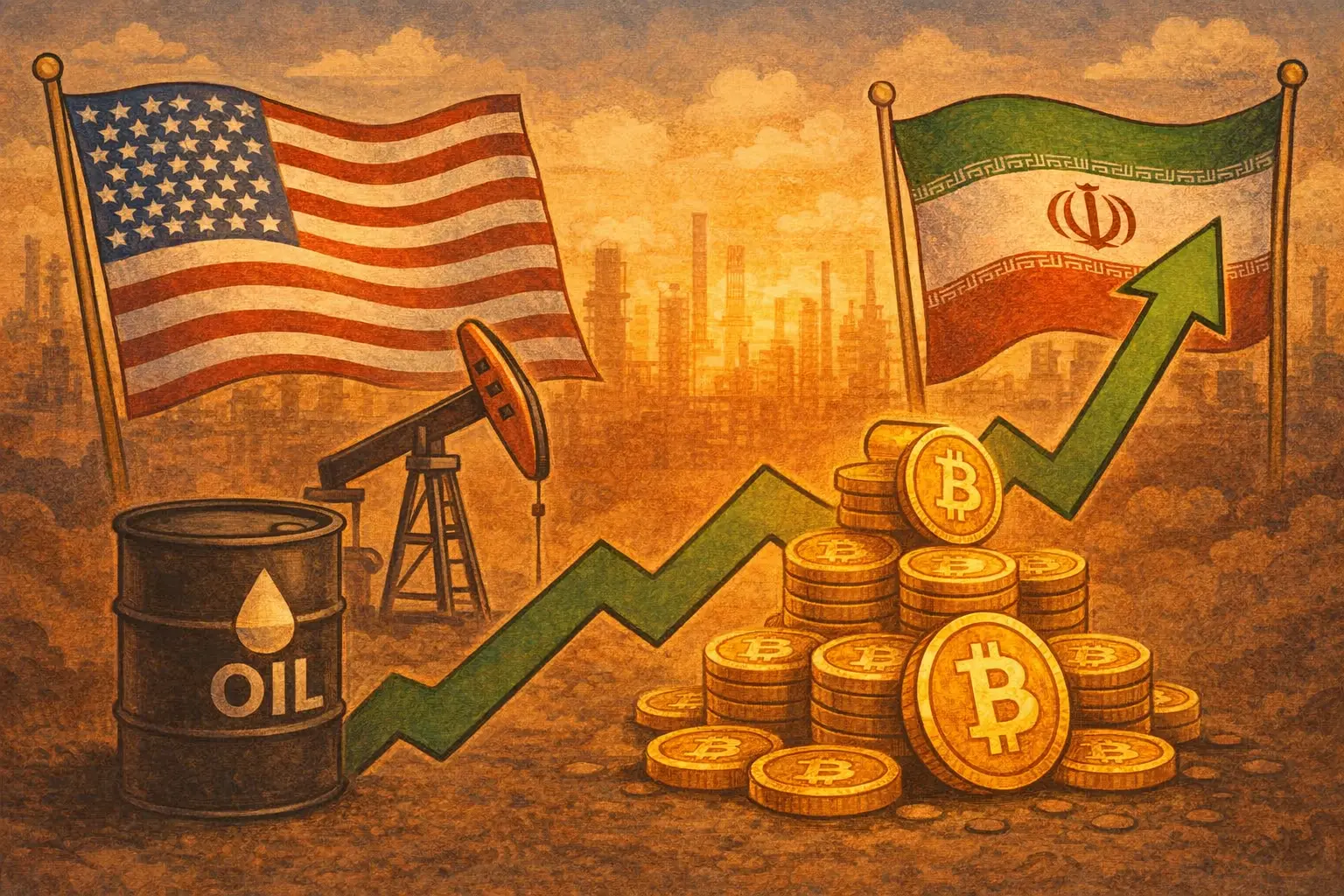
On June 23, the U.S. Department of the Treasury issued a 60-day general license that fully exempts sanctions on the production and sale of Iranian crude oil and petrochemical products; Iran, in parallel, froze overseas assets worth $12 billion. U.S. Vice President Vance revealed that, in exchange, Iran agreed to allow international inspectors to return to nuclear facilities, but Tehran has not yet acknowledged the concessions. Bitcoin rose back to $64,113 the same day; WTI crude oil fell to $73.67 per barrel intraday.
U.S. Treasury Issues 60-Day General License: Full Exemption From Sanctions on Iranian Crude Oil and Petrochemical Products
According to reports by Xinhua News Agency and CCTV News, the 60-day general license issued this time by the U.S. Department of the Treasury not only exempts sanctions on Iranian crude oil exports, but also allows entities such as the Iranian central bank to receive USD payments by bypassing counter-terrorism sanctions, substantially legalizing Iran’s large “shadow fleet.”
The exemption covers exports of Iranian crude oil to U.S. buyers, marking a major shift in decades of U.S.-Iran oil relations. Analysts noted that significant differences remain in nuclear negotiations. Iran’s domestic hardliners clearly oppose inspectors returning to the country’s nuclear facilities, and whether a final agreement can be implemented remains uncertain.
Joint Statement by Pakistan and Qatar: Agreement on a 60-Day Roadmap
According to a joint statement released by the mediators Pakistan and Qatar, the just-concluded U.S.-Iran talks were conducted in a “positive and constructive atmosphere,” achieving “encouraging progress.” The statement includes:
· The two sides of the U.S. and Iran set up a senior-level committee to provide political oversight of the mediation work;
· The chief negotiating representative reports regularly and leads multiple working groups to carry out work around nuclear issues, sanctions, and oversight mechanisms;
· It has reached “agreement on a roadmap for reaching a final agreement within 60 days”;
· At the same time, it established a “de-escalation mechanism task force” related to Lebanon, promoted with the assistance of Qatar and Pakistan.
Iran’s foreign ministry spokesperson Baghaei said that an agreement document was reached after 18 hours of talks.
CryptoQuant Data: June 21 Open Interest Drops to $20.89 Billion
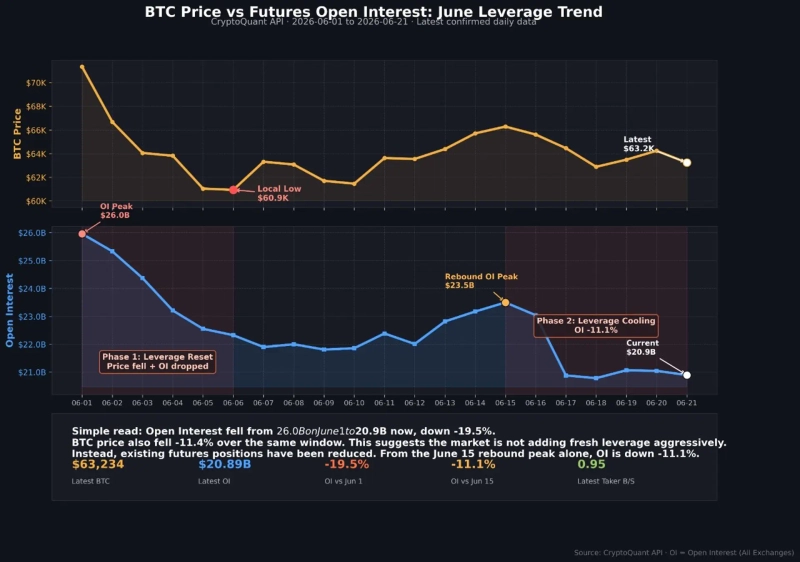 (Source: CryptoQuant)
According to an analysis by CryptoQuant contributor Woo Min-kyu on June 23, CryptoQuant data shows that on June 21, Bitcoin open interest across all exchanges fell from $25.96 billion on June 1 to $20.89 billion, a decrease of 19.5%. In the same period, the price of Bitcoin fell by about 11.4%.
Woo said that the drop in open interest is greater than the drop in Bitcoin price, indicating that a meaningful leverage reset is occurring in the futures market rather than new leverage being built, and market structure has improved.
Frequently Asked Questions
What specific scope does this 60-day exemption from the U.S. Treasury cover?
According to reports by Xinhua News Agency and CCTV News, this 60-day general license issued by the U.S. Treasury fully exempts sanctions on the production and sale of Iranian crude oil and petrochemical products, allowing Iran to conduct crude oil transactions in USD and export to U.S. buyers, while also allowing entities such as the Iranian central bank to receive USD payments by bypassing counter-terrorism sanctions. Iran also announced the immediate release of $12 billion in overseas assets.
How do U.S. Bank and Deutsche Bank differ in their forecasts for interest rate hikes in 2026?
According to reports, U.S. Bank expects the Federal Reserve to raise rates three times in 2026, each by 25 basis points, in September, October, and December, respectively; Deutsche Bank expects two rate hikes, each by 25 basis points, in September and December. Prime Terminal data shows that the money market assigns a 45% probability that the Federal Reserve will raise rates at its July 29 meeting, and that the probability of a December rate hike has already been priced in at nearly 90%.
What does the decline in Bitcoin open interest mean for market structure?
According to analysis by CryptoQuant contributor Woo Min-kyu, when both Bitcoin price and open interest decline at the same time, it usually indicates that existing leveraged positions are being liquidated or reduced. This round’s open interest drop (19.5%) is greater than the Bitcoin price drop (11.4%), suggesting that a meaningful leverage reset is taking place in the futures market, and market structure is healthier than during periods of excessive leverage concentration. Woo noted that this does not mean the market will rebound immediately, but the structure has already improved.


