



#SpaceX暴跌16%市值蒸发4000亿
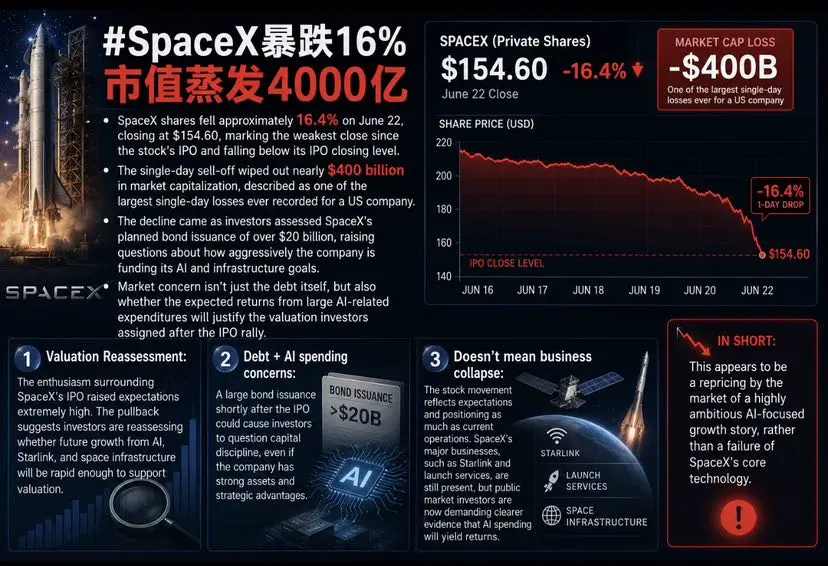
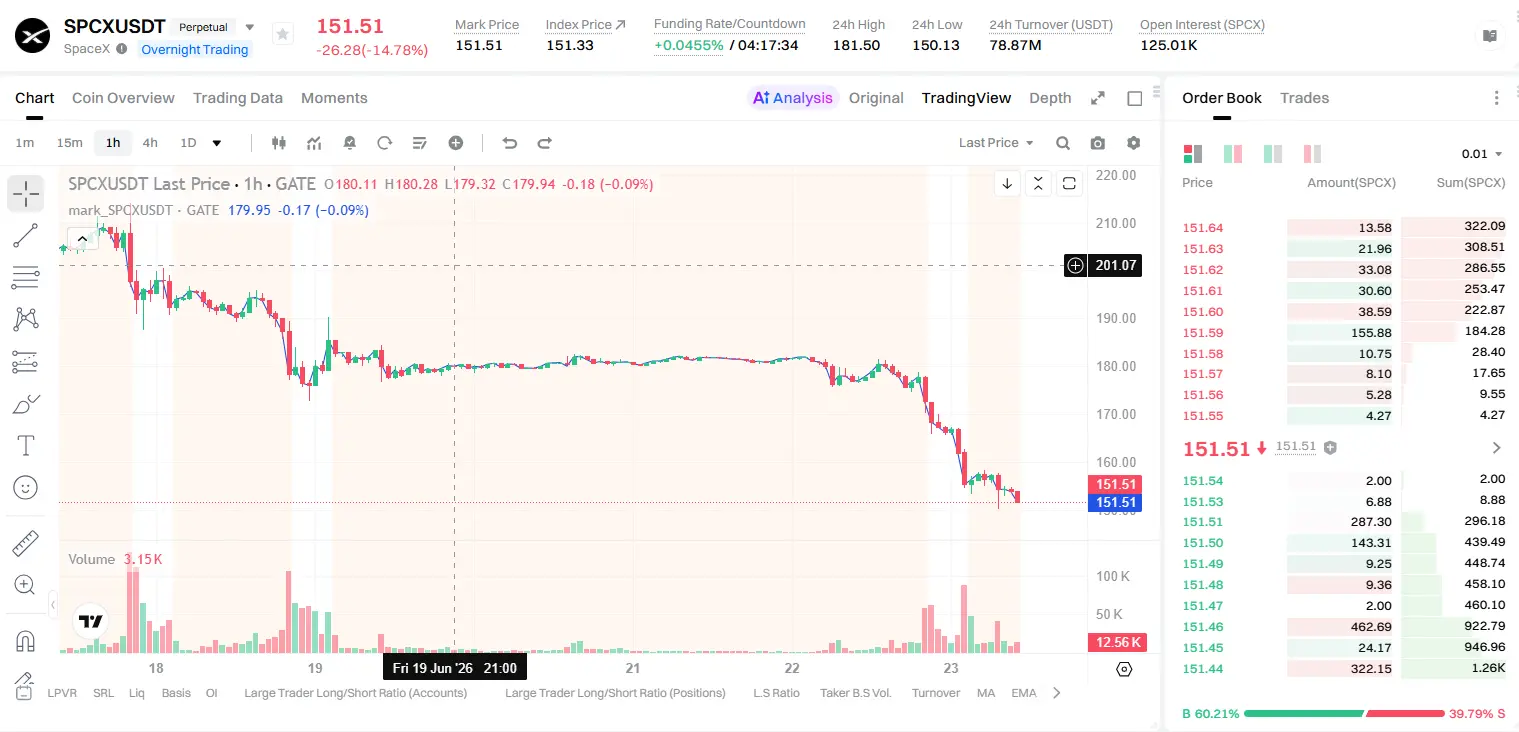
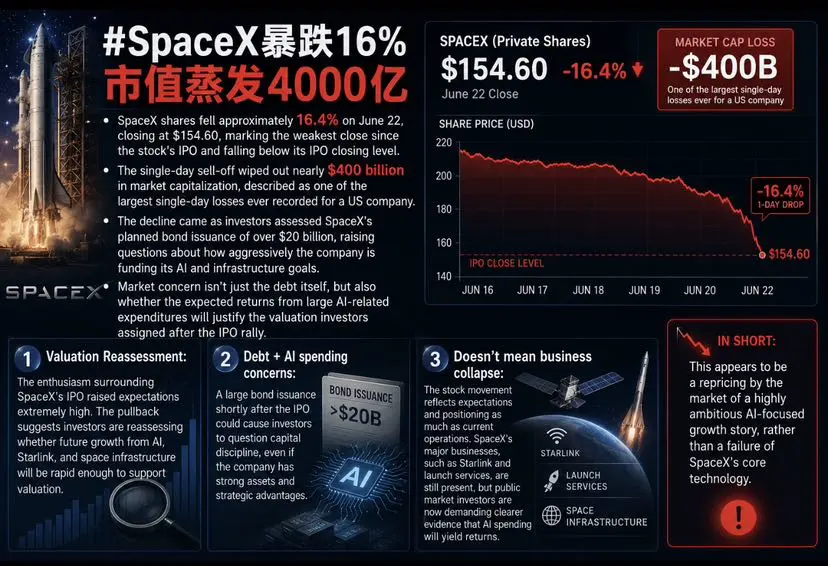
SpaceX shares fell approximately 16.4% on June 22, closing at $154.60, marking the weakest close since the stock's IPO and falling below its IPO closing level.
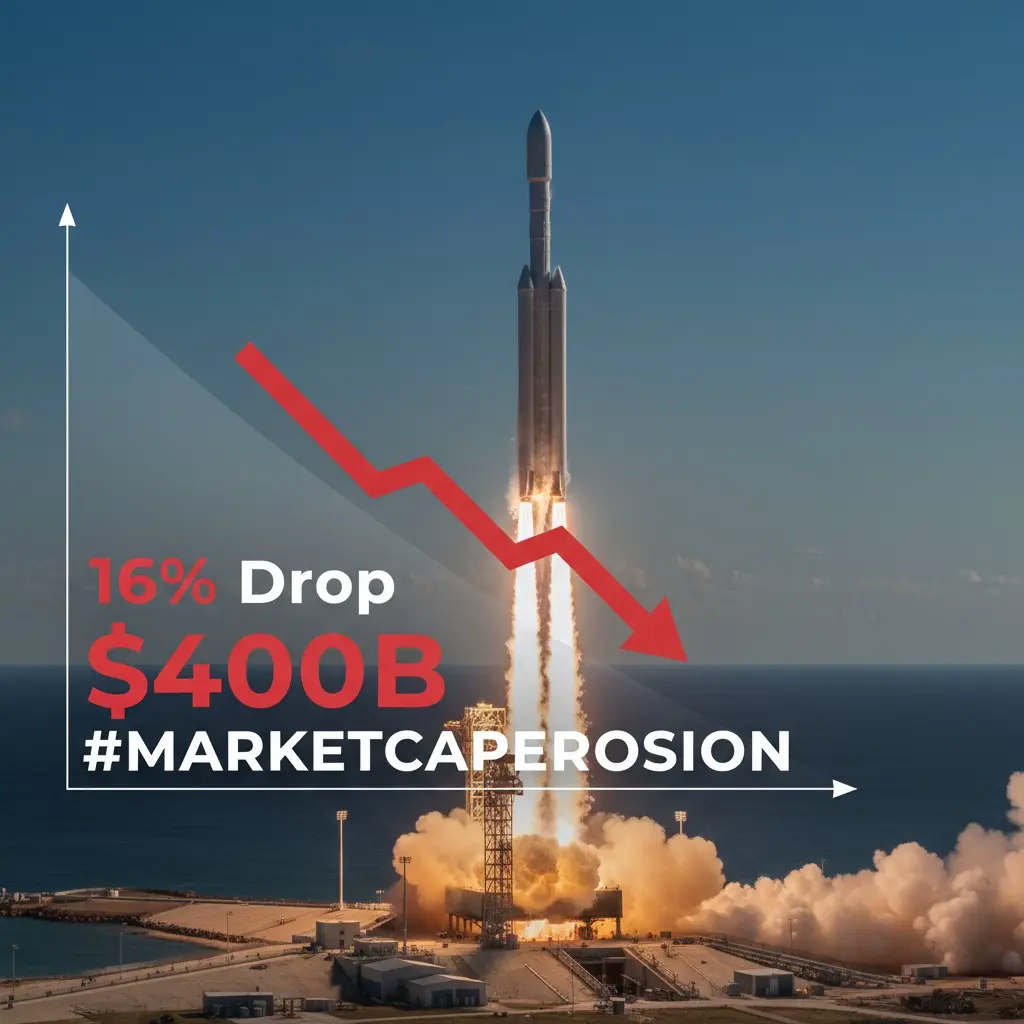
* The single-day sell-off wiped out nearly $400 billion in market capitalization, described as one of the largest single-day losses ever recorded for a US company.
* The decline came as investors assessed SpaceX's planned bond issuance of over $20 billion, raising questions about how aggressively the company is funding its AI and infrastructure goals.
* Market concern isn't just the debt itself, but also whether the expected returns from large AI-related expenditures will justify the valuation investors assigned after the IPO rally.
1. Valuation Reassessment:
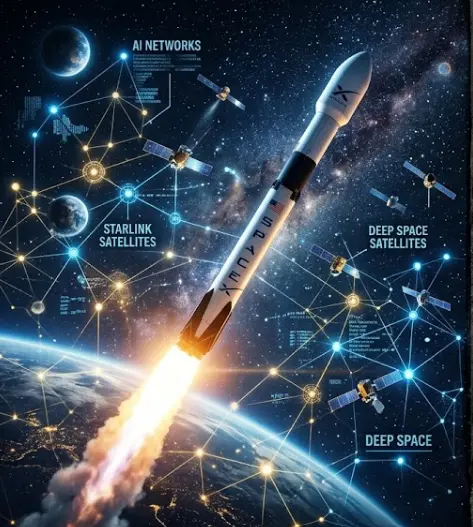
The enthusiasm surrounding SpaceX's IPO raised expectations extremely high. The pullback suggests investors are reassessing whether future growth from AI, Starlink, and space infrastructure will be rapid enough to support valuation.
2. Debt + AI spending concerns:
A large bond issuance shortly after the IPO could cause investors to question capital discipline, even if the company has strong assets and strategic advantages.
3. Doesn't mean business collapse:
The stock movement reflects expectations and positioning as much as current operations. SpaceX's major businesses, such as Starlink and launch services, are still present, but public market investors are now demanding clearer evidence that AI spending will yield returns.
In short: This appears to be a repricing by the market of a highly ambitious AI-focused growth story, rather than a failure of SpaceX's core technology.
SpaceX shares fell approximately 16.4% on June 22, closing at $154.60, marking the weakest close since the stock's IPO and falling below its IPO closing level.
* The single-day sell-off wiped out nearly $400 billion in market capitalization, described as one of the largest single-day losses ever recorded for a US company.
* The decline came as investors assessed SpaceX's planned bond issuance of over $20 billion, raising questions about how aggressively the company is funding its AI and infrastructure goals.
* Market concern isn't just the debt itself, but also whether the expected returns from large AI-related expenditures will justify the valuation investors assigned after the IPO rally.
1. Valuation Reassessment:
The enthusiasm surrounding SpaceX's IPO raised expectations extremely high. The pullback suggests investors are reassessing whether future growth from AI, Starlink, and space infrastructure will be rapid enough to support valuation.
2. Debt + AI spending concerns:
A large bond issuance shortly after the IPO could cause investors to question capital discipline, even if the company has strong assets and strategic advantages.
3. Doesn't mean business collapse:
The stock movement reflects expectations and positioning as much as current operations. SpaceX's major businesses, such as Starlink and launch services, are still present, but public market investors are now demanding clearer evidence that AI spending will yield returns.
In short: This appears to be a repricing by the market of a highly ambitious AI-focused growth story, rather than a failure of SpaceX's core technology.