In the face of the dramatic fluctuations in 2025, what truly destroys traders is not a single loss, but rather uncontrolled risk management and emotional reactions. Only by repairing the rules and rebuilding the processes can we avoid repeating past mistakes.
2025 will be another year of Fluctuation, but many people will suffer losses in trading.
This article is not written for those who have been losing money for a long time, but rather for those traders who were originally making stable profits and have outstanding abilities, but have given back a large amount of earnings this quarter.
One of the most painful things in life is to watch months or even years of effort go down the drain in an instant.
In Greek mythology, Sisyphus was punished by the gods for his transgressions with an eternal punishment: he must continuously push a boulder up a hill, and every time he reaches the summit, the boulder rolls back down, forcing him to start all over again. The cruelty of this punishment is unique, striking at the very core of human experience.
Trading is the same. Unlike most professions, trading does not guarantee phased victories; a bad decision can ruin an entire career in an instant. This characteristic has pushed many people into the abyss.
When the “boulder” rolls down, people usually have two reactions.
- One type of person increases their bets, trying to quickly recover losses. They trade more aggressively, unknowingly falling into the trap of the “Martingale strategy”: doubling down after a loss, hoping that one profit will cover all losses. This method can sometimes work, and this is precisely where its fatal danger lies: it reinforces a habit that will ultimately lead to losses.
- Another type of person is exhausted and completely withdraws from the market. These individuals often have good economic conditions and live comfortably, so risk no longer has asymmetry for them. They console themselves by claiming that there is no longer profit space in the market, or that they are no longer suited for trading. They choose to permanently exit the market, effectively ending their trading career.
Both reactions are understandable, but they are too extreme and fail to address the essence of the problem. The real core issue is: there are loopholes in your Risk Management system. Most people overestimate their Risk Management abilities.
Risk Management itself is not an unsolvable problem; the mathematical logic behind it has long been clear and defined. The real challenge lies not in “knowing what to do,” but in “persistently executing even when faced with emotions, arrogance, pressure, and fatigue.” Keeping actions aligned with intentions is one of the most difficult things for humans to achieve. And the market will mercilessly expose this disconnect with reality.
So, after a loss occurs, how should one get out of the predicament?
- First, you must accept this fact: you are not unlucky, nor have you been treated unfairly. This loss is caused by flaws in your trading process, and it is inevitable. If this issue is not accurately identified and fixed, history will surely repeat itself.
- Secondly, you need to fully accept your current net worth and never anchor to past historical highs. The impulse to “make the money back” is one of the most dangerous obsessions in the market. Temporarily step away from the trading screen and be grateful for the achievements you have already made. You are still alive and still in the market, and that is enough. Your current goal is not to break even, but just to make a profit.
Consider this loss as tuition paid to the market; it has exposed a fatal flaw. This lesson is one you will have to learn sooner or later, and fortunately, you learned it before the stakes got higher. If subsequent actions are taken properly, you will look back on this moment with gratitude in the future. Character is forged in times of adversity.
Identify the specific reasons for failure. For most people, losses are often caused by factors such as “over-leverage”, “not setting stop-loss” or “not executing after stop-loss is triggered”. By establishing strict rules around Risk Management and stop-loss, most catastrophic losses can be avoided.
Always remind yourself: the only way to prevent the boulder from rolling down again is to adhere to these rules. They are the only barrier between you and the pain of the present, the self-loathing. Without rules, you will have nothing.
Give yourself enough time to mourn your losses. Shouting, venting, or even breaking something is fine; let your emotions out instead of bottling them up.
Most importantly, transform pain into action. Trauma must be converted into structured rules and processes, otherwise it will repeat itself.
This cognitive response to trauma applies not only to trading losses but also to all losses in life. The two common reactions mentioned earlier are overly extreme because they often create more new problems while attempting to solve one. If you cannot recover from losses in a nuanced and precise manner, you will forever oscillate around the optimal solution, much like a gradient descent algorithm with a step size that is too large, which can never converge to the correct result.
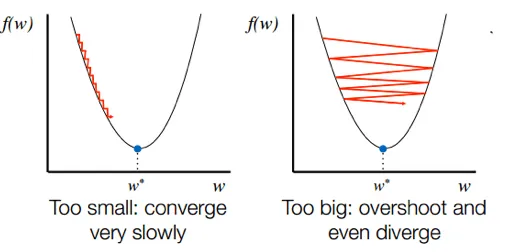
Source of the image: thiccy
After Napoleon's defeat that year, he immediately set about rebuilding infrastructure to prepare for the next battle. A defeat is fatal because it destroys your ability to fight again. The primary task after a defeat is to ensure that vulnerable point is no longer exploited by the opponent and to restore to optimal condition as quickly as possible.
You do not need to seek redemption, nor do you need revenge; there is no need for self-pity, nor for rage. You must act like a precise machine: fix the loopholes, rebuild the system, and ensure that this mistake never happens again. Every failure you endure will become a moat in your trading system, and this moat can only be learned through personal experience by others.
It is such failures that shape a person. Be grateful for their arrival, as they come to teach you important lessons and are by no means meaningless. Allow yourself to feel the pain, but more importantly, transform this suffering into motivation to ensure it never happens again.
The reason these things are difficult is that once you find the right direction, the compound growth of wealth will become inevitable. Finally, I wish you good luck.
- This article is authorized to be reprinted from: “Foresight News”
- Original Title: 《dealing with loss》
- Original author: thiccy, partner at scimitar capital
- Translator: Chopper, Foresight News
Disclaimer: The information on this page may come from third parties and does not represent the views or opinions of Gate. The content displayed on this page is for reference only and does not constitute any financial, investment, or legal advice. Gate does not guarantee the accuracy or completeness of the information and shall not be liable for any losses arising from the use of this information. Virtual asset investments carry high risks and are subject to significant price volatility. You may lose all of your invested principal. Please fully understand the relevant risks and make prudent decisions based on your own financial situation and risk tolerance. For details, please refer to
Disclaimer.


