Economist Peter Schiff warns that the US dollar is approaching a dangerous collapse point. The USD/CHF exchange rate has hit a 14-year low, less than 1% away from a new historic low. Schiff points out that the dollar has lost its safe-haven status, with gold taking its place, as central banks continue to buy gold to hedge against dollar reserve devaluation. The US Dollar Index (DXY) has plummeted 11% this year to 97.8, reaching a three-year low of 96.3 in September.
USD/CHF 14-Year Low Signals Imminent Collapse
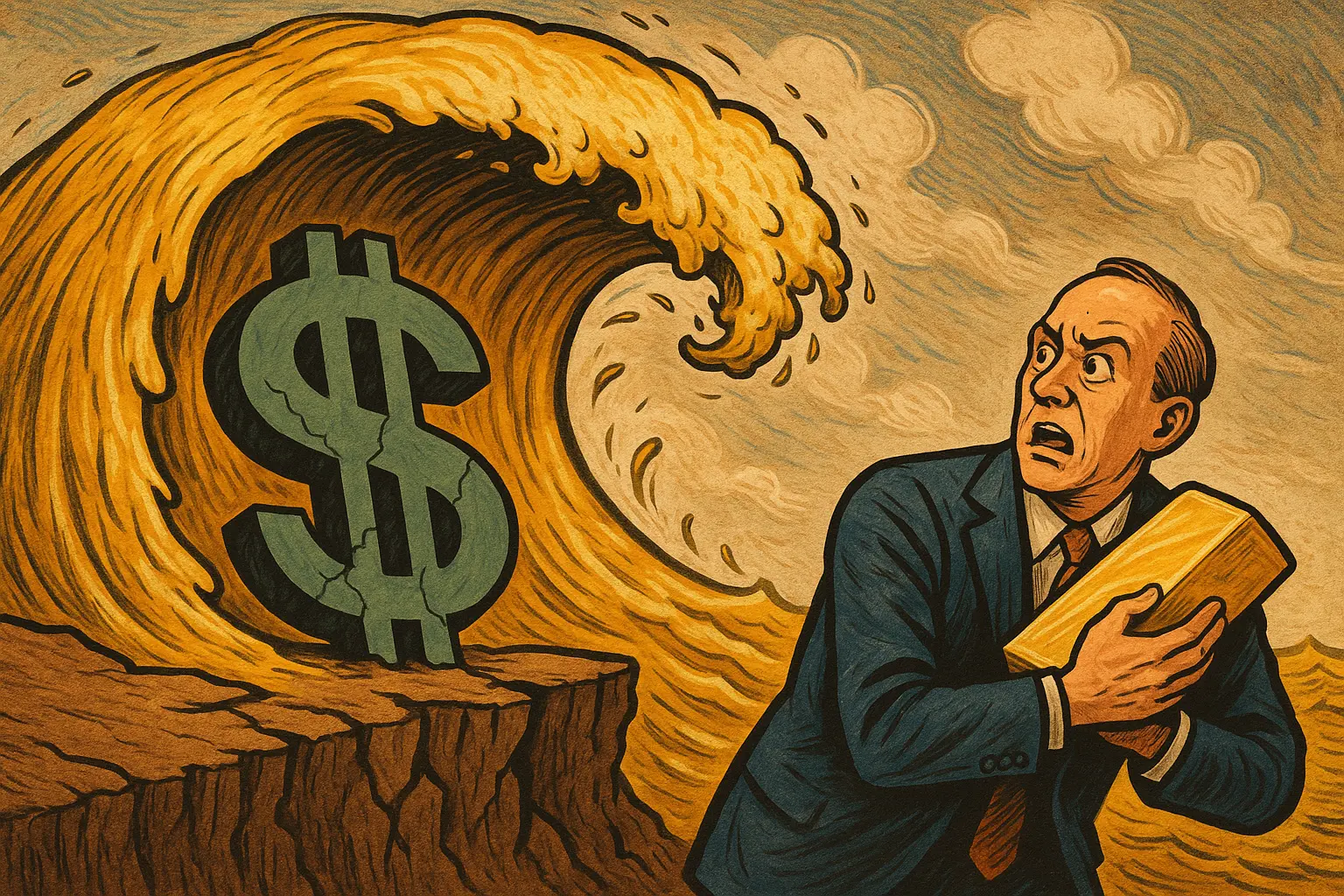
Peter Schiff posted on social media platform X, emphasizing that forex market volatility is a warning sign. He stated: “The USD/CHF exchange rate is currently at a 14-year low, less than 1% away from a new historic low.” This data is highly warning, as the Swiss franc has long been regarded as one of the most stable currencies globally. Switzerland’s low inflation, sound fiscal policy, and neutral political stance make it a safe haven during crises.
When the USD/CHF hits a 14-year low, it indicates that even relative to another safe-haven currency, the dollar continues to depreciate. This decline is not a short-term fluctuation but a continuation of a long-term trend. Since the USD index peaked in October 2022, the dollar has continued to weaken against major currencies, with a cumulative decline of over 15%. Being only 1% away from a historic low suggests the dollar could break through this key psychological level at any moment, potentially triggering an accelerated decline once breached.
Schiff warns: “This indicates a broader sell-off of the dollar, which means higher inflation, higher long-term interest rates, and a weakening US economy.” The chain reaction logic is: dollar depreciation → rising import prices → inflation increase → Fed forced to raise interest rates → higher borrowing costs → economic slowdown → rising unemployment. Once this vicious cycle starts, it will be difficult to break.
The trend of the US Dollar Index (DXY) further confirms Schiff’s concerns. According to TradingView data, the dollar index has fallen 11% since the beginning of the year to 97.8. It reached a three-year low of 96.3 in September, indicating that dollar weakness is not a temporary phenomenon. This ongoing downward trend reflects a loss of market confidence in the dollar’s long-term purchasing power.
The forex market is the largest and most liquid financial market globally, with a daily trading volume exceeding 7 trillion USD. When this market signals a weakening dollar clearly, other asset classes must be highly alert. Historical experience shows that the trend of major currencies depreciating often precedes broader financial crises. The sustained depreciation of the dollar in the 1970s eventually triggered stagflation, and current circumstances bear similarities to that period.
Safe-Haven Shift: Gold Replaces the Dollar as the New King
Schiff commented in another message: “The problem is that the dollar is no longer viewed as a safe-haven currency. Gold has taken its place.” This judgment is not baseless but based on objective observations of central bank behaviors and market data. On December 19, Schiff pointed out official sector demand and asserted, “Central banks are buying gold because they expect US inflation to surge and destroy the value of dollar reserves.”
Global central banks’ gold purchases hit a record high in 2022 and have remained at very high levels in 2023 and 2024. The People’s Bank of China has continuously increased its gold reserves for several months, while Russia, India, Turkey, and others have significantly increased their gold holdings. This asset reallocation led by sovereign nations more convincingly explains the loss of dollar confidence than any technical analysis.
The shift in safe-haven status has profound implications. Over the past decades, during global market turmoil, capital automatically flows into dollar assets, especially US Treasuries. This “safe-haven inflow” lowers US borrowing costs, allowing the federal government to finance at extremely low interest rates. However, when the dollar loses its safe-haven status, this automatic buying will disappear, and US Treasuries may face selling pressure, pushing yields higher and increasing government interest expenses.
Schiff pointed out on December 21 that rising debt and meager savings make current interest rates unsustainable, and the dollar’s reserve currency status is weakening. US federal debt has surpassed 36 trillion USD, with interest payments exceeding 1 trillion USD, making it the second-largest expenditure after Social Security. Under this fiscal structure, any rise in interest rates could lead to a spiral of worsening government finances.
Four Major Warning Signs of Dollar Collapse
1. Technical Breakdowns in Forex Markets
· USD/CHF hits a 14-year low, less than 1% from the historic low
· US Dollar Index (DXY) has fallen 11% this year to 97.8
· Reached a three-year low of 96.3 in September, establishing a continued downtrend
2. Structural Changes in Central Bank Behavior
· Central banks worldwide continue large-scale gold purchases to hedge against dollar risk
· Countries like China, Russia, India reduce US debt holdings and increase gold reserves
· Official sector demand indicates a loss of confidence in the dollar among sovereign nations
3. Debt and Interest Rate Negative Feedback Loop
· US federal debt exceeds 36 trillion USD, with interest payments over 1 trillion USD
· Current interest rate levels are unsustainable under the debt structure
· Low savings rates cannot support continued high borrowing costs
4. Loss of Safe-Haven Asset Status
· During market turmoil, capital no longer automatically flows into the dollar
· Gold replaces the dollar as the new safe-haven king
· US Treasuries lose automatic buying support
Chain Reaction: Triple Blow to Bonds, Stocks, and Consumers
In his speech on December 16, Schiff expanded his view to the broader economy. He claimed: “The US economy is on the brink of the greatest economic crisis of our lifetime. The surge to new highs in gold and silver prices will ultimately shake the foundations of the dollar and US Treasuries, causing consumer prices, bond yields, and unemployment to soar.” This description of systemic crisis is not alarmist but based on the reinforcing relationships among debt, inflation, and currency devaluation.
Schiff further described the severe consequences consumers face: “The dollar will crash, and everything that unemployed Americans cannot afford will become more expensive.” This stagflation scenario (high inflation + high unemployment) is the greatest nightmare for economic policy. When inflation is high, the Fed usually raises interest rates to curb demand, which leads to recession and rising unemployment. When unemployment is high, the Fed typically cuts rates to stimulate the economy, which then worsens inflation. In a stagflation environment, any policy will be a trade-off.
For global currencies, bonds, and risk assets, the dollar’s collapse will trigger a chain reaction. Many emerging market currencies are pegged or highly correlated with the dollar, so dollar depreciation will force these countries to face imported inflation. The global bond market will also be affected, as US Treasuries serve as the benchmark rate for the entire financial system. Rising yields will increase financing costs for all other bonds. In equities, although dollar depreciation may temporarily boost dollar-denominated stock prices, the decline in real purchasing power and the threat of recession will ultimately crush valuations.
Schiff believes that losing safe-haven status could cause a chain of economic damage to currencies, bonds, and risk assets. This systemic risk, in today’s highly interconnected global financial environment, will spread faster and with greater magnitude.


