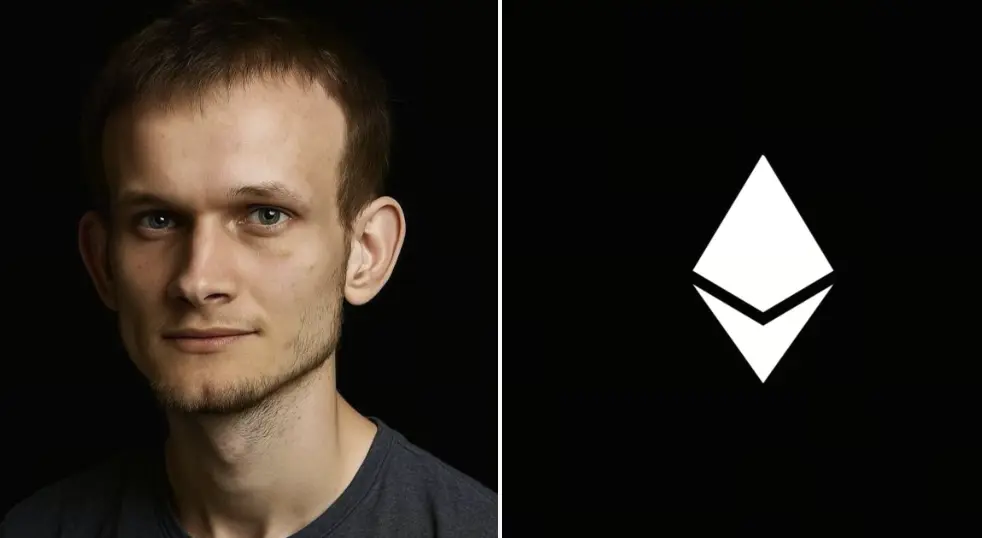
Ethereum co-founder Vitalik Buterin said on January 6, 2026, that Ethereum has effectively solved the long-standing blockchain trilemma after nearly a decade of research and protocol upgrades.
With zero-knowledge Ethereum Virtual Machines (ZK-EVMs) now production-ready and PeerDAS data availability sampling live on mainnet following the Fusaka upgrade in December 2025, Ethereum can scale significantly while preserving decentralization and security. Buterin described the network as entering a new phase as a “provably secure world computer.”
(Sources: X)
ZK-EVM and PeerDAS Mark a Structural Shift for Ethereum
The blockchain trilemma refers to the difficulty of achieving scalability, decentralization, and security at the same time. According to Buterin, Ethereum’s recent technical progress directly addresses this limitation.
ZK-EVMs now allow Ethereum blocks and state transitions to be verified using cryptographic proofs rather than re-execution. Proof generation times have fallen to seconds, and costs have dropped by more than an order of magnitude compared to early zero-knowledge systems. This enables full Ethereum-equivalent validation without relying on trusted sequencers or permissioned committees.
PeerDAS, short for Peer Data Availability Sampling, further removes scaling bottlenecks. Instead of requiring nodes to download all block data, validators sample small portions of data to verify availability. This significantly reduces hardware requirements while maintaining strong security guarantees.
Combined, ZK-EVMs and PeerDAS allow Ethereum to process far more data and transactions without sacrificing its decentralized validator set.

(Sources: X)
Scalability Without Compromising Decentralization
Buterin emphasized that Ethereum’s approach differs from many high-throughput blockchains that trade decentralization for performance. With PeerDAS, lightweight nodes can continue to participate in consensus, and with ZK-EVMs, verification becomes cheaper rather than more expensive as the network scales.
This architecture creates a path toward dramatically higher throughput on Ethereum Layer 1, with estimates pointing to tens of thousands of transactions per second over time. When combined with rollups and Layer 2 networks, total ecosystem capacity could reach millions of transactions per second while remaining trustless.
Ethereum Roadmap From 2026 to 2030
Buterin outlined several key milestones for the coming years. In 2026, Ethereum is expected to raise gas limits and expand early ZK-EVM validator participation. Between 2026 and 2028, further repricing and state optimizations are planned to ensure safe scaling.
By 2027 to 2030, zero-knowledge proof verification is expected to become the dominant validation mechanism across the network. Ethereum is also targeting 128-bit cryptographic security by the end of 2026, reinforcing its focus on long-term resilience rather than short-term performance metrics.
Why Solving the Blockchain Trilemma Matters
Ethereum’s ability to scale without weakening decentralization or security has major implications for institutional adoption and real-world applications. Use cases such as DeFi, tokenized real-world assets, AI agents, and onchain governance require both transparency and cryptographic certainty.
Unlike systems that rely on trusted operators, Ethereum’s roadmap prioritizes provable security and permissionless participation. This positions the network as a long-term settlement layer for global financial and computational infrastructure.
A New Phase for Ethereum
Buterin’s statement signals a turning point for Ethereum after years of incremental upgrades. With ZK-EVMs and PeerDAS now live or production-ready, Ethereum is transitioning from theoretical scalability research to practical, verifiable execution at scale.
As the network continues to evolve through 2030, Ethereum’s strategy remains focused on durability, trust minimization, and cryptographic verification. If successful, the platform may fulfill its original vision of becoming a decentralized, secure, and scalable world computer.
Disclaimer: The information on this page may come from third parties and does not represent the views or opinions of Gate. The content displayed on this page is for reference only and does not constitute any financial, investment, or legal advice. Gate does not guarantee the accuracy or completeness of the information and shall not be liable for any losses arising from the use of this information. Virtual asset investments carry high risks and are subject to significant price volatility. You may lose all of your invested principal. Please fully understand the relevant risks and make prudent decisions based on your own financial situation and risk tolerance. For details, please refer to
Disclaimer.
Related Articles
Ethereum Price Holds Key Support: Is $2,200 the Next Test for ETH?
March 6, 2026 7:15 pm EST
TheCoinRepublic39m ago
Culper Research Shorts ETH, Says Ethereum Price Is Going Down
March 6, 2026 10:15 pm EST
TheCoinRepublic40m ago
Contract whale pension-usdt.eth reduces Bitcoin short positions, decreasing from 1000 to 900 coins.
Gate News Report, March 7th, according to Hyperinsight monitoring, the contract whale pension-usdt.eth is reducing its Bitcoin short positions. The address originally held 1000 Bitcoin short positions and has now reduced to 900, with the closing operations still ongoing.
GateNews2h ago
Hidden "Death Spiral" Risk! Ethereum and Bitmine targeted by short-selling institutions
Ethereum is about to undergo a major upgrade, and the market is highly focused on it. However, short-selling firm Culper Research believes that the Ethereum economic model is failing and warns of a potential "death spiral." They point out that a significant drop in transaction fees and shrinking staking rewards will impact network security. The report also mentions Vitalik Buterin selling Ethereum and questions the market fundamentals, suggesting that Ethereum is facing a new reality.
区块客3h ago
Ethereum spot ETF experienced a net outflow of $82,851,900 yesterday, with all nine ETFs showing no net inflow.
On March 6th, Ethereum spot ETFs experienced a total net outflow of $82.8519 million, with all nine ETFs showing no net inflow. Fidelity FETH outflowed $67.5669 million, with a historical outflow reaching $218 million. Grayscale ETH Mini Trust outflowed $5.9979 million, with a total net asset value of $11.283 billion.
GateNews4h ago


