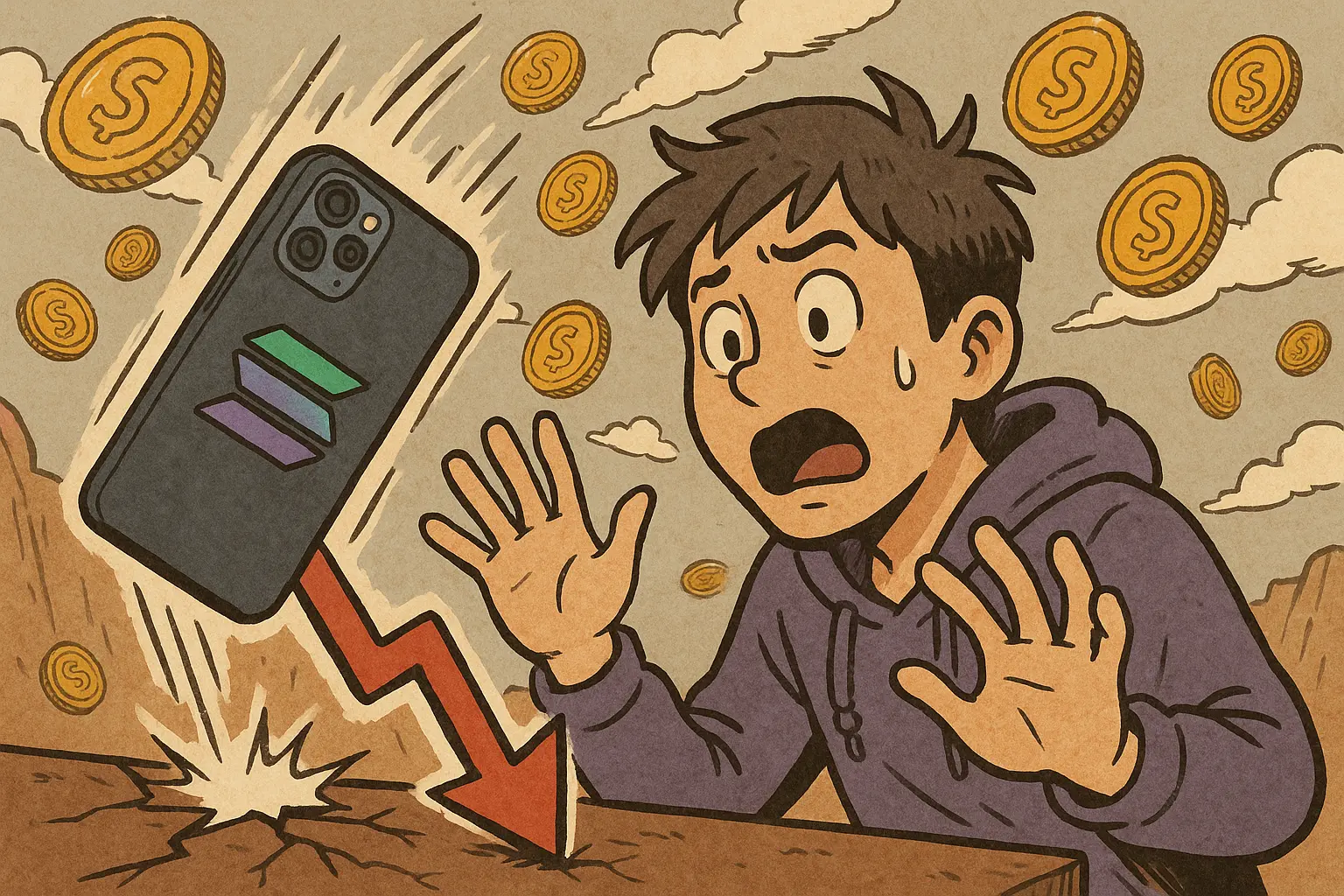
Solana Mobile native token SKR opens airdrop, pre-market price around $0.02, but after opening, it once dropped to $0.0088, a 56% decline. Despite Season 1 data showing 100,000 users, 9 million transactions, and $2.6 billion in trading volume, the sharp drop disappointed Seeker users and prompted the market to reevaluate the value of the Web3 phone ecosystem.
SKR Airdrop Pre-market Price Halved, Confidence Dented
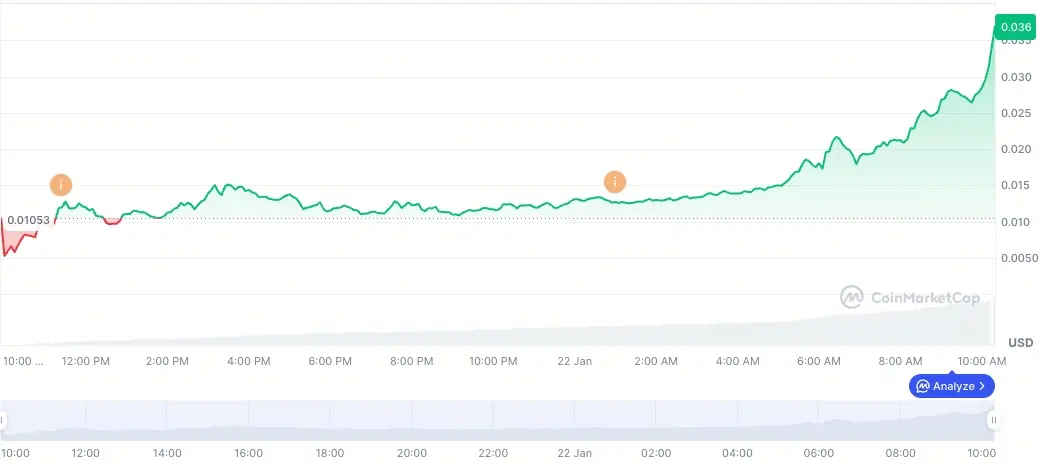
Originally, pre-market trading data showed SKR token price around $0.02, but after official listing on January 22, the price once dipped to $0.0088. This performance starkly contrasted with the crypto community’s previous expectations. On the eve of the airdrop, the market was generally optimistic about SKR, with most opinions believing the token price would stay in the $0.02 to $0.04 range.
The sudden halving at opening immediately sparked community discussion. Many Seeker phone users expressed disappointment on social media, with some questioning whether their initial purchase was worth it. The drop from $0.02 to $0.0088 means the airdrop value shrank by 56%. For users who spent hundreds of dollars on the phone and invested time in Season 1 activities, this gap is undoubtedly a huge psychological blow.
The reasons for the price plunge could be multiple. First, typical “airdrop dumping pressure”: when many users claim tokens simultaneously and rush to cash out, sell orders far exceed buy orders, causing prices to collapse. Second, skepticism about SKR’s actual utility: currently, SKR’s main uses are “Guardian staking” and “governance voting,” which have limited appeal for most users. Third, the overall crypto market weakness: Bitcoin recently retraced about 30% from its high, and altcoins have performed even worse.
Season 1 Ecosystem Data Looks Good but Price Doesn’t Reflect It
In fact, from a data perspective, Solana Mobile’s Season 1 performance isn’t bad. Over 100,000 users participated, with a total of 9 million transactions, over 265 dApps, and a total trading volume of $2.6 billion. These figures show that the Seeker phone ecosystem has a certain level of activity.
However, impressive ecosystem data has not supported SKR’s pre-market price. The market wants to see sustained high activity after the reward events to consider it truly competitive. So far, the official reports that over 150,000 second-generation Seeker phones have been delivered, with over 265 dApps and $2.6 billion in trading volume, indicating real users. But whether the Web3 phone can break free from the “usage just for airdrops” dilemma remains an unknown to watch.
This is the existential question all “token incentive-driven” projects must face. Looking at Season 1’s data, 9 million transactions are not bad, but we must honestly ask: how many of these activities are driven by “genuine demand,” and how many are just “farming for airdrops”?
SKR Tokenomics and Guardian Mechanism
According to official announcements, SKR distribution is as follows: 30% airdrop, 25% growth and partners, 15% Solana Mobile team, 10% Solana Labs, 10% community treasury, 10% liquidity and listing. Regarding inflation, SKR adopts a linear inflation model, with a 10% inflation rate in the first year (about 1 billion tokens), decreasing by 25% annually until stabilizing at 2%.
Currently, token holders can stake SKR with “Guardians,” participate in platform governance, and earn inflation rewards. The official explains that Guardians are based on the TEEPIN architecture, responsible for verifying device authenticity and reviewing dApp listings, ensuring decentralization and security of the phone ecosystem. The token is also allocated to a developer incentive fund to support teams developing applications on Seeker phones, introducing more use cases into the ecosystem.
From the tokenomics perspective, SKR may have additional future uses: dApp listing review fees, unlocking phone features or advanced services, in-ecosystem payment medium, hardware upgrade discounts. The key point to watch is whether the official will announce more actual uses for SKR in the coming months, which will directly impact the token’s long-term value.
Can Solana Phone Break the Airdrop-Only Destiny?
Looking back, the first-generation Saga phone initially struggled with sales, but gained popularity after the BONK airdrop. However, after profit opportunities disappeared, enthusiasm quickly faded, and the official even stated they would no longer support that model. Going further back: the once-popular Move-to-Earn app STEPN saw active users drop over 95% after token rewards were significantly reduced. Axie Infinity’s peak daily active users exceeded 2 million, but activity shrank sharply after rewards decreased.
Can Seeker phone break this curse? The possible outcome is a “niche but stable” path. Seeker phones won’t become mass-market consumer products, but will form a small, loyal Web3-native user base. If Solana Mobile can serve this core group well, a device base of 150,000 units could sustain a healthy niche ecosystem.
Disclaimer: The information on this page may come from third parties and does not represent the views or opinions of Gate. The content displayed on this page is for reference only and does not constitute any financial, investment, or legal advice. Gate does not guarantee the accuracy or completeness of the information and shall not be liable for any losses arising from the use of this information. Virtual asset investments carry high risks and are subject to significant price volatility. You may lose all of your invested principal. Please fully understand the relevant risks and make prudent decisions based on your own financial situation and risk tolerance. For details, please refer to
Disclaimer.


