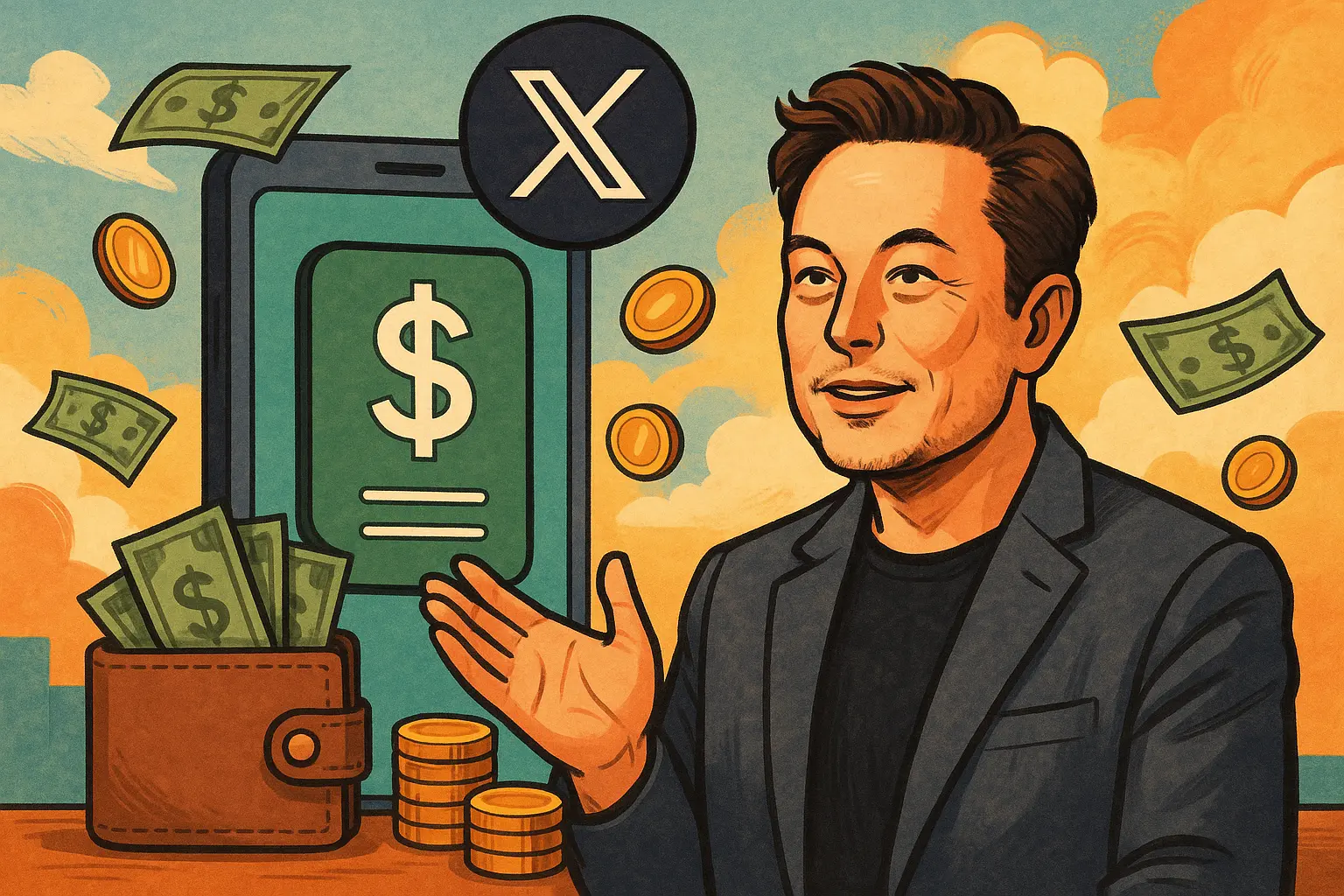
Elon Musk announced at the all-hands meeting of xAI on Wednesday that X Money plans to release in a “limited beta” within the next one to two months, currently undergoing closed testing internally. He called X Money a “game changer,” which will become a hub for all funds and a center for currency trading. X has 1 billion installs and approximately 600 million monthly active users. X Money aims to integrate social, messaging, content, and financial services.
Testing in 1 to 2 Months: From Internal Testing to Public Launch Countdown
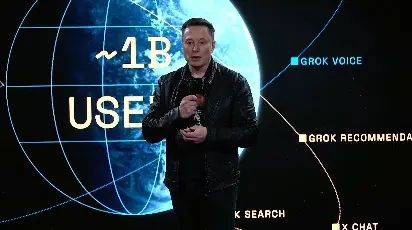
(Source: xAI)
X Money is part of Musk’s “everything app” plan, with the upcoming payment system set to launch in a “limited beta” within the next two months, followed by a global rollout to X users. Musk revealed a new timeline at the xAI “all-hands” meeting, stating that X Money is already in “closed internal testing.”
“This will become a hub for all funds, a source for all currency transactions,” he said, calling it a “game changer.” This ambitious vision shows Musk’s dissatisfaction with making X Money just a simple payment tool; he envisions it as a global financial hub. While the phrases “all funds” and “all transactions” are exaggerated, they reveal Musk’s strategic positioning: not as one of many payment options, but as the essential financial infrastructure.
The 1-2 month timeframe suggests that the external beta could be launched between mid-March and mid-April. “Limited beta” typically means access is restricted to a small user group, possibly via invitation or prioritized regions. This phased rollout allows risk control, user feedback collection, and issue fixing before a full-scale launch.
In terms of product maturity, “internal closed testing” indicates that X Money has completed core development, and X employees are actively using and testing the system. Such internal testing often uncovers serious bugs and UX issues, which are addressed through weeks or months of iteration before external release. Musk’s announcement of a 1-2 month timeline for external testing suggests smooth progress and that the product is nearing release readiness.
X Money Timeline
Current stage: Internal closed testing, X employees actively using
1-2 months later: Limited external beta, invitation-only or regional access
Mid to late 2026: Global launch, open to all X users
From a business strategy perspective, timing the launch of X Money is critical. Currently, X faces challenges like declining ad revenue and slowing user growth. Introducing payment features can open new revenue streams (transaction fees, exchange rate spreads) and increase user engagement and platform indispensability. When users store funds in X Money and use it for daily transactions, switching to other social platforms becomes more costly.
Aiming to Rival WeChat’s “Super App” Vision: 1 Billion Installs vs 600 Million Monthly Active Users
This move is seen as a key feature ahead, aiming to make X more indispensable, closely tied to its “super app” vision, with payments as a core driver of daily engagement. Musk pointed out that the platform has 1 billion installs but about 600 million monthly active users.
The data of 1 billion installs versus 600 million MAU reveals retention challenges. About 40% of users have installed the app but are not active, a moderate churn rate for social platforms. Musk hopes X Money can boost user activity—when users need to send/receive money or manage finances on X, they will open the app more frequently, increasing MAU figures.
It’s rumored that X Money, expected to launch last year, will be directly integrated into the X platform, aiming to become a comprehensive social, messaging, content, and financial service platform. “As we give people more reasons to use X—whether for messaging, Grok, or X Money—we hope they can live on X if they want,” Musk said.
Western markets differ fundamentally from China. Chinese users are accustomed to centralized ecosystems, while Western users prefer specialized standalone apps. In the US, people chat on WhatsApp, browse images on Instagram, check emails with Gmail, and transfer money via Venmo—rarely do they want all functions in one platform. Whether X Money can break this usage pattern is a key challenge for success.
Elon Musk’s Payment Dream: From X.com to X Money Over 25 Years
Since acquiring Twitter in 2022, Musk has been pushing for payments on X. The idea traces back to his early career in 1999, when he co-founded X.com, an online bank that later merged with Confinity to become PayPal, which was acquired by eBay. This history adds a narrative layer to X Money: Musk is returning to his starting point from 25 years ago, revisiting his unfinished payment dream.
In 1999, X.com was an ambitious online banking project offering checking, savings, transfers, and investments. After merging with Confinity, internal disagreements over strategy led Musk to be ousted as CEO; the company was renamed PayPal and focused on payments. This experience may be a career regret for Musk, and now, through X Money, he is revisiting and completing that earlier vision.
From a product perspective, X Money may not be just P2P transfers. Based on Musk’s “everything app” concept, X Money could include: P2P transfers (like Venmo), merchant payments (online and offline shopping), cross-border remittances (leveraging X’s global user base), investment and wealth management (stocks, funds, crypto), and possibly lending services. This comprehensive financial suite would far exceed simple payments.
Regulatory-wise, entering financial services means facing strict oversight. In the US, offering payment services requires a Money Transmitter License, obtained separately in each state. Investment services need a securities broker license. Lending requires a banking or lending license. Applying for and maintaining these licenses is costly and complex. It’s unclear whether Musk has secured the necessary licenses for X Money.
Additionally, X Money must integrate with existing banking systems. Users need to deposit from bank accounts into X Money and withdraw back to banks. This requires partnerships with hundreds of banks, technical integration, and compliance checks—time-consuming processes. PayPal took years to build a robust banking partnership network; whether X Money can do so quickly is a major challenge.
220,000 GPUs Expansion: xAI as the AI Engine for X Money
Musk also emphasized the company’s growth in AI, stating that xAI can “deploy more AI computations faster than others.” He showcased the company’s new AI data center in Memphis, Tennessee—called “Macroharder”—an expansion of existing facilities, adding 220,000 GPUs. “All of this is for training the AI models you experience. Large-scale training compute is critical for the best models,” he said.
220,000 GPUs is top-tier in AI data centers. For comparison, OpenAI’s training clusters have about 100,000–150,000 GPUs; Google and Meta’s clusters are similar. Musk’s investment in such a large-scale infrastructure via xAI demonstrates aggressive AI race positioning.
The link to X Money is that AI can enable smarter financial services—fraud detection (identifying suspicious transactions), credit scoring (based on user data), intelligent investing (personalized advice), and customer support (AI chatbots). If X Money leverages xAI’s tech advantages, it could gain a competitive edge over traditional finance and fintech players.
Musk also mentioned that xAI is recruiting crypto experts to train AI for market analysis, hinting that X Money might incorporate crypto features, allowing users to trade Bitcoin, Ethereum, and other assets within the platform. If realized, X Money could become a fusion of traditional and crypto finance.
In terms of competition, X Money entering the payments market will directly challenge Venmo, PayPal, Cash App, and others with established user bases and merchant networks. Its advantage lies in the social and content ecosystem of X, enabling seamless “see a tweet, pay” experiences. The challenge is the lack of financial operation experience and user trust.


