Lighter (LIT) dominance in the perpetual contract segment once peaked near 60% in mid-December 2025, reflecting a period of explosive growth immediately after the platform’s launch. This expansion was strongly driven by a wave of activity stemming from airdrops, along with high-intensity liquidity incentive programs.
However, as incentives gradually returned to normal levels, user participation quickly cooled off, leading to a significant decline in trading volume. By January 2026, the market-wide contraction wave continued to increase pressure, with total daily perpetual contract trading volume retreating to the 15–20 billion USD range — about 30% lower than the same period last year.
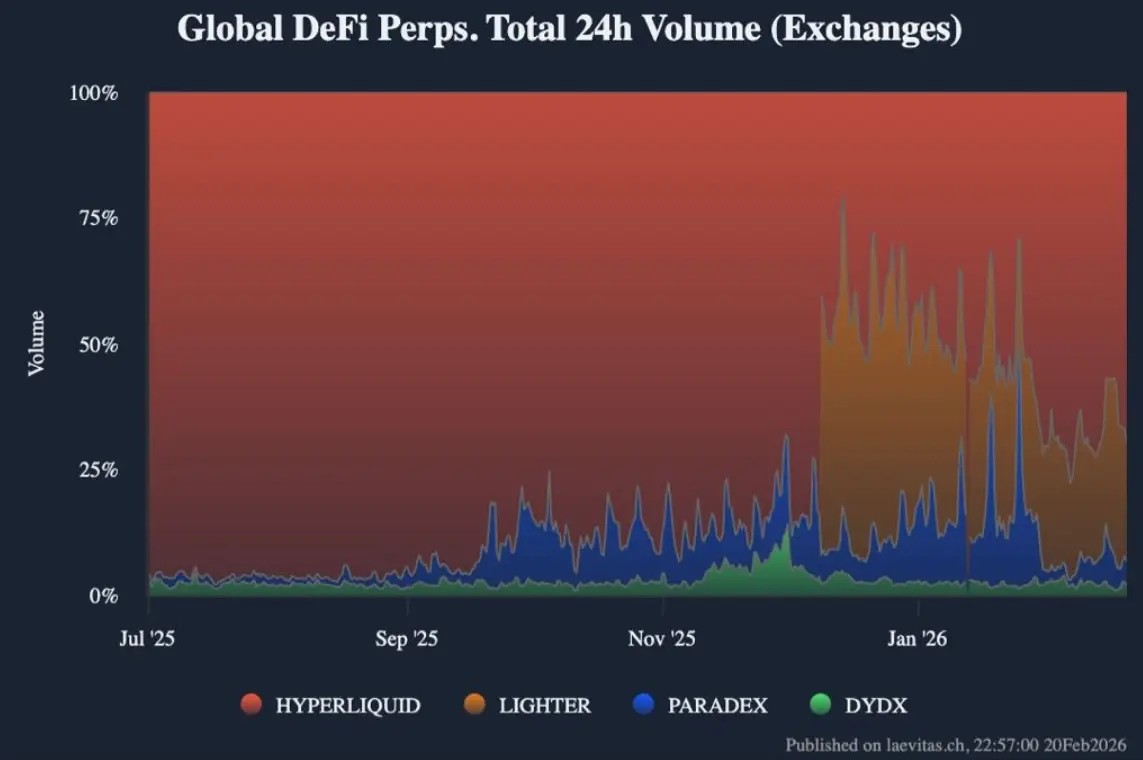 Source: Laevitas/ XWhile Lighter’s market share weakened, Hyperliquid (HYPE) gradually regained dominance, expanding control to the 40–50% range. This shift has reshaped the competitive landscape and created opportunities for Paradex and dYdX to attract additional capital during periods of market volatility.
Although a short-term recovery was observed in early February, Lighter’s market share subsequently slid back to around 25%, indicating that speculative momentum is waning and lacks sustainability.
Nevertheless, Lighter still maintains a relatively solid structural foundation in Bitcoin and Ethereum contracts, holding over 50% of open contracts in key trading pairs.
Overall, despite a decline in prominent trading volume, Lighter’s core liquidity layer remains notably resilient, even amid tightening macroeconomic conditions and the waning influence of incentive-based trading activities.
The Rise of Hyperliquid Through Capital Flows Out of Lighter
By the end of 2025, Lighter had risen to nearly 60% market share due to zero trading fees and expectations of an upcoming airdrop. This combination drove a surge of trading activity onto a single platform, triggering a wave of short-term traders and causing volume to spike as leverage demand exploded.
As 2025 closed, the total industry trading volume reached 7.9 trillion USD. During this peak, Lighter even surpassed Hyperliquid in daily activity. However, the balance quickly shifted. The LIT airdrop on December 30 turned the “trade for points” momentum into a “take profit and withdraw” mentality.
A 45% drop in LIT’s price in mid-January became the decisive catalyst. Yield-focused wallets simultaneously exited positions, reducing trading volume repeatedly and eroding the loyal user base. As this group left, Lighter’s market share was compressed to around 25%, then continued to decline to 8.1% by mid-February amid ongoing ranking turbulence.
More broadly, the market grew faster than Lighter’s ability to retain capital. Total perp trading volume doubled to 14 trillion USD in just six months, making any slowdown quickly lead to market share dilution.
This capital shift was strongly absorbed by Hyperliquid, which captured 23.4% of the market and controlled 70% of open contracts. Meanwhile, Aster and EdgeX also seized opportunities to attract additional funds through low latency, fee rebate mechanisms, and new incentive packages.
Justin Sun’s Strategic Positioning
The capital outflows eroded Lighter’s position even before large-scale token transactions appeared. After the airdrop, liquidity rapidly contracted, trading volume plummeted, and market share fell from an overwhelming 60% to single digits. As this downward trend continued, the focus shifted from exchange competition to token positioning and destiny.
This shift became even clearer when Justin Sun — founder of Tron — transferred nearly 10 million LIT into exchange hot wallets. Data from Arkham shows 7.212 million LIT moved through one deposit route, then an additional 5 million LIT entered the system via another channel.
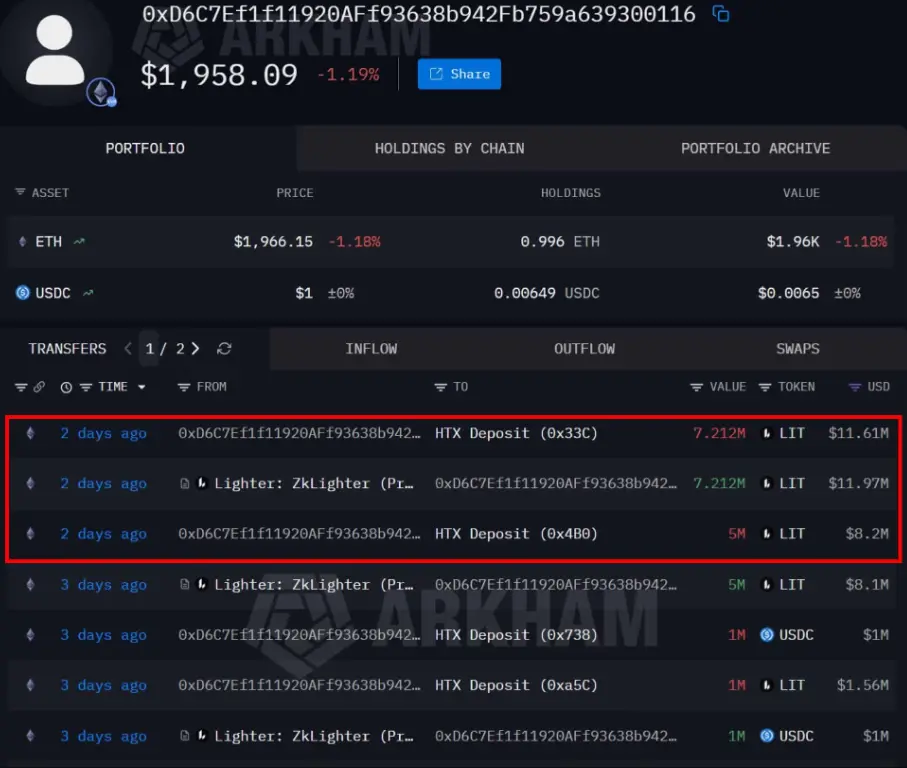 Source: XMeanwhile, other wallets also deposited 1–2 million LIT into the same infrastructure. This concentration indicates preparations for quick response if volatility increases. When assets are stored in hot wallets, transparency decreases while sell options expand, exerting significant pressure on market psychology.
Conversely, Wintermute accumulated LIT, reinforcing expectations of increased activity. Meanwhile, HTX transferred 6.5 million LIT into zkLighter infrastructure, signaling a preference to support the ecosystem rather than sell immediately.
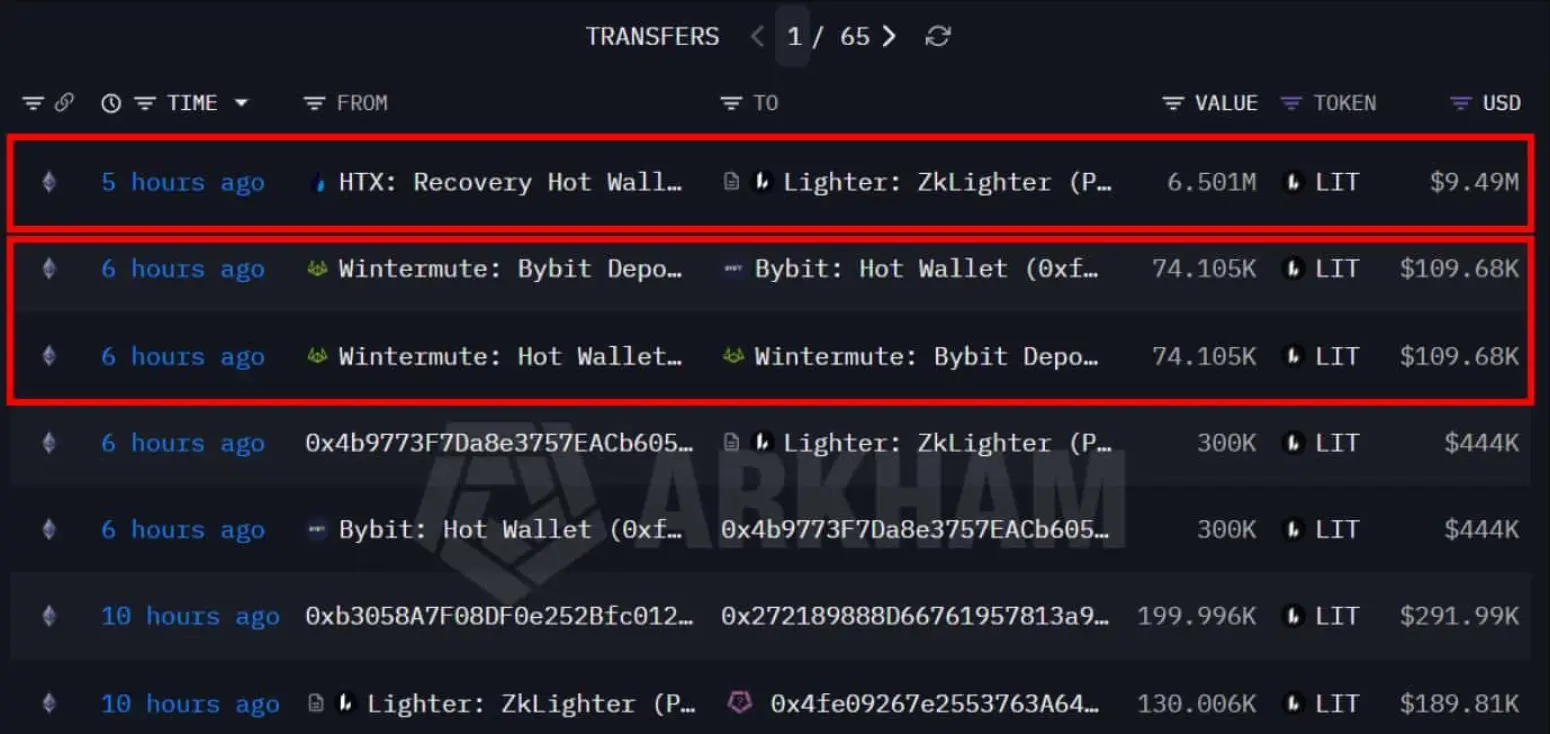 Source: XOverall, Justin Sun’s positioning reflects a flexible strategy: nurturing Lighter’s recovery story while keeping “leverage” ready for deployment if market conditions turn adverse.
Disclaimer: The information on this page may come from third parties and does not represent the views or opinions of Gate. The content displayed on this page is for reference only and does not constitute any financial, investment, or legal advice. Gate does not guarantee the accuracy or completeness of the information and shall not be liable for any losses arising from the use of this information. Virtual asset investments carry high risks and are subject to significant price volatility. You may lose all of your invested principal. Please fully understand the relevant risks and make prudent decisions based on your own financial situation and risk tolerance. For details, please refer to
Disclaimer.


