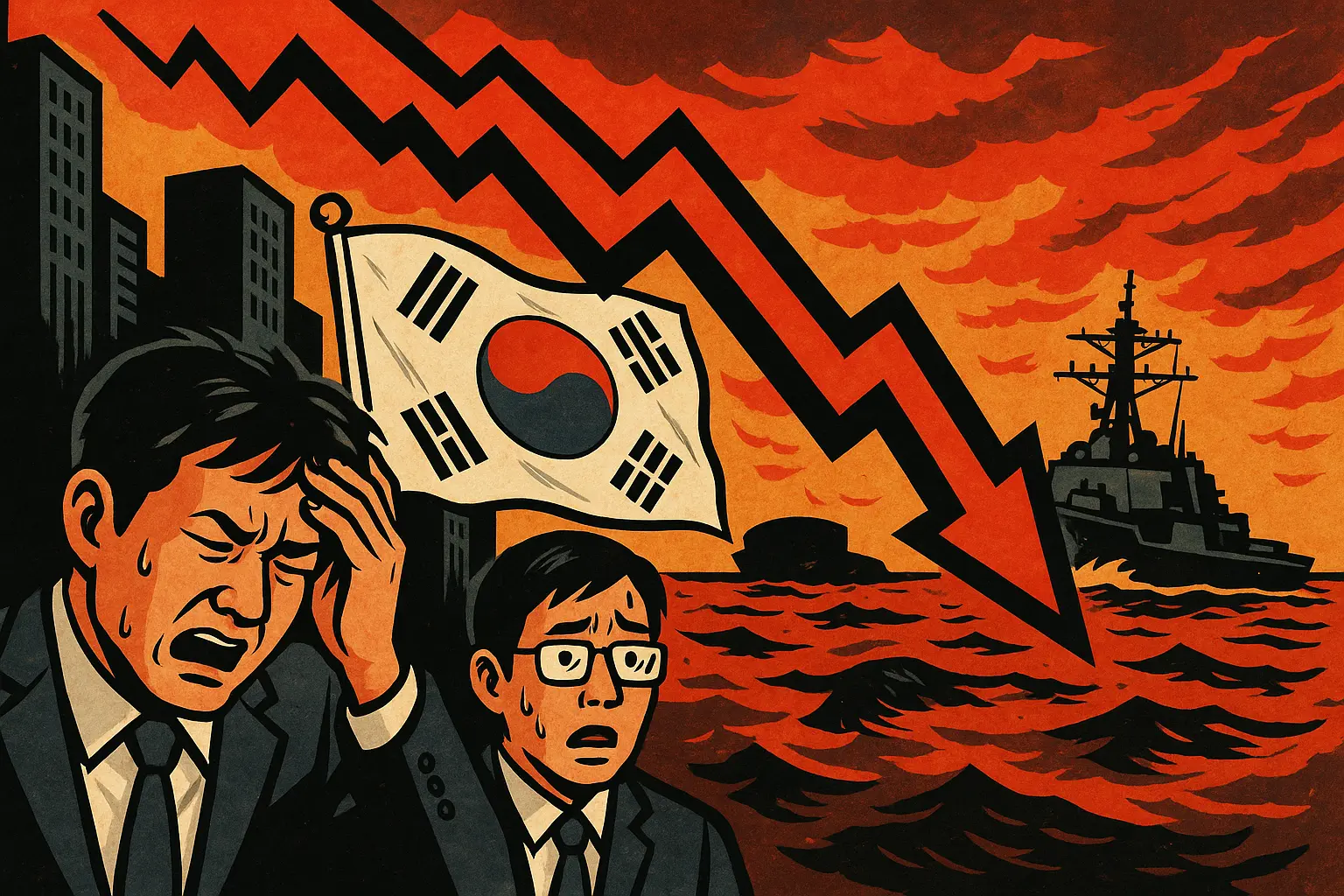
Monday, major Asian stock markets all declined sharply as the Iran-U.S. war enters its fourth week with no signs of ceasefire. South Korea’s KOSPI led the decline, plunging 4.71% to 5,509 points; Japan’s Nikkei 225 index fell as much as 4%; Australia’s ASX index dropped about 1.5%. The Trump administration’s 48-hour ultimatum regarding the Strait of Hormuz, set to expire Monday night New York time, has severely shaken global investor confidence.
Asian Markets Plunge Across the Board: Geopolitical and Energy Inflation Dual Pressures
This wave of selling in Asian markets is driven by two mutually reinforcing factors: escalating geopolitical risks from the Iran-U.S. conflict and rising energy prices fueling inflation expectations. Brent crude oil is currently fluctuating around $112 per barrel, up more than 55% since the conflict erupted in late February.
Japan is the most vulnerable major Asian economy in this round of impact, relying on the Strait of Hormuz for about 90% of its oil imports. Semiconductor-related stocks led declines in the Nikkei, with concerns that energy shocks are spreading through the entire industrial supply chain accelerating, not limited to the energy sector itself.
Ultimatum on the Strait of Hormuz: Core Risks at a Critical Juncture
The Trump administration demands Iran reopen the Strait of Hormuz, or face attacks on its power infrastructure. About one-fifth of the world’s oil and liquefied natural gas (LNG) typically pass through this route, making its strategic importance irreplaceable. Tehran responded strongly, threatening to permanently block the waterway and vowing to strike U.S. and Israeli energy assets in the region.
Core Risk Dimensions of the Hormuz Ultimatum
Global Supply Disruption Risk: One-fifth of global oil and LNG supplies depend on this channel; a blockade would cause immediate shocks to energy markets.
Japan’s High Dependence: 90% of its oil imports transit through this route, with industrial and manufacturing supply chain costs set to rise across the board.
Conflict Escalation Risk: Iran threatens to target regional energy assets, potentially expanding conflict from military facilities to civilian infrastructure.
Market Window Narrowing: The ultimatum expires tonight, leaving little room for negotiation; any accidental escalation could trigger further market turmoil.
Rate Cut Expectations Disappear: Fed Policy Path Reverses Sharply
The energy shock also has profound implications for global monetary policy outlooks. The U.S. 10-year Treasury yield hit 4.41%, a new eight-month high. Markets have completely abandoned expectations of a Fed rate cut, with traders now even pricing in the low probability of rate hikes—driven by inflationary pressures from rising energy prices, which are believed to have surpassed concerns about economic slowdown.
Cryptocurrency markets are also affected. Since the conflict erupted, Bitcoin and mainstream altcoins have maintained high correlation with stocks. During risk-off trading days, crypto assets and equities are sold off together. With the Hormuz ultimatum expiring today and ceasefire still distant, this high cross-market correlation shows no signs of easing.
FAQs
Q: How important is the Strait of Hormuz to the global energy market?
The Strait of Hormuz is a critical energy corridor connecting the Persian Gulf and the Arabian Sea, through which about one-fifth of global oil and LNG supplies are transported. A blockade would cause immediate shortages in global energy supplies, with particularly severe impacts on Asian economies heavily dependent on Middle Eastern oil imports.
Q: Why is Japan more vulnerable in this conflict than other Asian markets?
Japan relies on about 90% of its oil imports via the Strait of Hormuz. The energy shock not only directly boosts inflation but could also lead to widespread increases in supply chain costs for manufacturing sectors like semiconductors and automobiles. This explains why the Nikkei 225’s monthly decline is especially pronounced among Asian markets, with a drop of over 13% in March.
Q: How are Bitcoin and other cryptocurrencies affected by the Iran war?
Since the conflict began, Bitcoin and mainstream altcoins have maintained high correlation with stocks. During risk-off days, crypto assets are typically sold off alongside equities, indicating that the market still largely views them as risk assets rather than traditional safe havens.
Disclaimer: The information on this page may come from third parties and does not represent the views or opinions of Gate. The content displayed on this page is for reference only and does not constitute any financial, investment, or legal advice. Gate does not guarantee the accuracy or completeness of the information and shall not be liable for any losses arising from the use of this information. Virtual asset investments carry high risks and are subject to significant price volatility. You may lose all of your invested principal. Please fully understand the relevant risks and make prudent decisions based on your own financial situation and risk tolerance. For details, please refer to
Disclaimer.


