
The stablecoin USDC issuer Circle (CRCL) stock price rose approximately 10% again on March 9, with a total increase of 87.18% over the past month. Mizuho Bank analysts state that this rise reflects macroeconomic chain reactions triggered by Middle East geopolitical conflicts—rising oil prices boost inflation expectations, which limit the Federal Reserve’s room to cut interest rates, thereby benefiting stablecoin reserve yields. However, other analysts warn that CRCL’s stock price may be overvalued.
U.S.-Iran Conflict and Interest Rate Expectations: Macro Transmission Chain Analysis
Mizuho Bank’s analysis provides a clear macro transmission chain: since the outbreak of conflict in the Persian Gulf on February 28, West Texas Intermediate (WTI) crude oil prices have surged about 35%. Rising energy prices elevate inflation expectations, which in turn reduce market expectations for the Fed to cut interest rates.
Under unchanged conditions, a higher interest rate environment directly benefits stablecoin issuers’ financial performance: Circle holds large dollar reserves, which can earn higher interest in a high-rate environment, directly increasing profits.
Circle’s Q4 financial report also shows steady growth in USDC supply, providing some fundamental support, but analysts believe this is not enough to explain such a large stock price fluctuation.
Short Squeeze Dynamics: Data on Short Positions
Markus Thielen’s analysis for CoinDesk indicates that the main driver of this CRCL rally was the forced short covering of highly crowded short positions accumulated before earnings reports:
- Short Ratio: FactSet data shows about 13% of circulating shares are shorted.
- Short Covering Time: Based on recent trading volume estimates, it would take about two days to fully cover.
- Short Concentration: Before the earnings release, hedge funds had accumulated large put positions, creating high-concentration potential for a short squeeze.
Thielen directly states, “Trader position adjustments are the real catalyst for this rally; headline news impact is relatively limited.” When trigger events (better-than-expected earnings or macro positives) occur, traders forced to cover shorts become the main buying force.
Valuation Analysis: DCF and P/S Both Indicate Overvaluation
(Source: Bailey Pemberton)
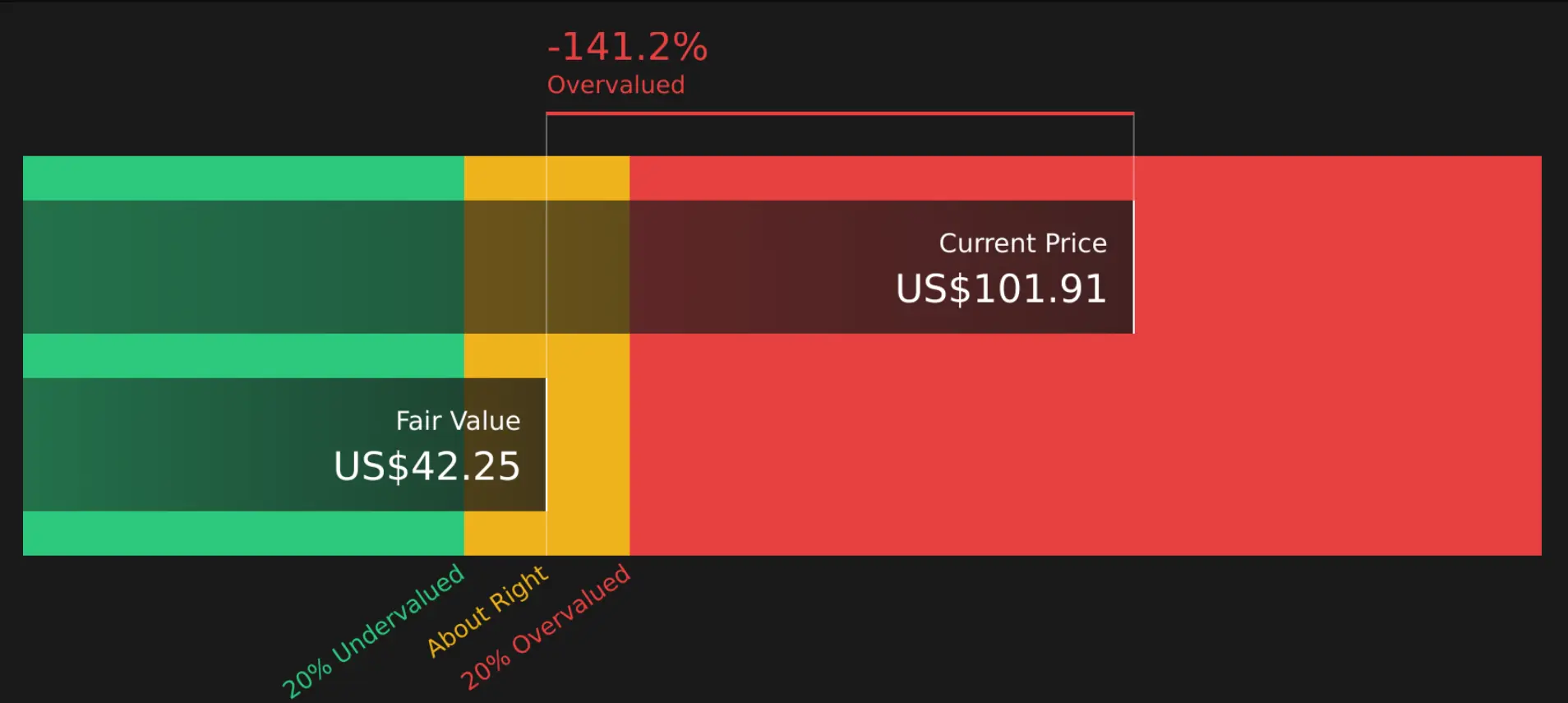
Analyst Bailey Pemberton evaluated CRCL’s stock price using two independent valuation methods:
-
Discounted Cash Flow (DCF): Using a two-stage free cash flow model, Circle’s past 12 months free cash flow was about $336 million, projected to reach $628.9 million by 2030. Discounted, the intrinsic value per share is approximately $42.25, compared to the current $111.84, meaning the stock is priced about 164.7% above estimated intrinsic value.
-
Price-to-Sales (P/S): Circle’s current P/S ratio is 9.67, much higher than the software industry average of 3.56 and the peer average of 9.00. Based on Circle’s earnings growth, profit margins, and risk profile, analysts estimate a reasonable P/S ratio of 3.97, far below the current level.
Both methods show that CRCL’s current stock price significantly exceeds its fundamental valuation. It’s worth noting that high-growth company valuations are subjective; if the U.S.-Iran conflict continues to push interest rate expectations higher, Circle’s actual profitability could surpass current model predictions.
FAQs
Q: What is the main reason for the 87% increase in CRCL stock price over the past month?
This rise is driven by two mechanisms: macro factors—U.S.-Iran conflict raising oil prices and inflation expectations, reducing the likelihood of Fed rate cuts, benefiting stablecoin reserves; and trading factors—pre-earnings highly crowded short positions being forced to cover, creating a short squeeze. Markus Thielen from 10x Research believes the latter is the main driver.
Q: How does the short squeeze form in CRCL’s stock price?
CRCL’s short ratio reaches 13% of circulating shares, and hedge funds accumulated large put positions before earnings. When trigger events occur, shorts are forced to cover, leading to continuous buying. FactSet data shows it takes about two days to fully cover, indicating high short concentration and typical conditions for a short squeeze.
Q: How do analysts assess the reasonableness of CRCL’s current stock price?
Bailey Pemberton’s DCF model estimates the intrinsic value at about $42.25 per share, which is 164.7% below the current $111.84. The P/S ratio of 9.67 is also far above the estimated reasonable level of 3.97 and the software industry average of 3.56. Both methods indicate that CRCL’s current stock price is seriously overvalued.
Disclaimer: The information on this page may come from third parties and does not represent the views or opinions of Gate. The content displayed on this page is for reference only and does not constitute any financial, investment, or legal advice. Gate does not guarantee the accuracy or completeness of the information and shall not be liable for any losses arising from the use of this information. Virtual asset investments carry high risks and are subject to significant price volatility. You may lose all of your invested principal. Please fully understand the relevant risks and make prudent decisions based on your own financial situation and risk tolerance. For details, please refer to
Disclaimer.


