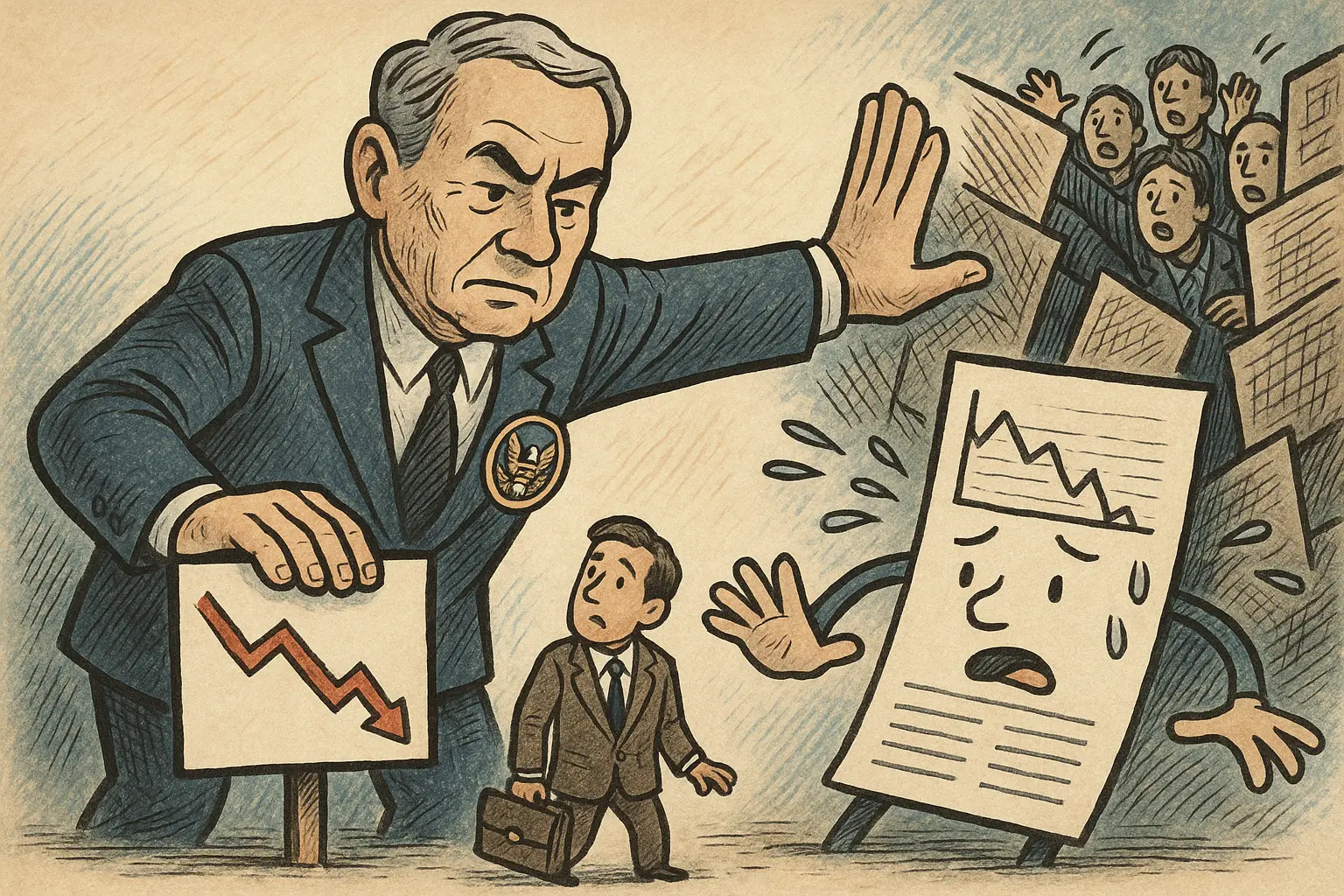
The U.S. Securities and Exchange Commission (SEC) released two major regulatory proposals on March 16, with very different directions but equally profound impacts. The first proposes amending Rule 15c2-11 of the Securities Exchange Act to explicitly narrow the scope of OTC market quote regulation to only apply to stocks; the second is that the SEC is considering abolishing the long-standing mandatory quarterly financial reporting system, allowing listed companies to disclose earnings semiannually instead.
Rule 15c2-11 Revision: Clarifying that OTC Market Quote Regulation Applies Only to Stocks
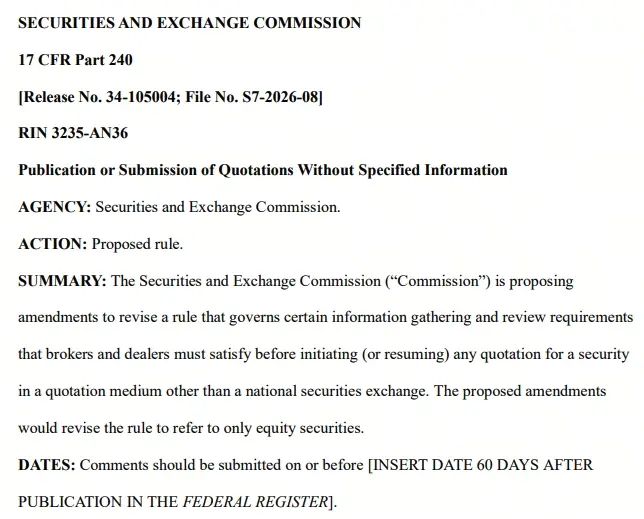 (Source: SEC)
Since its implementation, Rule 15c2-11 has primarily aimed to prevent manipulative and fraudulent trading behaviors in the OTC stock market, requiring broker-dealers to perform due diligence and review obligations when publishing or maintaining quotes in the OTC market.
This proposed revision clarifies the scope of the rule: officially confirming that Rule 15c2-11 applies only to stocks, excluding other asset classes. SEC Chairman Paul S. Atkins explained in the announcement: “Regulatory rules should be appropriately tailored to the asset classes they cover. This proposal will clarify the regulatory obligations when publishing quotes and reaffirm the long-standing consensus that Rule 15c2-11 applies to stocks.”
For the cryptocurrency market, this clarification has an indirect positive significance—it further confirms the SEC’s regulatory boundaries, explicitly stating that digital assets like Bitcoin and Ethereum are outside this rule’s framework, helping to reduce regulatory gray areas.
The public comment period will last 60 days from the date the proposal is published in the Federal Register.
Proposal to Eliminate Quarterly Financial Reports: Cost Reduction or Transparency Erosion?
The second, more systemic proposal, is that the SEC is considering abolishing the mandatory quarterly earnings disclosures, replacing them with semiannual reports. If officially adopted, this would be one of the most significant reforms to the financial reporting system in the U.S. capital markets in decades.
Arguments from Reform Supporters
- The compliance costs of quarterly reporting amount to billions of dollars annually for U.S. companies.
- Lower reporting frequency could encourage more companies to go public (reducing IPO barriers).
- It helps executives focus on long-term strategies rather than chasing short-term quarterly results.
- Regulators and business groups believe this could enhance companies’ long-term competitiveness.
Concerns from Critics
- Quarterly disclosures are core tools for retail investors and analysts to monitor company financial health.
- Reducing disclosure frequency may increase information asymmetry about fundamentals, leading to greater market volatility.
- Scarcity of financial information could give large institutional investors a greater informational advantage over retail investors.
Currently, the proposal is still under SEC internal review, and it is uncertain whether the rulemaking process will be completed by 2026.
Frequently Asked Questions
Why does the revision of Rule 15c2-11 have a direct impact on the cryptocurrency market?
This revision explicitly limits the scope of the rule to stocks, indirectly clarifying that digital assets (including Bitcoin, Ethereum, etc.) are not subject to this regulation. This has positive implications for the OTC trading of cryptocurrencies, providing clearer regulatory confirmation for digital asset OTC quote operations, helping institutions better understand their market obligations within a compliant framework.
How would changing quarterly reports to semiannual disclosures affect stock market volatility?
Theoretically, reducing the frequency of disclosures means investors will have to wait longer—up from every 3 months to 6 months—to access company financial data. During this period, stock price movements will rely more on market expectations and rumors rather than confirmed financial information. Critics argue this could lead to larger swings around the semiannual reports and provide a longer window for speculative activities driven by information asymmetry.
Could the abolition of quarterly reporting impact market sentiment for Bitcoin and other crypto assets?
There is an indirect impact. Reforms in market transparency generally influence overall investor risk appetite. If traditional stock markets become less transparent, some capital might shift toward perceived more transparent assets like cryptocurrencies with on-chain data. Conversely, if stock markets experience increased volatility, it could trigger a sell-off in risk assets overall. The specific impact will depend on how the policy is ultimately implemented and how markets adapt.
Disclaimer: The information on this page may come from third parties and does not represent the views or opinions of Gate. The content displayed on this page is for reference only and does not constitute any financial, investment, or legal advice. Gate does not guarantee the accuracy or completeness of the information and shall not be liable for any losses arising from the use of this information. Virtual asset investments carry high risks and are subject to significant price volatility. You may lose all of your invested principal. Please fully understand the relevant risks and make prudent decisions based on your own financial situation and risk tolerance. For details, please refer to
Disclaimer.


