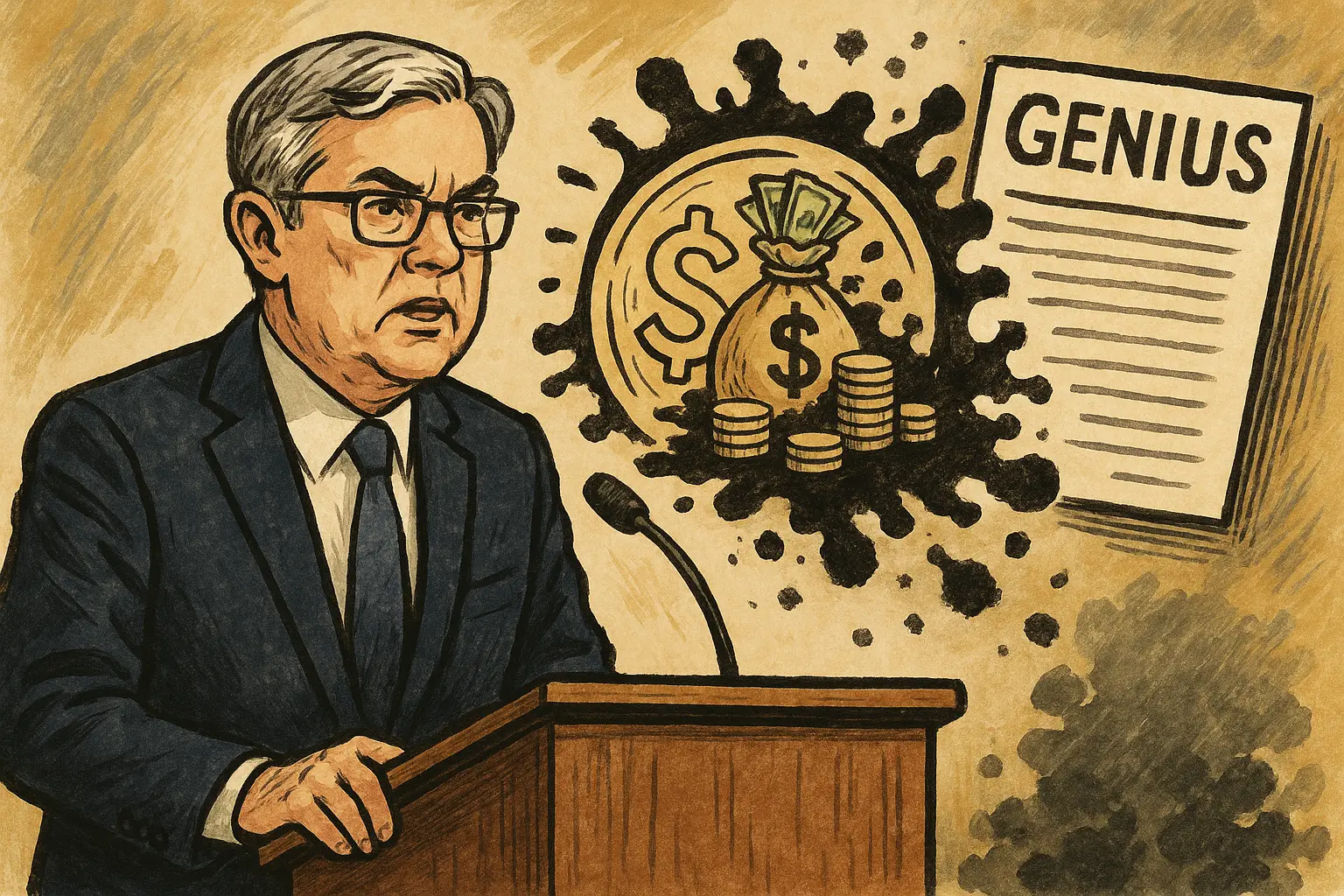
Federal Reserve board member Michael Barr on March 31, in a prepared speech at the Federalist Society, warned that stablecoin reserve assets carry potential money laundering and financial stability risks, while affirming their practical advantages in cross-border payments and real-time settlement. At the same time, the Federal Reserve and other regulators are actively developing specific rules related to the GENIUS Act, and the outline of the regulatory framework is rapidly taking shape.
Reserve asset quality: Barr points to the core of structural risks
Barr said that the quality and liquidity of stablecoin reserve assets are “critical” to their long-term sustainability, but there is a fundamental conflict of interest in issuance: stablecoin issuers have a strong incentive to maximize the returns on reserve assets by taking on as much higher risk as possible. Under conditions of insufficient regulation, this incentive may undermine reserve safety and put holders’ redemption protections at risk.
He said the core risks cover two dimensions: first, potential concerns about money laundering, arising from gray areas where parts of the platforms’ regulation is still not adequate; second, financial stability risks, arising from issuers’ risk-taking behavior with reserve assets. Once the market faces pressure, insufficient reserve liquidity may trigger system-wide bank runs.
Acknowledging the advantages of digital assets: a positive take on fast settlement
While warning of risks, Barr also clearly affirmed the real-world benefits of digital assets such as stablecoins:
Fast settlement capability: compared with traditional wire transfers that may take several business days, stablecoins can achieve near real-time cross-border settlement, greatly improving capital efficiency
Corporate finance applications: digital assets can help companies handle everyday financial matters, reducing time costs and intermediary fees for cross-border payments
Remittance use-case advantages: personal cross-border remittances are an important stablecoin application scenario, especially competitive in regions lacking banking infrastructure
He made clear that: “Strict controls over reserve assets, along with regulatory, capital and liquidity requirements and other measures, can enhance the stability of stablecoins, making them a more viable payment tool. But whether these goals can be achieved will depend on the details of implementation.”
The GENIUS Act and the regulatory framework: details determine success or failure
The Federal Reserve and other regulators are currently actively developing specific rules related to the GENIUS Act, requiring stablecoin issuers to formally complete regulatory registration and hold reserves equal to the amount issued, to ensure a 1:1 convertibility with the U.S. dollar.
Federal Reserve board member Bowman also separately confirmed that regulators are moving forward with stablecoin rulemaking. The background worth noting is that, recently, conflicts between the banking industry and crypto companies arising from digital-asset regulation—including disputes over banking license eligibility—are adding complexity to rulemaking. The final balance between the strictness and flexibility of regulation will directly determine the development landscape of the U.S. stablecoin market.
Frequently asked questions
What specific money laundering risks of stablecoins did the Federal Reserve warn about?
Stablecoins’ ability to transfer across borders and the ambiguous regulatory gray areas of some platforms make them one of the potential tools for money laundering. Barr’s warning points to the possibility that issuers may provide opaque transfer channels, which could allow illicit funds to bypass traditional banks’ anti-money laundering (AML) monitoring systems. The GENIUS Act’s formal registration requirements are the regulatory response aimed at this structural loophole.
What does the GENIUS Act mean for the stablecoin market?
The GENIUS Act requires stablecoin issuers to complete formal regulatory registration and hold reserves equal to the amount issued (typically dollars or short-term U.S. Treasury securities). This will raise compliance barriers for issuers, eliminate smaller issuers with unclear reserve management, and at the same time create a clearer market entry pathway for large compliant institutions—potentially driving more institutionalized and centralized development in the stablecoin market.
Why is the risk-taking by reserve asset holders the core issue in stablecoin regulation?
Stablecoin issuers hold reserve assets to ensure token convertibility, but reserve returns directly affect their profitability. In the absence of regulatory constraints, issuers tend to invest in assets with higher returns but greater risk; if the market becomes volatile, insufficient reserve liquidity may not be able to handle large-scale redemptions, creating systemic run risks. This is exactly the fundamental reason Barr emphasized that regulatory details are crucial.


